
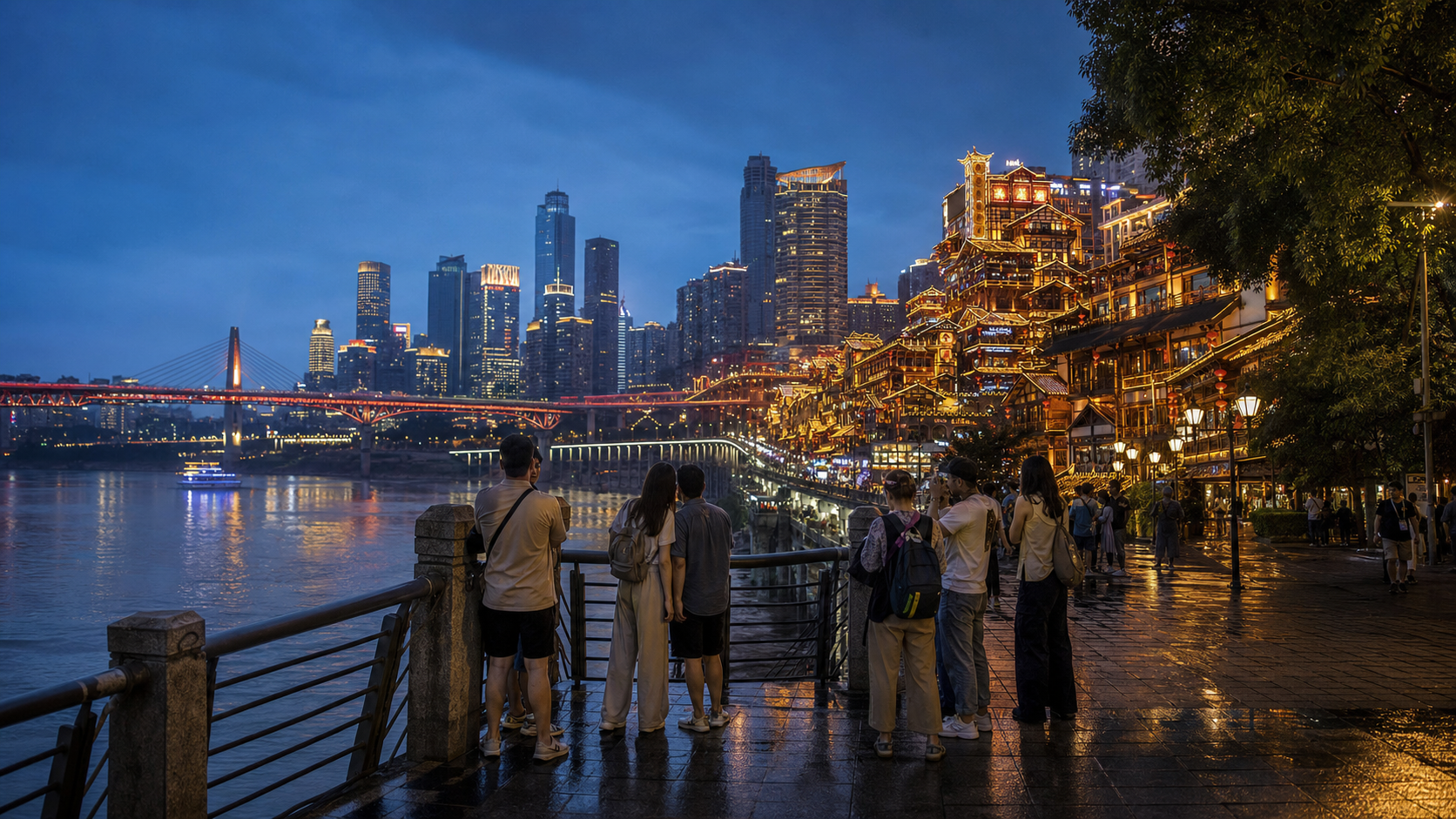
For a first-time foreign visitor, a workable 4-day Chongqing itinerary in 2026 is 3 urban days plus 1 flexible day: Jiefangbei and Hongya Cave, Liziba and Ciqikou, a mountain-city walk, then Wulong or a slower city day. I rechecked route and transport sources on 2026-08-08; budget a full-day transfer chain; the high-speed train itself can be about 35–40 minutes each way for the Wulong round trip.
Temporary construction notice (September 2026): Liziba Station is being renovated. Hall A is closed September 1–October 31; parts of Exit 1 remain affected through September 25, parts of Exit 2 through September 20, and parts of the platform through November 30. Follow station signs and allow extra time.

Chongqing rewards a flexible itinerary. A map can make two attractions look close while the real route includes a bridge, a tunnel, an elevator, a staircase or a different road level. For visitors who do not speak Chinese, the smoothest day is rarely the day with the most pins. It is the day with a clear base, a short list of stops and one transport fallback.
Quick Decision: Which Four-Day Shape Fits You?
Use this table before copying the daily route.
| Traveler situation | Recommended shape | Why |
|---|---|---|
| First trip, family, luggage or moderate walking | 3 urban days + 1 flexible city day | You see the core without committing to a long regional transfer. |
| First trip, nature is a priority | 3 urban days + Wulong day trip | The fourth day adds karst scenery, but the day can create a full-day transfer chain; the high-speed train itself can be about 35–40 minutes each way of round-trip travel. |
| Photographer or active walker | 2 urban days + 2-day regional extension | You get more time outside the center, but you may need to move or store luggage. |
| Rain, heat, late arrival or early departure | Keep all 4 nights in central Chongqing | A single base makes weather changes and route recovery easier. |
- Traveler situation
- First trip, family, luggage or moderate walking
- Recommended shape
- 3 urban days + 1 flexible city day
- Why
- You see the core without committing to a long regional transfer.
- Traveler situation
- First trip, nature is a priority
- Recommended shape
- 3 urban days + Wulong day trip
- Why
- The fourth day adds karst scenery, but the day can create a full-day transfer chain; the high-speed train itself can be about 35–40 minutes each way of round-trip travel.
- Traveler situation
- Photographer or active walker
- Recommended shape
- 2 urban days + 2-day regional extension
- Why
- You get more time outside the center, but you may need to move or store luggage.
- Traveler situation
- Rain, heat, late arrival or early departure
- Recommended shape
- Keep all 4 nights in central Chongqing
- Why
- A single base makes weather changes and route recovery easier.
The 3+1 model is the most forgiving for a first visit. Wander in China describes it as three urban days plus one regional block, while its 2+2 model is aimed at travelers who want more time in Wulong or the Three Gorges area. EastChinaTrip also presents 3–5 days as a useful stay range. These are planning patterns, not a reason to force an outer trip into every four-night stay.
Local tip: I would make the fourth day conditional until I see the weather, ticket availability and everyone's energy. A long day outside Chongqing is memorable when the group wants it; it is exhausting when the group is already carrying wet shoes and a flat phone battery.
The 4 Days at a Glance
| Day | Focus | Main stops | Time budget | Fallback if the day breaks |
|---|---|---|---|---|
| 1 | Arrival orientation and one night view | Jiefangbei → Hongya Cave → riverfront | 2–3 hours for orientation, meal and rest, then one evening route | Protect 30–60 minutes for payment setup, hotel directions and charging |
| 2 | Monorail plus old street | Liziba → Ciqikou | 30–60 minutes at Liziba, 2–3 hours at Ciqikou | Take a 60–90 minute hotel break before dinner instead of adding a stop |
| 3 | Mountain-city walking and culture | Shibati or Huguang Guild Hall, then Danzishi or Longmenhao | 3–5 hours before any riverfront evening | Swap the outdoor block for a museum, mall or covered food stop in heavy rain |
| 4 | Wulong or a softer city day | Wulong Karst, or a second river view and a final hotpot meal | Roughly a full-day transfer chain; the high-speed train itself can be about 35–40 minutes each way of round-trip travel before Wulong sightseeing time | Choose the city day for late flights, children, older travelers or heavy rain |
- Day
- 1
- Focus
- Arrival orientation and one night view
- Main stops
- Jiefangbei → Hongya Cave → riverfront
- Time budget
- 2–3 hours for orientation, meal and rest, then one evening route
- Fallback if the day breaks
- Protect 30–60 minutes for payment setup, hotel directions and charging
- Day
- 2
- Focus
- Monorail plus old street
- Main stops
- Liziba → Ciqikou
- Time budget
- 30–60 minutes at Liziba, 2–3 hours at Ciqikou
- Fallback if the day breaks
- Take a 60–90 minute hotel break before dinner instead of adding a stop
- Day
- 3
- Focus
- Mountain-city walking and culture
- Main stops
- Shibati or Huguang Guild Hall, then Danzishi or Longmenhao
- Time budget
- 3–5 hours before any riverfront evening
- Fallback if the day breaks
- Swap the outdoor block for a museum, mall or covered food stop in heavy rain
- Day
- 4
- Focus
- Wulong or a softer city day
- Main stops
- Wulong Karst, or a second river view and a final hotpot meal
- Time budget
- Roughly a full-day transfer chain; the high-speed train itself can be about 35–40 minutes each way of round-trip travel before Wulong sightseeing time
- Fallback if the day breaks
- Choose the city day for late flights, children, older travelers or heavy rain
Read the table as a load plan rather than a schedule. Each row assumes one base hotel, one anchor stop and one exit route, which is the pattern that survives a wrong road level or a sudden downpour.
Day 1: Jiefangbei Orientation, Hongya Cave and the Riverfront
Good for: first-time orientation, night photography, travelers who want a simple first evening.
Start around Jiefangbei rather than trying to cross the whole city after arrival. Give yourself about 2–3 hours for orientation, a meal and a short rest before the evening route. The central area is useful because shops, metro access, taxis and food are close together, even though it is busy.
Walk through the central streets, then decide whether your group has enough energy for Baixiangju or Raffles City before heading toward Hongya Cave. Do not make every stop a photo mission. One landmark, one meal and one river view is enough for an arrival day.

At Hongya Cave, plan around the view rather than the interior shops. Wikipedia's entry describes it as an 11-story stilt-building complex built into the hillside on the south bank of the Jialing River, which is exactly why the name is ambiguous on a map: 11 floors means several street-level entrances. The stacked architecture is most useful as a skyline subject from outside, from the river side or from a bridge approach. Leave a clear exit plan: upper road, lower river road, or a nearby pickup point. Our Hongya Cave guide covers which level to enter from and where the crowd concentrates after dark.

Avoid if: you land late with large luggage and plan to add three attractions before check-in. On the first night, protect 30–60 minutes for payment setup, hotel directions and charging your phone.
Day 2: Liziba, Ciqikou and a Deliberate Afternoon Break
Good for: visitors who want the famous rail-through-building view plus an older street district.
Liziba: 30–60 minutes, not an afternoon
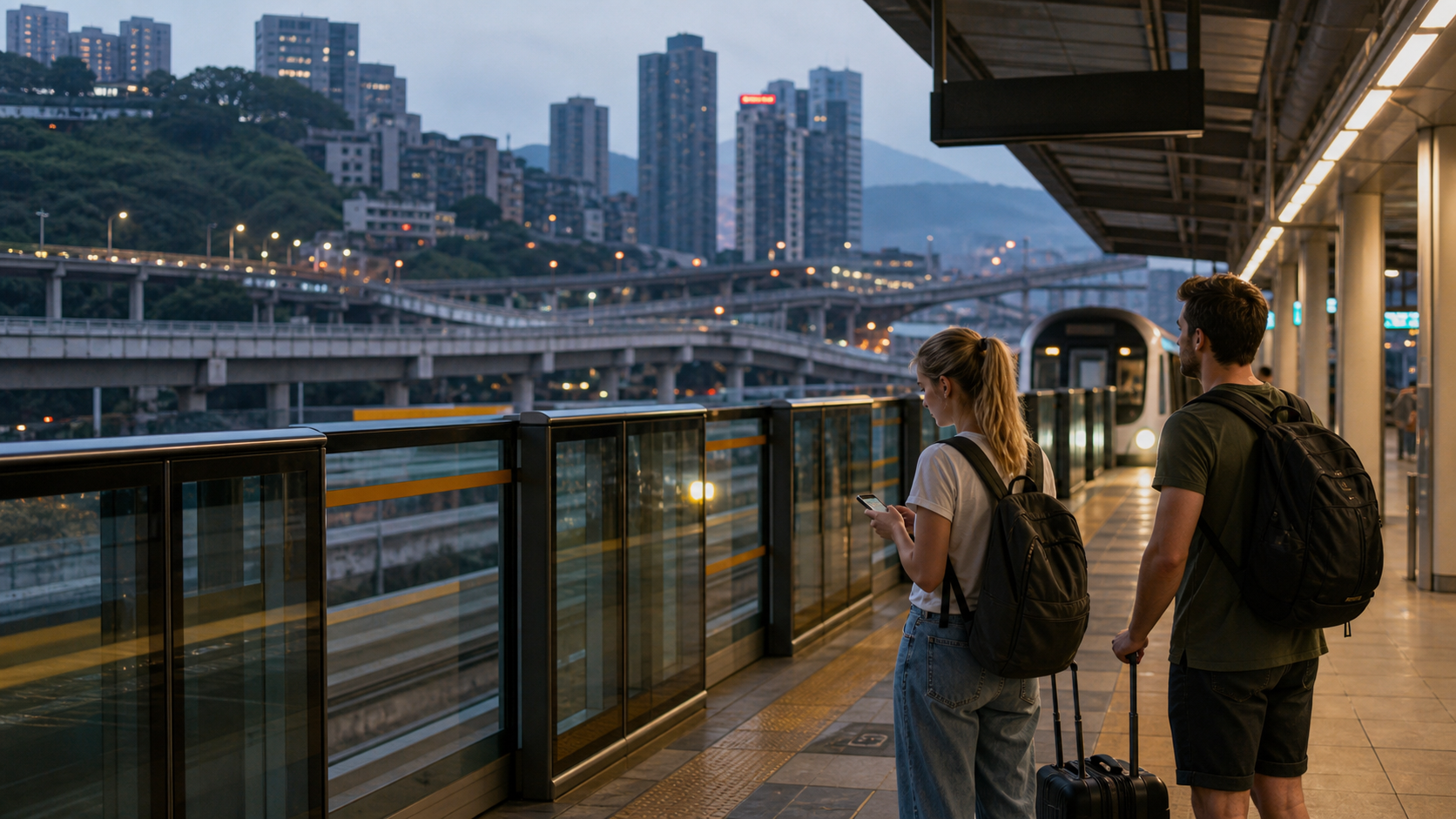
Use the morning or early afternoon for Liziba. The station opened on 18 June 2005 and the Line 2 monorail runs through the sixth to eighth floors of a 19-storey residential building, so the whole spectacle is over in the seconds a train takes to cross. The public viewing area is a clear stop, but the scene is better when you give it 30–60 minutes rather than waiting for a long time in a crowded position. Watch the monorail, take a wide photo that includes the hillside buildings, and move on. The Liziba monorail viewpoint guide explains where to stand and when the platform is least crowded.

Ciqikou: an old port, not a quiet museum
Ciqikou works as the second half of the day if you accept what it is: a busy old-town-style district with stone lanes, snacks, tea, shops and people. The subdistrict in Shapingba was first built during the reign of Emperor Zhenzong of Song (998–1004) and grew into a Ming-dynasty commercial port on the Jialing River, which is why the lanes are narrow and the crowd concentrates on one main street. Allow 2–3 hours for a relaxed visit, less if the heat or crowd becomes tiring. Save a Chinese destination name before leaving the hotel, because a map pin near an old town can still leave a final walk. The Ciqikou guide covers the quieter side lanes and the walk back to the metro.
Build a hotel break of at least 60–90 minutes between Liziba and dinner. In Chongqing, that break is part of the route design, not lost sightseeing time. It gives you space to dry clothes, recharge a phone and decide whether dinner should be hotpot, noodles or something mild.
Common mistake: pairing Liziba, Ciqikou, Wulong and a night cruise on the same day. These stops belong to different route loads. Keep the old street and monorail together; move the regional landscape to Day 4.
Day 3: Mountain-City Walking and Riverside Culture
Good for: travelers who want to understand the terrain rather than collect landmarks.
Start with a mountain-city route in central Chongqing and choose a cultural stop such as Shibati or Huguang Guild Hall. The goal is to experience changing levels: a street becomes a staircase, a staircase opens onto a terrace, and a short route can finish at a very different elevation. Give this day 3–5 hours before adding a riverfront evening, and use the Shibati mountain-city trail guide if you want the staircase route mapped step by step.

The route can continue toward Danzishi or Longmenhao if the group still has energy. A riverside old-street area gives you a slower visual counterpoint to Jiefangbei. If rain is heavy, shorten the outdoor section and use a museum, mall or covered food stop as the middle block.
Metro single fares start at CNY 2 and rise by distance; after 55 km, each additional 20 km adds CNY 1, so there is no fixed CNY 10 network cap. The official one-day pass is CNY 18. At staffed ticket windows across the network, POS terminals accept UnionPay, Visa, Mastercard, JCB and American Express for tickets; this is different from tapping a foreign card directly at the fare gate. Our Chongqing metro guide covers the ticket types.
If you finish the walk near the centre, Xiaoshizi is the interchange you are most likely to use. A 2026 Chongqing municipal government reply on rail transit confirms that the station sits next to the Jiefangbei commercial area, Hongya Cave and the Yangtze River Cableway, and that passengers carrying large luggage or with limited mobility can use the accessible lift in the middle of the platform. On a stair-heavy day, that lift is worth knowing about before you arrive.
Local tip: wear shoes that tolerate wet stone and carry a small amount of water. A route of 3 kilometers can feel longer when it includes steps and repeated level changes.
Day 4: Wulong or a Softer Chongqing Day?
Choose Wulong if: your group likes landscapes, accepts an early start and can handle a long transfer day.
The Wulong option gives the itinerary a clear contrast: green karst cliffs, bridges, steps and a visitor trail rather than dense urban roads. Wulong Karst sits in Wulong District within Chongqing Municipality and forms part of the South China Karst UNESCO World Heritage Site inscribed in 2007; the Three Natural Bridges section alone is a 22 km² conservation area holding the Tianlong, Qinglong and Heilong limestone bridges. Wander in China describes the regional day as a 3+1 add-on, but also warns that the round trip can take roughly a full-day transfer chain; the high-speed train itself can be about 35–40 minutes each way before the attraction time itself. Check the day-trip transport, ticket and weather conditions before you commit.

Choose a city day if: you have a late flight, children, older travelers, heavy rain or a group that prefers food and photography over transit. Use the fourth day for a slower return to a favorite neighborhood, a museum, a second river view, shopping or a final hotpot meal. You can still make the day feel new by changing the camera height: explore a lower riverside road in the morning and a high viewpoint near sunset.
Do not switch hotels just to make one day trip look shorter unless your transport and luggage plan is already verified. A stable central base makes it easier to leave a bag, ask the front desk for the Chinese address and recover when the weather changes.
Where to Base Yourself for Four Nights
Central Yuzhong is the default
For a first visit, choose the neighborhood before the property. A central Yuzhong base around Jiefangbei, Linjiangmen, Jiaochangkou or nearby river streets reduces the number of taxi decisions on Days 1 and 3. It also keeps the first and final nights easier when you have luggage.
When another area fits better
Guanyinqiao is a reasonable alternative if shopping, restaurants and nightlife matter more than walking to Hongya Cave. An airport-side or northern business-district base fits a late arrival, early departure or work trip better than a sightseeing-heavy four-day plan. The where-to-stay guide explains the tradeoff between central convenience, river-road scenery and northern logistics.
Before booking, check 4 items in recent reviews: foreign-passport check-in experience, the exact entrance, elevator/luggage access and the Chinese address shown to a driver. “Near” a landmark is not enough in a vertical city.
Transport, Weather and Booking Buffers
The 3 buffers to protect
Keep 3 buffers in every day: 30 minutes for a wrong exit or road level, 60 minutes for a real meal and 90 minutes of flexible time before a train or flight. Those numbers are not official schedules; they are a practical way to avoid building a trip that fails after one missed turn.
Metro or car?
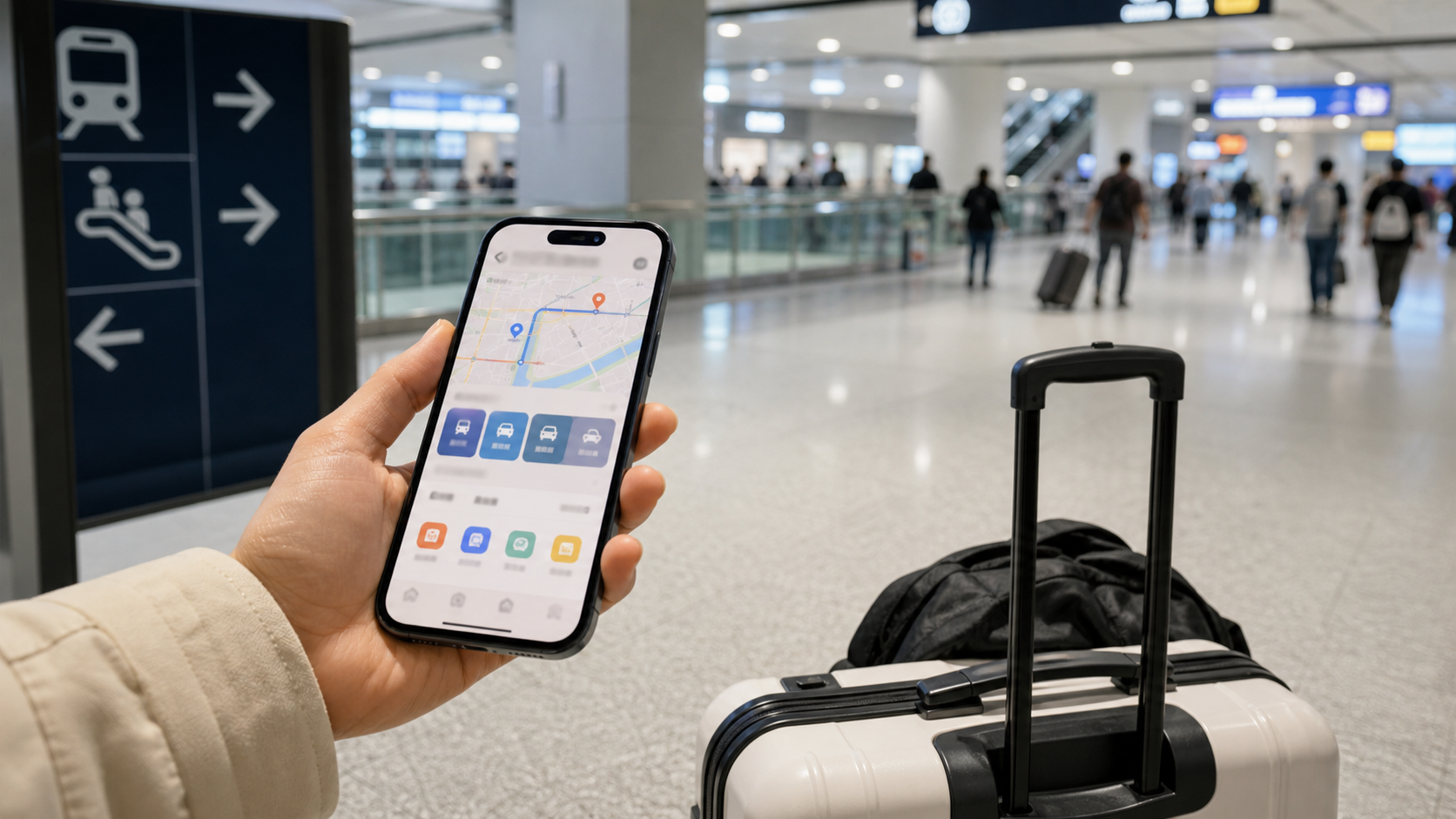
Use metro when the route is clear, luggage is light and the weather is manageable. Use a taxi or ride-hailing car when the group is wet, tired, carrying bags or facing a difficult last kilometer. The airport transfer guide covers the first arrival decision, and the taxi and ride-hailing guide explains the pickup-level problem that makes the last 300 metres harder than the ride.
Rain, heat and public holidays
For rain, keep one indoor or covered substitute inside the same district. For heat, move outdoor walks earlier and keep the afternoon break — the summer heat and stairs guide covers how much a humid afternoon changes a stair route. For public holidays, leave extra time for reservations and queues; EastChinaTrip specifically advises adjusting the order around flight, high-speed rail and reservation constraints.
Chinese Phrases to Save
| Situation | Chinese phrase | Meaning |
|---|---|---|
| Ask for the exact address | 请把中文地址发给我。 | Please send me the Chinese address. |
| Ask which entrance to use | 从哪个入口进去比较方便? | Which entrance is easier to use? |
| Ask for a taxi-friendly exit | 请带我到方便打车的出口。 | Please take me to an exit where it is easy to get a taxi. |
| Ask for a short break | 我们想先休息一个小时。 | We would like to rest for one hour first. |
| Ask whether the route has many stairs | 这条路楼梯多吗? | Does this route have many stairs? |
| Save a meal fallback | 附近有清淡一点的菜吗? | Is there something milder nearby? |
- Situation
- Ask for the exact address
- Chinese phrase
- 请把中文地址发给我。
- Meaning
- Please send me the Chinese address.
- Situation
- Ask which entrance to use
- Chinese phrase
- 从哪个入口进去比较方便?
- Meaning
- Which entrance is easier to use?
- Situation
- Ask for a taxi-friendly exit
- Chinese phrase
- 请带我到方便打车的出口。
- Meaning
- Please take me to an exit where it is easy to get a taxi.
- Situation
- Ask for a short break
- Chinese phrase
- 我们想先休息一个小时。
- Meaning
- We would like to rest for one hour first.
- Situation
- Ask whether the route has many stairs
- Chinese phrase
- 这条路楼梯多吗?
- Meaning
- Does this route have many stairs?
- Situation
- Save a meal fallback
- Chinese phrase
- 附近有清淡一点的菜吗?
- Meaning
- Is there something milder nearby?
Frequently Asked Questions
Q: Is 4 days enough for a first Chongqing trip?
A: Yes, if you prioritize 3 urban days and treat Day 4 as flexible. You can cover Jiefangbei, Hongya Cave, Liziba, Ciqikou, a mountain-city walk and one food-focused evening without crossing the city repeatedly.
Q: Should I add Wulong to a 4-day Chongqing itinerary?
A: Add Wulong when landscapes matter and your group accepts a long transfer day. Current itinerary references describe roughly a full-day transfer chain; the high-speed train itself can be about 35–40 minutes each way of round-trip travel, so a softer city day is more suitable for late flights, children, older travelers or heavy rain.
Q: Where should I stay for four nights in Chongqing?
A: A central Yuzhong base is practical for a first visit because it reduces taxi decisions around Jiefangbei, Hongya Cave and the mountain-city routes. Choose Guanyinqiao when shopping and nightlife matter more, or an airport-side base for transit logistics.
Q: How much walking should I expect?
A: Plan for at least 3–5 hours of walking on a sightseeing day, with stairs and elevation changes making short distances feel longer. Keep a 60–90 minute hotel break when the weather is humid or rainy.
Q: Can I use the metro without speaking Chinese?
A: Usually yes. iChongqing describes English ticket-machine interfaces, but you should still save the Chinese destination, check the current station display and use a taxi for a difficult final kilometer.
About This Guide
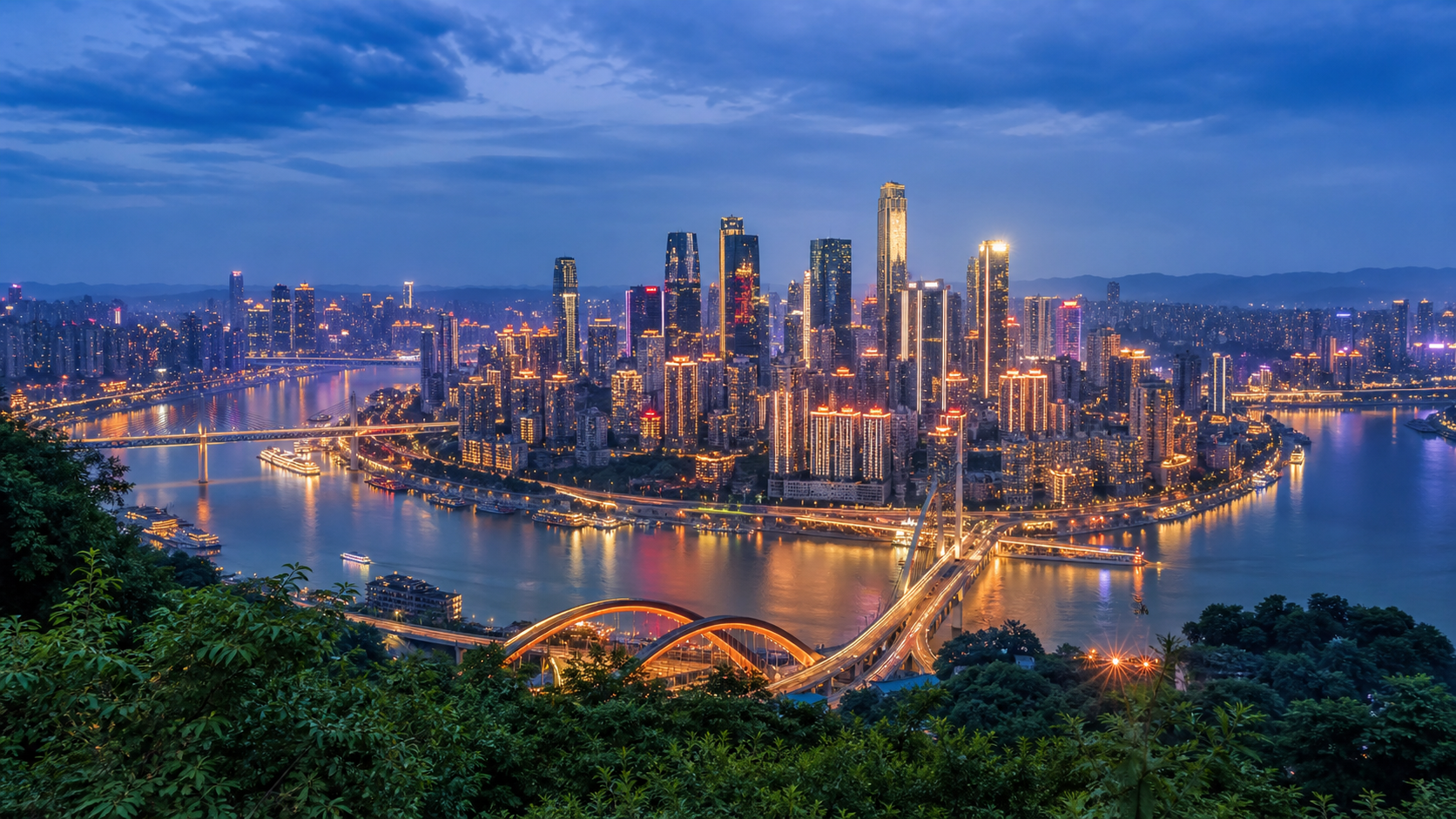
This guide was written for foreign visitors who need a route they can actually adjust. I opened and read current 2026 itinerary, transport and visitor-planning pages on July 31, 2026, then used the sources to separate urban days from long regional travel. On 2026-08-08 I re-opened the transport and landmark sources and added dated references for Liziba, Ciqikou, Wulong Karst and the Xiaoshizi interchange; the UNESCO listing page refused the automated read, so the World Heritage status is cited through Wikipedia instead. Route order, operating details, tickets and weather still need a date-specific check. All public visuals are original AI-generated Chongqing scenes based on internal reference photos; the source photos are not republished.
Traveler comments
Share a recent experience or ask a practical question about this guide.