
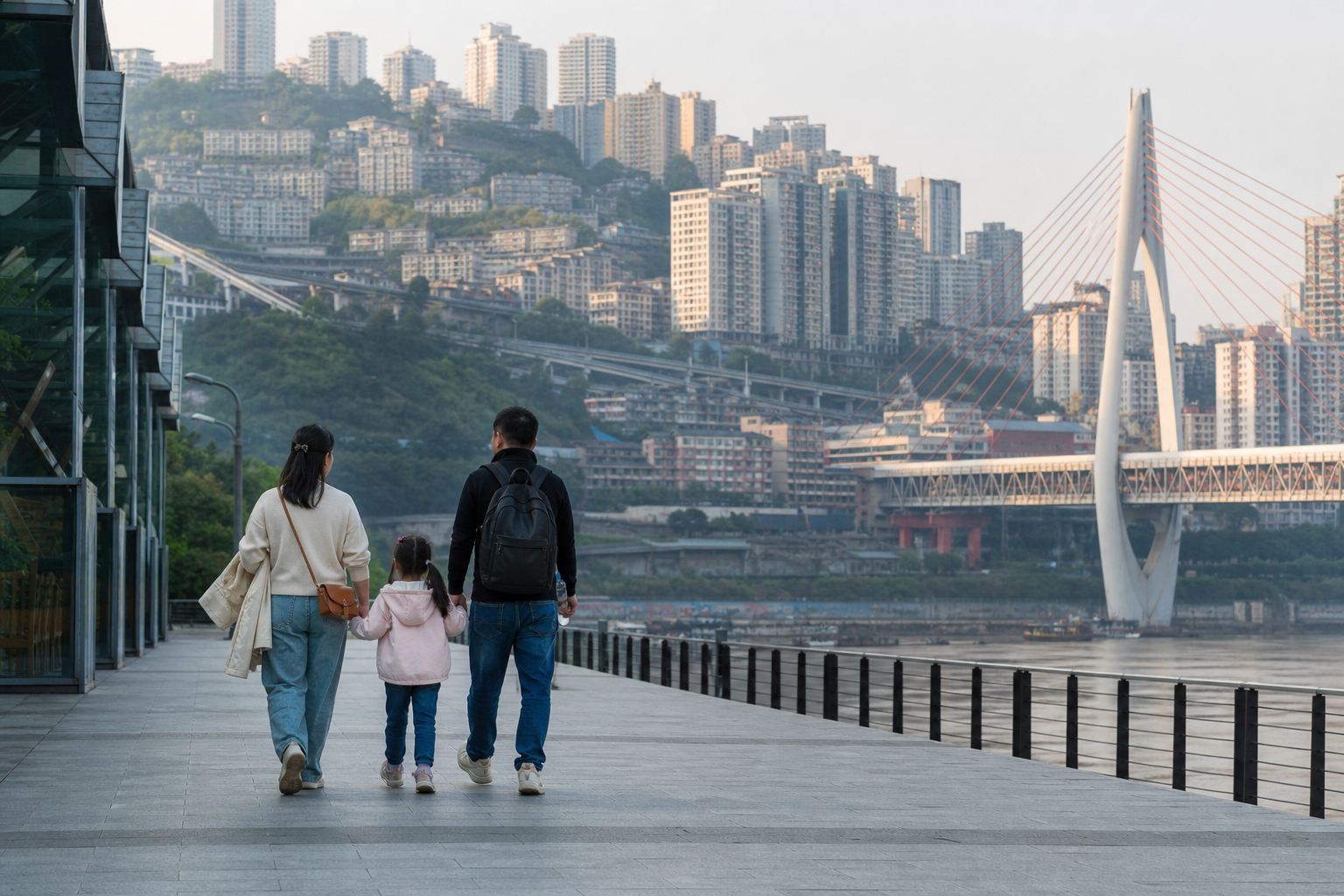
For a first family trip to Chongqing in 2026, use three zones over three days: a zoo-and-monorail day, a museum-and-river day, and a short Jiefangbei/Hongya Cave evening. I rechecked official museum, zoo and metro sources on 2026-08-08 and built the plan around 60–90 minute blocks with a midday rest.
Temporary construction notice (September 2026): Liziba Station is being renovated. Hall A is closed September 1–October 31; parts of Exit 1 remain affected through September 25, parts of Exit 2 through September 20, and parts of the platform through November 30. Follow station signs and allow extra time.
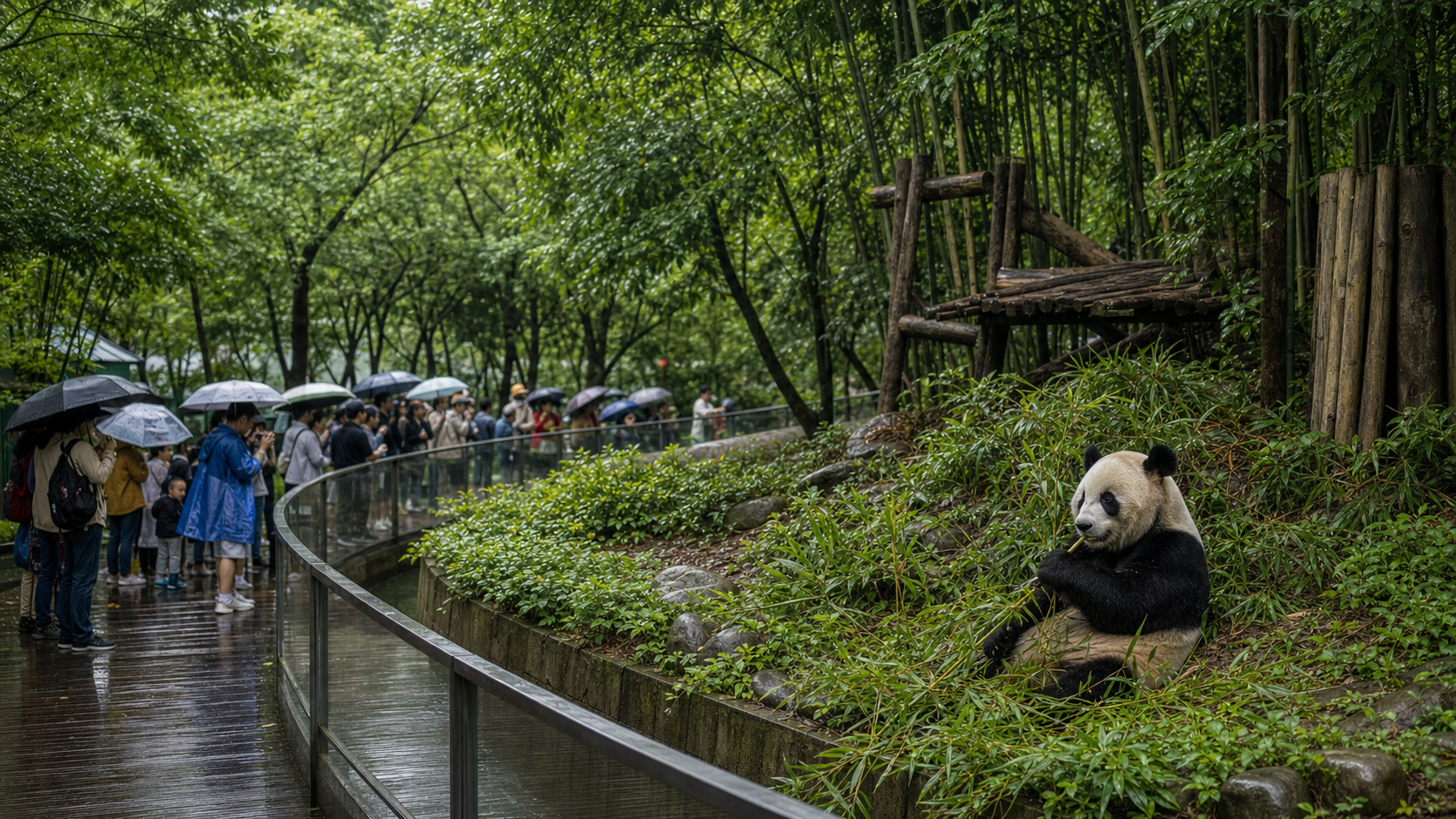
Current zoo data (verified 2026-09-02): Chongqing’s urban-management bureau lists the zoo at 43.4 hectares, with more than 240 species and 4,716 animals. A municipal report said the zoo kept 24 giant pandas in October 2025; that is a dated snapshot, not a guaranteed live count, because births and transfers can change it.
The Half-Day Rule: 1 Anchor, 1 Recovery Stop, 1 Turnaround Point
For each half-day, choose 1 anchor attraction, 1 indoor or shaded recovery stop, and 1 point where the family can quit without losing the day. I reassess after 60–90 minutes because Chongqing's stairs, heat and rain compound faster than map distance suggests. A zoo morning can end at lunch; a museum block can replace an exposed river walk; a Hongya Cave evening can be viewed from a calmer opposite-bank promenade. Chongqing's municipal family-weather guidance highlights museums as hot-weather family options. Carry a folding stroller only when you are ready to fold it, and keep a carrier or taxi pivot for stair-heavy segments.

Who This Plan Fits
This itinerary is for a family with a preschool or primary-school child, a stroller, or a child who needs a quiet break after one major activity. It is also useful for parents who do not speak Chinese and want a route that can be explained to a taxi driver or hotel desk in short pieces.
It is not a “see everything” schedule. A family can cover three meaningful blocks per day, but a child may need a toilet, snack, nap or air-conditioned pause between them. The city’s vertical layout means that a 700-metre line on a map can include stairs, a bridge, a road-level change or a crowded interchange. My planning rule is simple: one anchor attraction, one nearby add-on, and one exit plan.
Good fit: first trip, animal lovers, families combining learning and city views, visitors carrying a stroller, and parents who prefer metro plus short taxi rides.
Avoid this plan if: your group wants late-night food every night, a full Wulong day trip, or a tightly timed photo checklist. Add a fourth day instead of squeezing those into this route.
The 3-Day Route at a Glance
| Day | Main plan | Why it works for families | Exit plan |
|---|---|---|---|
| 1 | Chongqing Zoo → Liziba | A concrete destination, animal stops and one memorable monorail view | Return by Line 2 or take a taxi after the zoo |
| 2 | Chongqing Science and Technology Museum → Jiangbeizui riverfront | Indoor learning, toilets and a flexible riverside finish | Leave the riverfront when the child is done; do not force a night cruise |
| 3 | Jiefangbei → short Hongya Cave view | Central landmarks with an optional evening scene | Skip Hongya Cave if the family is tired or the crowd is heavy |
- Day
- 1
- Main plan
- Chongqing Zoo → Liziba
- Why it works for families
- A concrete destination, animal stops and one memorable monorail view
- Exit plan
- Return by Line 2 or take a taxi after the zoo
- Day
- 2
- Main plan
- Chongqing Science and Technology Museum → Jiangbeizui riverfront
- Why it works for families
- Indoor learning, toilets and a flexible riverside finish
- Exit plan
- Leave the riverfront when the child is done; do not force a night cruise
- Day
- 3
- Main plan
- Jiefangbei → short Hongya Cave view
- Why it works for families
- Central landmarks with an optional evening scene
- Exit plan
- Skip Hongya Cave if the family is tired or the crowd is heavy
The four anchor stops, with the numbers that matter
| Stop | Where it is | Timing fact worth checking | Family time budget |
|---|---|---|---|
| Chongqing Zoo | Jiulongpo District, 43.4 hectares | Open-air site; plan around weather, not closing time | 2–3 hours |
| Chongqing Science and Technology Museum | Central, indoors | 09:30–17:00, Tuesday to Sunday, closed Monday | 90 minutes to 2 hours |
| Liziba | Line 2 elevated station | The monorail crosses floors 6–8 of a residential building | 20–40 minutes |
| Hongya Cave (evening) | Central Yuzhong, near Xiaoshizi | Crowd density rather than opening time is the limit | 30–60 minutes, then leave |
- Stop
- Chongqing Zoo
- Where it is
- Jiulongpo District, 43.4 hectares
- Timing fact worth checking
- Open-air site; plan around weather, not closing time
- Family time budget
- 2–3 hours
- Stop
- Chongqing Science and Technology Museum
- Where it is
- Central, indoors
- Timing fact worth checking
- 09:30–17:00, Tuesday to Sunday, closed Monday
- Family time budget
- 90 minutes to 2 hours
- Stop
- Liziba
- Where it is
- Line 2 elevated station
- Timing fact worth checking
- The monorail crosses floors 6–8 of a residential building
- Family time budget
- 20–40 minutes
- Stop
- Hongya Cave (evening)
- Where it is
- Central Yuzhong, near Xiaoshizi
- Timing fact worth checking
- Crowd density rather than opening time is the limit
- Family time budget
- 30–60 minutes, then leave
Every row is a stop-or-continue decision, not a reservation. The two fixed constraints are the museum's Monday closure and your child's tolerance for the block before this one.
Day 1: Zoo First, Liziba Second
The zoo: 2–3 hours, many natural reset points
Start with Chongqing Zoo in the morning, when the family still has energy. The official city profile lists panda, tiger, bear, primate, giraffe, elephant, reptile, fish and bird areas, as well as a children’s play area and leisure spaces. That variety matters more than chasing one animal: if a child loses interest after 40 minutes, the next section gives you a natural reset. The zoo opened to the public in 1955 and covers 43.4 hectares, so treat it as a park you sample rather than a loop you complete. Our Chongqing Zoo and panda guide covers the panda viewing windows in more detail.
The zoo is in Jiulongpo District, and the nearby Chongqing Zoo Station is on Line 2. A China Association of Metros report describes the station as child-friendly after an upgrade, with direct lifts at entrances, an accessible lifting platform, a dedicated child passage, wide exit gates and smart lockers, plus panda-themed wayfinding. Facilities can change, so follow station staff and look for the lift rather than carrying a stroller through every stairway.

Allow roughly 2–3 hours for the zoo, then stop for lunch before adding another landmark. Do not plan a long cross-city meal search with a tired child. Save the Chinese phrase 不要辣,不要麻 (bù yào là, bù yào má) on your phone if you need food without chilli and numbing pepper.
Liziba: a 20–40 minute stop, not an afternoon
After the zoo, take Line 2 to Liziba for a short monorail experience. The viewing area is about the visual fact children enjoy: the train passes through a residential building — specifically the sixth to eighth floors of a 19-storey block, which is why the whole spectacle lasts a few seconds per train. Treat it as a 20–40 minute stop, not a full afternoon. A family can watch one or two trains, take a photo from the public viewing area, then decide whether to continue. The Chongqing government's rail-transit reply identifies Liziba and the Zoo as elevated Line 2 stations, so the ride itself becomes part of the visit. The Liziba monorail viewpoint guide has the standing positions if you want a photo without a crowd.

Local decision: if the child is asleep after the zoo, skip Liziba and return to the hotel. Chongqing rewards a route that ends before a meltdown more than a route that adds one more landmark.
Day 2: Science Museum, Then a Short River View
The museum: the only fixed constraint in the plan
Make Day 2 your indoor and weather-flexible day. The Chongqing Science and Technology Museum official website currently lists opening hours of 09:30–17:00, Tuesday through Sunday, with Monday closed. The same page says holidays and special circumstances follow the official notice, so check the museum site before leaving and plan the booking step around your travel date. The Monday closure is the one item in this itinerary that will not bend for a tired child, so build the week around it first.
The museum gives a family a different kind of Chongqing memory: a child can touch, watch and ask questions while the adults sit for a few minutes. The official site lists exhibition and science-activity sections and also publishes current activity calendars. Do not promise that every temporary exhibit will run in English; save the venue name in Chinese and use a translation app for the booking or desk conversation if needed.

Keep the museum visit to the child’s attention span. For many families, 90 minutes to 2 hours is enough before lunch. A longer visit is possible if the child is engaged, but do not turn a learning venue into another endurance test.
The late-afternoon river block
In the late afternoon, choose Jiangbeizui riverfront or a nearby indoor mall rather than crossing the city for several separate attractions. The point is a change of pace: open space, a snack, and a view of the river. If the weather is hot or wet, keep the riverfront to 30–45 minutes and use a taxi to the hotel. The city government’s rail-transit reply notes that Xiaoshizi sits next to Jiefangbei, Hongya Cave and the Yangtze River Cableway and carries heavy daily flow, and that passengers with large luggage or limited mobility can use the accessible lift in the middle of the platform. With a stroller or large day bag, either use that lift or take a direct car; the Chongqing metro guide covers exits and transfers if you stay on rail.

Day 3: Jiefangbei, Then Hongya Cave If the Family Still Has Energy
Use the third day for the central city, but keep the walking area small. Start near Jiefangbei, take a short look at the monument and surrounding streets, then choose one indoor lunch or café break. Do not combine Jiefangbei, Shibati, the cableway and Hongya Cave as one stroller route. Those places may appear close on a screen while the real route changes level several times.
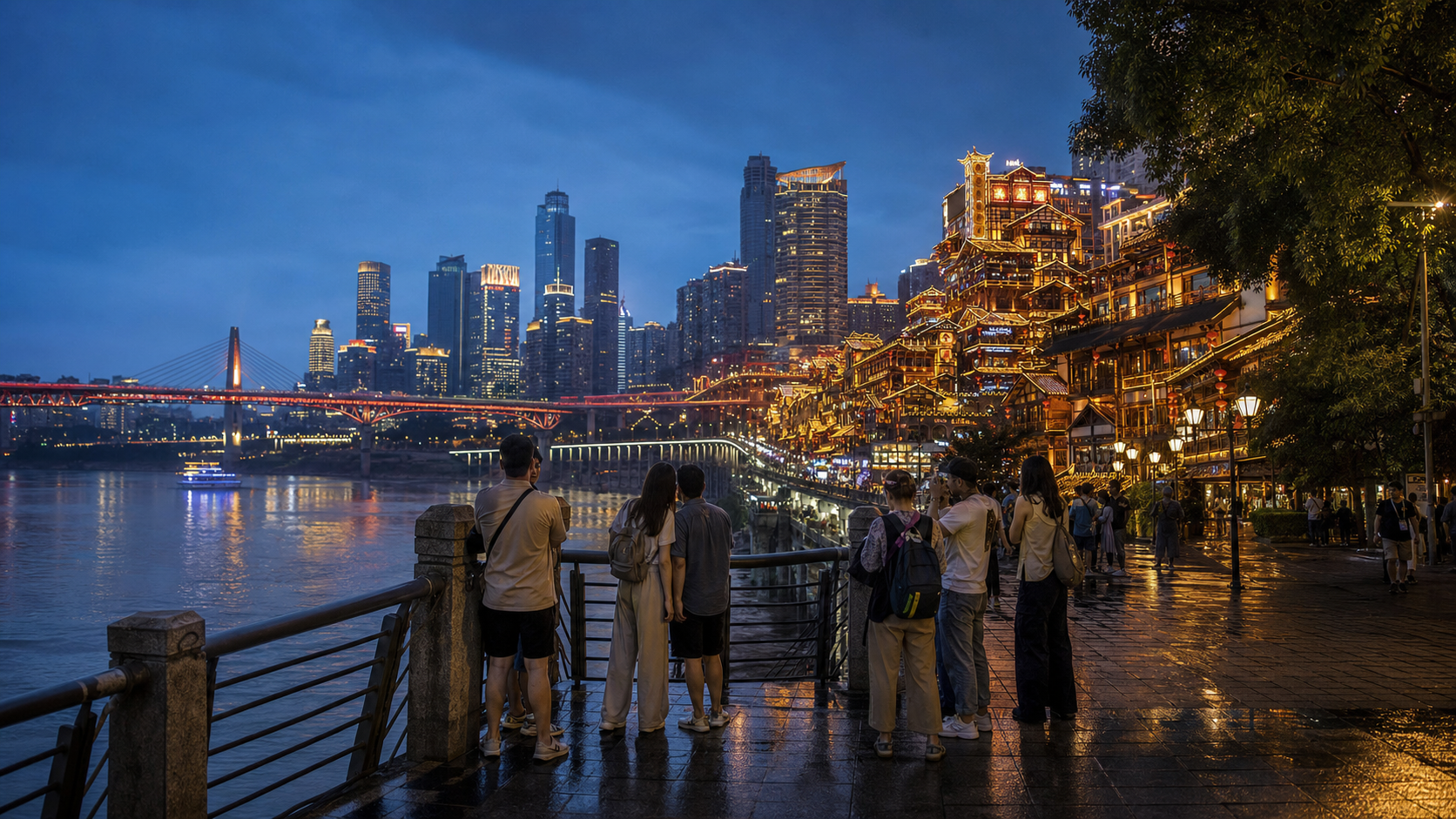
For the evening, Hongya Cave is an optional scene rather than a family endurance requirement. The government transport page places Xiaoshizi close to Jiefangbei, Hongya Cave and the Yangtze River Cableway, and describes it as a busy interchange. If you use the station, leave extra time for passenger flow and follow staff signs. If the child is tired, view the illuminated buildings from a safer open riverside point and leave; the complex is 11 storeys of stilt buildings on a hillside, so you do not need to enter every level of it. Our Hongya Cave guide explains which level to enter from if you decide to go in.

Common mistake: parents often schedule the night view because it looks like the easiest reward at the end of the day. In practice, crowd density, stairs and waiting for a car can make it the hardest part. The better family decision is to set a 30–60 minute limit and keep the hotel address ready in Chinese.
Where to Stay for a Family Route
Choose the neighborhood before choosing the room. For this plan, a central Yuzhong base near a usable metro station reduces the number of long cross-city rides. A room with a quiet sleep setup, enough floor space for luggage, and a front desk that confirms foreign-passport check-in in advance may matter more than a river view. The where-to-stay guide compares the central, shopping-district and northern bases if you are still deciding.
Four questions to ask before booking
For families with a stroller, ask the property these four questions before booking:
- Is foreign-passport check-in accepted for every traveler in the room?
- Which street-level entrance should a taxi use?
- Is there a lift from the entrance to the lobby and room floors?
- Can the front desk write the hotel address in Chinese for a driver?
Do not assume that a hotel near Hongya Cave is quiet at night, or that a hotel near a metro map pin is step-free. Ask for the entrance and road level, then compare that answer with your child’s routine.
Food, Strollers and the 90-Minute Rule
Chongqing food can work for children, but the order needs to be explicit. Save these phrases:
| Situation | Chinese phrase | Meaning |
|---|---|---|
| No chilli | 不要辣。 | No chilli, please. |
| No numbing pepper | 不要麻。 | No numbing pepper, please. |
| Mild and not oily | 清淡一点,少油。 | Mild, with less oil, please. |
| Child portion | 请给孩子一份。 | Please make one portion for the child. |
| Find a lift | 请问电梯在哪里? | Where is the lift, please? |
- Situation
- No chilli
- Chinese phrase
- 不要辣。
- Meaning
- No chilli, please.
- Situation
- No numbing pepper
- Chinese phrase
- 不要麻。
- Meaning
- No numbing pepper, please.
- Situation
- Mild and not oily
- Chinese phrase
- 清淡一点,少油。
- Meaning
- Mild, with less oil, please.
- Situation
- Child portion
- Chinese phrase
- 请给孩子一份。
- Meaning
- Please make one portion for the child.
- Situation
- Find a lift
- Chinese phrase
- 请问电梯在哪里?
- Meaning
- Where is the lift, please?
The 60–90 minute rule
My practical limit for a family walking block is about 60–90 minutes before a planned pause. That pause can be a drink, a toilet, a shaded bench or a short taxi. It is not wasted sightseeing time; it is what keeps the next block usable.
Strollers, lifts and who carries what
For a stroller, use metro lifts when the station provides them, fold the stroller when staff or passenger flow requires it, and keep a lightweight carrier as a backup for stairs. In crowded places, one adult should handle the child while the other handles the phone, tickets and bags. When the transfer looks harder than the ride, the taxi and ride-hailing guide covers how to name a pickup point a driver can actually reach.
Rain, Heat and Tired-Child Pivots
On a hot or rainy day, replace the long outdoor section with the Science Museum or a hotel rest block. On a cool clear day, extend the riverfront walk by 30 minutes. If the child is sleeping, protect the nap rather than waking them for a photo stop.
The route also changes by age. A toddler may need one major attraction per half day; a primary-school child may enjoy the zoo plus Liziba on the same day. Teenagers may prefer the monorail, a night view and food, but still need a clear pickup point because Chongqing’s road levels can confuse a first-time visitor.
Phrases to Save Before Leaving the Hotel
| Situation | Chinese phrase | Meaning |
|---|---|---|
| Show hotel address | 这是酒店地址,请带我们到入口。 | This is the hotel address. Please take us to the entrance. |
| Ask for a station lift | 请问无障碍电梯在哪里? | Where is the accessible lift? |
| Ask for a short stop | 我们带着孩子,请在方便下车的地方停。 | We are traveling with a child. Please stop somewhere convenient to get out. |
| Explain a tired child | 孩子累了,我们想休息一下。 | The child is tired; we would like to rest. |
| Ask for a non-spicy meal | 这份给孩子,不要辣,不要麻。 | This portion is for a child; no chilli and no numbing pepper. |
- Situation
- Show hotel address
- Chinese phrase
- 这是酒店地址,请带我们到入口。
- Meaning
- This is the hotel address. Please take us to the entrance.
- Situation
- Ask for a station lift
- Chinese phrase
- 请问无障碍电梯在哪里?
- Meaning
- Where is the accessible lift?
- Situation
- Ask for a short stop
- Chinese phrase
- 我们带着孩子,请在方便下车的地方停。
- Meaning
- We are traveling with a child. Please stop somewhere convenient to get out.
- Situation
- Explain a tired child
- Chinese phrase
- 孩子累了,我们想休息一下。
- Meaning
- The child is tired; we would like to rest.
- Situation
- Ask for a non-spicy meal
- Chinese phrase
- 这份给孩子,不要辣,不要麻。
- Meaning
- This portion is for a child; no chilli and no numbing pepper.
Frequently Asked Questions
Q: Is Chongqing suitable for a family trip with young children? A: Yes, if you plan one main block at a time. The zoo, a museum, metro rides and short river views can work well, but hills, stairs, heat and crowd changes require pauses.
Q: How many days should a family spend in Chongqing? A: Three days covers the city at a measured pace. Add a fourth day for Wulong, a slower neighborhood walk or a weather buffer instead of adding a distant day trip to an already full schedule.
Q: Is Chongqing Zoo close to the metro? A: Chongqing Zoo Station is on Line 2 and serves the zoo area. Use the station’s lift or child-friendly facilities when available, and ask staff if a stroller route is unclear.
Q: Should children visit Hongya Cave at night? A: They can, but treat it as an optional 30–60 minute view. If the crowd, stairs or transport queue becomes uncomfortable, leave and view the lights from an open riverside area instead.
Q: What should children eat in Chongqing? A: Ask for no chilli and no numbing pepper, and start with mild noodles, rice, soup, steamed dishes or vegetables. Show the Chinese phrases in this guide rather than relying on a spoken translation at a busy table.
About This Guide
This guide was written for foreign families who need route decisions, not a list of every attraction. I opened the museum's official site, the zoo's public record, the Chongqing municipal rail-transit reply and the metro-industry report on Chongqing Zoo Station on 2026-08-08, then rebuilt the plan around short blocks, rest points and a clear exit option. Ticket prices, panda counts and station-to-station travel times are deliberately absent: none of those pages published a 2026 figure that could be verified on the day of writing. Recheck venue notices, weather and station conditions on the day you travel.
For the next planning step, compare this family route with the 4-day Chongqing itinerary, the summer heat and stairs guide, and the Chongqing taxi and DiDi guide.
Traveler comments
Share a recent experience or ask a practical question about this guide.