
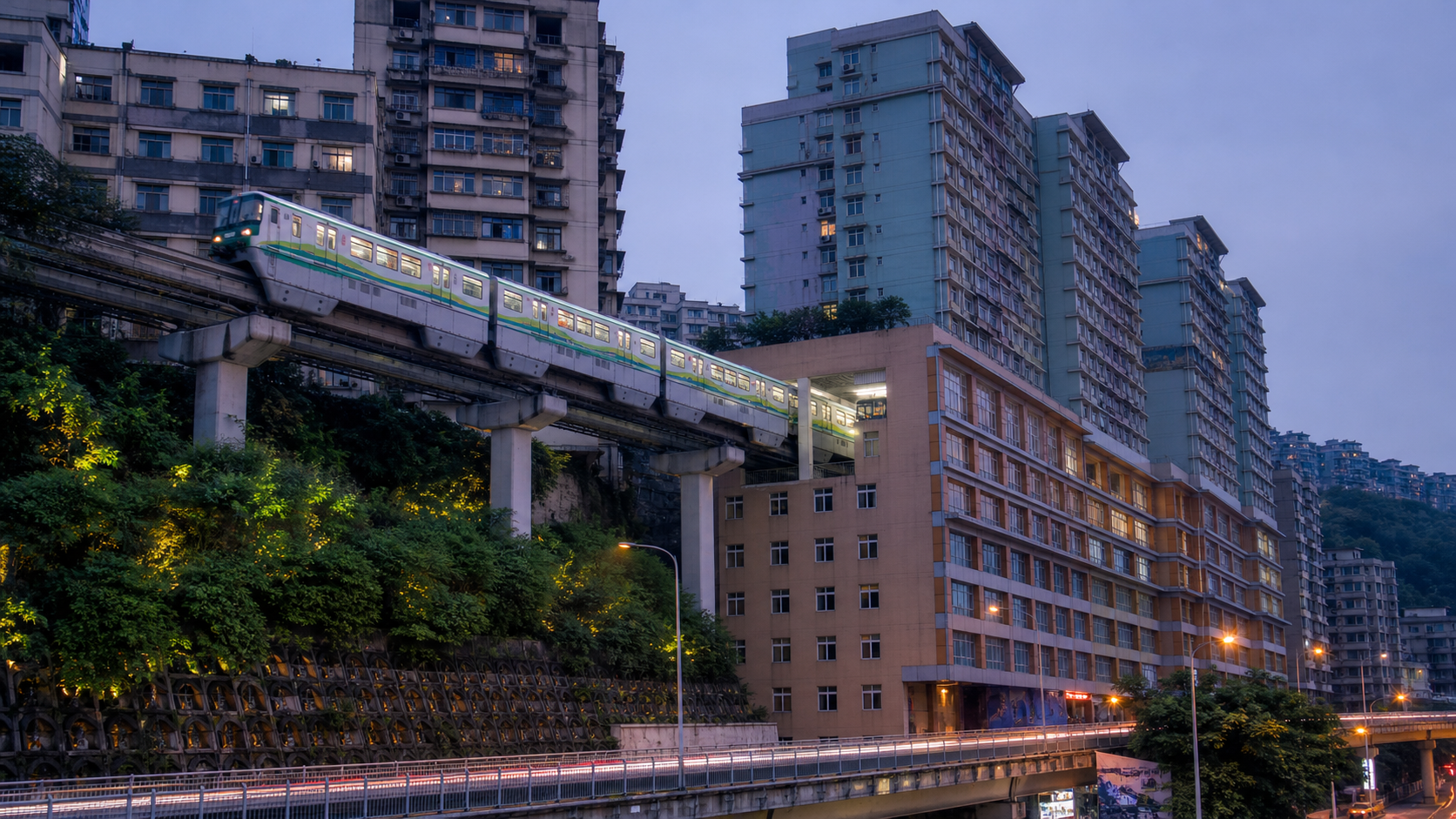
For a 2026 Liziba monorail viewpoint stop in Chongqing, budget 20–45 minutes: watch 1–2 Line 2 trains, take the building shot, then continue your route. Our 21 September source check confirms that the riverside viewing platform is open, while phased renovation still changes circulation inside the working Line 2 station.
Temporary construction notice (checked 21 September 2026): The official viewing platform is open, but Hall A is scheduled to remain closed through 31 October, part of Exit 1 is affected through 25 September, and station-platform work continues through 30 November. Exit 2's published work window ended on 20 September, but that date alone does not prove reopening. Follow current signs and staff directions, and add 10–15 minutes for diversions.

This guide is written for foreign visitors who want the iconic shot without getting stuck in Chongqing’s “vertical city” friction: stairs, layered roads, and confusing level changes. For background station facts, I cross-checked the Wikipedia page for Liziba Station. For “how long does it take” planning, I used the Trip.com listing (which frames it as a quick stop). For a sense of why the scene turned into a photo spot, I referenced iChongqing’s reporting about the trend. (Links in each section.)
What Liziba Is (And What It Isn’t)
A working station, not a ticketed attraction
Liziba is a monorail station on Chongqing Rail Transit Line 2 in Yuzhong District. It opened on 2005-06-18, and it’s famous because the station platforms and track run through a 19-story residential building, occupying its sixth to eighth floors. The important “myth-buster” detail: the station and the building were constructed as one structure, rather than a train line being retrofitted through an existing apartment later. Source: the Liziba Station page on Wikipedia (see also its citations).
Why the scene exists at all
Line 2 is one of two heavy monorail lines in a network that opened in 2004 and now runs 582 km; that record also describes Lines 2 and 3 together as the longest monorail system in the world. Monorail is the technology that makes a station inside a residential block feasible in the first place, which is a more interesting answer than “someone built a train through a house.” If you want the wider network context before you ride, our Chongqing metro guide covers fares, transfers, and signage.
What it isn't
What it isn’t: a ticketed attraction with a timed entry, or a place where you need to “plan the perfect train schedule.” If you start chasing an exact train frequency, you usually end up wasting time. Unless you have a live official timetable in hand, plan your stop around your own energy: arrive, watch a couple of trains, take your shots, leave.

How Long to Budget (A Realistic Timing Plan)
For a short visit, use 20–45 minutes on-site as a planning guide, following the suggested sightseeing time on the Trip.com viewing-platform listing. Adjust the stop to your interests and the conditions when you arrive.
| Minutes on site | What to do | Why this block exists |
|---|---|---|
| 0–10 | Find a safe standing spot and check your camera settings | Settings fumbling during a train pass is the main reason people need a third attempt |
| 10–25 | Watch one train go through, then adjust your angle for the second | The first pass tells you where the light and the crowd actually are |
| 25–45 | Take a breather, do one wide shot and one tight shot, then move on | Two deliberate frames beat fifteen rushed ones |
| +10 minutes | Add for a group of 3 or more | Turns at the same spot take longer and people drift into the walkway |
- Minutes on site
- 0–10
- What to do
- Find a safe standing spot and check your camera settings
- Why this block exists
- Settings fumbling during a train pass is the main reason people need a third attempt
- Minutes on site
- 10–25
- What to do
- Watch one train go through, then adjust your angle for the second
- Why this block exists
- The first pass tells you where the light and the crowd actually are
- Minutes on site
- 25–45
- What to do
- Take a breather, do one wide shot and one tight shot, then move on
- Why this block exists
- Two deliberate frames beat fifteen rushed ones
- Minutes on site
- +10 minutes
- What to do
- Add for a group of 3 or more
- Why this block exists
- Turns at the same spot take longer and people drift into the walkway
If you are traveling with kids or older parents, the correct “upgrade” is not staying longer; it is choosing a calmer time and simplifying the shot list.
Where to Stand for the Classic Shot (Safety First)
The standing rule
Most first-time visitors make the same mistake: they stop at the first crowded curb and try to film from the narrowest pinch point. Chongqing is full of layered roads; even when the map looks “flat,” the sidewalk may be the only safe pedestrian channel at that level. If you are unsure where to stand, follow this simple rule:
- Choose a spot where you can keep one full arm’s distance from the curb (about 0.5–1 meter).
- Do not step backward while filming; set your feet first, then lift the phone.
- If you see people forcing tripod legs into the walking lane, move 20 meters away and take a cleaner wide shot.
Why leaving early costs you nothing
The viewing-platform listing on Trip.com emphasizes that the stop is free-entry; that is helpful mentally: you are not “wasting a ticket” by leaving early. Treat the experience like a viewpoint, not a commitment.

The “Mountain City” Reality: Stairs, Levels, and Fatigue
Liziba is in Yuzhong District, and the bigger challenge for many foreign travelers is not the train—it’s the terrain. Your map app may show a short line distance, but the path can include stairs, overpasses, and level changes. In one 30-minute stop, it’s easy to burn your energy budget for the rest of the afternoon.
I plan my day with one number in mind: 2 major stairs segments per half-day is enough for most visitors, especially in hot months. If you already did a long stair-heavy walk (Hongya Cave levels, riverbank steps, or old-street slopes), do Liziba as a quick stop and then move to a flatter activity: a café break, a museum, or a more direct metro ride. Our Hongya Cave foreign visitor guide explains how many level changes that landmark alone can add.

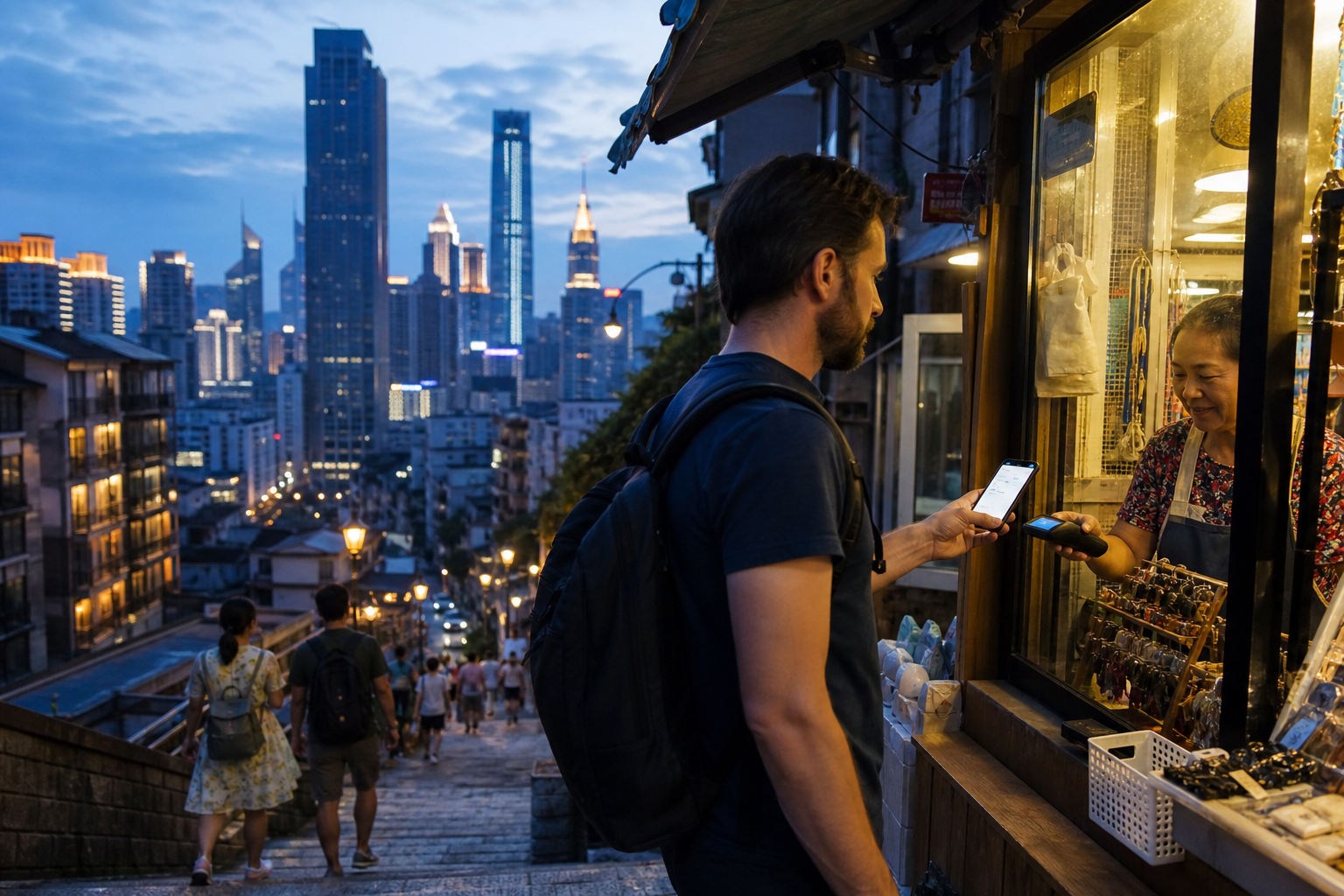
If you need a practical “reset,” this pairs well with our Chongqing payment guide: reloading Alipay/WeChat Pay and saving a Chinese address often solves more on-the-ground stress than adding one more viewpoint.
When to Go (Crowds and Light, Without Overpromising)
I do not publish an “every X minutes” train frequency in this guide, because the access-log reality of travel content is simple: visitors copy exact numbers and then blame the site when reality differs. What I can say safely is:
- If you go at a popular photo time, you will share the viewpoint with other people filming.
- If you go outside peak photo hours, you can take the same shot with less friction.
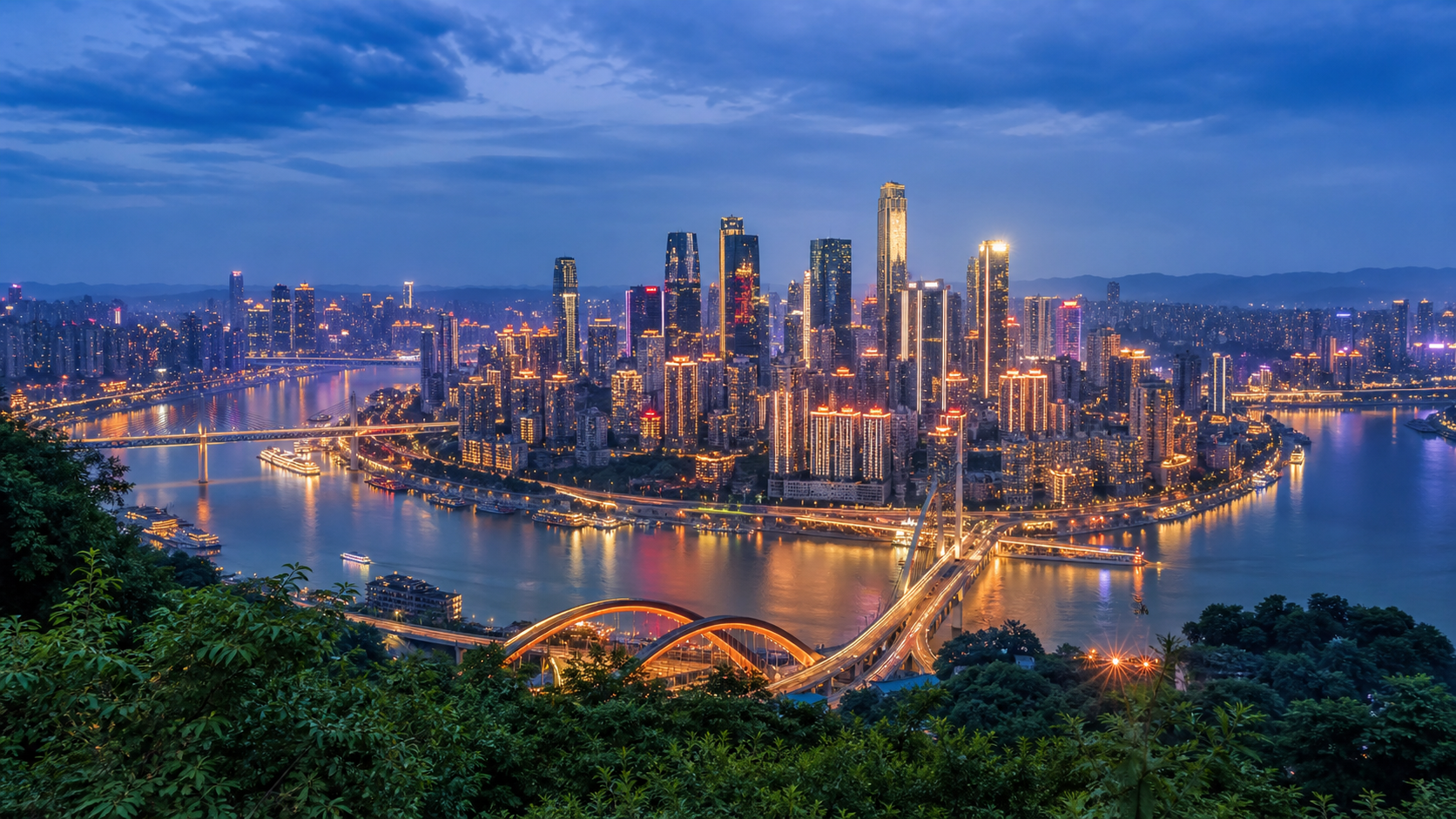
For light, I like blue-hour city context because Chongqing reads as a layered skyline rather than a flat grid. If you want one scenic context frame for your trip diary, take it here, then continue toward a river viewpoint later in the evening.

If you want a narrative connection for a 3-day first trip, Liziba fits naturally on Day 2 of our first-time Chongqing 3-day guide. The pacing works because Day 2 is about “weird Chongqing geometry” rather than long museum hours.
A Simple “Do This Next” Micro-Itinerary (30–90 Minutes)
Once you finish your Liziba photo stop, do not wander aimlessly hunting “another angle” for an hour. Pick one follow-up move:
- Move to your next planned attraction in 15–30 minutes (stay on itinerary).
- Take one short river-context walk (when you want skyline/bridge shots).
- Go straight to a meal (when you are heat-tired or stairs-tired).
If you choose option 2, look for a safe, open riverside segment where you can stop without blocking the flow. Chongqing views often get better when you step back.

Common Misunderstandings (Quick Reality Checks)
| What visitors assume | What the record actually says | What it means for your stop |
|---|---|---|
| The line was cut through an existing apartment block | The station and building were constructed together as one structure | It is engineering, not a stunt; there is nothing "dangerous" to witness |
| It must be unbearably loud inside | Specialised noise-reduction equipment isolates station noise from the residence | Do not expect a dramatic roar, and do not treat residents as part of the show |
| You need a ticket to watch | The observation-platform listing is marked free entry | Leaving after 20 minutes costs you nothing |
| It is a dedicated tourist attraction | It is a working Line 2 station, opened 18 June 2005, on floors 6 to 8 | Passengers are commuting; keep the walkway clear |
| Everyone here is a tourist accident | Reporting describes how the scene became a filming destination | Expect other cameras and plan your angle around them |
- What visitors assume
- The line was cut through an existing apartment block
- What the record actually says
- The station and building were constructed together as one structure
- What it means for your stop
- It is engineering, not a stunt; there is nothing "dangerous" to witness
- What visitors assume
- It must be unbearably loud inside
- What the record actually says
- Specialised noise-reduction equipment isolates station noise from the residence
- What it means for your stop
- Do not expect a dramatic roar, and do not treat residents as part of the show
- What visitors assume
- You need a ticket to watch
- What the record actually says
- The observation-platform listing is marked free entry
- What it means for your stop
- Leaving after 20 minutes costs you nothing
- What visitors assume
- It is a dedicated tourist attraction
- What the record actually says
- It is a working Line 2 station, opened 18 June 2005, on floors 6 to 8
- What it means for your stop
- Passengers are commuting; keep the walkway clear
- What visitors assume
- Everyone here is a tourist accident
- What the record actually says
- Reporting describes how the scene became a filming destination
- What it means for your stop
- Expect other cameras and plan your angle around them
The construction and noise-reduction details above come from the Wikipedia station record, the free-entry framing from the Trip.com listing, and the popularity account from iChongqing's report on the station in the courtyard.
Frequently Asked Questions
Q: How long do I need at Liziba viewpoint in 2026? A: Budget 20–45 minutes on site for 1–2 train passes and a few photo angles. If you’re with a group, add about 10 minutes for turns and repositioning.
Q: Is Liziba a station or just a photo spot? A: It’s a real CRT Line 2 station (opened 18 June 2005, occupying floors 6 to 8 of the building), and the “train through a building” view is a side effect of the station design. You can watch as a visitor or ride through as transit.
Q: Do I need to pay or book a ticket to watch the train? A: The viewing-platform listing I checked is marked as free entry, so you can watch without booking. If you ride the metro, you still pay normal transit fare via your payment app.
Q: What should I be careful about while filming? A: Keep 0.5–1 meter away from the curb when possible, don’t step backward while filming, and avoid blocking the walking lane—this is a tight sidewalk in a layered-road city.
Q: What should I do after Liziba if I only have half a day? A: Pick one follow-up: continue your next planned stop within 15–30 minutes, do one short riverside context walk, or go straight to a meal to reset your energy.
About This Guide
This guide was rechecked on 2026-07-27 against CQNEWS reporting on Line 2 passenger services at Liziba, the current Trip.com viewpoint listing, and Wikipedia's station and construction summary. On 2026-08-08 we reopened the station and rail-transit records, added the floors 6-to-8 detail, and turned the timing plan and the misunderstanding list into tables. We still publish no train frequency, because no source we read states an official headway for this viewpoint. Treat it as a practical pacing note: get the shot while keeping the rest of the day moving.
For full itinerary context, continue with the first-time 3-day guide, payment setup guide, and where to stay in Chongqing.
Traveler comments
Share a recent experience or ask a practical question about this guide.