
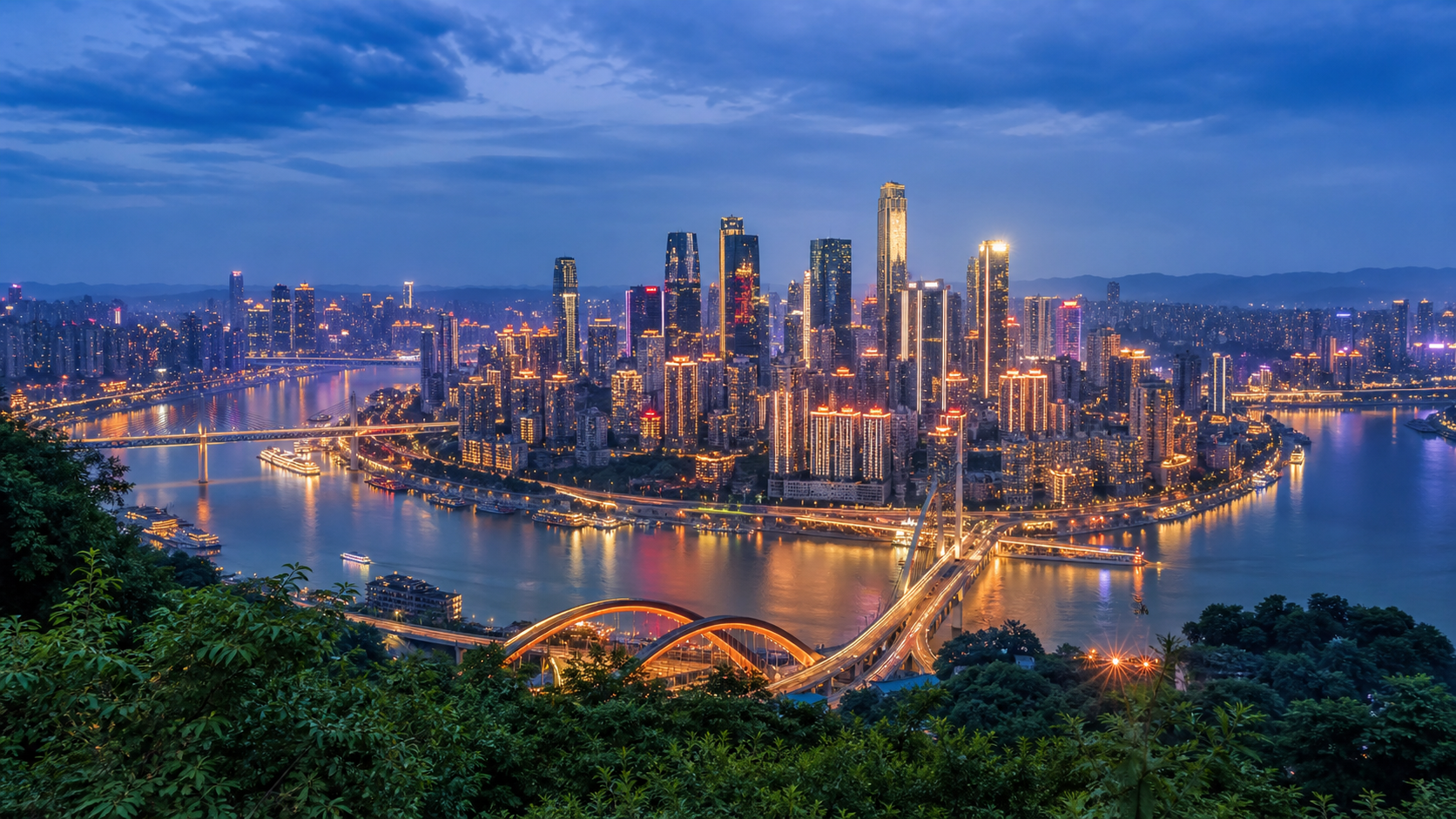
For a first Chongqing trip in 2026, run 3 compact daily loops from a Yuzhong base instead of one long attraction checklist. Our 2026-08-08 source check puts Jiangbei airport about 19 km north of the centre on a 582 km rail network, so transfers, not distance, decide each day. Leave recovery time for stairs, heat, and payment setup.
Temporary construction notice (September 2026): Liziba Station is being renovated. Hall A is closed September 1–October 31; parts of Exit 1 remain affected through September 25, parts of Exit 2 through September 20, and parts of the platform through November 30. Follow station signs and allow extra time.
This guide uses Yuzhong and Jiefangbei as the default base because it keeps Hongya Cave, Liziba, food streets, river views, and metro lines within manageable loops. It also builds in recovery time. Chongqing is exciting because it is physically unusual; that same quality makes rushed itineraries fall apart.
The 3-Day Plan at a Glance
| Day | Focus | Main stops | Pace and terrain | Evening |
|---|---|---|---|---|
| Day 1 | Orientation and the first night view | Jiefangbei, Hongya Cave | Lightest day; arrival fatigue is real | Simple dinner near the base; split pot if you choose hotpot |
| Day 2 | Urban contrast and food | Liziba Station, Ciqikou Ancient Town (1.18 km² old-town area) | Heaviest walking day; build in a 15:00–17:00 hotel break | Make dinner the main event: hotpot, xiaomian, Jianghu cuisine, or grilled fish |
| Day 3 | Cableway, mountain-city walking, or a soft exit | Yangtze River Cableway (1,166 m, about a 3.6-minute crossing) | Flexible; choose by energy and queue length | Depart with margin, or one final bowl of noodles |
- Day
- Day 1
- Focus
- Orientation and the first night view
- Main stops
- Jiefangbei, Hongya Cave
- Pace and terrain
- Lightest day; arrival fatigue is real
- Evening
- Simple dinner near the base; split pot if you choose hotpot
- Day
- Day 2
- Focus
- Urban contrast and food
- Main stops
- Liziba Station, Ciqikou Ancient Town (1.18 km² old-town area)
- Pace and terrain
- Heaviest walking day; build in a 15:00–17:00 hotel break
- Evening
- Make dinner the main event: hotpot, xiaomian, Jianghu cuisine, or grilled fish
- Day
- Day 3
- Focus
- Cableway, mountain-city walking, or a soft exit
- Main stops
- Yangtze River Cableway (1,166 m, about a 3.6-minute crossing)
- Pace and terrain
- Flexible; choose by energy and queue length
- Evening
- Depart with margin, or one final bowl of noodles
Read the table as a shape, not a schedule. Each day is one geographic cluster, and the evening line is where most first-time visitors overcommit.

Before You Start: Set Up the Boring Things
Payments, offline names, and cash
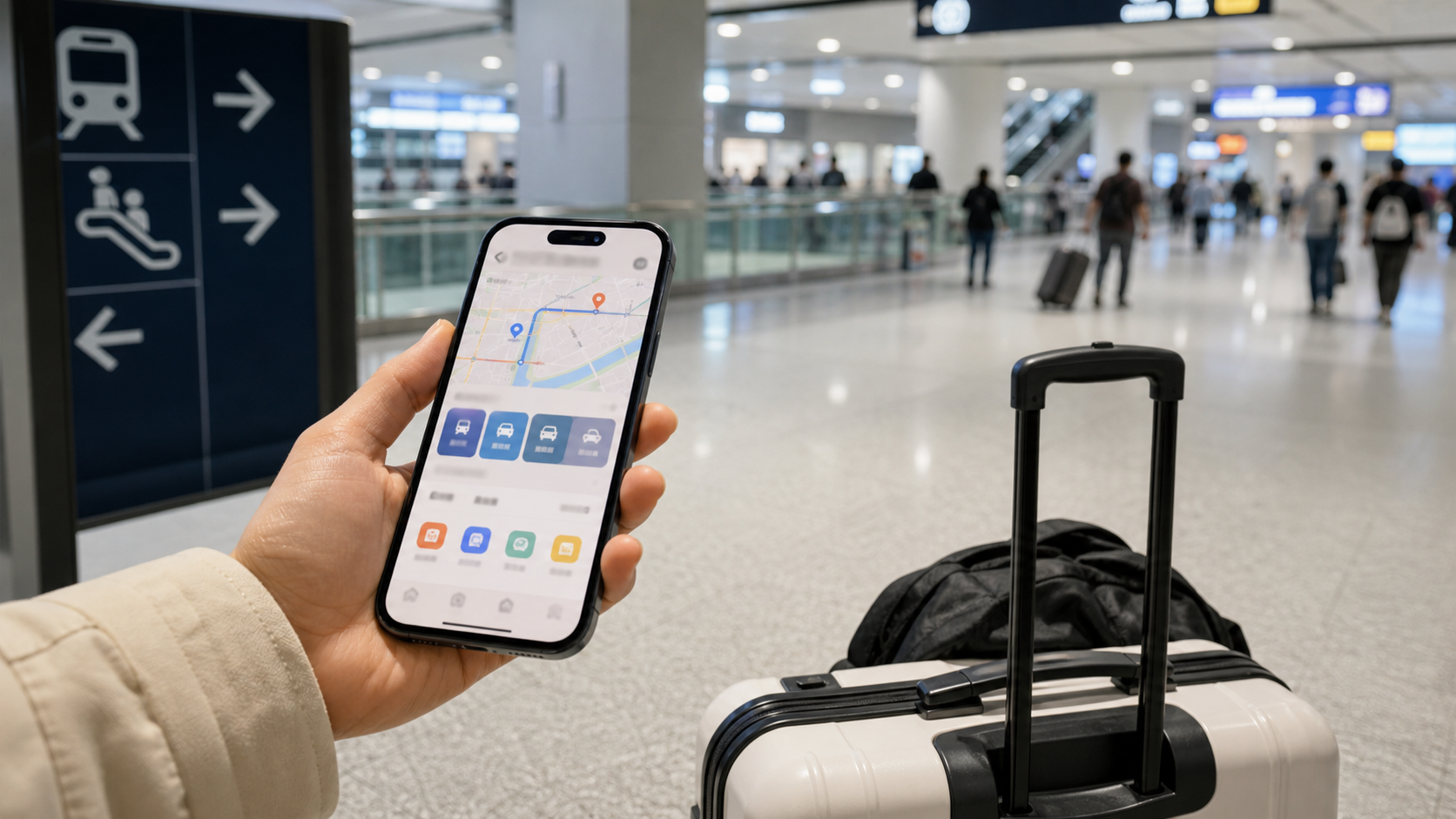
Install Alipay and WeChat before arrival if possible, add an international card, and keep some cash as a backup. Cash is legal, but small businesses often work faster with QR payment. Save your hotel name, nearby metro station, and key attractions in Chinese as well as English. In Chongqing, a route that looks short may include stairs, tunnels, overpasses, and road levels that confuse normal map logic.
| Do before you land | Why it matters here | Takes about |
|---|---|---|
| Alipay / WeChat set up with an international card | QR payment is faster than cash at small food stalls and ticket machines | 20–30 minutes at home |
| Hotel name, branch, and nearest metro station saved in Chinese | Chongqing has repeated branch names and layered street levels; a driver needs the exact one | 5 minutes |
| Key attraction names saved in Chinese | Signage is bilingual, but drivers and shop staff read the Chinese name faster | 5 minutes |
| Offline map with your 3 daily clusters pinned | Straight-line distance hides stairs, overpasses, and tunnels | 15 minutes |
| Some cash kept as backup | A payment app that fails at 22:00 is a bigger problem than a small currency-exchange fee | Airport ATM or your bank |
- Do before you land
- Alipay / WeChat set up with an international card
- Why it matters here
- QR payment is faster than cash at small food stalls and ticket machines
- Takes about
- 20–30 minutes at home
- Do before you land
- Hotel name, branch, and nearest metro station saved in Chinese
- Why it matters here
- Chongqing has repeated branch names and layered street levels; a driver needs the exact one
- Takes about
- 5 minutes
- Do before you land
- Key attraction names saved in Chinese
- Why it matters here
- Signage is bilingual, but drivers and shop staff read the Chinese name faster
- Takes about
- 5 minutes
- Do before you land
- Offline map with your 3 daily clusters pinned
- Why it matters here
- Straight-line distance hides stairs, overpasses, and tunnels
- Takes about
- 15 minutes
- Do before you land
- Some cash kept as backup
- Why it matters here
- A payment app that fails at 22:00 is a bigger problem than a small currency-exchange fee
- Takes about
- Airport ATM or your bank
Airport arrival and the first transfer
Chongqing Jiangbei International Airport sits roughly 19 km north of the city centre and connects to the city by rail transit: Terminal 3A is served by Line 10, and Terminal 2 connects to Lines 3 and 10. The wider Chongqing Rail Transit network opened in 2004 and now runs 582 km, which is why the metro, not taxis, is the dependable spine of a short trip. Check real-time terminal and flight details from the airport or airline before travel. If your flight arrives late, do less on the first night instead of forcing a full sightseeing route. Our airport to downtown transfer guide covers the arrival options in more detail.
Hotel check-in as a foreign passport holder
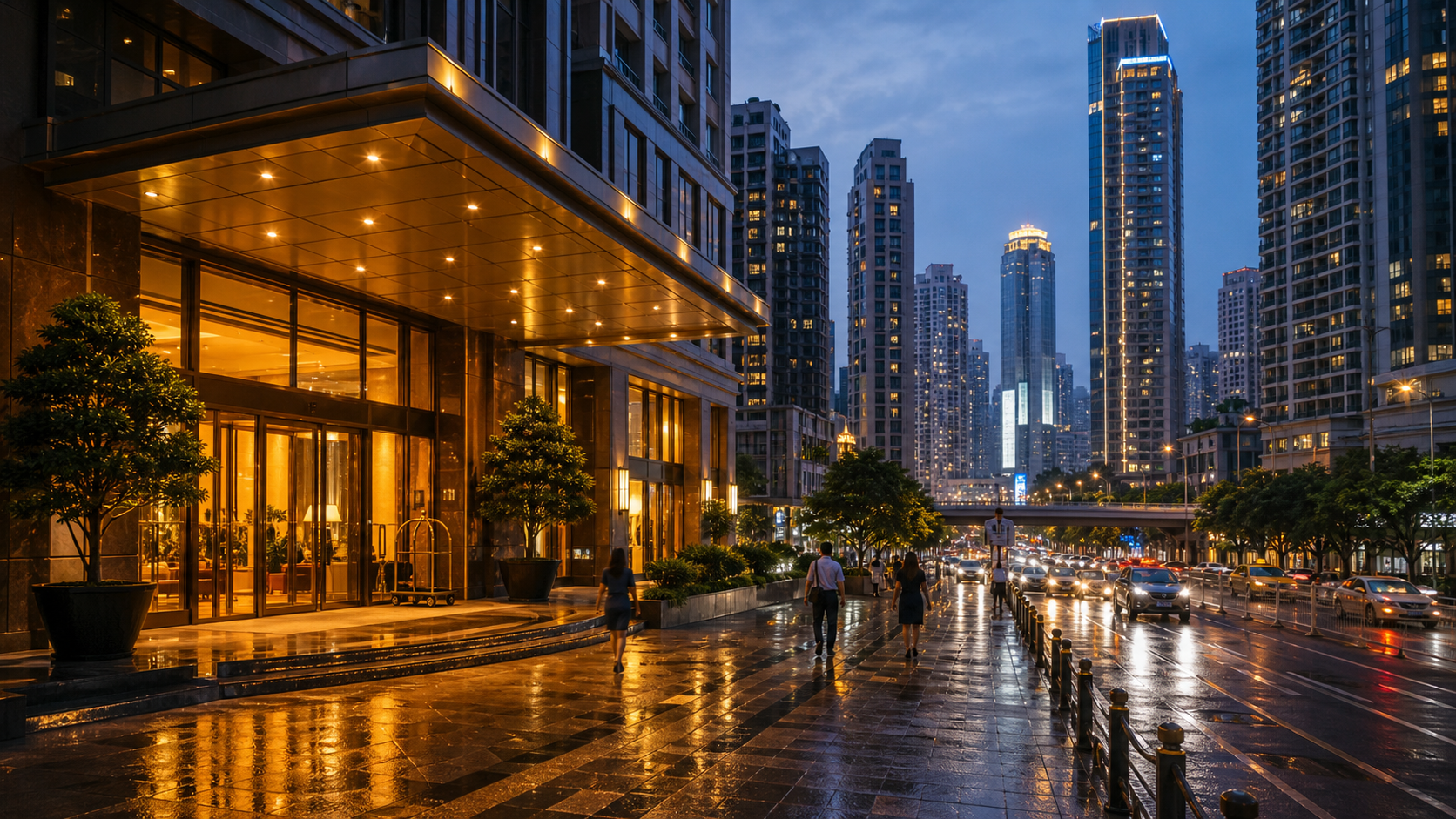
If this is your first China trip, hotel check-in matters. For a central local mid-range comparison, Walling Hotel (Jiefangbei Hongyadong) sits at No. 68 Linjiang Road in Yuzhong District, with public listings placing Linjiangmen Station around 190 m away. Compare that branch for Jiefangbei/Hongya Cave routes; the Auto Expo/Jinyu branch fits northern business or airport-side logistics better.

Day 1: Jiefangbei, Hongya Cave, and the First Night View
Afternoon: use Jiefangbei to get oriented
Start slowly. Check in, charge your phone, confirm your payment setup, then walk around Jiefangbei before sunset. Jiefangbei is not the quietest part of Chongqing, but it is the easiest orientation point. It has malls, food streets, metro access, taxis, and bright landmarks that help you understand the tourist core.
Evening: Hongya Cave from two levels, not from inside
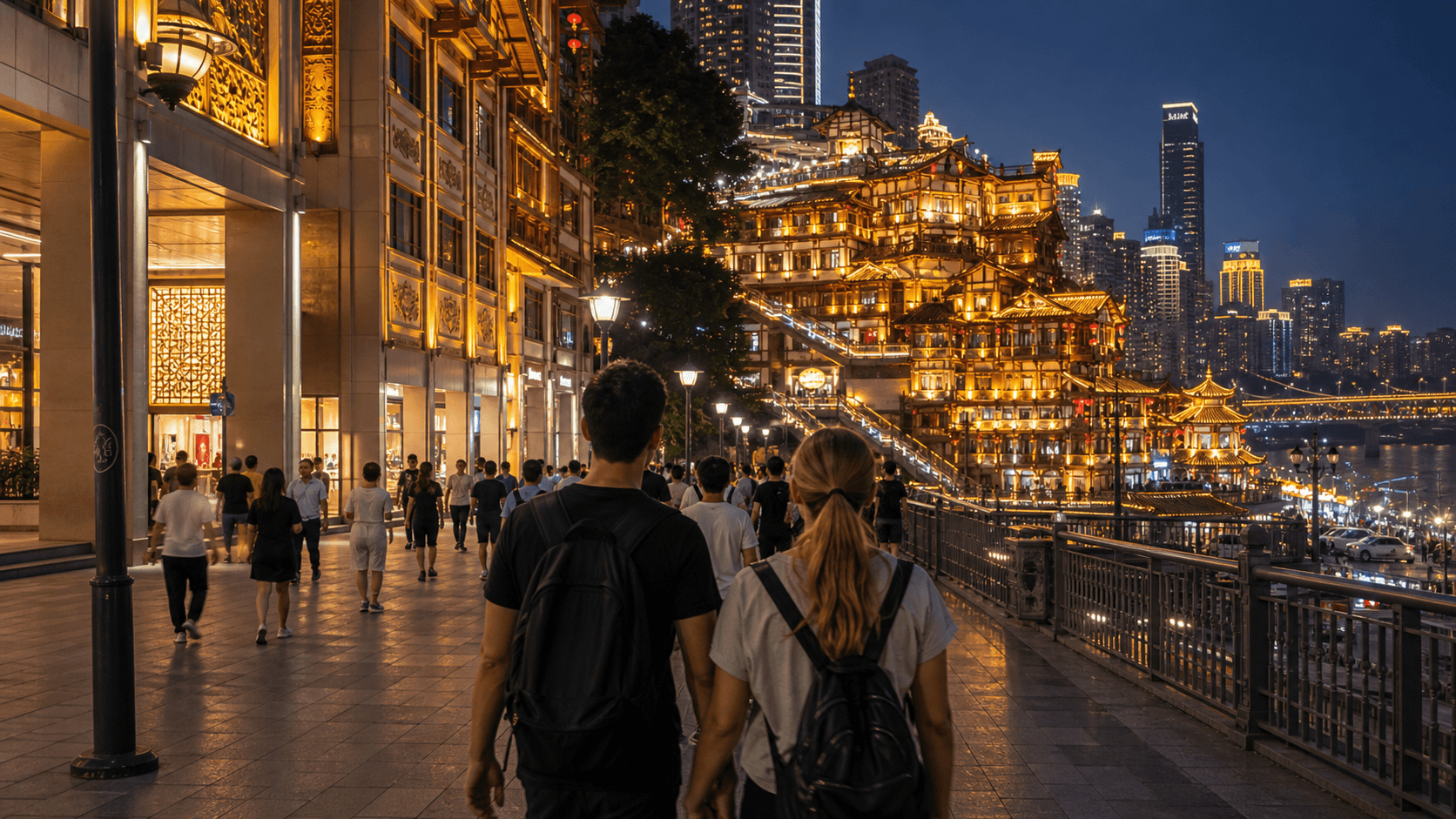
Walk toward Hongya Cave before dark, but do not spend the whole evening inside it. TravelChinaGuide describes the complex as an 11-storey, 75 m stilt building where the 1st floor and the 11th floor are reached from two different roads, and admission is free. That single fact changes the plan: you are choosing a level, not buying a ticket. The stronger memory is often from outside or across the road: stacked lights, cliff-side layers, and the feeling that the building is part of the mountain. Inside, expect snacks, souvenir shops, elevators, and crowds. Our Hongya Cave foreign visitor guide sets out the level-by-level route in full.
Dinner: keep the first meal simple
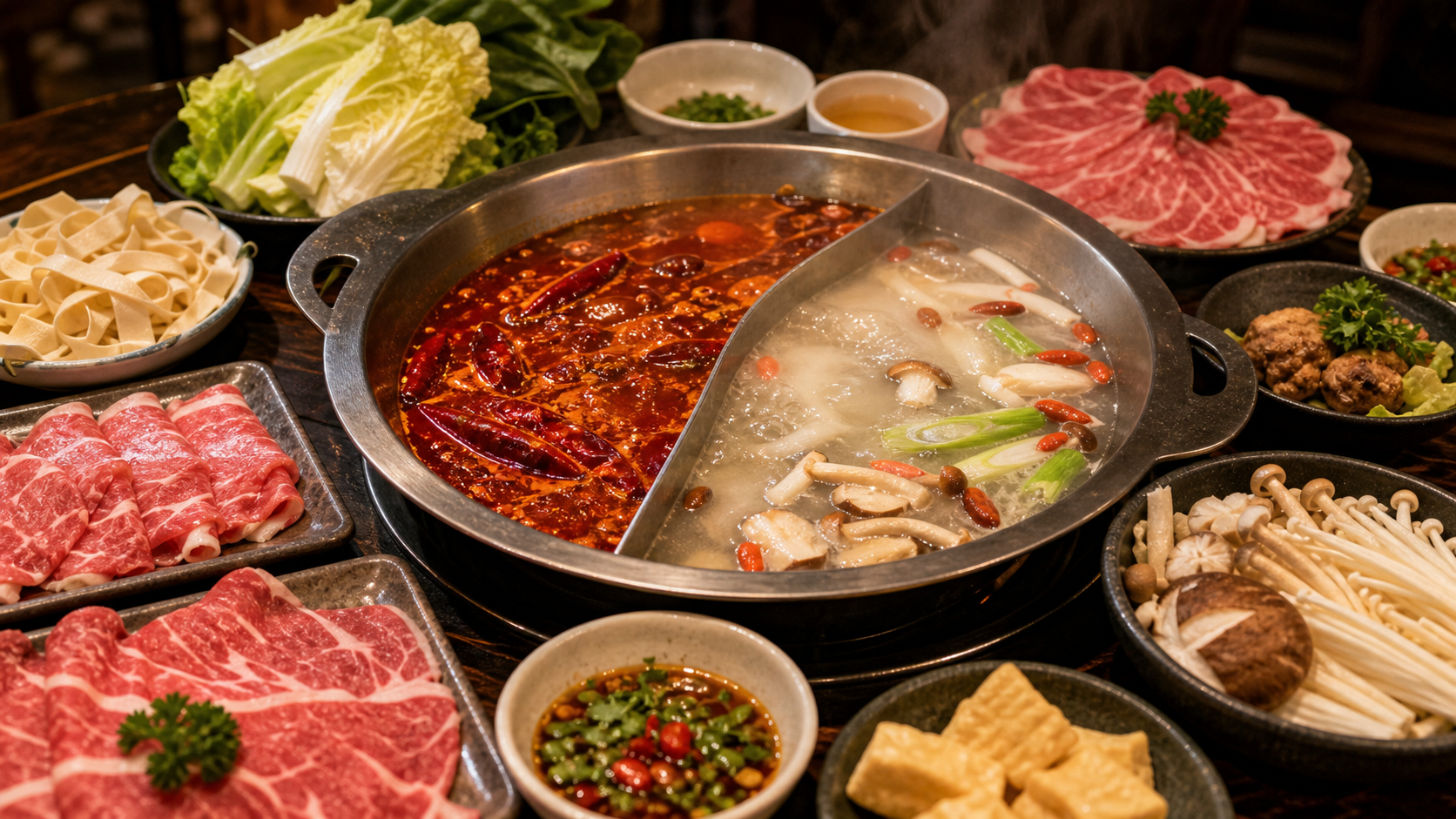
For dinner, keep the first meal simple. If you choose hotpot on night one, use a split pot and start mild. If you are tired, noodles or a mall restaurant may be the better choice. Chongqing rewards appetite, but it punishes overconfidence. The Chongqing hotpot survival guide explains the pot, the spice words, and the sauce bowl before you sit down.
Day 2: Liziba, Ciqikou, and a Food-Focused Evening
Morning: Liziba in 20–45 minutes
Use the second day for urban contrast. Liziba is a short, clear stop: watch the monorail pass through the building-like station, take photos, and leave before it eats half your day. It is one of the easier viral Chongqing spots because the viewing area is designed for visitors. Budget 20–45 minutes; the Liziba monorail viewpoint guide explains where to stand and when the stop stops being worth extra time.
Midday: Ciqikou with the right expectations
Ciqikou is historic, commercial, crowded, and still useful if expectations are right. It is a subdistrict of Shapingba District on the west bank of the Jialing River covering about 1.18 km², with records placing its founding in the reign of Emperor Zhenzong of Song (998–1004). A compact area is walkable, but a compact area full of weekend visitors is also where fatigue arrives. Do not expect a quiet old town. Expect stone lanes, snacks, tea, souvenirs, steps, and crowds. Go earlier if heat and pressure bother you. If you are traveling with older family members or children, treat walking time seriously.
Afternoon reset, then a food-focused evening
Build a hotel break into the afternoon. A rest between 3 p.m. and 5 p.m. can save the evening, especially in summer humidity or damp winter weather. Make dinner the main event: hotpot, xiaomian, Jianghu cuisine, or grilled fish.

Day 3: Cableway, Mountain-City Walking, or a Softer Exit
Option A: the Yangtze River Cableway
Your third day depends on energy. If you still want a big visual experience, consider the Yangtze River Cableway, but when the queue is reasonable. The crossing is 1,166 m and takes about 3.6 minutes between Xinhualu and Shangxinjie (Longmenhao); the ride is short compared with the wait, which is exactly why queue length should decide the plan. If waiting time is long, a bridge viewpoint or river walk may give a better memory with less standing around.
Option B: a mountain-city walking route
If you prefer walking, choose a mountain-city route in Yuzhong. The goal is not one landmark. The goal is moving through levels: a street that becomes a rooftop, a stairway that becomes a shortcut, and a metro exit that opens at a surprising height. This is where Chongqing feels least like other Chinese megacities.
If you fly out today
If you are leaving that day, reduce ambition. Pack early, eat one final bowl of noodles, and head to the airport or station with margin. Bridge and tunnel traffic can be unpredictable; metro timing is often safer if your luggage is manageable.

Where to Stay and What to Skip
Areas that work for a first trip
For most first-time foreign visitors, stay in Yuzhong around Jiefangbei, Jiaochangkou, Qixinggang, Linjiangmen, or nearby river streets. China Highlights reaches the same ordering, placing Jiefangbei ahead of Nanbin Road and Guanyinqiao for a first visit. Guanyinqiao works if shopping and nightlife matter more than classic sights. Airport hotels are for one-night transit, not a full Chongqing base. Our where to stay in Chongqing guide compares the areas in detail.
How to read a hotel listing here
Use hotel reviews carefully. Look for recent mentions of foreign passport check-in, elevator access, luggage routes, and the exact branch name. The Jiefangbei Hongyadong branch above is worth comparing when you want a Chongqing local mid-range option near Linjiangmen, but choose by branch and route, not by brand alone.
What to skip
Skip anything that crosses the city twice in one day. Also skip restaurants that are famous mainly for photos if the menu is unreadable and you are exhausted. A comfortable meal beats a stressful viral one.

Frequently Asked Questions
Q: Is 3 days enough for a first Chongqing trip?
A: Yes. Three days is enough for Jiefangbei, Hongya Cave, Liziba, one old-street area, one night view, and a serious food experience. It is not enough for every outer attraction.
Q: Should I stay near Hongya Cave?
A: Nearby can be useful, but check the exact entrance, road level, and metro route. “Near Hongya Cave” can still be awkward with luggage.
Q: Can I use the metro without Chinese?
A: Usually yes. Station names are signed in English across the 324-station network, but payment and route planning are easier if you prepare apps and Chinese place names before arrival.
Q: Is Chongqing too spicy for foreign travelers?
A: Not if you choose carefully. Start mild, use a split hotpot, and do not treat local spice levels as a challenge.
Q: Is Chongqing good for solo travelers?
A: Yes, especially if you stay central and use the metro. Solo hotpot can be harder, but noodles, small restaurants, and malls are easy.
About This Guide
This guide was substantively refreshed on 2026-07-27 after comparing a current Trip.com three-day plan, TravelChinaGuide's terrain and transport overview, the geographic grounding in Jiefangbei CBD, and a recent traveler itinerary report. On 2026-08-08 we rechecked the airport, rail-transit, Ciqikou, cableway, and Hongya Cave reference pages and added the day-by-day and pre-arrival tables from facts those pages state. Traveler discussion is directional; live weather, tickets and operating details still need trip-date checks. Existing visuals are original generated assets, and OTA photos remain internal reference material.
Traveler comments
Share a recent experience or ask a practical question about this guide.