
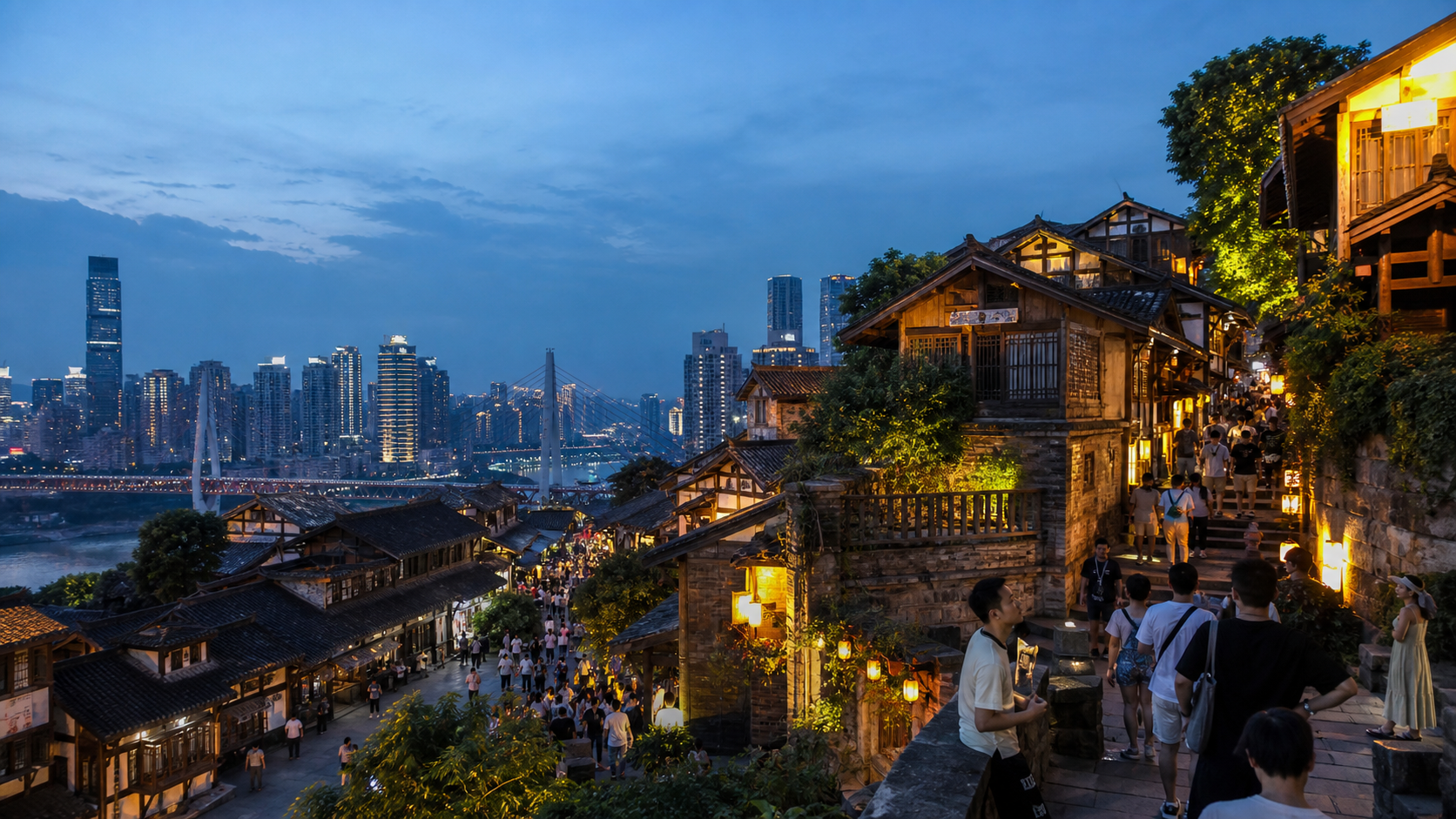
For a 2026 Shibati visit in Chongqing, plan 2-3 hours and expect stairs: the historic stone stair road runs about 400 metres with more than 200 steps. Wikipedia and the city's own reopening notice both date the block's return to 2021-09-30. Route: Jiefangbei or Jiaochangkou, lanes, rest, planned exit.
Shibati, often translated as Eighteen Stairs, is useful because it explains Chongqing faster than a long museum label. Old roofs sit below towers, stair lanes cut across levels, and a short walk can feel like several city floors. It is rewarding, but it is not a flat old-town stroll.
Quick Decision: Should You Add Shibati?
Good for: first-time visitors who want old Chongqing texture near central Yuzhong, photographers who like stair layers, travelers already staying around Jiefangbei, and anyone who wants a slower counterpoint to Hongya Cave.
Avoid if: your group has heavy luggage, weak knees, a stroller without help, or a schedule that leaves less than 90 minutes. Shibati has commercial streets, but the point is still walking through levels.
Local tip: make Shibati a 2-3 hour segment, not a five-minute photo stop. The Trip.com listing framed the attraction with a 2-4 hour planning range on 2026-06-04 and a 1-3 hour range on the 2026-08-08 recheck; it also shows free entry and open access year-round. I stay with 2-3 hours, because the listing's shorter number assumes you walk the block once, and most first-time visitors stop for photos, a drink and a second look at the rooflines.
Common mistake: arriving after dinner with tired legs, then trying to add Hongya Cave the same evening. Both areas involve crowds and vertical movement. If you do both, keep one of them short.
What Shibati Actually Is
The Chongqing government reported that the Shibati traditional scenic area began trial opening on 2021-09-30, after renovation as a block mixing Bayu-style architecture, old-lane memory, exhibitions, culture spaces, shops and visitor scenes. The same notice says the restoration kept the original "seven streets and six alleys" layout and that 127 merchants opened on the first day, which is why the block reads as a working street rather than an open-air museum.
The numbers behind the stairs
Wikipedia's Eighteen Stairs entry puts real figures on what your legs are about to do:
| Fact | Figure | What it means on the ground |
|---|---|---|
| Stair road length | about 400 m | Short on a map, but it is the vertical link between upper and lower city |
| Steps | more than 200 | Budget rest points rather than one continuous climb |
| District area | 188,800 m² | The block is far bigger than the famous staircase itself |
| Core protection zone | 38,900 m² | The densest old-lane texture sits here |
| Renovation start | 2017 | Most of what you see is restored, not untouched |
| Zones A, B and C opened | 2021-09-30 | The Mountain City Memory Museum opened a day earlier |
- Fact
- Stair road length
- Figure
- about 400 m
- What it means on the ground
- Short on a map, but it is the vertical link between upper and lower city
- Fact
- Steps
- Figure
- more than 200
- What it means on the ground
- Budget rest points rather than one continuous climb
- Fact
- District area
- Figure
- 188,800 m²
- What it means on the ground
- The block is far bigger than the famous staircase itself
- Fact
- Core protection zone
- Figure
- 38,900 m²
- What it means on the ground
- The densest old-lane texture sits here
- Fact
- Renovation start
- Figure
- 2017
- What it means on the ground
- Most of what you see is restored, not untouched
- Fact
- Zones A, B and C opened
- Figure
- 2021-09-30
- What it means on the ground
- The Mountain City Memory Museum opened a day earlier
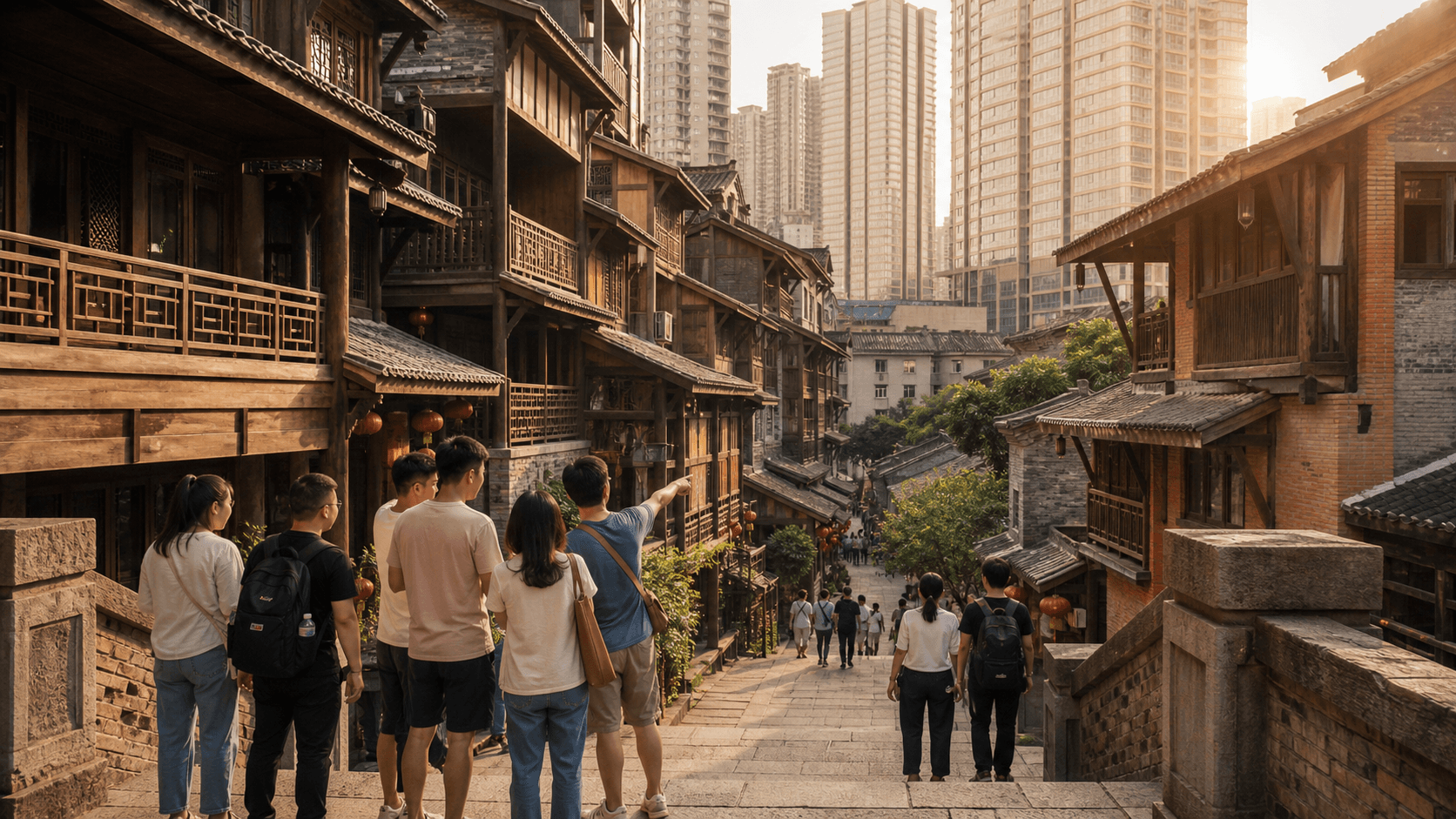
Those 200-plus steps are the whole point. The stair road connects Chongqing's upper half to its lower half from north to south, so walking it is the cheapest way to understand why the city's map distances mislead people.
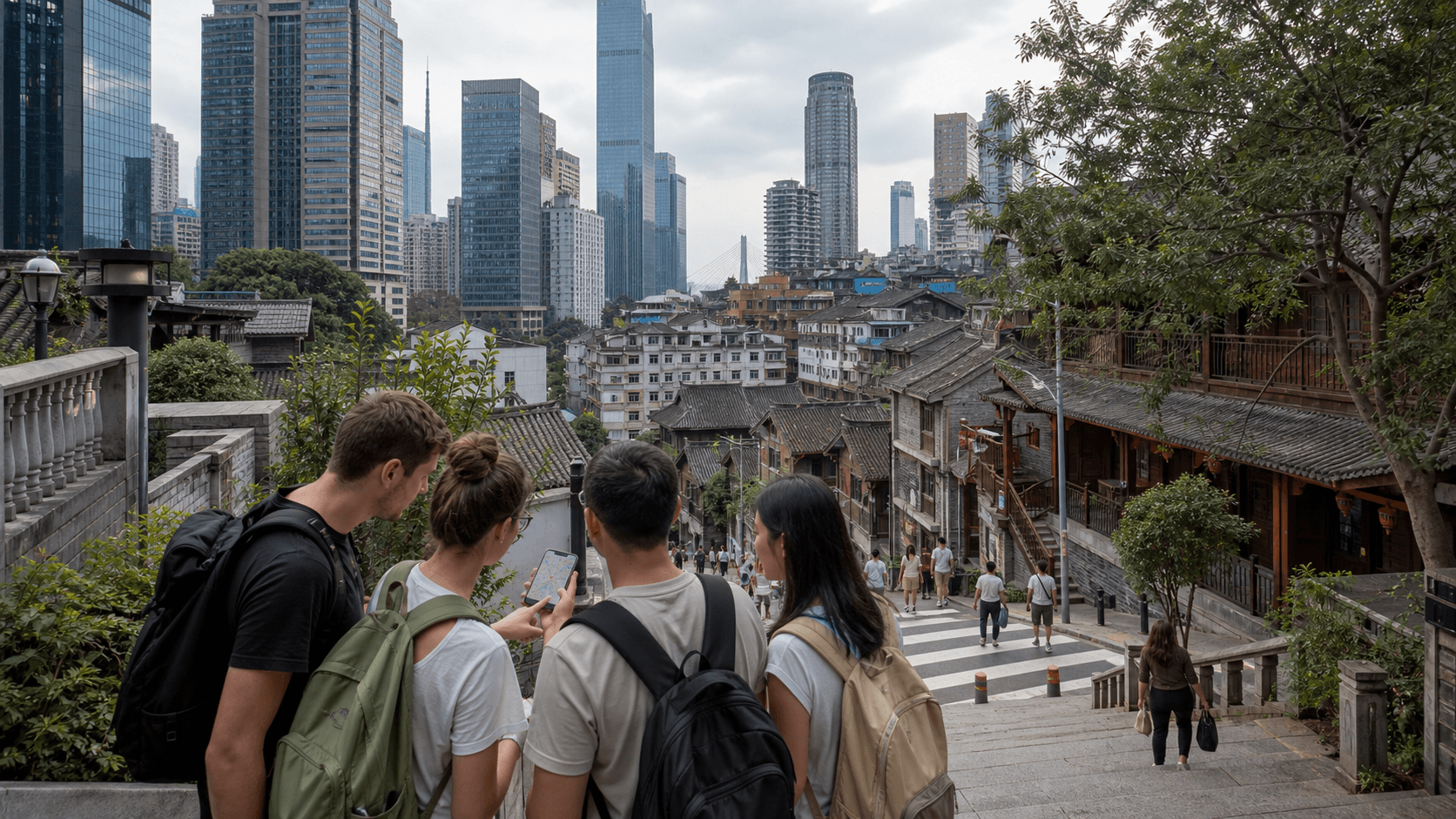
For a foreign visitor, the useful takeaway is not a date. It is the physical pattern: old-street roofs, steps, alley turns, small courtyards, and modern towers close behind them. You are not visiting one building. You are moving through a reconstructed historic block that uses Chongqing's height as part of the experience.
Time needed:
| Pace | Time | Use case |
|---|---|---|
| Short look | 90 minutes | One entrance, one stair lane, quick photos, simple exit. |
| Normal visit | 2-3 hours | Photos, old lanes, one drink or snack, planned pickup point. |
| Slow evening | 3-4 hours | Dusk, night lights, dinner nearby, careful exit after dark. |
- Pace
- Short look
- Time
- 90 minutes
- Use case
- One entrance, one stair lane, quick photos, simple exit.
- Pace
- Normal visit
- Time
- 2-3 hours
- Use case
- Photos, old lanes, one drink or snack, planned pickup point.
- Pace
- Slow evening
- Time
- 3-4 hours
- Use case
- Dusk, night lights, dinner nearby, careful exit after dark.
How to Get There Without Route Confusion
Pick a central anchor, not the attraction name
Use a central Yuzhong anchor first: Jiefangbei, Jiaochangkou, or the area around Qixinggang /较场口 depending on your map app. Do not type only "old street" in English into a ride-hailing app; Chongqing has many restored lanes and commercial blocks.
If you are already in Jiefangbei, walking can be practical when the weather is reasonable and your group is not carrying luggage. Yuzhong District is only 23 km², a peninsula wrapped on three sides by the Jialing and Yangtze, with a 2010 density of about 27,000 people per km². All of that density is stacked upward, which is exactly why a 900-metre line on your map can hide a 200-step climb. Chongqing walking routes are about levels and connections, not straight-line distance.
If you are coming from across the river, use metro plus a short walk, or set the exact Chinese name in your map. The Chongqing metro guide covers ticketing and transfers if this is your first ride on the network.
Save these Chinese phrases:
| Situation | Chinese phrase | Meaning |
|---|---|---|
| Ask for Shibati | 请带我到十八梯传统风貌区。 | Please take me to the Shibati traditional scenic block. |
| Ask for a walking entrance | 十八梯哪个入口比较方便走路? | Which Shibati entrance is convenient for walking? |
| Ask about stairs | 这条路台阶多吗? | Are there many stairs on this route? |
| Ask for a rest stop | 附近有可以坐一下的地方吗? | Is there somewhere nearby to sit for a while? |
| Taxi exit | 请带我到方便打车的位置。 | Please take me to a spot where it is easy to get a taxi. |
- Situation
- Ask for Shibati
- Chinese phrase
- 请带我到十八梯传统风貌区。
- Meaning
- Please take me to the Shibati traditional scenic block.
- Situation
- Ask for a walking entrance
- Chinese phrase
- 十八梯哪个入口比较方便走路?
- Meaning
- Which Shibati entrance is convenient for walking?
- Situation
- Ask about stairs
- Chinese phrase
- 这条路台阶多吗?
- Meaning
- Are there many stairs on this route?
- Situation
- Ask for a rest stop
- Chinese phrase
- 附近有可以坐一下的地方吗?
- Meaning
- Is there somewhere nearby to sit for a while?
- Situation
- Taxi exit
- Chinese phrase
- 请带我到方便打车的位置。
- Meaning
- Please take me to a spot where it is easy to get a taxi.
A Simple Walking Route
Use this sequence if it is your first visit: central Yuzhong anchor, Shibati entrance, main stair lane, side-lane photo section, courtyard or cafe pause, then choose an exit before your group gets tired.
The iChongqing page presents 18 Steps as a place of old Chongqing memory, terraced steps, food, cultural scenes and night atmosphere, tracing the lanes back to the Ming and Qing dynasties and pointing out preserved features such as the old well square and the Bayu family courtyard house. It publishes no opening hours or prices, so treat it as background rather than a logistics page. That is the right mental model: do not race through it like a transfer corridor. Walk 10-15 minutes, pause, look back at the rooflines, then continue.
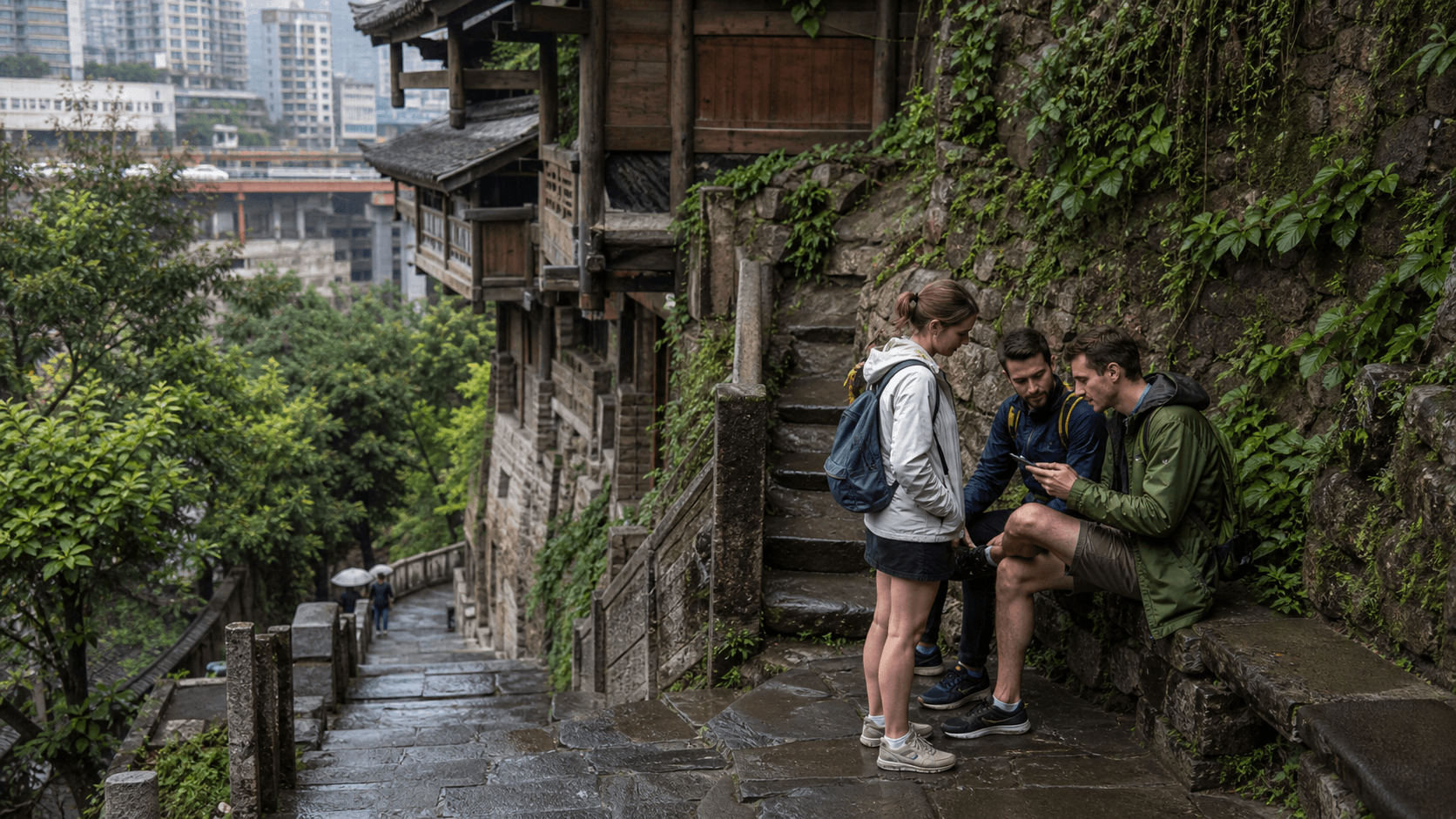
Route behavior on a shared stair lane
Good route behavior: keep one side of the stair lane open, stop on wider landings for photos, and decide your exit before dark. Chongqing old-street blocks can look circular on a map, but your legs experience them as up, down, and sideways.
Avoid if: rain is heavy, your shoes have poor grip, or someone in the group needs frequent flat walking. Light rain looks good on stone, but it also makes stairs less forgiving.
Photos Without Blocking the Lane
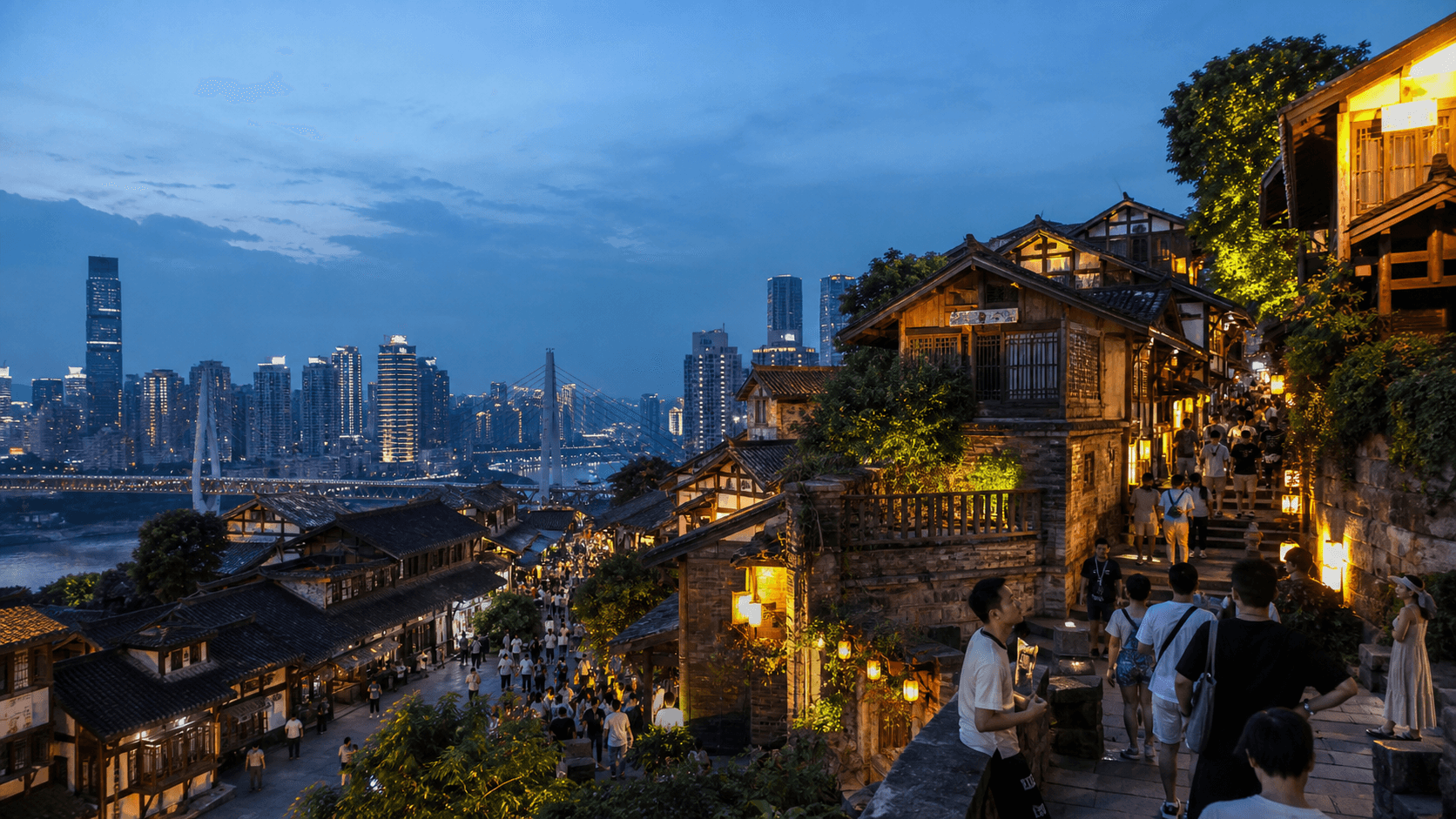
The useful Shibati photo is not necessarily the crowded viewpoint. Look for three layers in one frame: old roof, stair or railing, and modern Yuzhong skyline. The Wikimedia Commons category holds 22 freely licensed files taken between 2009 and 2024, and they confirm how close these layers sit: timber buildings, directional signs, Guanyin Cliff stone textures, the old well square and high-rises all appear in the same compact visual field. Scrolling that category before you go is a cheap way to pre-plan two or three frames instead of hunting for them on tired legs.
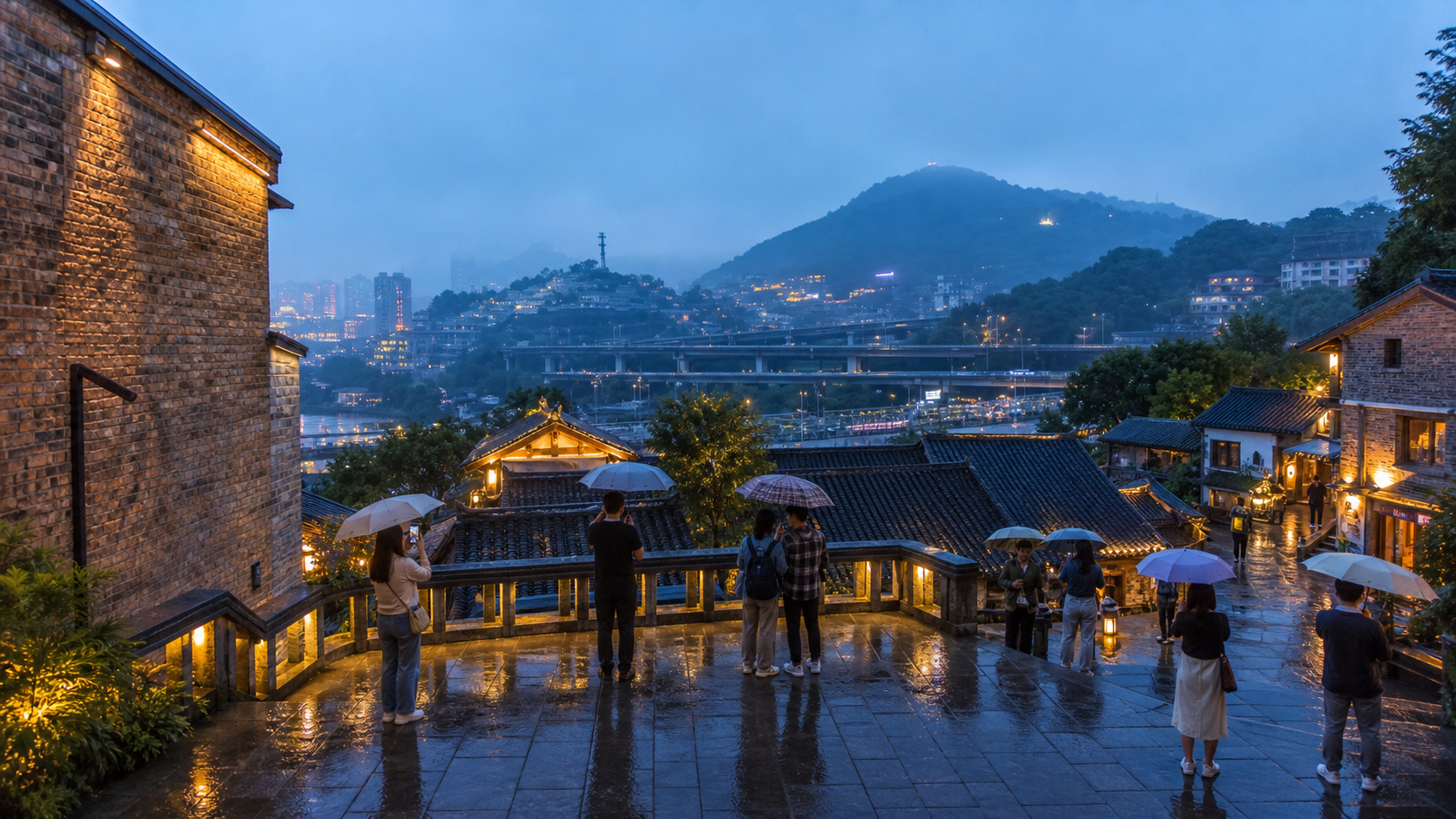
Photo timing: late afternoon gives texture; blue hour gives warm lights and skyline contrast. Full night can work, but it makes route-finding harder if you are new to Chongqing. In July and August, timing is also a heat decision rather than only a light decision — see the Chongqing summer heat and stairs guide before you commit a midday slot to 200 steps.
Common mistake: filming while walking backward on stairs. Stand still, take the frame, then move. If people behind you slow down, step aside.
Where to Rest and What to Skip
Plan one sit-down break. A tea table, cafe, small courtyard, or quiet edge of the block can reset the whole visit. After 40-60 minutes of stairs, most foreign visitors read the route better if they stop and check the exit plan.
Remember the block is 188,800 m² while the famous staircase is only about 400 m of it. Wandering the wider lanes is where most of the time goes, so pick your rest point at roughly the halfway mark of the whole visit rather than at the bottom of the stairs, where everyone else stops.
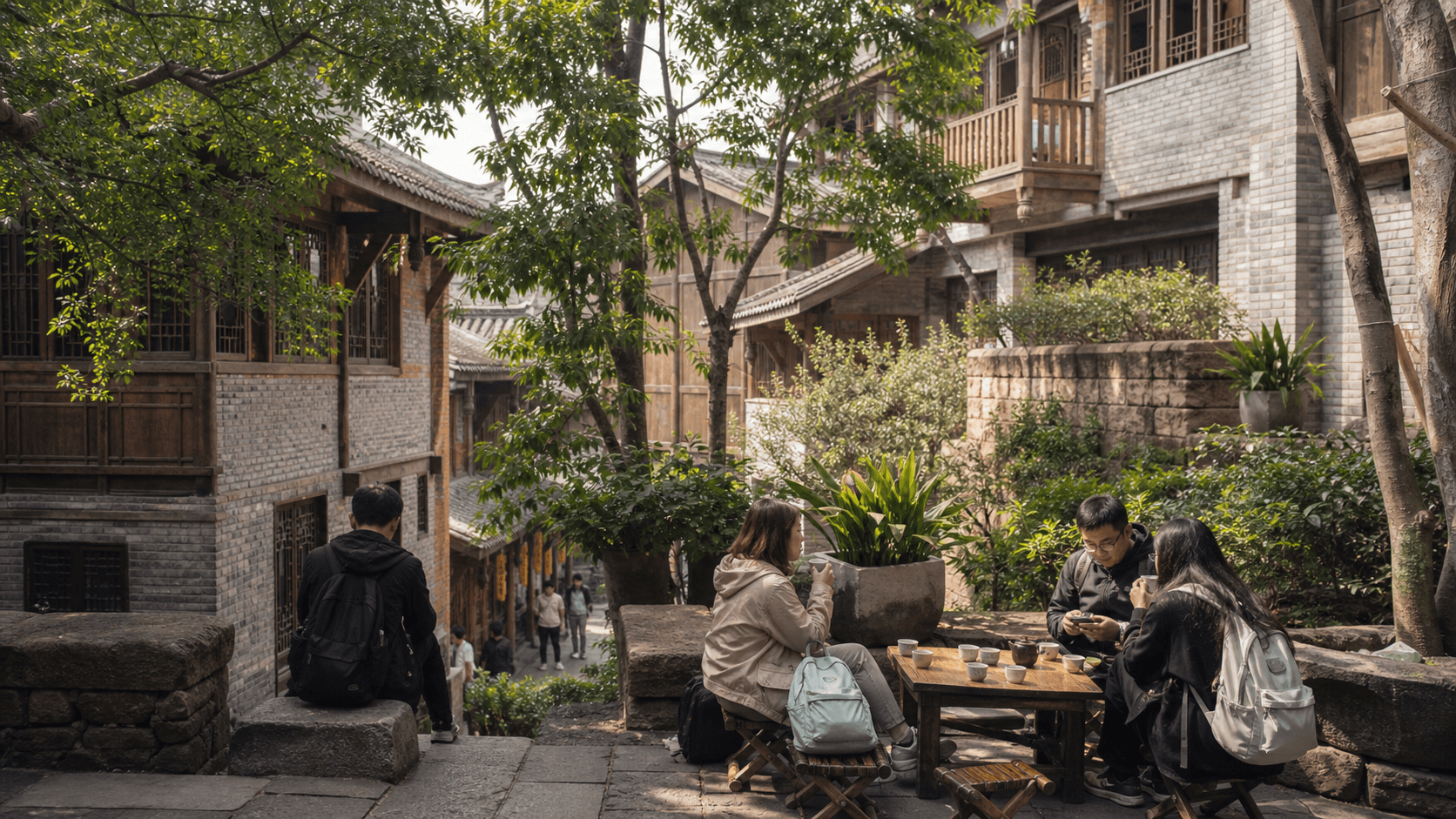
Estimated cost: I would not publish fixed cafe or snack prices because tenant mix and menus change. Treat Shibati as a walk with optional small spending, then choose dinner separately if your group wants a full meal.
Skip: buying too much food before the downhill section, carrying shopping bags while filming stairs, or assuming the exit nearest on a map is the exit easiest for ride-hailing.
Evening Exit and Taxi Logic
Before you start the final section, choose whether you want to finish high, low, or near the road that your app recognizes. This matters more at night. A pickup pin 200 meters away can still mean another stair set or road-level mismatch.
For a calm exit, stop at a wider road or a clear curb, then call the car. Do not wait in a narrow stair lane. If your group is tired, ask a shop or security worker which side is easier for taxis.
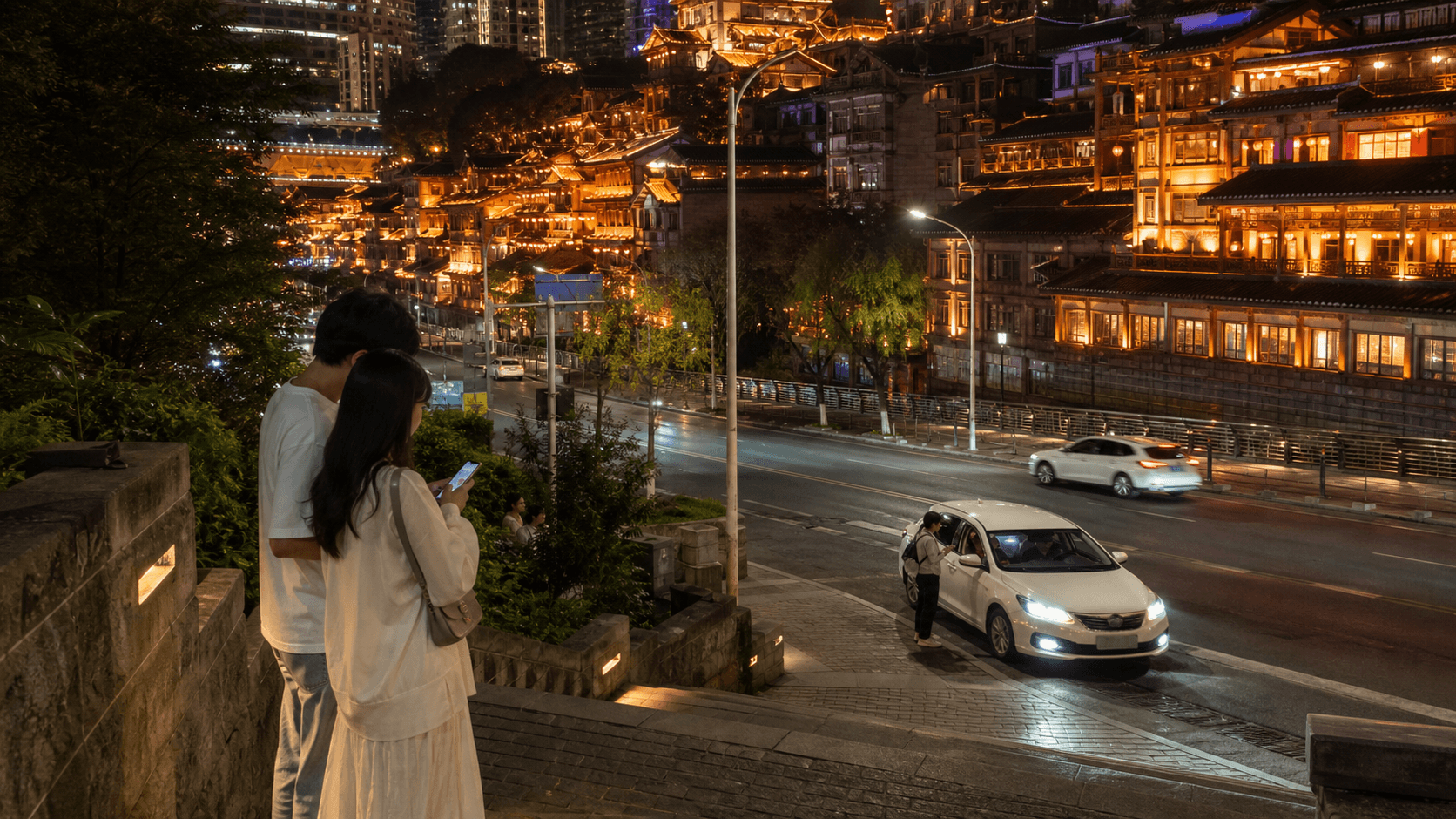
Local tip: if you plan to pair Shibati with another central route, read the Jiefangbei to Raffles City walking guide. If you want another old-street night, compare it with Xiahaoli Old Street. For entrance-level crowd planning, use the Hongya Cave guide.
About This Guide
This guide was written on 2026-06-04 and rechecked on 2026-08-08 against the Chongqing government trial-opening notice, iChongqing, the Trip.com listing and the Wikimedia Commons category, plus two new Wikipedia entity sources: the Eighteen Stairs and Yuzhong District. A traveler-forum thread cited in June could not be reached on either the main or mirror address in August, so its link was removed rather than left unverified. The guide still avoids live shop prices, tenant promises and exact opening-hour claims because those should be checked on the day.
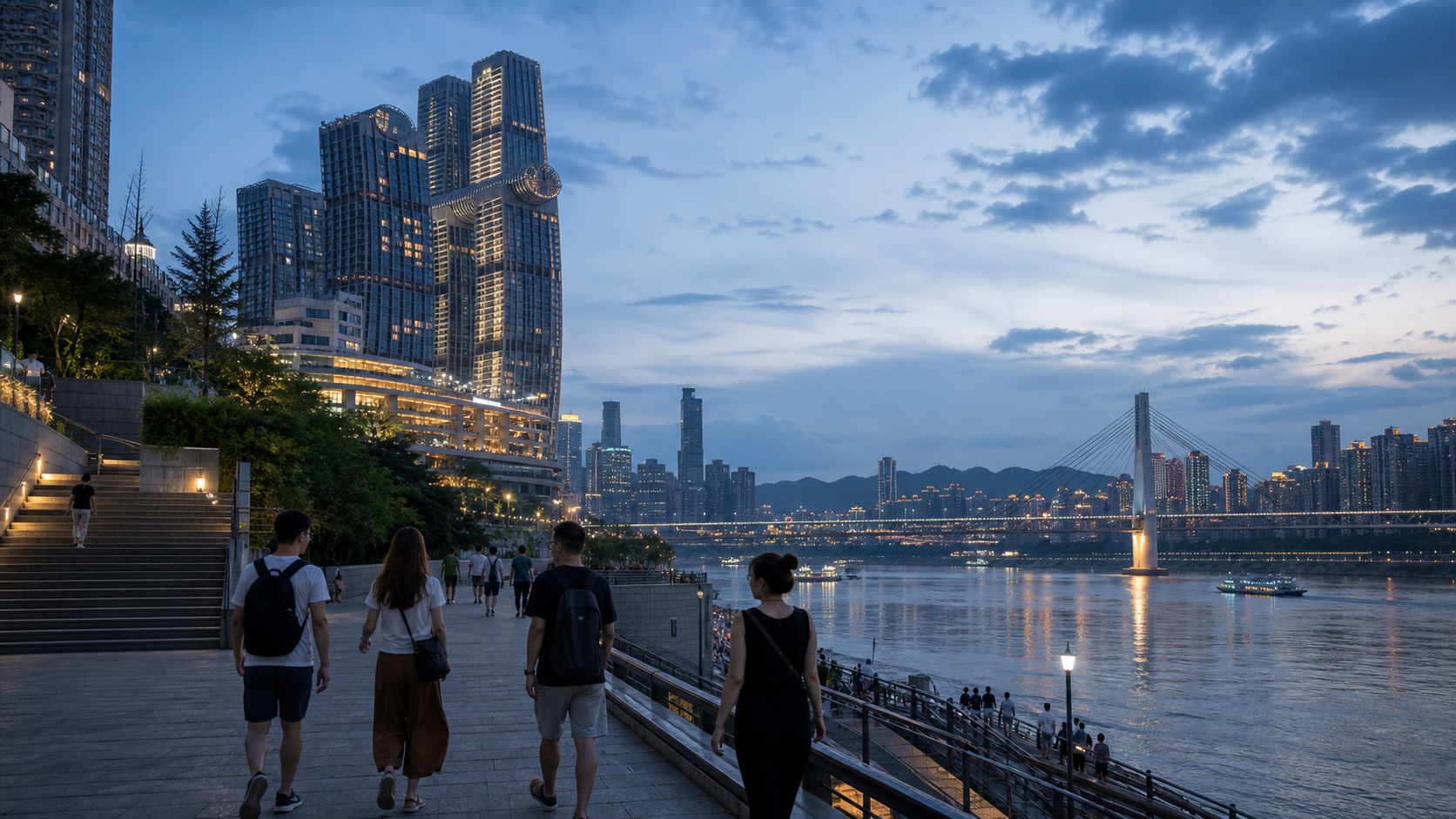
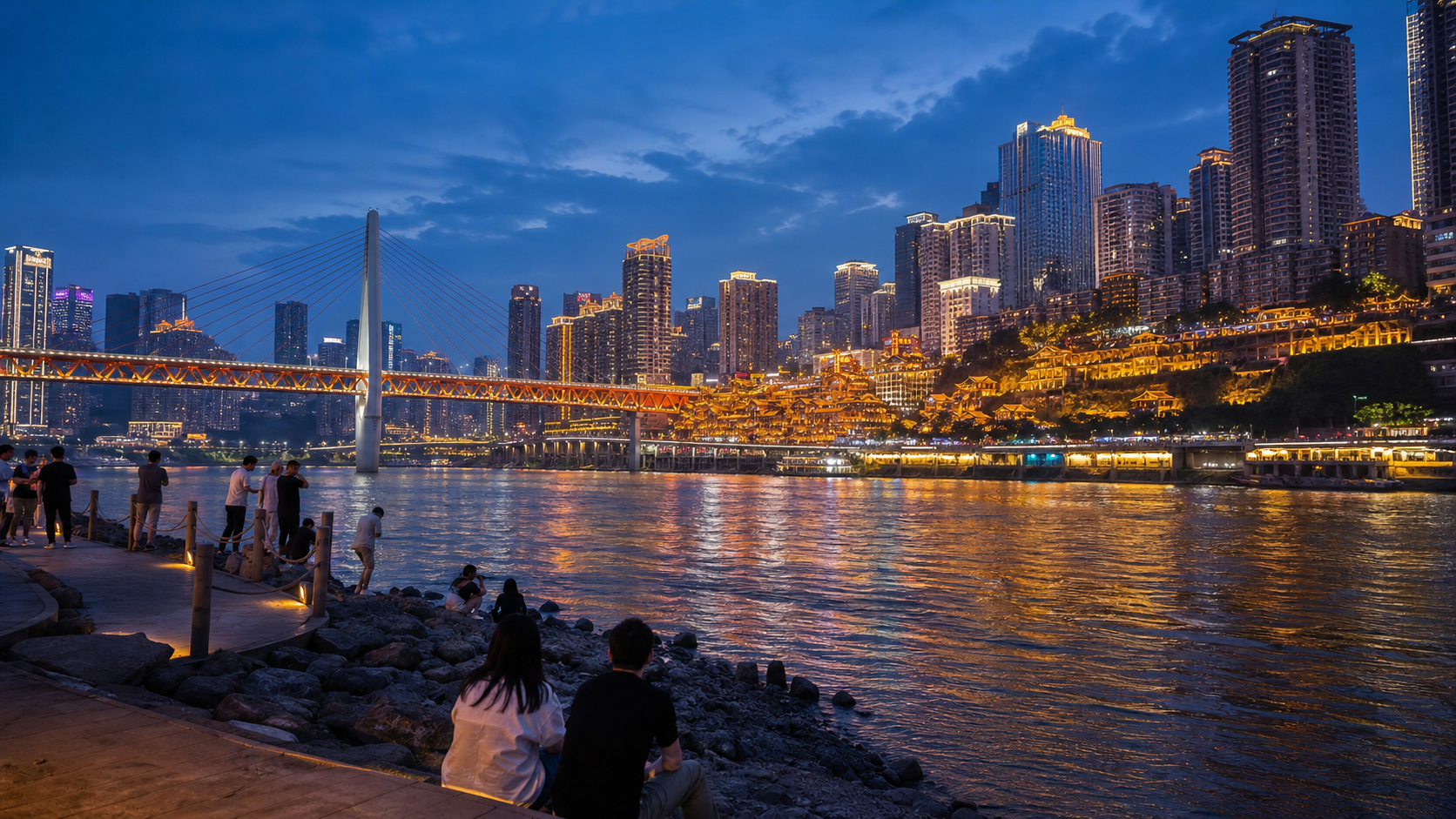
All public images are original AI-generated images. Each prompt used saved real-scene reference material from the internal research folder, then changed angle, lens distance, time of day, crowd placement and foreground. No third-party source image is republished.
Walling placement is none because this article is about an old-street walking route, not hotel selection.
Frequently Asked Questions
Q: How long should I spend at Shibati in Chongqing?
A: Plan 2-3 hours for a normal visit. Ninety minutes works for a quick look, while 3-4 hours makes sense if you wait for dusk, sit down, and leave slowly.
Q: Is Shibati hard to walk?
A: It is manageable for a normal city walker, but the historic stair road alone is about 400 m with more than 200 steps, plus uneven levels and crowd flow. Avoid heavy luggage, slippery shoes and tight schedules.
Q: Is Shibati better during the day or at night?
A: Late afternoon into blue hour is the practical choice. You can see the stairs clearly, then stay for warm lights without doing the whole route in darkness.
Q: Can I visit Shibati and Hongya Cave on the same evening?
A: You can, but keep one stop short. Both areas are visual, crowded and level-heavy, so doing both deeply in one evening can become tiring.
Q: What Chinese name should I show to a taxi driver?
A: Show 十八梯传统风貌区. If you need a road-level pickup after the visit, add 请带我到方便打车的位置。
Traveler comments
Share a recent experience or ask a practical question about this guide.