
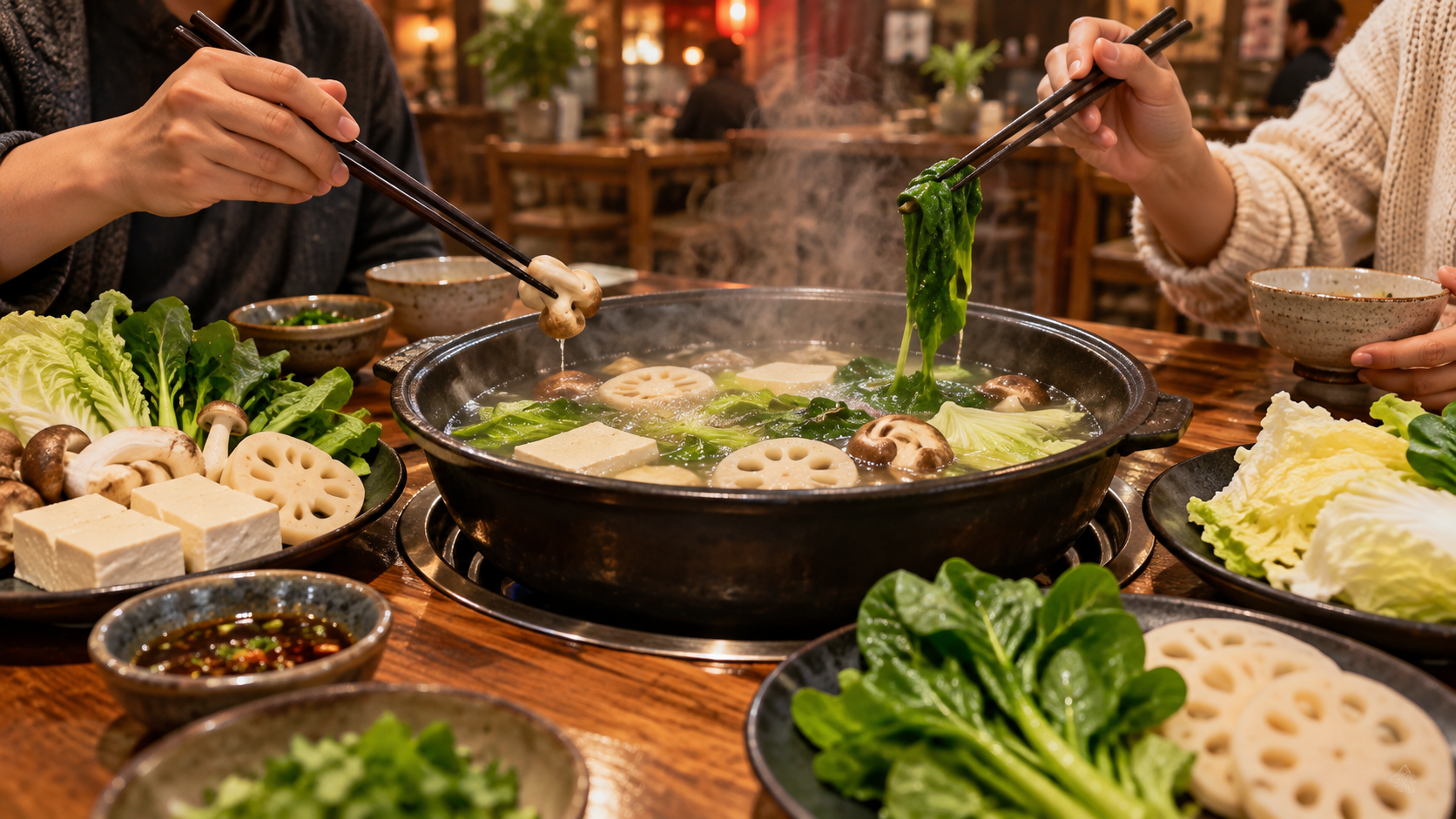
For vegetarian and vegan food in Chongqing in 2026, check 3 things before ordering: broth, cooking fat and toppings. Our review of visitor accounts and food guides supports asking about each ingredient explicitly. Start with a restaurant that can explain its recipe, carry a Chinese request, and keep a second meal option available.
Say Which Diet You Mean
“Vegetarian” and “vegan” are not interchangeable. If you do not eat meat or fish but do eat eggs or dairy, say so. If you avoid all animal products, mention eggs, dairy, fish sauce, oyster sauce, lard and beef tallow explicitly. If you have a food allergy, this guide is not a safety guarantee; tell staff the allergen, ask about cross-contact and follow your own medical guidance.
| What to ask about | Chinese | Why it matters |
|---|---|---|
| No meat or seafood | 不要肉、海鲜和肉末。 | “Vegetable” dishes can contain a small meat topping. |
| No animal stock | 不要骨汤、肉汤。 | Clear or pale broth is not automatically vegetable stock. |
| No animal oil | 不要牛油、猪油。 | A hotpot base or stir-fry may use tallow or lard. |
| No animal sauce | 不要蚝油、鱼露、虾皮。 | Sauce and seasoning can be easy to miss. |
- What to ask about
- No meat or seafood
- Chinese
- 不要肉、海鲜和肉末。
- Why it matters
- “Vegetable” dishes can contain a small meat topping.
- What to ask about
- No animal stock
- Chinese
- 不要骨汤、肉汤。
- Why it matters
- Clear or pale broth is not automatically vegetable stock.
- What to ask about
- No animal oil
- Chinese
- 不要牛油、猪油。
- Why it matters
- A hotpot base or stir-fry may use tallow or lard.
- What to ask about
- No animal sauce
- Chinese
- 不要蚝油、鱼露、虾皮。
- Why it matters
- Sauce and seasoning can be easy to miss.
I would show one complete request to staff before ordering rather than hope a menu category explains my diet. A local visitor discussion describes unexpected minced pork in a vegetable dish. That is one account, not proof that every restaurant uses it; it is a reason to ask.
Hotpot: Choose the Base Before the Vegetables
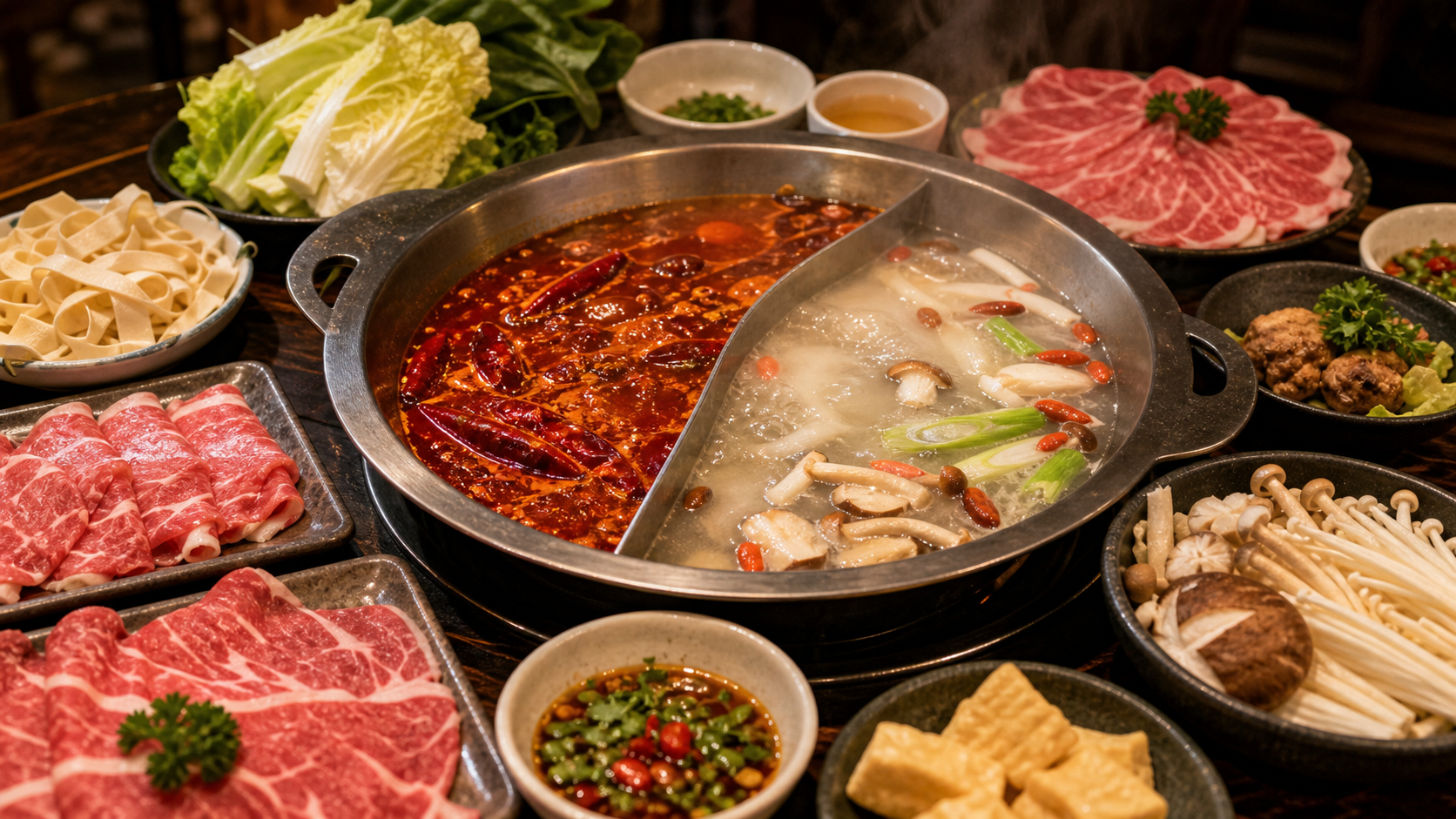
The Chongqing food guide warns that a spicy hotpot base may use beef tallow. A red, mushroom or clear-looking pot tells you very little about its stock. Ask 这个锅底有牛油、猪油、骨汤或海鲜吗? (“Does this hotpot base contain beef tallow, lard, bone stock or seafood?”). Then ask whether the restaurant can prepare a separate plant-based base that fits your restrictions. If the answer is unclear, choose another meal.

Order vegetables, tofu, mushrooms and lotus root after confirming broth and sauces. Shared tongs and split pots can still transfer ingredients across compartments. I would not promise that a divider solves strict vegan or allergy concerns. The hotpot survival guide covers ordering rhythm and spice; this page covers the ingredient questions it cannot resolve from a menu photo.
Noodles and Stir-Fries Can Hide Animal Ingredients
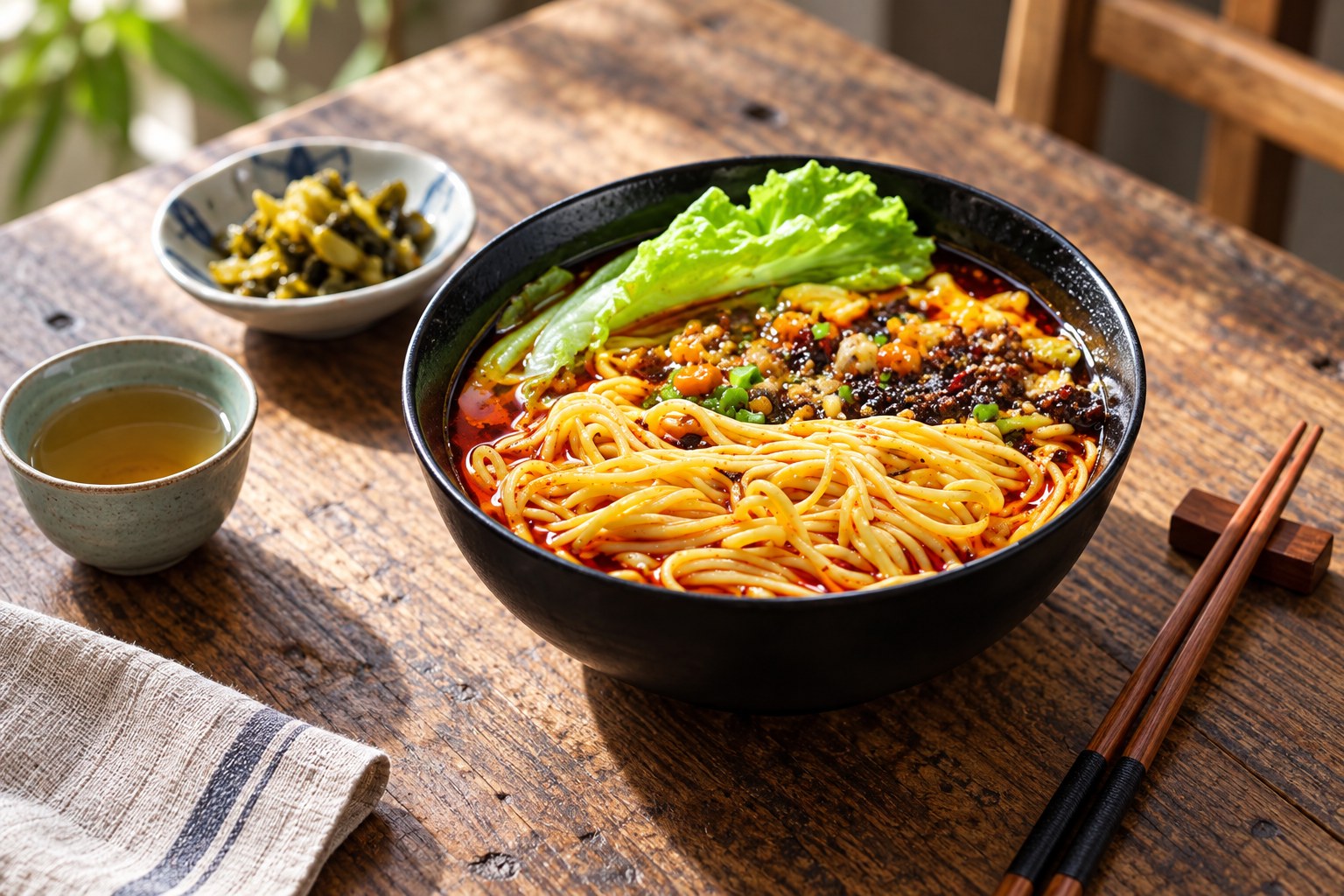
Chongqing noodles can arrive with minced meat, meat stock, lard or mixed sauces even when the main topping looks plant-based. I would ask about the soup, topping and oil separately. For a dry noodle dish, check the sauce as well. A general China vegetarian guide lists hidden broth and animal sauces as common communication friction; it is not evidence that any named Chongqing stall is safe.

Try 这碗面有肉末、骨汤或猪油吗? (“Does this bowl of noodles have minced meat, bone stock or lard?”). If your request is strict, add 如果不能做,请直接告诉我。 (“If you cannot make it this way, please tell me directly.”) That sentence is useful: it gives staff permission to say no instead of guessing.

For stir-fries, a plate of greens can still use oyster sauce, lard or small dried shrimp. Do not assume 素菜 on a menu fully defines your version of vegetarian. Ask the cook or server to confirm the actual recipe. If communication breaks down, use a translation app but keep the Chinese ingredient terms visible.
A Simple Order and a Backup
For a relaxed meal, I would choose rice, one vegetable dish and tofu, then verify cooking oil, sauce and stock before confirming the order. This is a decision process, not a list of guaranteed vegan dishes. Another option is a dedicated vegetarian restaurant, but even there I would confirm ingredients that matter to me, especially egg, dairy and shared utensils. Current restaurant listings and opening status change, so check today's menu and reviews rather than relying on a saved recommendation.

Show this full message if you are vegan: 我吃纯素,不吃肉、鱼、海鲜、蛋、奶。请不要用牛油、猪油、骨汤、蚝油或虾皮。如果做不到,请告诉我。 In English: “I eat vegan food: no meat, fish, seafood, egg or dairy. Please do not use beef tallow, lard, bone broth, oyster sauce or dried shrimp. If that is not possible, please tell me.” Keep the message on your phone offline. Make payment plans separately with the payment guide.
Build a Meal Plan Around Your Actual Route
I would save 2 possible food stops near the day's main area, then verify them before becoming hungry. A dedicated vegetarian listing is a starting point for a conversation, not confirmation that the kitchen fits every diet. Check recent opening information, the correct branch and whether you can identify a suitable order. A restaurant across the city can be a poor practical choice even when its menu looks promising.
The Chongqing visitor discussion includes travelers using vegetarian directories to find options around Yuzhong. I would use those results as leads, then ask the business directly about the ingredients important to me. An old review of one dish cannot approve every item or another branch. A translated menu helps you ask a better question; it does not replace the answer.
For a family or mixed-diet group, agree whether to share a meal or order individually before sitting down. The vegan traveler should not be left negotiating a different stock after the table has already ordered a shared hotpot. Check the restrictive order first, then build everyone else's meal around what the restaurant can prepare. This reduces the chance of paying for a meal someone cannot eat.
A Two-Stage Conversation With Staff
Use 2 stages: establish what can be made, then confirm the chosen dish. I would show the complete Chinese diet message, let staff read it, and ask which menu item fits. After selecting, repeat the ingredients you exclude. A short written request is easier to follow than several unfamiliar dietary labels at once.
| Moment | Chinese phrase | Meaning |
|---|---|---|
| Before ordering | 可以请厨房确认一下配料吗? | Could the kitchen check the ingredients? |
| Cooking oil | 请用植物油,不用动物油。 | Please use plant oil, not animal fat. |
| Sauce | 酱料里有蚝油、鱼露或虾皮吗? | Does the sauce contain oyster sauce, fish sauce or dried shrimp? |
| Vegan clarification | 鸡蛋和奶也不要。 | No eggs or dairy either. |
| Uncertain answer | 如果不确定,我换一道菜。 | If it is uncertain, I will choose another dish. |
- Moment
- Before ordering
- Chinese phrase
- 可以请厨房确认一下配料吗?
- Meaning
- Could the kitchen check the ingredients?
- Moment
- Cooking oil
- Chinese phrase
- 请用植物油,不用动物油。
- Meaning
- Please use plant oil, not animal fat.
- Moment
- Sauce
- Chinese phrase
- 酱料里有蚝油、鱼露或虾皮吗?
- Meaning
- Does the sauce contain oyster sauce, fish sauce or dried shrimp?
- Moment
- Vegan clarification
- Chinese phrase
- 鸡蛋和奶也不要。
- Meaning
- No eggs or dairy either.
- Moment
- Uncertain answer
- Chinese phrase
- 如果不确定,我换一道菜。
- Meaning
- If it is uncertain, I will choose another dish.
Ingredient terms appear in the food guide and general ordering reference; the conversation sequence is our editorial suggestion. Avoid assuming a nod answers several questions at once. If the server needs to ask the kitchen, give them that opportunity. If a prepared base cannot be changed, accept the answer and choose another option.
Do not use an allergy claim as shorthand for a preference you do not have. An actual allergy requires separate communication and your established advice. This article does not certify kitchens or handling practices. Neither a reassuring photograph nor a Chinese sentence establishes a meal's safety.
Shared Tables and Separate Needs
At a shared hotpot table, check 3 decisions: which stock is acceptable, how ingredients enter the pot and which utensils everyone uses. I would explain my preference to companions before ordering. A divided pot is a design feature, not evidence that food on one side stays separate.
Dipping sauces need the same attention as broth. Ask about a prepared mixture rather than judging its color. If staff cannot explain a sauce, request a simpler confirmed combination or leave it out. Check packaged snacks individually too: an adapted restaurant dish does not establish the ingredients of a packaged version sold at the counter.
For Malaysian and Indonesian visitors, vegetarian food and halal requirements answer different questions. Vegetables do not establish halal preparation or certification. For Thai travelers, familiar-looking sauces can still need an ingredient check. For Japanese and Korean travelers, a light-looking stock can still contain animal ingredients. These are reasons to communicate your personal requirements, not assumptions about anybody's diet.
Keep One Backup Meal
Keep 1 fallback meal or a familiar packaged snack whose label you can assess. I would arrange it before a long attraction visit so food is a planned part of the day. If the first restaurant cannot meet your request, move to the saved alternative while there is time. Repeatedly removing a visible topping does not resolve uncertainty about a prepared recipe.
Separate spice from ingredients: 不要辣椒 asks for no chili, while avoiding animal stock needs another sentence. A mild dish is not necessarily vegetarian, and vegetarian food need not be mild. The xiaomian guide covers noodle ordering; this page supplies the broth and fat questions. Save the relevant phrases offline before relying on a live translation app at a busy counter.
About This Guide
Chongqing Travel Editorial reviewed a local visitor discussion and two current food/travel guides on 29 September 2026. It is desk research, not an inspection of any kitchen. The 5 photos are original AI illustrations based on internal real-photo references; none verifies a dish's ingredients. Ask staff directly, especially for allergies or strict diets.
Frequently Asked Questions
Q: Is a mushroom or clear hotpot broth automatically vegan? A: No. Ask whether it contains bone stock, meat stock, seafood, beef tallow or lard.
Q: Can I order only vegetables in a regular hotpot? A: Possibly, but confirm the base, sauces, utensils and any cross-contact that matters to your diet.
Q: Does 素菜 always mean vegan? A: No. Ask about egg, dairy, animal oil, broth and sauce.
Q: Are Chongqing noodles without visible meat vegetarian? A: Not necessarily. Ask about minced topping, stock, oil and sauce.
Q: What if staff cannot confirm ingredients? A: Choose a simpler confirmed meal or another restaurant; do not rely on a photograph or a guessed translation.

Traveler comments
Share a recent experience or ask a practical question about this guide.