
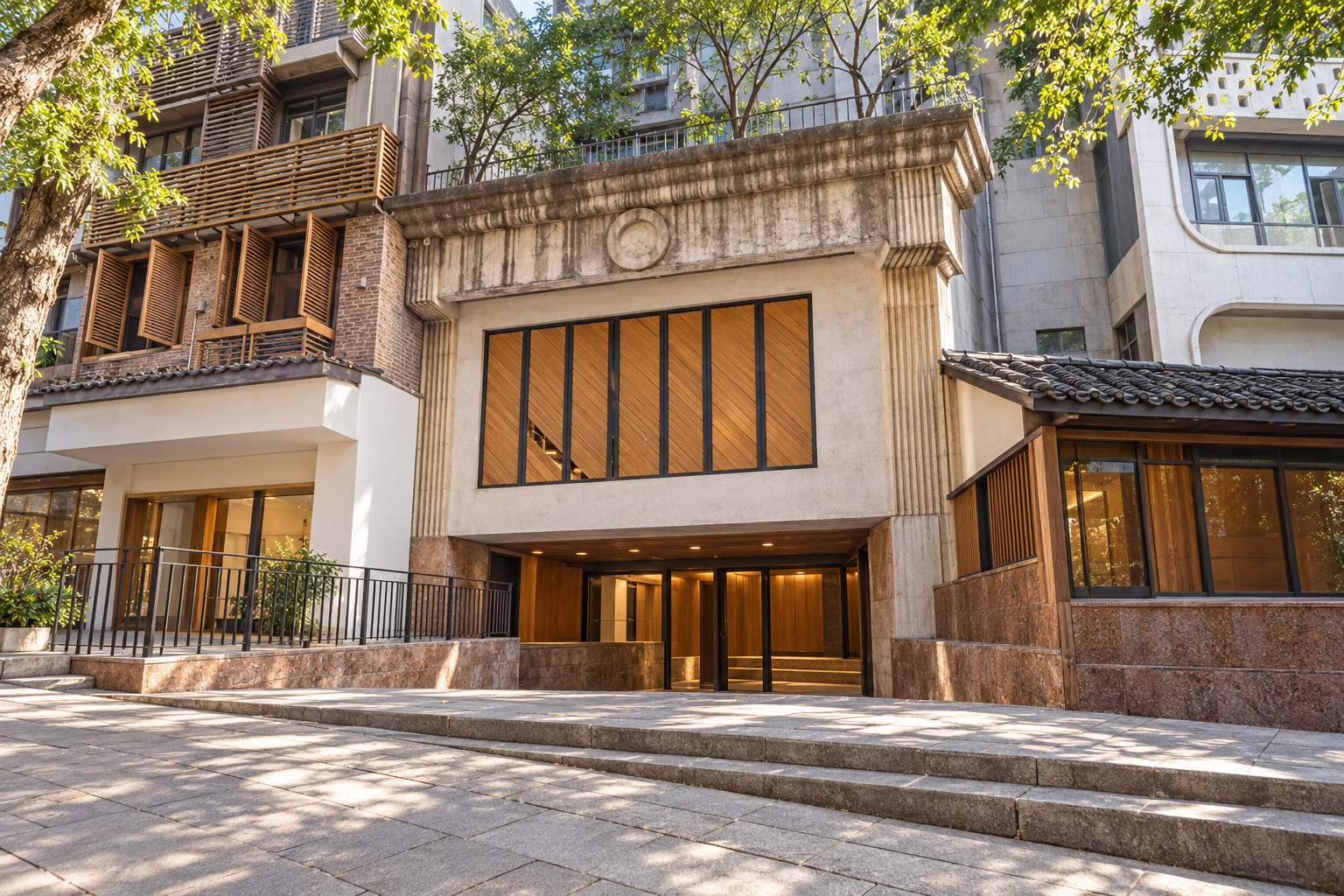
AI illustration: Shihuishi-inspired market exterior with stone cornice. The two market exteriors are distinct. The step detail is illustrative, not an accessibility survey; no interior stalls or current availability are established.
Reference: news.cnr.cn / 邹巧 / 央广网
Illustrations interpret historical references; they are not current photographs, venue endorsements, ingredient declarations or safety guarantees. The two market exteriors are distinct. The step detail is illustrative, not an accessibility survey; no interior stalls or current availability are established.
For a Chongqing fresh-market visit in 2026, choose a working food market, confirm its entrance and shop with the people using it. Yuzhong’s government documents Shihuishi’s renovation, while newer reporting describes a changing Luzumiao district. Start with food identification and a small purchase; ask before photographing vendors and do not assume every display is ready to eat.
A market visit works when you enjoy looking closely: reading a price label, asking what a vegetable is called, or understanding how a familiar ingredient appears before it becomes dinner. It is less rewarding if you arrive expecting a performance, a fixed tasting circuit or a room arranged for photographs.
This guide uses Shihuishi, 石灰市菜市场, as a central research lead and explains an approach you can adapt elsewhere. It does not promise a guided tour, daily stall list or particular meal. The useful souvenir may be a Chinese food name saved on your phone rather than a bag of ingredients you cannot store or take home.
Find the produce market inside the wider Luzumiao area
The Yuzhong government’s February 2021 account records Shihuishi reopening after an upgrade in October 2020. It places the market within the Luzumiao redevelopment context and describes cleaning and waste-handling arrangements. That establishes a real market history, not a current guarantee about every stall or entrance.
Save the full Chinese market name. The Trip.com listing checked on 1 October 2026 identifies the Qingniao Building branch and Sixian Lane, 四贤巷3号. Different language views provide inconsistent floor detail. Use the address as a search lead, then ask for the operating produce-market entrance rather than climbing to a floor based on an old screenshot.
Luzumiao, 鲁祖庙, can also lead you to flower shops, cafes or the wider historic street area. Those are different visit purposes. Show “石灰市菜市场的入口在哪里?” if you need to ask where the market entrance is. If a shopkeeper points toward a building, confirm whether visitors can enter and which level contains the stalls you want.
Anyone who needs a lift, seating or a step-free approach should verify those separately. A listing pin does not describe the threshold, aisle width or working lift. Keep a nearby alternative in mind so that finding a closed entrance does not turn a short food stop into a frustrating search.
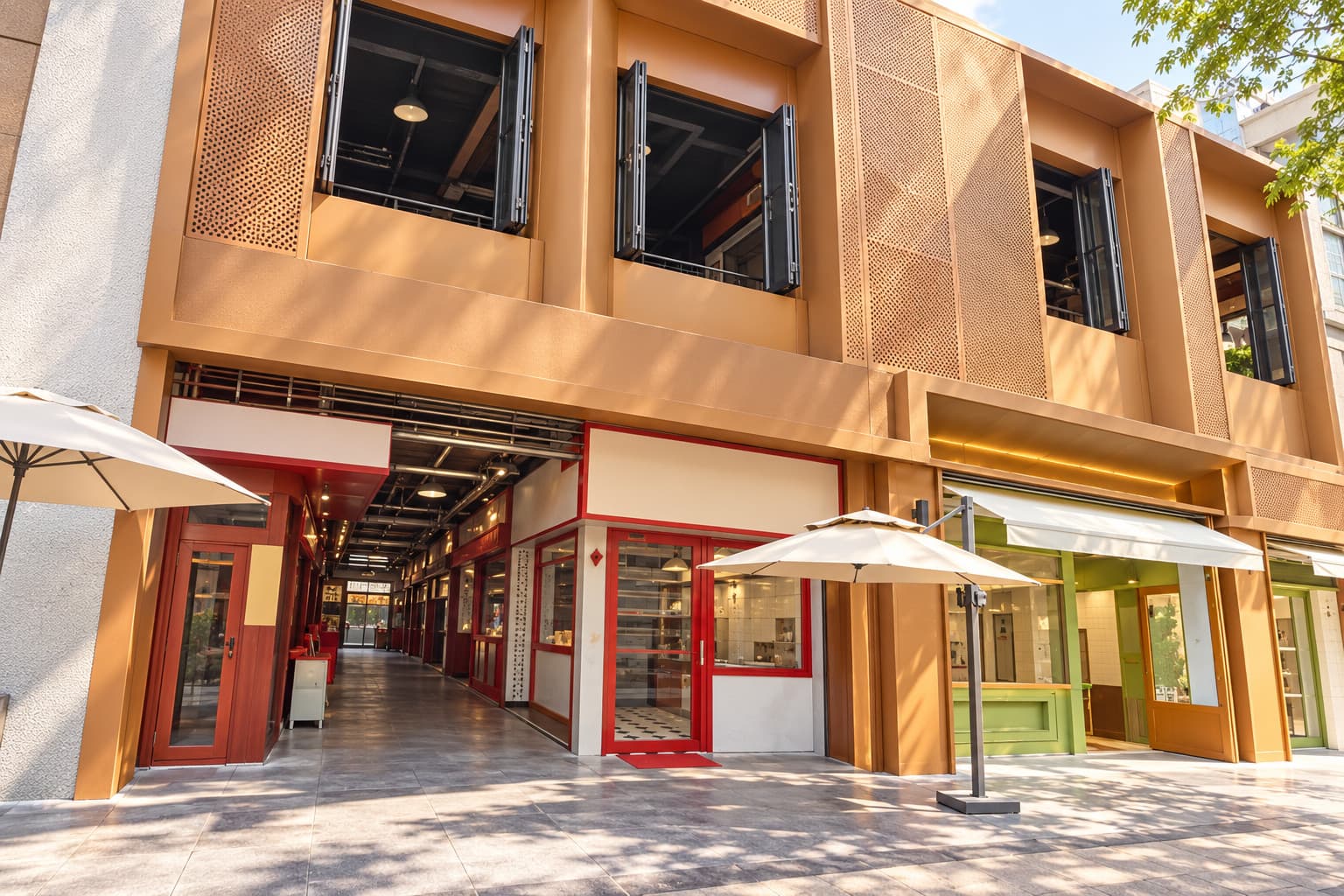
AI illustration: Minzhucun-inspired orange market facade. The two market exteriors are distinct. The step detail is illustrative, not an accessibility survey; no interior stalls or current availability are established.
Reference: news.cnr.cn / 邹巧 / 央广网
Look for food names before deciding what to buy
A 2023 iChongqing report on market visits names Shihuishi alongside Daxing Village, Jiandong, Wucun and Houfengyan markets. Its value is the range of everyday market settings, not a ranking to follow today. Pick a manageable visit instead of trying to collect all five names in one outing.
Begin by observing how a stall works. Are customers pointing at loose produce, handing over a bag to be weighed, or ordering prepared portions? Wait until the seller has finished the current transaction before asking a question. Your first useful phrase is “这个叫什么?”: what is this called? Ask them to write the name if you want to find the ingredient again.
Then distinguish what the product is from how it is meant to be used. “这个要煮熟吗?” asks whether it needs cooking. “这个可以直接吃吗?” asks whether it can be eaten as sold. Do not treat a seller’s answer about one tray as applying to everything beside it. Ask before touching loose food, lifting a lid or tasting anything.
For packaged goods, compare the Chinese product name, ingredient list, storage directions and date markings. A colourful picture of a finished bowl can appear on a packet containing just a component. If you are unsure whether it includes seasoning or needs other ingredients, ask while the packet is still on the counter. That is more useful than relying on a photograph of someone else’s meal.
Agree on the quantity, unit and total together
The Shihuishi listing read on 1 October 2026 provides a place identity, but it does not supply a reliable current price list for individual stalls. Ignore broad claims that a market is invariably cheaper than a supermarket. Compare the actual product and quantity you intend to purchase.
Before the seller bags anything, ask “怎么卖?”: how is this sold? A number on a sign may refer to an item, a portion or a weight unit. Point to the label and have the seller show you the unit. If a scale is involved, look at the displayed weight and total rather than calculating from an unfamiliar shorthand.
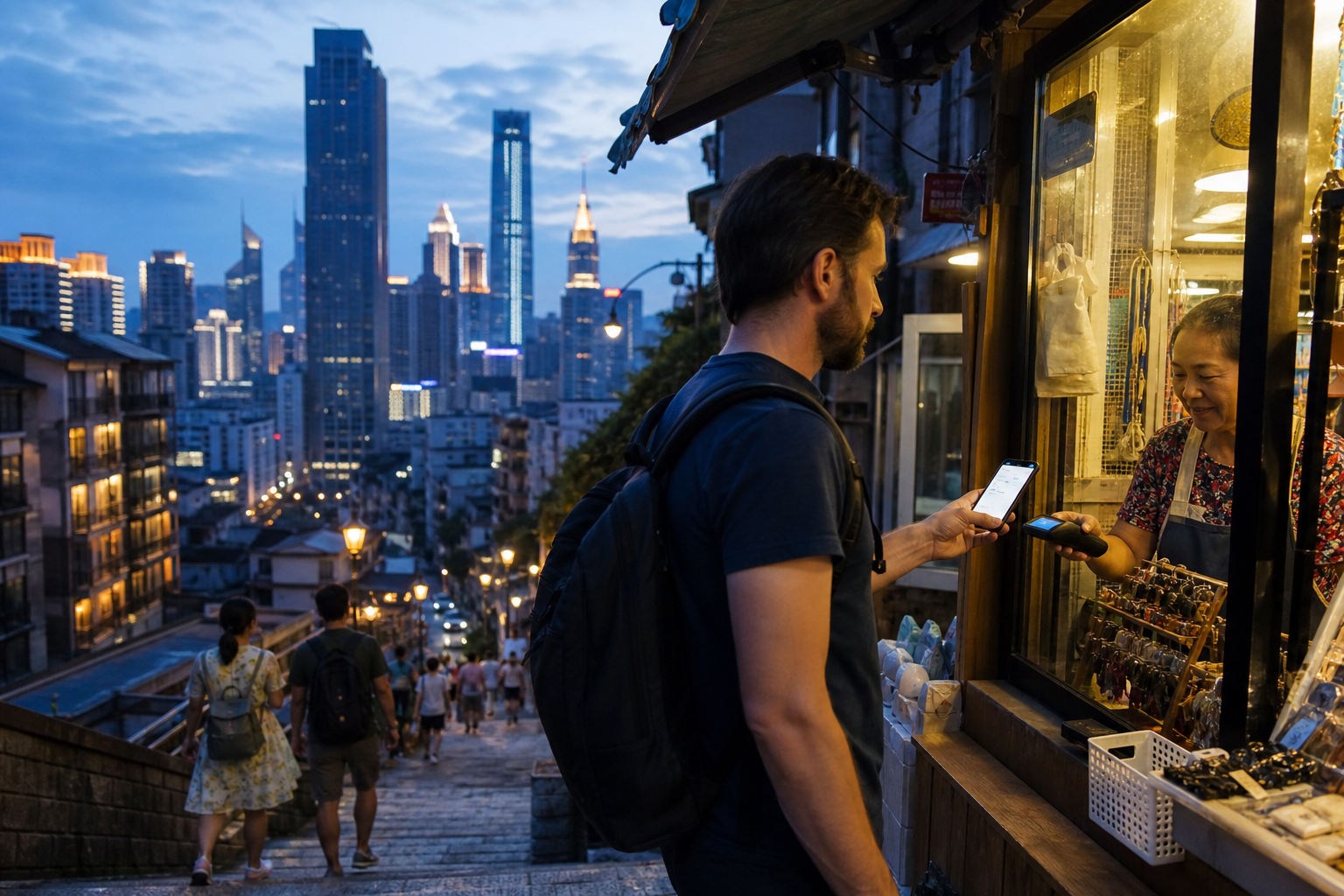
For a first purchase, a small amount is easier to manage. Say “我想买一点” and indicate what you want, then confirm the quoted total: “一共多少钱?” A calculator screen can help when spoken numbers are difficult. If you change your mind, do so before the seller cuts, cooks or packs something specifically for you.
Ask how to pay before ordering prepared food or commissioning a larger purchase. Keep the payment amount visible until both sides agree, and let the seller confirm receipt before leaving. If a phone transaction appears unresolved, check its status instead of paying twice immediately. The Chongqing payment guide covers preparation beyond this market stop.
Carry what you buy without blocking the aisle. A reusable bag is useful if the seller agrees it suits the product; separate items that could leak rather than putting everything beside your camera or travel documents.

AI illustration: Shallow stone steps and pavement detail. The two market exteriors are distinct. The step detail is illustrative, not an accessibility survey; no interior stalls or current availability are established.
Reference: news.cnr.cn / 邹巧 / 央广网
Make photography a conversation, not a claim on the space
The April 2026 Luzumiao report describes visitor interest in the surrounding streets, including coffee, records and food businesses. It does not establish a photography permission for the market. A neighbourhood becoming popular online does not make its workers performers or its customers anonymous scenery.
Ask “可以拍照吗?” before photographing a stall closely, and make it clear if you mean the person rather than the produce. Pointing to your camera and waiting for an answer is more respectful than taking the picture and asking afterward. A refusal needs no argument. Buying something also does not buy the seller’s consent to a portrait.
Keep your position on the customer side. Do not step behind a counter, move price cards, rearrange vegetables or reach across a work surface to improve the frame. Avoid blocking someone carrying a load or standing in a narrow doorway while checking your pictures. Put away a tripod if it would take space from trading.
For a quieter image, choose a food detail without a face, or an exterior from a public position after checking local signs. Do not photograph a child closely without their responsible adult’s permission. Keep payment codes, receipts and customers’ phone screens out of the frame.
If you want to publish a portrait or use a photograph commercially, explain that purpose rather than relying on permission for a casual holiday snapshot. A respectful encounter can be enjoyable without producing any image at all.
Treat food handling and carrying it home as separate decisions
The district’s 2021 waste-management account describes organised cleaning and separation of market waste. Its date matters: a renovation story is not an inspection of the meal in front of you. Judge what you can observe today and decline a purchase if its preparation or storage is unclear.
Keep raw ingredients apart from ready-to-eat items in your shopping. If you want to eat at a stall, confirm that the item is sold as a cooked portion and ask where customers may sit. Do not infer a tasting entitlement from an open container or a photograph in a review. Use the seller’s serving utensils instead of reaching into shared food.
If you have an allergy or a strict dietary requirement, a handwritten sign naming a vegetable is not enough information about a prepared dish. Ask about the complete seasoning and preparation, and do not rely on appearance. The vegetarian and vegan ordering guide explains why the main ingredient and the finished dish can differ.
Before buying anything perishable, decide where it will go next. A long sightseeing afternoon is a poor plan for something the seller says needs refrigeration. Ask for storage instructions you understand; a hotel room is not automatically equipped to cook or safely store groceries.
For an international journey, check the destination country’s official food and agricultural-entry rules before purchasing. Packaging, a receipt and airport retail availability are not evidence that your particular item is permitted at the other end. When unsure, enjoy the food locally and keep its name instead.
Original editorial guide card: Agree before buying. Ask the chosen venue directly.
Original editorial guide card
Agree before buying
- Confirm the quantity and selling unit
- Confirm the total before paying
Ask the chosen venue directly.
Leave room for the neighbourhood, or leave when shopping needs the space
The 6 April 2026 reporting on Luzumiao describes a district where traditional businesses and newer shops coexist. Expect the surrounding streets to change. A saved social-media image may show a business that has moved, and a market visit should not depend on finding its exact background.
A useful sequence is to locate the entrance, walk through without stopping at every stall, return to something that interests you, and make a considered purchase. If the aisles are busy, shorten the looking part. If the market is closing, do not delay workers for a photo request or ask them to reopen containers.
Match the stop to the rest of your day. Carrying bags through steep streets or crowded attractions quickly removes the pleasure from a shopping visit. If you plan to buy groceries, arrange a direct return to suitable storage. If you are browsing, keep the rest of your route flexible rather than adding a distant market merely because it appears on a list.
The Jiefangbei and Raffles City walking guide provides wider central-city context. Treat it as a separate route to adapt, not evidence of a fixed market-to-attraction walking time.
Before leaving, check that you have your belongings, understand any food-storage instruction and have disposed of waste where directed. Thank the seller who helped you identify something. The rewarding part of a fresh-market visit is usually a clearer understanding of everyday food, not the number of stalls you photographed.
Original editorial guide card: Visit considerately. Ask the chosen venue directly.
Original editorial guide card
Visit considerately
- Ask before photographing people
- Keep entrances and shopping paths clear
Ask the chosen venue directly.
About This Guide
Researched on 1 October 2026 using district records, local reporting and a public market listing. This is an independently written, AI-assisted planning guide, not an account of an on-site visit. Stall menus, entrances, hours, accessibility and food-handling conditions were not tested. Photography permissions and purchasing suggestions are practical recommendations; they are not claims of a market-operated visitor service.
Frequently Asked Questions
Q: Which Chongqing market can I use as a central starting point? A: Shihuishi, 石灰市菜市场, is a research-backed lead in Chongqing’s Luzumiao area. Confirm the operating entrance and current access rather than relying on inconsistent floor information in listings.
Q: Can I photograph vendors at a Chongqing fresh market? A: Ask each person before taking a close portrait in a Chongqing market and respect any refusal or posted restriction. A public market is a working shopping space, and a purchase does not grant portrait permission.
Q: Are the foods displayed at Shihuishi ready to eat? A: Do not assume so at Shihuishi or another Chongqing market. Ask about the specific item, whether it requires cooking and how it should be stored before buying or tasting it.
Q: Should I bargain at a Chongqing produce stall? A: First confirm the unit, quantity and total at the Chongqing stall. Accept the seller’s terms or decline politely before custom preparation; this guide does not assume bargaining is expected.
Q: Can I take Chongqing market food on an international flight? A: Check the destination country’s official entry rules and the relevant transport rules for your exact purchase. Buying or sealing food in Chongqing does not establish that it is allowed across another border.

Traveler comments
Share a recent experience or ask a practical question about this guide.