
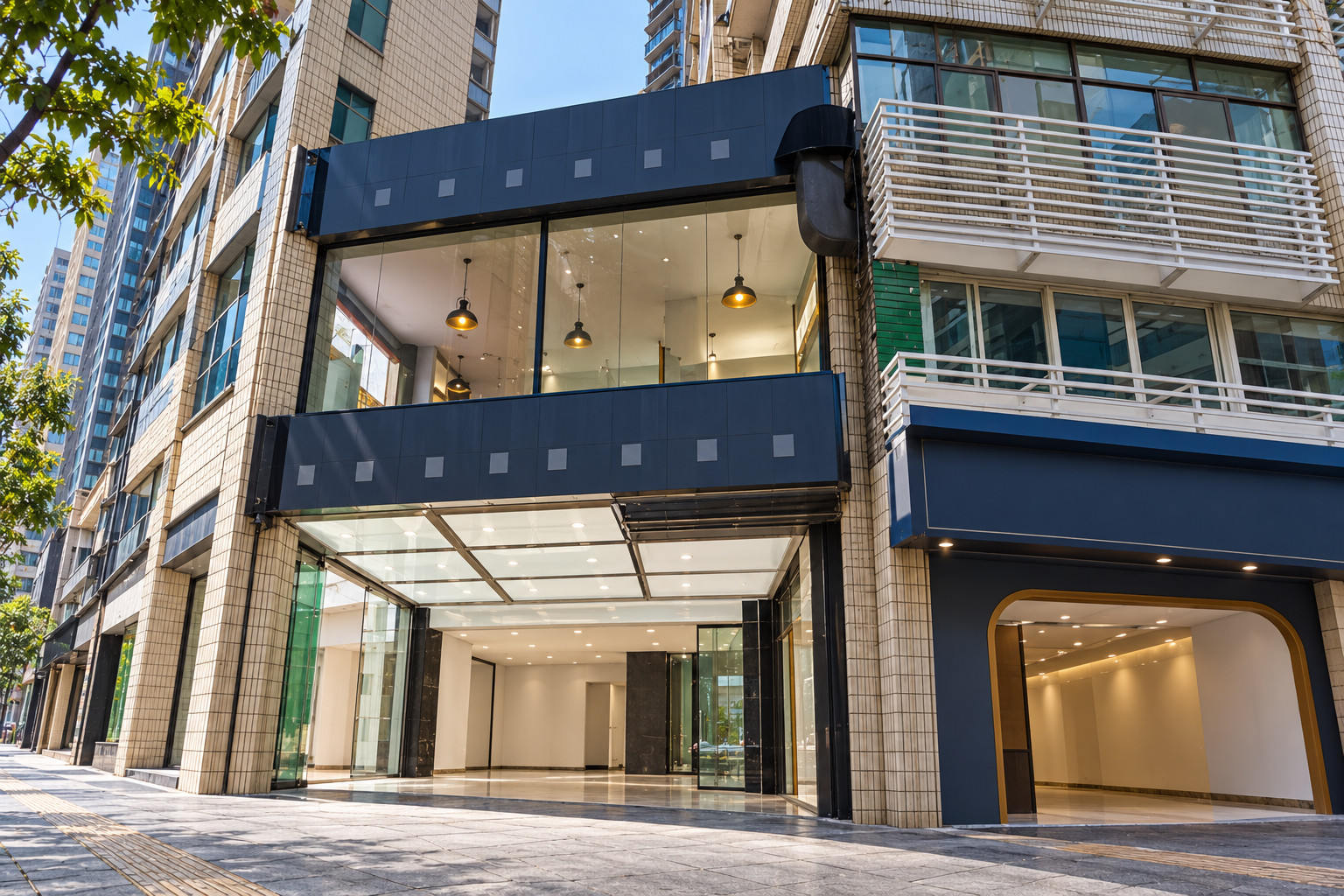
AI illustration: Anonymous tiled storefront and balconies. Generic verification context only. No food, drink or outlet shown is certified or claimed halal.
Reference: halalchinatrips.com / Unknown photographer
Illustrations interpret historical references; they are not current photographs, venue endorsements, ingredient declarations or safety guarantees. Generic verification context only. No food, drink or outlet shown is certified or claimed halal.
Halal dining in Chongqing in 2026 requires checking the actual outlet, its evidence and its preparation practices before ordering. Chongqing’s published rules describe a dedicated qingzhen mark and separate handling requirements. Use that local context to ask informed questions, then verify any claimed certification with its issuer; a cuisine name or no-pork statement is insufficient evidence on its own.
The practical aim is to make a meal decision that matches your own requirements. This guide does not certify restaurants, decide religious questions for readers, or treat every traveller’s standard as identical. If you follow a particular authority’s guidance, decide what documentation or assurances you need before the trip rather than making that decision under pressure at a counter.
A map search, hotel recommendation or social-media post can start your search. None of those establishes that the specific branch, kitchen and dish meet your requirements today. Save leads as leads, and leave enough time to check them without committing to a long journey or a prepaid meal.
Understand the local claim and check the exact outlet
The Chongqing Ethnic and Religious Affairs Commission’s page published on 9 March 2026 reproduces the city’s regulation, originally adopted in 2000 and amended through 2010. Articles 28 and 29 describe approval and display of a dedicated 清真 mark, alongside dedicated handling and preparation arrangements. This is a description of the published local text, not a new 2026 certification scheme.
清真 is commonly rendered as qingzhen or halal in this dining context. A sign using the word gives you something specific to ask about. It does not tell you, without further evidence, who issued the sign, whether it applies to that branch, or whether a different foreign certifier recognises the operation.
Ask the restaurant to identify the evidence it relies on and the authority or organisation behind it. If a staff member points to a logo, ask to see the accompanying documentation rather than relying on the shape or colour of the design. A decorative crescent, Arabic-looking lettering or a regional cuisine name does not answer the same question.
Do not judge a staff member’s religion or a kitchen’s practices from appearance, name, clothing or ethnicity. Ask about the business and the food. That keeps the conversation respectful and directs attention to information that can actually be checked.

AI illustration: Two small tea cups on a table. Generic verification context only. No food, drink or outlet shown is certified or claimed halal.
Reference: www.ichongqing.info / Event organizer, via iChongqing
Match the evidence to the exact outlet
MUIS’s official verification advice tells consumers checking its certification to look for the displayed certificate, verify the details and match the current certificate to the outlet name and location. That advice concerns the MUIS system. The underlying evidence questions are useful in Chongqing, but the page does not certify Chongqing businesses or make Singapore rules applicable there.
Start with the Chinese business name and street address. Compare those with the restaurant you intend to visit, including the branch or unit where relevant. Similar English names are not enough. If a chain has several locations, do not move a certificate from one address to another in your planning notes.
Check the issuer, reference number, covered activity and validity information shown on the document. If an end date is present, read it carefully. If the evidence is a supplier’s certificate, ask what ingredient it covers and how the restaurant connects it to the food being served. A document for a product is different from evidence about an entire kitchen.
Use the issuer’s official directory or contact information, found independently, when a claimed certificate needs verification. A QR code on an image can lead anywhere; check the destination before supplying information. If the issuer cannot be identified or the document cannot be matched, record the uncertainty rather than changing it into a positive claim.
A useful personal note is brief: exact branch, evidence checked, date checked and unresolved questions. Do not save staff identity documents or publish private messages. The goal is your meal decision, not collecting unnecessary personal data about restaurant workers.
Keep foreign certification directories within their scope
The MUIS scheme page updated on 28 September 2026 distinguishes eating establishments, food-preparation areas and products, among other schemes. It includes food-court stalls within the eating-establishment category. This makes scope important: a stall, a packaged product and a hotel kitchen are not interchangeable certification objects.
JAKIM’s status-check page, published in December 2020 and still accessible at this check, directs readers to the Malaysian Halal Directory for products, premises, services and relevant foreign certification information. It is a reference route for a JAKIM-related claim, not a complete listing of places to eat in Chongqing.
If you rely on a foreign authority, search the authority’s current material for the claim actually being made. Recognition of a certification body does not itself prove that the body certified the restaurant in front of you. Likewise, a certified product supplied to a kitchen does not describe everything else used there.
Do not infer that a restaurant is unsuitable merely because it is absent from an unrelated country’s directory. Equally, do not infer suitability from an issuer’s logo copied onto a travel post. When the evidence does not answer your question, contact the relevant authority or choose a meal whose basis you can verify to your satisfaction.

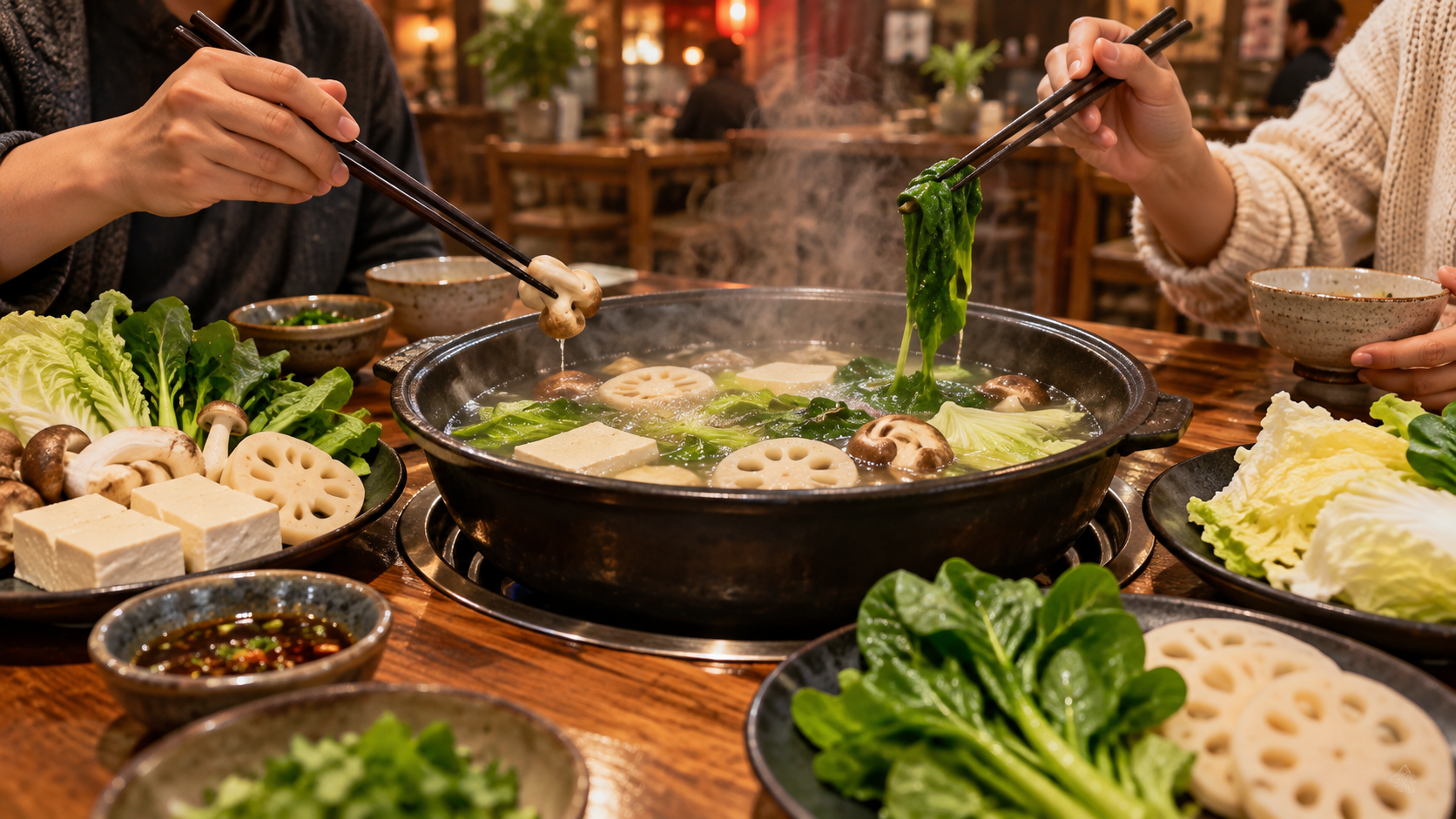
AI illustration: White bean curd in a bowl. Generic verification context only. No food, drink or outlet shown is certified or claimed halal.
Reference: www.ichongqing.info / Kenny Dong / iChongqing
Verify preparation and plan the meal
Article 29 of the Chongqing text addresses dedicated transport, containers, equipment and preparation or sales areas. Its practical relevance is that the main ingredient does not describe the entire process. Ask the kitchen about the elements that matter to your own halal requirements rather than ending the discussion at “no pork.”
Useful questions include the source of the meat, the broth and cooking fat, seasonings or sauces, and whether alcohol is used in preparation. Ask whether the food is cooked, stored and served using arrangements consistent with the claim the restaurant makes. These are questions to resolve with the venue; this guide does not state that a particular ingredient appears in every Chongqing dish.
When a dish can be modified, distinguish leaving out a garnish from changing an already prepared base. Removing something visible after cooking is different from making the meal without it. Ask what is prepared in advance and whether the proposed alternative uses the same broth, sauce or equipment.
If the person taking orders does not know, ask whether someone responsible for the kitchen can explain. Avoid a rapid series of vague yes-or-no questions that encourages agreement without understanding. Show a concise written request and give the staff time to answer. If the answer remains unclear, you can politely choose another meal.
The vegetarian and vegan ordering guide covers another set of dietary questions, but a vegetarian description should not be treated as a substitute for halal verification. The standards and concerns overlap in some places and differ in others.
Use clear phrases and let the venue explain its evidence
The MUIS verification FAQ emphasises matching a certificate to its location. In a conversation, begin with that concrete issue before asking about a specific dish. Showing a written question can be more reliable than using a general English word that different speakers understand differently.
“请问这家店有清真证明或清真专用标志吗?” asks whether this outlet has halal documentation or a dedicated qingzhen mark. “是哪一个机构出具的?” asks which organisation issued it. “这份证明适用于这个地址吗?” asks whether the document applies to this address. These phrases request information; they do not validate the answer.
For preparation, you can ask “这个菜用了什么汤底和油?” meaning “What broth and oil does this dish use?” If avoiding alcohol is part of your requirement, “烹饪时会用料酒或其他酒吗?” asks whether cooking wine or other alcohol is used. Ask the staff to explain the actual recipe rather than assuming a translation of the dish name contains every ingredient.
Keep an English version of your requirement beside the Chinese text. If a translation app gives an unexpected result, ask for clarification rather than repeatedly rephrasing until you obtain the answer you hoped for. Photos of ingredients or documents may help when the venue offers them, but pictures still need context.
If you also have a food allergy, communicate it separately. Halal evidence does not establish that a meal is free from a particular allergen or that cross-contact has been controlled. This guide provides no allergy-safety assurance.

Original editorial guide card: Check the exact outlet. Ask the chosen venue directly.
Original editorial guide card
Check the exact outlet
- Match the name and address
- Check issuer, scope and validity
Ask the chosen venue directly.
Plan the meal location before committing the sightseeing day
The JAKIM directory explanation distinguishes products, premises and services. Apply the same precision to your travel plan: a packaged-food lead, a restaurant address and a hotel meal arrangement are different options requiring different checks. A general statement that a district has halal food does not identify your dinner.
Contact a promising outlet before making a special trip. Confirm its current address, the meal period you want, and whether the staff can answer your verification questions. Keep another suitable option in mind in case the business is closed, has moved or cannot provide enough information. This is particularly useful when a group has a fixed departure or attraction booking.
For packaged food, examine the actual package and the certification claim attached to that product. Check the product name and manufacturer rather than transferring an approval from a similar flavour or brand. Follow any storage instructions and check the date marking. A familiar international brand does not automatically mean that every product sold in Chongqing is covered by the same certification.
For hotel breakfast or a group meal, ask who prepares the food and whether the arrangement you need applies to the meal actually booked. A hotel’s ability to suggest a nearby restaurant does not establish the status of its own buffet. Avoid paying for a special arrangement until the relevant details and terms are clear.
Use the Chongqing navigation guide to verify the final entrance, and the payment guide to prepare for payment. Those practical checks should come after you have found a meal whose evidence meets your requirements.

Original editorial guide card: Ask about preparation. Ask the chosen venue directly.
Original editorial guide card
Ask about preparation
- Ask about ingredients and utensils
- If evidence is unclear, choose another meal
Ask the chosen venue directly.
About This Guide
Sources were read on 1 October 2026. The article explains evidence-checking and communication using Chongqing material and official MUIS/JAKIM references within their stated jurisdictions. No Chongqing restaurant was certified, inspected or contacted for this guide. Readers should use their own trusted religious authority for questions about acceptable practice.
Frequently Asked Questions
Q: Does a no-pork sign mean a Chongqing restaurant is halal? A: A no-pork statement does not establish the whole preparation or certification status of a Chongqing restaurant. Ask about the outlet’s evidence, ingredients and handling practices according to your requirements.
Q: Can I identify a halal Chongqing restaurant from its cuisine or staff appearance? A: No reliable verification follows from a Chongqing restaurant’s regional cuisine, decoration or staff appearance. Check the business’s actual claim and supporting evidence, without making assumptions about anyone’s religion.
Q: Does a Chongqing qingzhen mark mean MUIS or JAKIM certification? A: Do not treat Chongqing’s local qingzhen marking and MUIS or JAKIM certification as interchangeable. Verify the named issuer, outlet address, scope and current status of the specific claim.
Q: Is vegetarian food in Chongqing automatically suitable for a halal diet? A: A vegetarian description does not resolve every halal preparation question in Chongqing. Check the relevant ingredients, sauces and handling, and follow the guidance of your own trusted religious authority.
Q: Can this guide name a currently verified halal restaurant in Chongqing? A: No restaurant in Chongqing was individually verified for this article. Use it to check a specific outlet before ordering; an online recommendation or old photograph remains a lead until its current evidence is confirmed.
Traveler comments
Share a recent experience or ask a practical question about this guide.