
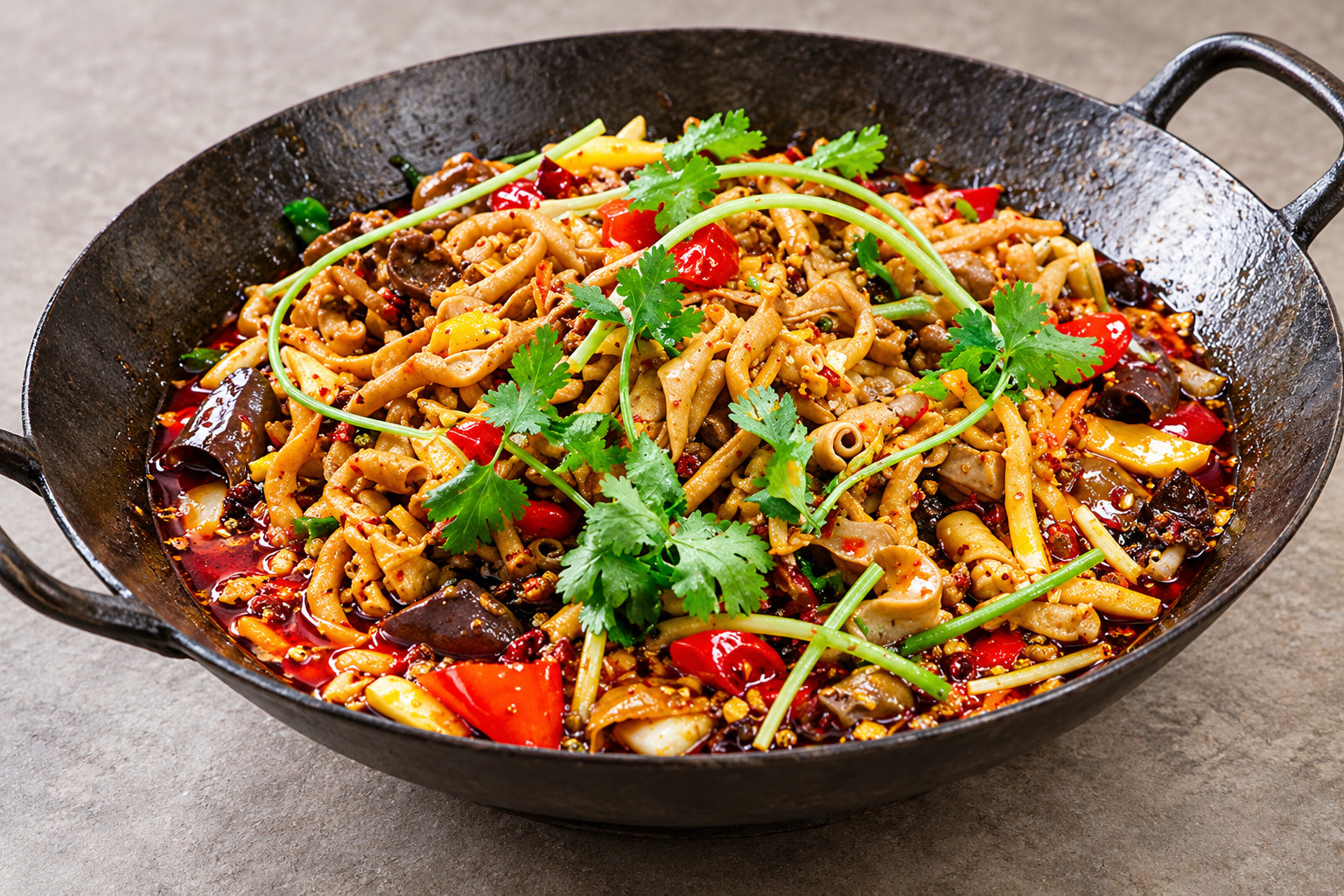
AI illustration: Qianjiang jiza in a black wok with red oil and herbs. Dish illustrations do not establish a current restaurant, menu, exact organ mix or dietary suitability.
Reference: www.ichongqing.info / Unknown photographer
Illustrations interpret historical references; they are not current photographs, venue endorsements, ingredient declarations or safety guarantees. Dish illustrations do not establish a current restaurant, menu, exact organ mix or dietary suitability.
Qianjiang jiza in 2026 is a chicken-offal dish, not an ordinary chicken-meat order. Qianjiang’s culture and tourism page describes giblets with pickled chili, radish and potatoes, served with continued heating. Agree on the ingredients before ordering, confirm the exact restaurant branch and treat a shared pot as a choice everyone at the table should understand.
The Chinese name is 黔江鸡杂. 鸡 means chicken, while 杂 here refers to assorted offal. That distinction matters more than finding a famous sign: someone happy to eat chicken breast may not want the organs used in this dish.
This guide explains the meal, the questions to ask and how to evaluate named restaurant leads. It is not a restaurant review or a booking service, and it does not assume that a regional name gives every business the same recipe, price or preparation standards.
Understand the offal before choosing the pot
The Qianjiang culture and tourism page displaying 12 June 2026 describes chicken gizzard, heart, liver and intestine in the dish. The page’s URL sits in an older dated directory, so the date here refers to what the page displays. Its ingredient description is a regional explanation, not a guarantee of the exact mix in a particular restaurant.
Ask “鸡杂里有哪些部位?”: which parts are in the chicken giblets? Useful names include 鸡胗 for gizzard, 鸡心 for heart, 鸡肝 for liver and 鸡肠 for intestine. Ask the server to point out the ingredients if spoken explanations are difficult. Do not hide the answer from another diner because you hope they will enjoy it before finding out.
If you dislike a particular organ, ask whether the venue can omit it or make a different order. Some preparations may use an already mixed portion. An omission request is not fulfilled merely because the menu photograph does not show the ingredient clearly.
Before ordering for a group, say plainly that this is offal and ask whether everyone wants it. A separate dish may suit someone better. That is an ordinary preference, not a failure to appreciate a regional food culture, and there is no reason to pressure a reluctant diner into sharing.
If you are curious but unsure, ask what a smaller order involves and whether it fits your group. No standard pot size is established in this guide. Seeing a large pot in a photograph tells you little about its paid portion or how many diners it was intended to serve.

AI illustration: Handled pan with irregular cooked giblets and peppers. Dish illustrations do not establish a current restaurant, menu, exact organ mix or dietary suitability.
Reference: www.qianjiang.gov.cn / Unknown photographer
Expect pickled flavours and ask about the heating arrangement
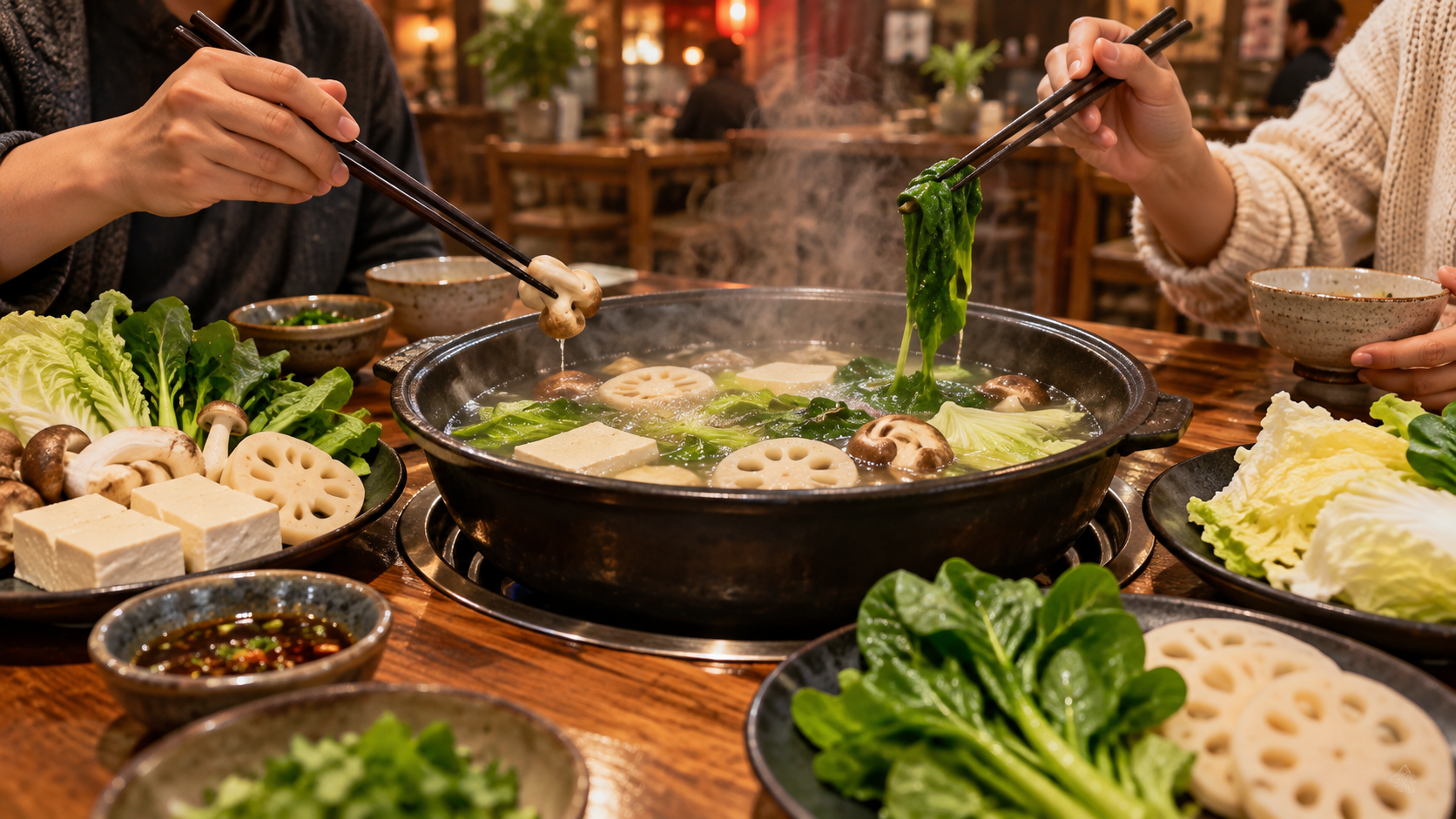
The Qianjiang government’s 2026 specialties page describes chicken offal with potato and pickled chili, followed by continued gentle heating while diners eat. It also describes vegetables being added. This explains the shared-pot format, but the restaurant must tell you how its own dish is served and what is ready to eat.
Ask whether the dish arrives fully cooked and whether anything added later needs more time. Do not assume a simmering pot makes every ingredient immediately ready, and do not try to reproduce a cooking time from a promotional food description. Follow a clear explanation from the kitchen; if an item’s status is uncertain, ask before eating it.
Tell staff about your heat preference before they cook. “少放辣椒” requests less chili, and “少放花椒” requests less Sichuan pepper if that matters to you. Pickled chili and a prepared sauce may still contribute heat after an extra chili garnish is omitted. Ask what can actually be adjusted rather than treating “mild” as a fixed measurement.
Keep the tabletop clear around the heat source. Let staff adjust a burner or deal with a dry pot instead of experimenting with unfamiliar controls. Ask for serving utensils, and move food to your own bowl to cool comfortably. A communal pot is not a reason to hurry or reach across another person with a hot ladle.
When adding vegetables or other ingredients, confirm whether they are included in the order or priced separately. A historical description of a meal format does not establish a current free-addition offer. Make each extra a deliberate order so that the final bill remains understandable.
Check the dish, brand and branch as separate identities
The district’s October 2025 industry report names brands including Apengji, Guoqing and Tianlong under the wider regional jiza identity. “Qianjiang jiza” on a sign therefore should not be treated as proof that all such restaurants belong to one operator. A familiar name is a starting point for verification.
Save the full Chinese branch name and its current map pin. For example, the Trip.com page read on 1 October 2026 names 国庆鸡杂(黔江民族风情城店), the Ethnic Customs City branch. An older Wikivoyage entry, marked October 2024, lists 国庆鸡杂老店 on Danhang Road. These are different address records; do not combine one listing’s directions with another listing’s phone or review.
The named examples are verification leads, not recommendations based on a meal we tested. Check the exact branch’s current menu, whether it is serving at your intended time and whether it can answer your ingredient questions. A venue’s overall rating does not establish that the dish you want is available or suits your requirements.
If someone needs step-free access, ask about the actual entrance, dining level and lift. One customer comment on the Ethnic Customs City listing mentions stairs, but a review is not an access survey. Do not assume that a map pin on a road means the tables are at street level.
For a reservation, agree on group size, date, time, any deposit and cancellation terms directly with the business before committing. This guide has not verified a current reservation channel, private room or English-speaking service at either example.

AI illustration: Close detail of offal slices and pink radish strips. Dish illustrations do not establish a current restaurant, menu, exact organ mix or dietary suitability.
Reference: www.qianjiang.gov.cn / 封煜靖
Treat the new food street as a destination lead, not a current menu
A Qianjiang government announcement dated 8 January 2026 records a jiza food street opening the previous day in the Jiangyuan Lane redevelopment context, 酱园巷. It reported nearly 20 shops at that time. That provides a more recent area lead than an old list of individual restaurants, but it is not a live operating roster.
If you are visiting Qianjiang’s urban area, search the Chinese lane name together with 鸡杂 and check the result against the current map. Ask a local service desk or the intended business to confirm the entrance if the listings are ambiguous. A development’s opening ceremony does not tell you which restaurant is trading this evening.
Once there, compare menus and service arrangements instead of following the largest sign automatically. Ask for a dish description, portion and total before sitting down for a shared meal. If you are arriving outside a usual meal period, confirm that the kitchen is serving rather than assuming an open dining room means all dishes are available.
Zhuoshui, 濯水, is another place associated with jiza in regional material and restaurant listings. Do not treat a Zhuoshui restaurant and a central-Qianjiang restaurant as interchangeable destinations. Check which place you are already visiting and what onward journey the meal would require.
You can also encounter the dish outside Qianjiang. A CQNEWS feature published in October 2019 discussed examples in central Chongqing. Its old business descriptions are not present-day endorsements, but they show why tasting jiza need not automatically become a separate regional excursion. Choose the version that fits a well-verified route.
Keep everyone’s dietary decision visible
The regional specialties description dated January 2026 is explicit about chicken offal and vegetable additions. Vegetables served in that pot share the dish’s cooking environment. They are not an independent vegetarian meal simply because you can lift them away from the meat.
For someone avoiding offal as a preference, explain which parts are used and offer a different order. For someone with an allergy or a medically required restriction, ask the kitchen about the complete sauce, oils, pickled ingredients and preparation. Naming the meat does not establish every other ingredient. If the needed information is unavailable, choose an option with a clearer preparation explanation.
Halal suitability also requires venue-specific evidence. The word “chicken” does not answer sourcing, certification, sauce or equipment questions. Do not interpret a regional dish’s cultural association as a religious dietary assurance. The vegetarian and vegan ordering guide offers broader language for explaining restrictions, although jiza itself is an offal dish.
Order a separate meal deliberately when needed. Ask whether it can be prepared and served separately rather than assuming a side plate solves every concern. Give the affected diner the information and let them decide; avoid translating a cautious answer as a definite “yes” for the sake of keeping the group together.
A useful written order should specify the dish, requested changes and any non-negotiable restriction. Show it before cooking begins and confirm that the person taking the order has understood. If staff cannot make the requested change, accepting that limit is more constructive than hoping the kitchen will improvise something you can safely eat.

Original editorial guide card: Know what you are ordering. Ask the chosen venue directly.
Original editorial guide card
Know what you are ordering
- Jiza means chicken offal
- Ask which organs and seasonings are used
Ask the chosen venue directly.
Plan the journey around an actual return, not a food headline
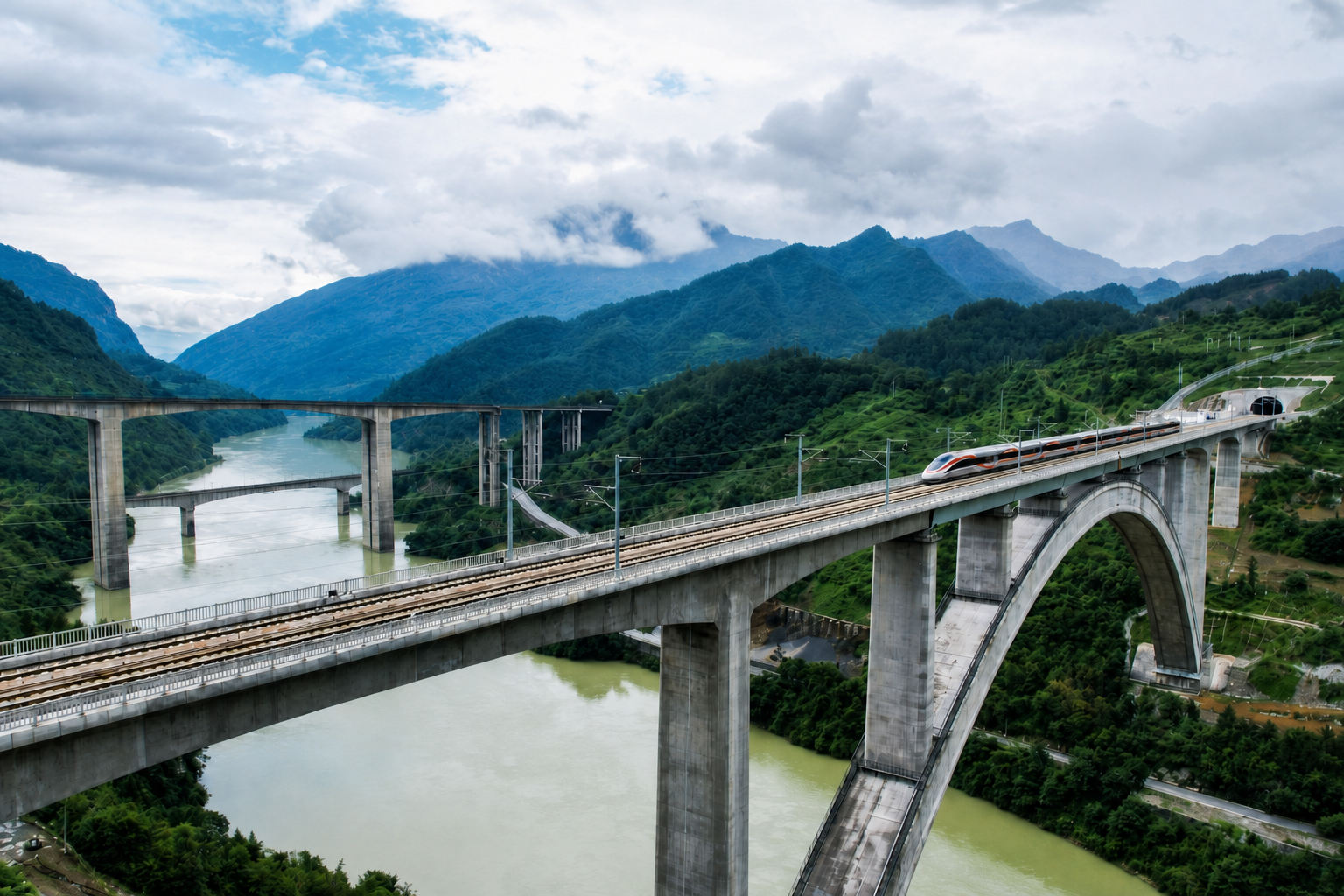
The July 2025 iChongqing rail report describes the Chongqing East–Qianjiang high-speed connection and food-related visits. Its roughly one-hour rail narrative is not a door-to-door promise from a central hotel to a restaurant. You still need to reach the correct station, make the last-mile trip and return.
Before a food-led day out, check the trains for your actual date and the restaurant’s location. The Chongqing railway-stations guide explains why choosing the right station matters. Do not assume a ticket for another Chongqing station is interchangeable with Chongqing East, and do not extend old tourism promotions mentioned in rail reporting into your current trip.
Save a return plan before lunch. If you want to include Zhuoshui or another attraction, calculate that additional journey separately rather than relying on the district name to make everything nearby. A relaxed regional meal is easier to enjoy when you are not repeatedly checking whether you have missed the final workable connection.
For a meal within central Chongqing, verify the branch and plan an ordinary trip there. The taxi and ride-hailing guide provides context for saving a precise destination and pickup location. No dedicated jiza shuttle or tour service is established by this article.
At the end of the meal, compare the bill with the pot, rice, drinks and extras actually ordered. Ask about an unclear item before paying. If taking food away, ask for handling instructions and consider your remaining travel time. A manageable portion and a clear journey home are more useful than ordering for an impressive table photograph.
Original editorial guide card: Confirm the actual visit. Ask the chosen venue directly.
Original editorial guide card
Confirm the actual visit
- Check the exact branch and current menu
- Plan the return journey before setting off
Ask the chosen venue directly.
About This Guide
Sources were read on 1 October 2026, including Qianjiang government food and district reports, local media and separate restaurant listings. This original AI-assisted guide does not claim an on-site meal, restaurant inspection, tested access or booking. Named businesses remain verification leads. Current branches, menus, heating instructions, dietary suitability and transport require direct checks. No independent review is claimed.
Frequently Asked Questions
Q: Is Qianjiang jiza made from ordinary chicken meat? A: Qianjiang jiza centres on chicken offal, with regional descriptions naming gizzard, heart, liver and intestine. Ask the selected restaurant which parts are in its actual order before agreeing to share it.
Q: Is Qianjiang jiza the same as a standard hotpot order? A: Qianjiang descriptions present a seasoned offal dish with pickled ingredients and continued table heating. Ask the restaurant what arrives cooked, what may be added and how its particular serving arrangement works.
Q: Is every Qianjiang jiza restaurant part of the same chain? A: No single-chain identity follows from the regional dish name. Qianjiang reporting names several brands, so verify the complete Chinese restaurant and branch name before using directions or booking details.
Q: Can a vegetarian share the vegetables in a jiza pot? A: Vegetables cooked in a Qianjiang jiza pot share its meat-based preparation. Ask for a separately explained dish that meets the diner’s requirements instead of presenting picked-out vegetables as vegetarian.
Q: Do I need to travel to Qianjiang to taste jiza? A: The dish has also been documented in central Chongqing. For a Qianjiang trip, verify the chosen venue and the whole return journey rather than treating a rail-time headline as a restaurant-to-hotel travel time.

Traveler comments
Share a recent experience or ask a practical question about this guide.