
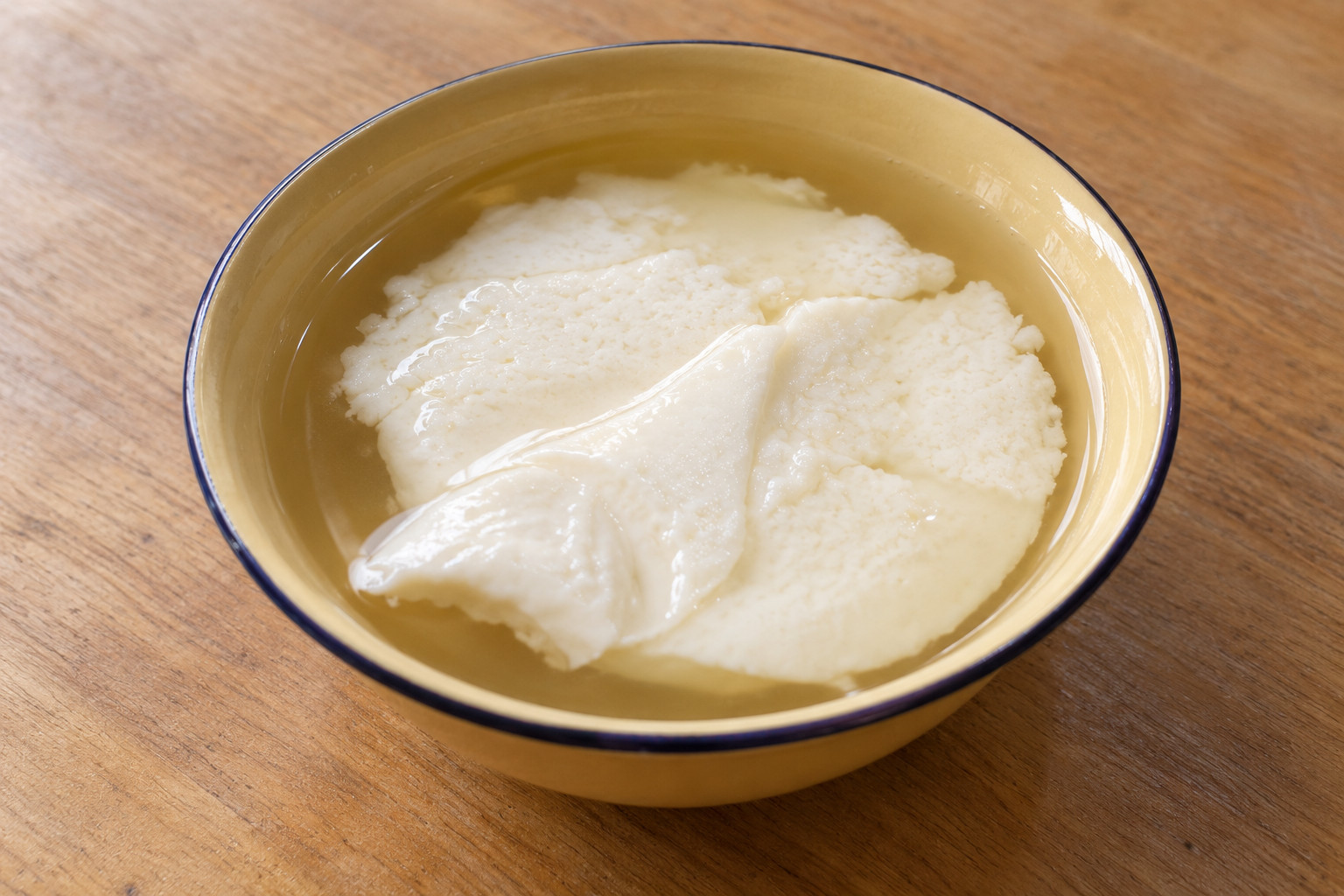
AI illustration: A bowl of tender white douhua in pale liquid. Curd and dips are shown separately. No rice, complete meal, included extras or vegetarian status is established.
Reference: www.ichongqing.info / Kenny Dong / iChongqing
Illustrations interpret historical references; they are not current photographs, venue endorsements, ingredient declarations or safety guarantees. Curd and dips are shown separately. No rice, complete meal, included extras or vegetarian status is established.
Douhua rice meals in Chongqing in 2026 usually mean tender bean curd, a dipping sauce and rice, rather than sweet tofu dessert. The municipal douhua map describes this savoury combination. Order the curd, sauce and accompanying dishes explicitly: a pale bowl and a vegetable ingredient do not establish vegetarian preparation or an allergy-safe meal.
The appeal of douhua fan, 豆花饭, is its simple structure. You can pay attention to the curd itself and decide how much dip to add, provided the venue serves them separately. You can also turn it into a larger shared meal, but that changes both the bill and the ingredient questions.
This guide explains the meal rather than ranking restaurants. Regional names, historical food writing and customer reviews are useful starting points; none gives a complete current menu for the table you are about to order.
Recognise a savoury meal built around three components
The municipal douhua map published in December 2022 describes bean curd between softer tofu pudding and pressed tofu, eaten with a seasoned dip and rice. Those 3 components are the starting point for understanding a plain douhua-fan order. Additional vegetables, meat or soup need to be considered separately.
Show 豆花饭 if you want the savoury rice meal. “豆花” on its own can appear in different dishes, and an English “tofu pudding” translation may suggest something sweet that you did not intend. Ask “是配米饭和蘸水的吗?”: is it served with rice and dipping sauce? The answer tells you more than a translated dessert-style name.
If you are ordering from photographs, check whether the rice and little sauce dish are included in that menu item or shown as serving suggestions. A bowl of curd may be available separately. If a display contains several prepared dishes, do not assume that pointing at the douhua gives you the entire spread.
The texture is part of the experience, but do not expect every version to be identical. The municipal map describes regional preparation differences; it is not a uniform specification for every restaurant. If you have difficulty with chopsticks, ask for a spoon. There is no value in struggling with a soft piece of food while the rest of your meal cools.
For a simpler first order, ask staff to identify the curd, rice and dip before adding extras. That creates a clear base against which you can understand the rest of the menu.

AI illustration: Three separate bowls of dipping seasonings. Curd and dips are shown separately. No rice, complete meal, included extras or vegetarian status is established.
Reference: www.ichongqing.info / Kenny Dong / iChongqing
Use the dip gradually and let the curd cool comfortably
The Chongqing Local Chronicles Office’s December 2023 essay on Jiangjin douhua describes hot curd with a chili-based dipping accompaniment. Its expressive account is cultural writing, not an instruction to eat painfully hot food. Let your portion cool to a comfortable temperature and use your own judgement about pace.
If the curd and dip arrive separately, start with a small amount of dip on a piece of curd. Taste before pouring sauce over the entire bowl. Keeping them separate lets you understand the curd’s texture and adjust the seasoning of each mouthful; it also avoids committing your rice to a sauce you have not tried.
Ask “蘸水可以单独放吗?” if you want the dipping sauce on the side. If you prefer less chili, say “少放辣椒”. If you dislike the numbing sensation, mention 花椒 separately. These are requests the venue needs to confirm, not a promise that every prepared sauce can be remade.
Check the dip’s ingredients if anything matters to your diet. “这个蘸水里有什么?” asks what is in it. Colour cannot reveal all the oil, seasonings or ingredients already mixed through. A green dip is not automatically mild, and an apparently simple red sauce is not an ingredient declaration.
For a shared curd bowl, ask for serving utensils and put food into your own bowl before dipping. Keep personal chopsticks out of a sauce bowl meant for the group, or request separate dips. If the venue serves individual portions instead, clarify that before ordering additional bowls unnecessarily.
There is no single performance to get right. Use the utensils that help you eat comfortably, ask if the serving arrangement is unclear and enjoy the meal at your own pace.
Confirm the whole order before adding the side dishes
The 2023 Jiangjin account describes douhua meals accompanied by dishes such as steamed pork and twice-cooked pork as well as vegetables and soup. That matters when someone recommends a “simple tofu lunch”: the restaurant’s idea of a complete meal may be broader than the plain curd-and-rice order you had in mind.
Ask which items are individual portions and which are for sharing. “这一份是一个人吃的吗?” asks whether the portion is intended for one person. Ask what it includes and point to each extra you want. Do not rely on another table’s spread to estimate your own order, because their dishes may have been ordered separately.
If rice or curd top-ups are offered, ask whether they are included and how to request them. This guide does not establish a free-refill rule across Chongqing. A generous story about a particular town or an old review is not a reason to expect the same service at every counter.
For a group, start by agreeing who wants the plain meal and who wants additional dishes. Keep a restricted diner’s order clear rather than assuming they can take the vegetables from a shared meat dish. Ask whether a side can be prepared separately and whether the kitchen can answer the relevant ingredient questions.
Before payment, confirm the total: “这些一共多少钱?” Some menus show individual items and some offer combinations; let the current menu determine the purchase. Avoid carrying an old per-person price from a travel article into a different restaurant. The Chongqing payment guide covers practical preparation for a small counter transaction.

AI illustration: Close detail of soft curd folds and serving liquid. Curd and dips are shown separately. No rice, complete meal, included extras or vegetarian status is established.
Reference: www.ichongqing.info / Kenny Dong / iChongqing
Check what a regional name really means
The official 2022 map distinguishes several regional foods. Dianjiang is associated with stone-milled bean curd; Luoqi has a bowl-set green-soybean version. Fuling’s “river-water” name is historical: the same source says its contemporary version uses tap water. A traditional name is not a literal description of every ingredient or method today.
There is a more consequential naming trap: the map describes Yushan chicken douhua, 郁山鸡豆花, as a meat-based dish containing chicken, ham and chicken broth. Its appearance and name evoke douhua, but that does not make it plain soybean curd. If you are avoiding meat, ask about the complete dish rather than reading “douhua” as a vegetarian label.
The CQNEWS English account from December 2022 also discusses regional variation. Some translated ingredient wording differs from the municipal Chinese source. For ordering, use the Chinese name and a direct explanation from the kitchen; this guide follows the primary source where those descriptions conflict.
The same caution applies to a restaurant name. A place called a douhua shop may sell other meals. Public comments on a Xinhua Road listing, read on 1 October 2026, discuss both douhua and other foods. Those comments are not a verified menu, but they are a reminder to point to the exact dish rather than ordering by the shop’s sign alone.
If staff offer 荤豆花, ask them to explain the ingredients. If they offer 素豆花, still explain which animal ingredients or allergens you avoid. A shorthand category can help start a conversation; it does not finish it.

Original editorial guide card: Clarify the order. Ask the chosen venue directly.
Original editorial guide card
Clarify the order
- Ask whether rice and dip are included
- Confirm portions, extras and total
Ask the chosen venue directly.
Ask about preparation without treating a bowl as a safety certificate
A 17 April 2026 report from China Food Safety News describes targeted checks of douhua businesses in Mudong, including storage, separation of raw and cooked food and utensil sanitation. It records problems being corrected. That is current evidence of oversight activity, not a certification of every restaurant or the meal you will eat later.
Choose a place where staff can explain what you are ordering and where you are comfortable with what you can observe. If something about preparation or storage concerns you, you can leave. A busy room, rustic appearance or attractive photograph does not settle a food-handling question either way.
For an allergy or medically required restriction, carry an accurate written Chinese explanation and ask about the curd, dip, oil, seasonings and equipment. Plain soybean curd itself is not suitable for someone avoiding soy. More broadly, removing a garnish does not establish that the remaining meal meets an allergy requirement. If staff cannot confirm the necessary details, do not infer a safe answer from silence or a friendly nod.
For vegetarian, vegan or halal requirements, ask about the whole order, including the liquid around the curd, sauces and shared side dishes. The vegetarian and vegan food guide provides a fuller set of questions. No universal certification or preparation guarantee is made here.
If taking leftovers away, ask for storage instructions you can actually follow. A long walk after lunch or a hotel room without suitable storage can make takeaway impractical. Order a manageable meal rather than relying on the option of carrying everything for the rest of the day.
Fit the meal into a place you already plan to visit
The Jiangjin food essay from 2023 names the old-town lanes around Qingping Lane and Nan’an Gate in its account of douhua culture. That is geographical and cultural context, not a current opening-hours directory. A food name associated with a district does not require a special cross-city journey for your first taste.
If you are already visiting Jiangjin, Mudong or another area with a relevant food tradition, ask about current local options and compare their menus. If you are staying in central Chongqing, a clearly explained nearby meal may fit better than chasing a historic shop from an old feature. Confirm the branch and whether douhua is still available at your intended meal time before setting off.
For a short urban sightseeing day, choose somewhere you can sit comfortably and have time to ask questions. Avoid scheduling lunch so tightly that you must order without understanding the menu. If you are travelling with people who have different tastes, look for a place that can explain separate orders rather than persuading everyone to share one dip.
The Jiefangbei–Raffles City walking guide can help you think about a central meal break. It does not establish a particular douhua restaurant or a precise walking time to one.
If you enjoyed the meal, save the dish name and any ingredients the server explained. On another day you can compare a regional variation knowingly. The interesting comparison is how the curd, dip and accompaniments change, rather than whether each meal matches one photograph.

Original editorial guide card: Ask about the whole dish. Ask the chosen venue directly.
Original editorial guide card
Ask about the whole dish
- Check curd, liquid, dip and oil
- A dish name does not prove dietary suitability
Ask the chosen venue directly.
About This Guide
Research was read on 1 October 2026. This original AI-assisted guide uses the municipal douhua map, local food-history writing, an inspection report and limited customer comments. It does not claim a restaurant visit, tasted meal or tested dietary accommodation. Historical preparation descriptions are not modern operating guarantees. Restaurant availability, portions, refills and ingredients require direct confirmation. No independent review is claimed.
Frequently Asked Questions
Q: Is Chongqing douhua fan a sweet dessert? A: Chongqing douhua fan usually refers to a savoury meal of bean curd, dipping sauce and rice. Show 豆花饭 and confirm the accompaniments if an English menu describes it as tofu pudding.
Q: Do I pour all the sauce into my douhua? A: When a Chongqing venue serves the dip separately, try a small amount with a piece of curd before seasoning the whole bowl. Ask for separate dips if sharing makes the arrangement unclear.
Q: Is a Chongqing douhua meal automatically vegetarian? A: No; Chongqing douhua meals may include meat sides or ingredients that are not visible in the curd. Check the dip, liquid, cooking ingredients and preparation, and avoid treating a dish name as a certification.
Q: What is Yushan chicken douhua? A: Chongqing’s official douhua map describes Yushan chicken douhua as a meat-based dish using chicken, ham and chicken broth. Its tofu-like appearance does not make it plain soybean douhua.
Q: Are extra rice and bean curd included in the price? A: Ask the chosen Chongqing restaurant what the order includes and whether additional portions cost extra. This guide establishes no citywide free-refill rule or current set-meal price.


Traveler comments
Share a recent experience or ask a practical question about this guide.