
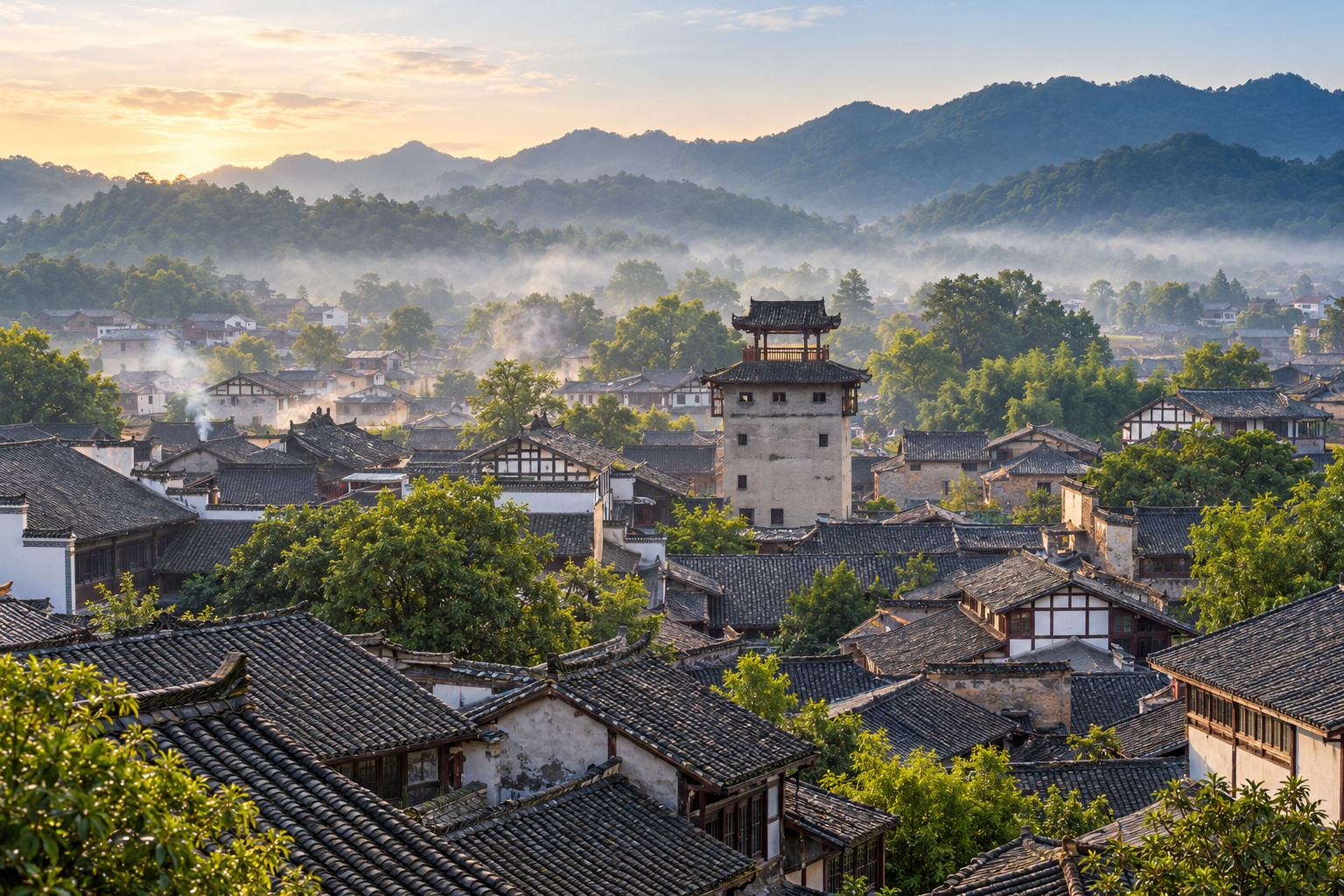
Cover: Fengsheng roofscape and tower with wooded hills. Approximate AI illustration based on historical real photographs; not a current photograph, route map or proof of access.
Reference photographs used only as internal inputs: Banan / Xiong Wei, Banan / Feng Yahong
Four scenes are AI-generated approximations; the planning diagram is original. Reference-photo capture dates are unknown. No independent language, image, rights or browser-display review is claimed. Approximate AI illustration based on historical real photographs; not a current photograph, route map or proof of access. The courtyard scene is inspired by restored Shiquantang; exact geometry and original fabric are not established. None of these illustrations proves interior access or current business opening.
Fengsheng Ancient Town in 2026 is a Banan outing for reading old trading streets at an unhurried pace. The district's tourism profile names three preserved stone-paved streets: Fushou, Shizi and Banbian. Plan around the public streets and open businesses, with time to look closely and a confirmed journey home.
Save 丰盛古镇, Fengsheng Ancient Town, as the destination. Its historical description as a “dry wharf” refers to its role as a land-trade hub. It is not an instruction to look for a riverside promenade, and this guide does not invent a waterfront route from that phrase.
The approach here is architectural and social: observe how streets, shops and homes fit together, then decide where you would like to stop. This is desk research, not a record of walking the town. Individual buildings, businesses and public-transport services still need checking for your visit date.
Understand the trading town before choosing stops
The Banan district profile, dated 15 June 2026, places Fengsheng near the meeting of Banan, Fuling and Nanchuan. It describes a town that developed through trade and identifies its 2008 recognition as a Chinese historic and cultural town. Those points provide a useful framework without making every building the same age.
Look for the relationship between movement and business: a shop opening onto a street, a narrow frontage leading toward a courtyard, or a junction that encourages people to stop. These are observation prompts, not claims that a particular doorway is open for inspection. A place can reveal its commercial history from the public street without requiring entry into residents' homes.
Avoid making “unchanged” the test of whether Fengsheng is worthwhile. A living town needs repairs, deliveries, utilities and modern working businesses. The interesting question is how older spaces are used now, not whether your photograph can remove every sign of contemporary life.
This focus also keeps the visit distinct from an ancient-town collection exercise. You do not need a list of every historic settlement in Chongqing. Pick the details that make this one readable: the named stone streets, timber structures and history of exchange across the surrounding districts.

Courtyard and tower inspired by restored Shiquantang. Approximate AI illustration based on historical real photographs; not a current photograph, route map or proof of access. The courtyard scene is inspired by restored Shiquantang; exact geometry and original fabric are not established. None of these illustrations proves interior access or current business opening.
Reference photographs used only as internal inputs: Banan / Zheng Bin
Use Fengsheng’s three streets to plan a manageable visit
Keep the three street names in your notes: 福寿街, Fushou Street; 十字街, Shizi Street; and 半边街, Banbian Street. The Banan official profile and Trip.com's destination description identify these stone-paved streets. English pages may translate the names literally as Cross Street or Half Street, so the Chinese characters are useful when comparing signs.
On arrival, look for the visitor map and ask which public connections are available. This guide does not establish an exact street order, distance or continuous step-free circuit. An attractive line on an online map may not show a threshold, temporary work or a passage that belongs to a household.
Begin with an open public section and let the pace develop from what you find. At a junction, decide whether the next part is a public street or a private entrance before continuing. If a business has a courtyard, ask whether visitors may enter and whether a purchase or ticket is expected.
Agree on one easy-to-identify meeting point if your group separates. A street name helps orient everyone, but a photograph of an agreed public landmark or shop exterior can be more useful than “meet near the old buildings.” Make sure the landmark is identifiable without photographing residents at close range.
Give the journey as much attention as the old street
Fengsheng is a destination in Banan, not a stop you should assume is next to central Chongqing's hotel districts. Secondary sources disagree on some distances and proposed transfers. This guide does not average those figures into a new promise or reproduce an unverified bus schedule.
Choose the travel method after checking the current journey from your actual starting point. If arranging a car, give the provider the full Chinese destination and agree on arrival and collection points. Ask whether waiting, parking, changes and the return journey are included in the quoted total.
If travelling by public transport, confirm both legs, the final return and the place where any transfer occurs. A historic-town article can remain useful for architecture long after its transport paragraph becomes outdated. Do not depend on an older service description for the trip home.
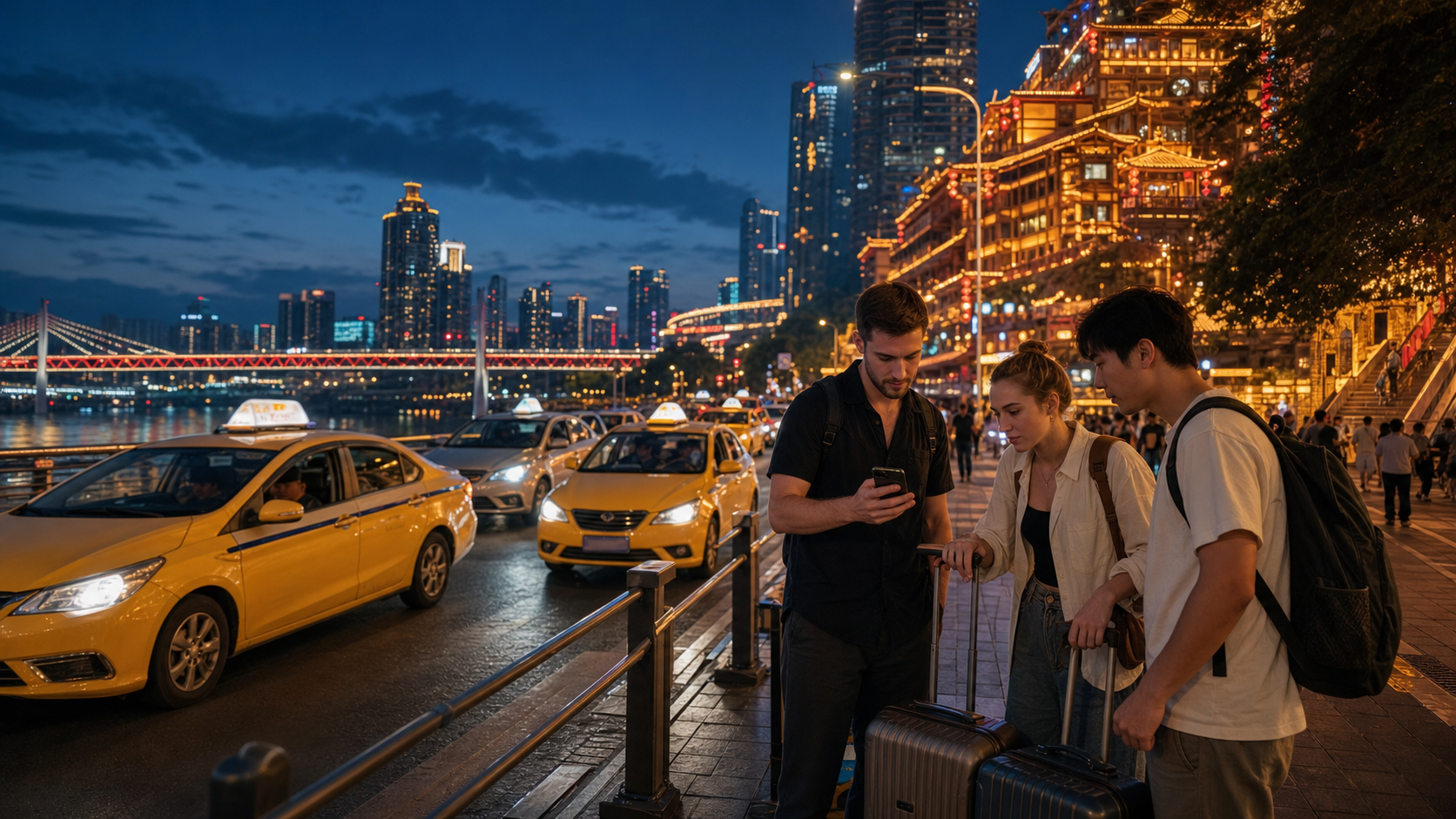
Keep the return location available offline and agree on it before spending time in the streets. The site's taxi and ride-hailing guide offers wider booking help. It does not establish that an on-demand vehicle will be available whenever you finish at Fengsheng.
Decide how much town fits your day
A comfortable visit needs space for three things: orientation, looking and a pause. The exact duration depends on the route you choose, the businesses open and the interests of your party. Do not treat a platform's suggested visit time as a timed circuit that must be completed.
For someone using a mobility aid or pushing a stroller, ask about the particular street surfaces, steps, thresholds and rest facilities. The presence of public streets does not establish a continuous accessible route through every historic section. Decide which part is workable rather than assuming the whole town has one uniform surface.
Weather can also change what kind of outing you want. If conditions make your chosen streets uncomfortable, shorten the plan rather than extending it into uncertain passages or closed interiors. Keep bags manageable, let residents and deliveries pass, and avoid stopping the entire group across a narrow section.
If you want a different old-town experience closer to the focus of a central-city itinerary, compare the Ciqikou guide. The choice should follow your available travel time and interests, not a claim that one town is universally more “authentic” than another.
Look at buildings from the public side of the threshold
Banan's architectural description identifies two- to three-storey timber structures, with brick-and-tile courtyard buildings among the town's architectural features. A commercial destination account from China Dragon Tours also describes Fengsheng's trading history and watchtower heritage. These accounts support looking at building forms; they do not grant access to every property mentioned.
A useful viewing sequence is street, frontage, roofline. Start with how a building meets the route used by pedestrians. Then look at door and window shapes visible from outside, and finally step back where permitted to understand the upper structure. This gives the building context without leaning into a doorway or blocking the pavement for a close-up.
Do not assume a decorative detail is original to a named dynasty. Repairs and replacements may not be apparent from a photograph. If a dated interpretation panel is available, distinguish what it says about the building from what it says about the town as a whole.
Watchtowers and named historic interiors deserve a separate access check. Do not climb a staircase because a travel listing mentions an upper-level view. Ask whether the space is open, which areas are permitted and whether photography is allowed. Closed doors are a normal boundary in a place where people live and work.

Grey roof tiles and timber balcony details in Fengsheng. Approximate AI illustration based on historical real photographs; not a current photograph, route map or proof of access.
Reference photographs used only as internal inputs: Banan / E024-court-2
Meet a working town through its crafts and food
Fengsheng's official profile highlights traditional trades and everyday businesses. The Chongqing agriculture authority's 2023 report describes craft-food production and courtyard-based economic activity. That is evidence of a working town, not a promise of a demonstration whenever a visitor arrives.
If you find an open workshop, ask whether watching is welcome. Keep clear of working tools, materials and customers. A person serving their neighbours is not automatically available to explain a process, and a brief refusal does not mean you chose a bad time to visit.
For photographs, separate permission to enter, permission to photograph the space and permission to photograph a person. One does not imply the others. Ask before making an identifiable portrait, particularly of children, and accept a refusal without repeated requests or a longer lens from farther away.
Two short phrases can help: “可以拍照吗?” means “May I take a photograph?” and “这里可以进去吗?” means “May I enter here?” Point clearly to the subject or doorway and wait for an answer. These phrases are communication aids, not a substitute for understanding what permission was actually given.
Buy or taste with a specific question in mind
The official sources mention foods and trades associated with Fengsheng, including dried tofu, noodles and bean-based products. That provides ideas for what to look for, rather than a verified menu at a particular stall. The presence of a food name in a heritage description does not establish what is being made or sold today.
If buying, ask about the item itself: the unit used for the price, the amount in a pack, the ingredients, how it should be kept and whether it is intended to be eaten immediately. Look at the actual label instead of treating “traditional” or “local” as an explanation of contents or origin.
For a dietary restriction, ask directly about sauces, fillings and preparation as well as the main ingredient. A tofu- or bean-based name alone does not establish a vegetarian, halal or allergy-compatible product. This guide does not verify any particular seller's recipe or preparation practices.
Consider one purchase you understand instead of filling a bag on the strength of a picturesque stall. The site's craft and souvenir guide can help frame questions about provenance, materials and packaging. Confirm the rules that apply to anything you intend to take onward across a border.

Fengsheng building cluster with timber gables and modern plaster buildings. Approximate AI illustration based on historical real photographs; not a current photograph, route map or proof of access.
Reference photographs used only as internal inputs: Banan / Feng Yahong
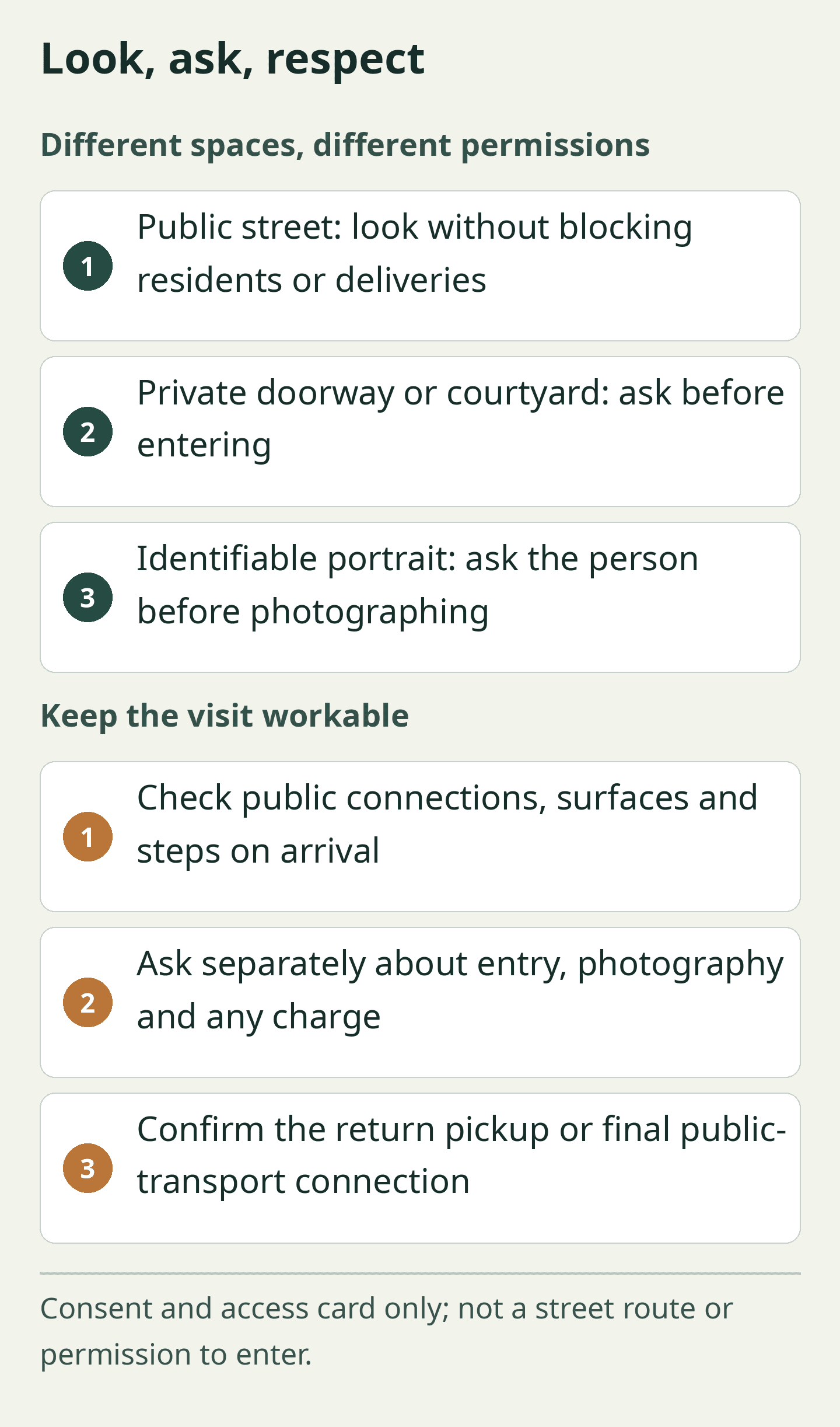
Original editorial planning diagram. Consent and access card only; not a street route or permission to enter.
Original editorial planning diagram
Different spaces, different permissions:
- Public street: look without blocking residents or deliveries
- Private doorway or courtyard: ask before entering
- Identifiable portrait: ask the person before photographing
Keep the visit workable:
- Check public connections, surfaces and steps on arrival
- Ask separately about entry, photography and any charge
- Confirm the return pickup or final public-transport connection
Consent and access card only; not a street route or permission to enter.
About This Guide
Prepared through automated desk research on 1 October 2026 using Banan's official attraction profile, a municipal agriculture report and travel-platform descriptions. Fengsheng, 丰盛, is the verified destination name. There is no firsthand visit or independent human-review claim. Transport, interiors, seller details and image permissions remain unverified.
Frequently Asked Questions
Q: What name should I use to find the town? A: Search 丰盛古镇, Fengsheng Ancient Town, in Banan. Keep the Chinese name alongside the English spelling when sharing the destination.
Q: Does “dry wharf” mean there is a riverfront walk? A: The description refers to Fengsheng's historic land-trade role. It does not establish a waterfront itinerary, and this guide does not promise one.
Q: Which streets are named in the official description? A: Fushou Street, Shizi Street and Banbian Street are listed. Their current connections and any access limitations should be checked on arrival.
Q: Can visitors enter the old houses for photographs? A: Enter a Fengsheng home or private courtyard only with the occupant's permission. Being in a historic town does not make every interior public.
Q: Are all shops open whenever the streets are accessible? A: No current opening schedule has been verified for individual Fengsheng businesses. Street access and a shop, workshop or historic interior opening are separate matters.
Traveler comments
Share a recent experience or ask a practical question about this guide.