
For Chongqing souvenirs in 2026, start with 4 practical choices: ramie textiles, small ceramics, folding fans and city-themed gifts. The district government recognizes Rongchang’s textile and pottery traditions. I would choose by material, maker and packed size, then confirm the shop before making a special trip.
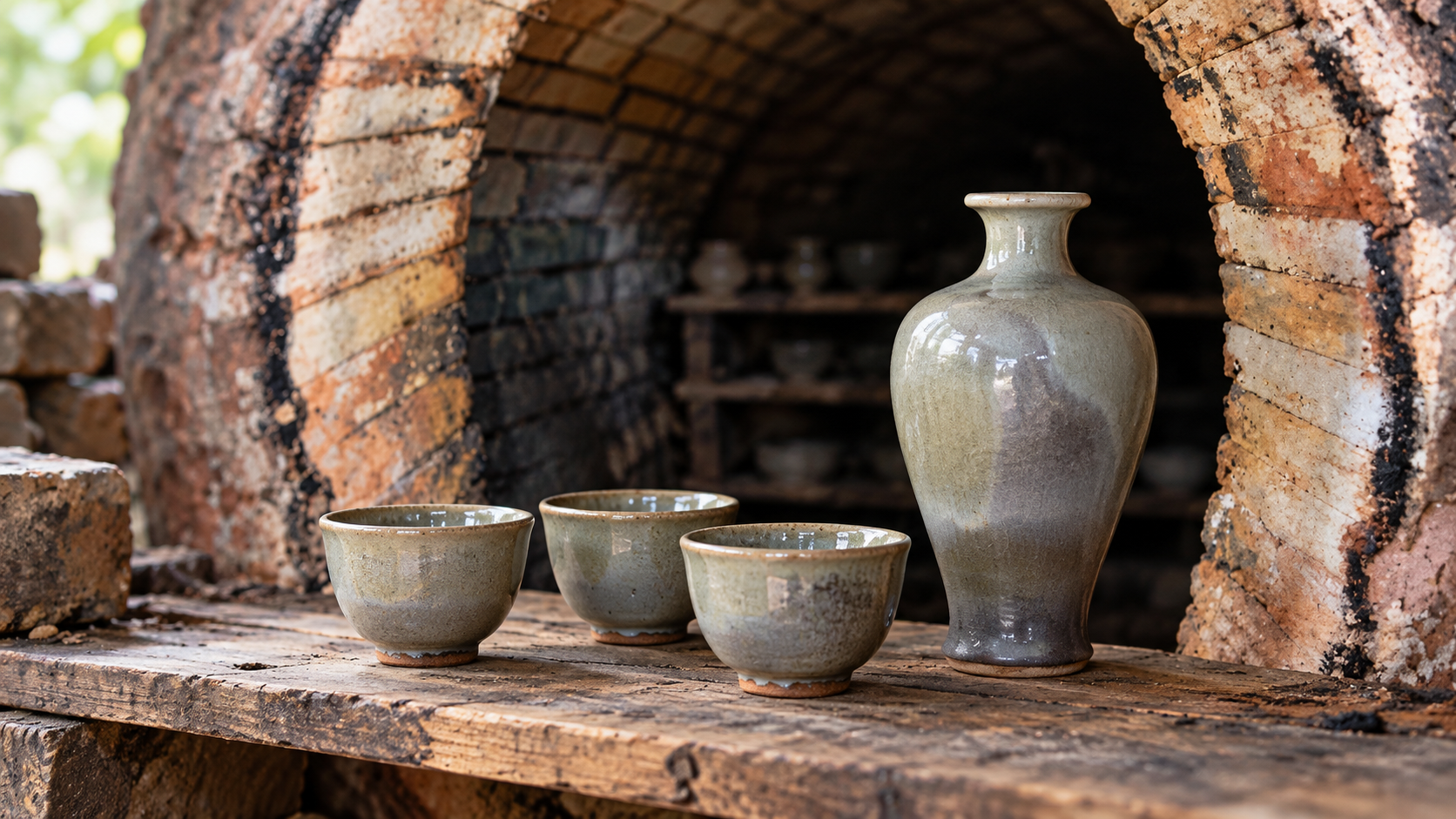
AI-generated illustration of a Rongchang-style pottery setting. It does not depict an actual shop or verify any product availability.
Start with one purpose: a personal keepsake, a gift someone will use, or a craft you want to learn about. Then check the material, the maker and the packed size before looking for a second shop. This guide focuses on non-food gifts, with a central-city showroom option and a separate Rongchang craft-town option.
Pick a material before picking a shop
For a light, relatively flat gift, start with a ramie textile item or a city-themed bookmark. For someone who enjoys tea or coffee, consider one small ceramic piece rather than a complete service. A folding fan works for a person who likes decorative objects, provided you check how it opens and how it will travel.
Treat these as shopping categories, not a guarantee of what any shop has today. The attraction of a craft gift is often the individual piece, so compare finish and usefulness rather than assuming that the biggest box or the word “heritage” makes it the right choice.
Rongchang xiabu: ask what the item is made from
Rongchang summer cloth, or xiabu (荣昌夏布), is traditionally hand-woven from ramie. Rongchang district's government records the weaving technique's inclusion on China's national intangible-cultural-heritage list in 2008. The same report identifies Rongchang summer cloth and pottery among the first “Chongqing Companion Gifts” selections in 2025. Rongchang government
You may encounter xiabu in contemporary accessories and decorative pieces as well as lengths of cloth. The China National Textile and Apparel Council has documented designers combining Rongchang ramie with embroidery, other fabrics and contemporary shapes. A modern design is therefore not automatically less meaningful than a traditional-looking one. Textile industry association
Ask which part of the item is xiabu. A textile-covered notebook, a framed work and a garment are different purchases, with different care needs. For clothing, check the fiber label, seams and fit. For a framed piece, inspect the frame and the size of the protective packaging. Keep the maker's name with the gift so its story does not depend on remembering a sales conversation.

AI-generated scene based on a real Rongchang xiabu photograph, illustrating ramie texture rather than stock at a particular shop.
Small Rongchang ceramics: buy the piece you can protect
Rongchang pottery has a documented local craft tradition; the district government lists pottery-making's national heritage recognition in 2011. Its products include everyday wares and decorative ceramics. That gives you a useful choice between something to use and something to display. Rongchang government
A single cup or small vase is a sensible starting point when luggage space is limited. Look at the rim and base in good light. Ask whether the specific piece is intended for food or drink, and request the maker's care instructions rather than assuming it is suitable for a dishwasher, microwave or boiling water.
Inspect the actual item you will receive before it is wrapped. If buying a set, check every piece. Ask to see the final box before paying: a small cup can become a surprisingly bulky purchase once protected. Do not rely on a decorative gift box alone to prevent damage in transit.

Check 1 the rim; 2 the base; 3 ask about intended use; 4 protective packing. Inspect the actual item; this diagram does not certify its suitability.
Folding fans and city-themed gifts
Rongchang folding fans are another established local craft category, identified alongside pottery and ramie in the district's tourism promotion. iChongqing's Rongchang profile
Ask permission before opening a display fan. Check that the ribs move smoothly, the surface is securely attached and the closed fan fits its sleeve or box. Ask whether decoration is printed or painted by hand; both can be enjoyable, but they should not be priced or described as the same work without explanation.

AI-generated image based on real Rongchang grass-linen fan photographs; it illustrates materials and construction, not products confirmed for sale.
If your interest is the city rather than a particular craft, a small skyline-themed gift may be enough. Yulitang's own catalogue includes Chongqing-themed bookmarks, xiabu pieces and ceramic products. Use the catalogue to describe what you are looking for, then confirm the exact item and its availability with the shop. Yulitang catalogue
Where to look without turning shopping into a full-day trip
One specific central-city lead is Yulitang (渝礼堂), a craft and gift business. Its own contact page lists a showroom at 9-1, Building 1, Yuzhou Xindu, 140 Daping Zhengjie, Yuzhong District, near Shiyoulu station Exit 1A. This is an upstairs showroom, so save the full address rather than expecting a street-level souvenir shop. Confirm opening and the item you want before making a special journey. This is a documented lead, not a personally tested recommendation. Yulitang's address
Show this address when checking:
重庆市渝中区大坪正街140号,渝州新都1栋9-1,渝礼堂
If the making process matters more than a quick purchase, consider Rongchang as a separate outing. The district government's description of the Xiabu Cultural Tourism and Leisure Street includes exhibition spaces, the China Xiabu Museum and specialist craft businesses. It is a different trip from a short central-Chongqing shopping stop. Verify your chosen workshop and transport before committing a day. Rongchang craft district

Reference-based AI scene of Rongchang xiabu weaving; it illustrates the craft and does not identify a currently visitable workshop.
Make the language question small and specific
A photograph of the item plus one clear question is more useful than asking someone to find “the best local souvenir.” You can ask your hotel reception to help confirm a showroom's entrance, today's opening or whether a particular design is available.
If you are already staying at Walling Hotel (Jiefangbei Hongyadong), at No. 68 Linjiang Road, ask its front desk which assistance is available. Where StayCore AI interpreting tools are active, they can help frame a question for staff; the seller must still confirm stock, materials and arrangements. Installed features vary. Disclosure: the two brands are content partners of this website; this paragraph is a promotional mention, not an independent assessment of their service.
Match the purchase to the person receiving it
For a colleague or host, choose an object whose purpose is easy to explain. A bookmark can travel with a short note about the city; a cup needs a little more care information. Avoid making the recipient responsible for finding a place for a large display piece unless you know they enjoy that kind of gift.
For your own home, think about where the object will go before buying it. A beautiful textile may need a frame, a fan may need a stand, and a teapot may be less useful to someone who normally makes coffee. Include those practical details when comparing purchases. They are part of the decision even if they are not part of the shop price.
For someone interested in craft, the useful extra is information. Ask for the studio or maker name, the material and a brief description of the technique. If a claim such as “handmade” matters to your choice, ask which steps were done by hand. It is reasonable to buy an appealing modern design without paying for an impressive story you cannot verify.
You can also leave without buying. Photograph a permitted display or save the business's catalogue and revisit the decision after checking your luggage. Do not let a special shopping journey turn into an obligation to purchase something unsuitable.
Five questions worth saving
- 这是在哪里制作的? — Where was this made?
- 这个是什么材料? — What material is this?
- 这是手工绘制的还是印刷的? — Is this hand-painted or printed?
- 可以看一下包装后的大小吗? — May I see its size when packed?
- 可以把店名、商品名称和价格写在收据上吗? — Could you put the shop name, item name and price on the receipt?
Before leaving, photograph the item and maker label for your own records, keep the receipt, and check that the packed purchase fits your carrying plan. If the seller proposes delivery, confirm the destination, full cost and expected arrival before agreeing. A compact object with a clear maker and a practical use is often the souvenir that earns a lasting place at home.
About This Guide
Sources checked on September 30, 2026. This is a desk-researched guide, not a report of an in-person shopping visit. Retail stock, opening arrangements and prices need direct confirmation. The cover is an AI-generated illustration. The three craft scenes were generated by AI using real photographs as references; the ceramic checklist is an original guide diagram. These visuals do not verify any currently visitable workshop, actual shop or stock.
Frequently Asked Questions
Q: Which souvenir should I choose when I have very little luggage space?
A: Start with a flat textile or small piece of stationery, then inspect the packed version rather than judging the display item alone. A frame or presentation box can change the decision. If you cannot protect a ceramic purchase comfortably, choosing another material is better than hoping the box survives the rest of the journey.
Q: Does a heritage label mean an individual item is handmade or authentic?
A: A general statement about a craft tradition does not answer how a particular retail item was made. Ask about that exact product, its maker and its materials. Keep the answer on a receipt or product card if it matters to you. This guide does not authenticate individual sellers or pieces.
Q: Should I travel to Rongchang just to buy one gift?
A: Make that journey when workshops and the craft setting are themselves part of what you want to experience. For one small purchase during a short city stay, first check a central showroom's catalogue and availability. Spending more time travelling does not automatically improve the gift, and an unconfirmed workshop may not offer a demonstration when you arrive.
Q: Is it better to buy a matching set or a single ceramic piece?
A: Buy for the recipient's actual use. One comfortable cup may get more use than a large set chosen mainly for its packaging. With a set, inspect each component and ask what replacements would involve. Think through the complete packed size, not just the number of pieces shown on a shelf.
Q: Can my hotel or an AI translator verify the seller's claims for me?
A: They can help you communicate a question, but a translated answer is still the seller's answer. Ask for written product information and make your own purchasing decision. Availability of hotel assistance varies; neither a friendly recommendation nor a smooth translation should be treated as proof of craftsmanship, current stock or a product's suitability for your intended use.



Traveler comments
Share a recent experience or ask a practical question about this guide.