
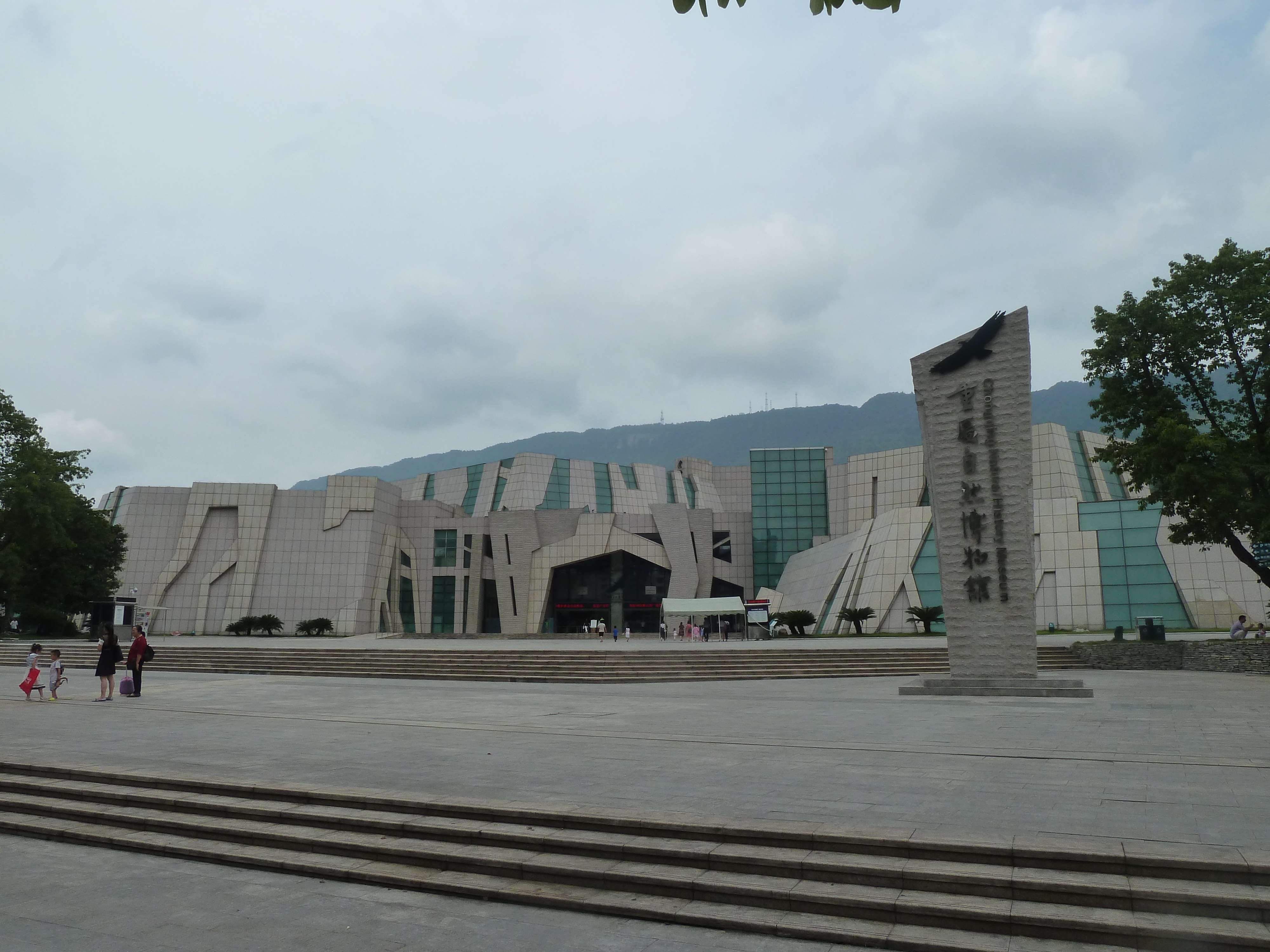
Chongqing Natural History Museum in Beibei suits a 2026 trip built around dinosaurs, wildlife or the landscape’s formation. The operator lists 6 permanent galleries. I would reserve a half-day including travel and choose 2 gallery priorities; the museum deserves a deliberate outing rather than a rushed addition to downtown sightseeing.
Historical exterior photograph taken on 2018-08-22 by STW932, CC BY-SA 4.0. This photo does not establish current conditions. Cover display is cropped to fit the layout and uses the page’s tint/contrast styling; the original photograph is available at the source link.
The decision is straightforward. Choose this museum when someone in your group has a genuine curiosity about the natural world. If your remaining Chongqing time is mostly earmarked for urban history and riverfront sights, weigh the journey against those priorities before leaving your hotel.
Decide what you would give up to go
The main cost is the time and attention the outing takes. Free admission makes the museum easy to consider, but it does not remove the travel or the need to eat, rest and get back. Compare two actual plans: your chosen galleries plus the complete return journey, and the activity you would otherwise do.
An early departure makes sense if the museum is a priority and you want flexibility afterward. A late start deserves more scrutiny: check when you can actually reach the entrance, then subtract the time you need for your chosen galleries from closing time. Being admitted shortly before the cutoff does not make the remaining visit worthwhile for every traveller.
For a mixed-interest group, agree on one shared gallery and a stopping point before setting out. A shorter visit that everyone accepts can work better than asking less enthusiastic companions to wait through a complete tour. If even the shared gallery feels like a compromise, save this outing for another trip.
Check which museum and which building
Save the Chinese name 重庆自然博物馆 and the address 重庆市北碚区金华路398号: 398 Jinhua Road, Beibei District. This guide covers the main natural-history exhibition building. The institution also has a separate historic site associated with the former China Western Academy, so an old address or a search result about the academy can send you somewhere else. The municipal government's museum profile distinguishes the two sites.
Chongqing China Three Gorges Museum is another institution, in Yuzhong District. Be explicit about “Natural History” and “Beibei” when asking for directions. iChongqing's museum directory lists them separately.

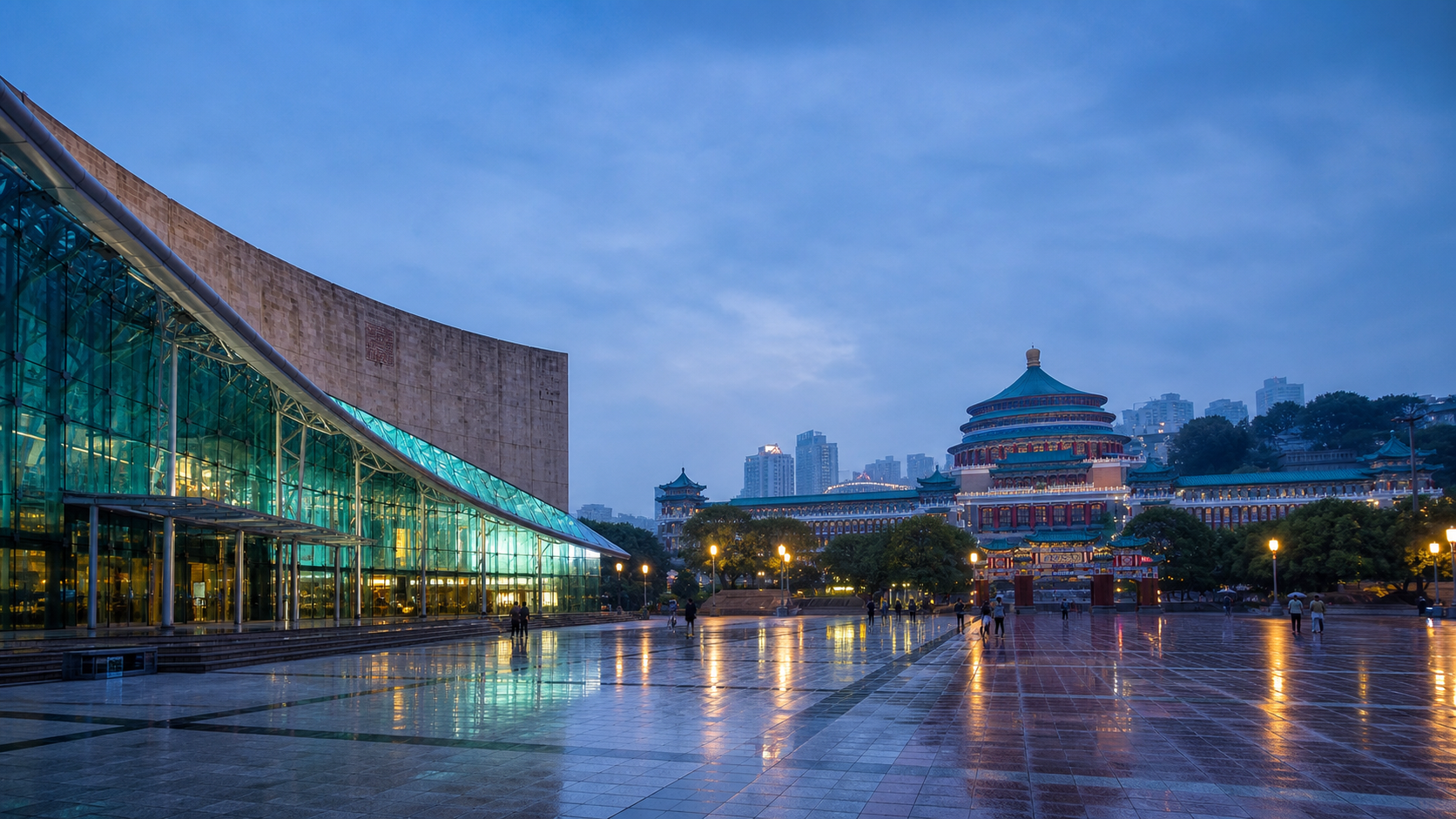
AI-adapted exterior illustration based on STW932’s photograph from 2018-08-22, with tighter framing and exposure changes. Source and adaptation: CC BY-SA 4.0. This is not evidence of current conditions.
Treat the journey as part of the decision
The museum sits at the foot of Jinyun Mountain, according to iChongqing's destination guide. Think of it as a Beibei outing rather than an extra stop between central-city attractions.
The operator's transport instructions specify Metro Line 6 to Zhuangyuanbei, followed by a bus connection: exit 1C for bus 560, or exit 2B for bus 583. Check the displayed bus destination and current navigation before boarding. These are the published connections, not a promise about waiting times on your travel date.
A taxi for the final leg may simplify the transfer, especially if your group is tired. Compare that option with the bus in a live mapping app. For a direct car journey, check traffic before committing; a fixed “minutes from downtown” claim is unhelpful when the starting point and traffic vary. Save the museum pin and your return destination before setting out.

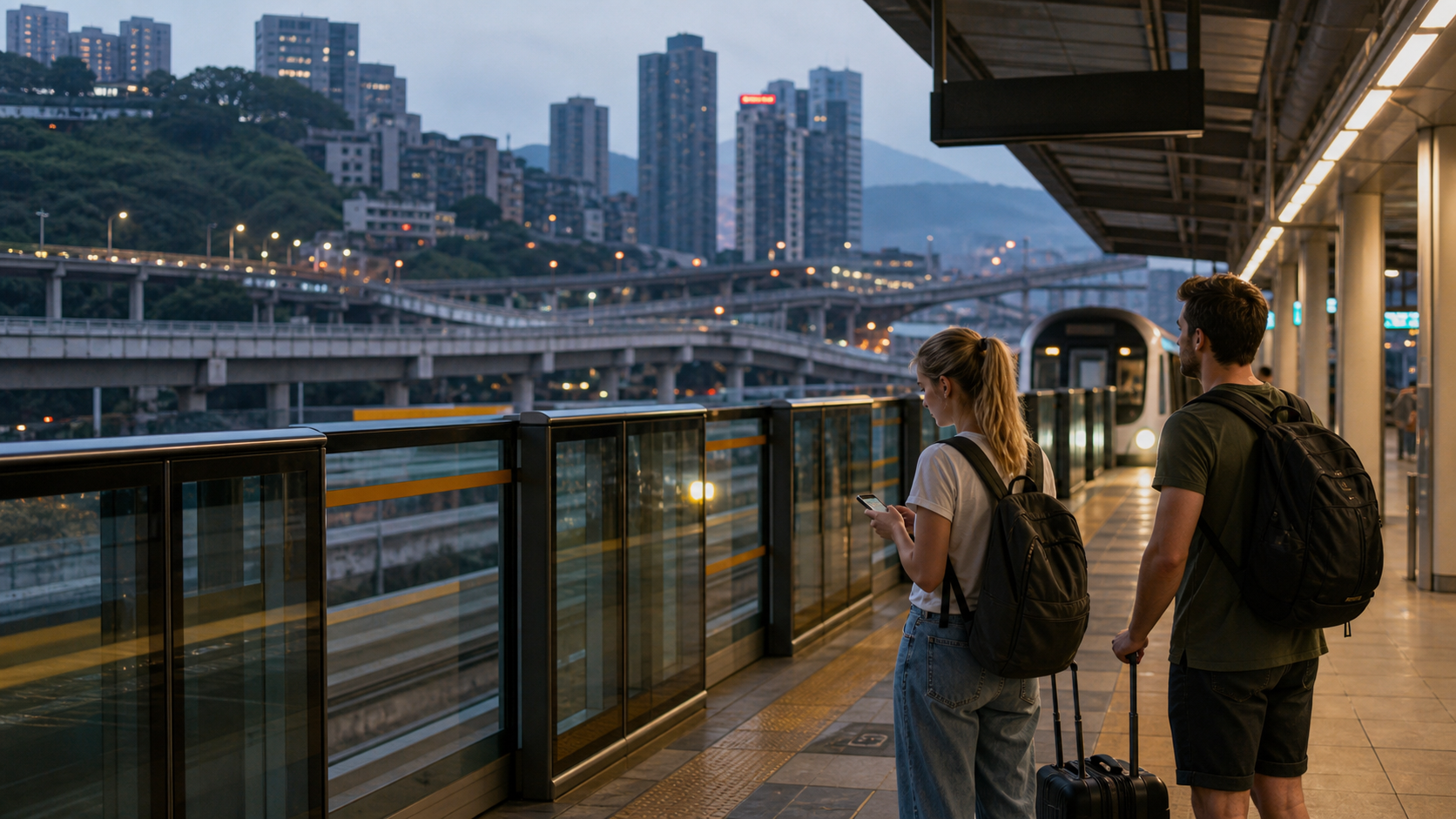
Diagram key: Line 6 to Zhuangyuanbei; exit 1C for bus 560, or exit 2B for bus 583. This is a connection schematic; check current signs and directions.
Admission and opening information need one important caveat
Permanent exhibitions are free under the museum's visitor rules. Do not assume that every temporary exhibition, workshop or special activity has the same terms.
Regular opening is published as 09:00–17:00, with Monday closure except public holidays. There is a discrepancy over last entry: the operator's homepage says 16:30, while the municipal government's June 2026 listing says 16:00. Arrive well before 16:00 rather than building a trip around the later cutoff. Check the operator's latest notice for your date, especially during holidays.
Old reservation instructions still appear online. A July 2024 government notice removed booking requirements for most of the city's free museums, and the museum's own announcement, reproduced by Chongqing News, specified walk-in entry for individual visitors. That is the latest general entry-policy notice located for this guide. Carry your passport; the checked pages do not spell out an overseas-passport entrance procedure, so confirm that detail with the museum if needed. Its listed visitor telephone is +86 23 6031 3777.
Choose the galleries around your interests
The museum lists six permanent exhibitions. You do not need to give them equal time.
Dinosaur World is the obvious starting priority for fossil enthusiasts. iChongqing describes skeletons, footprints, eggs and reconstructed habitats. Use that variety to look beyond size: compare what bones reveal with the different evidence left by a footprint or an egg. This is a useful way to slow down without trying to read every label.
Landscape Metropolis, the Chongqing Hall, is especially relevant to a visitor exploring the city. The operator's description connects mountain building, changing land and sea, and river development with Chongqing's terrain. Make room for it if you want the streets, hills and rivers outside to have a geological context.
Animal Planet presents wildlife specimens and continental environments, with donations from Kenneth Behring acknowledged by the museum. It offers a change of subject after fossils. Pick a few animals to compare rather than turning the hall into a checklist of names.
Earth Mystery explores the planet's structure, materials and processes. Life Stream follows life's long history, while Ecological Homeland considers the relationship between human activity and the environment. These themes can connect a visit into a larger story: how the planet changes, how life responds, and where people fit. The museum explains them on its Earth, evolution and environment pages.
Build a visit you will still enjoy at the end
For a focused visit, choose two priorities before arrival, then leave one gallery as an optional extra. A dinosaur enthusiast might pair Dinosaur World with Life Stream; someone interested in Chongqing itself might pair Landscape Metropolis with Earth Mystery. These are thematic suggestions, not a floor-by-floor walking route. Follow the entrance map and any temporary closures on the day.

AI-generated illustration based on an official museum photograph. The miniature landscape and panoramic backdrop depict an indoor display, not an outdoor location or a current floor plan.
If visiting with children, ask each person to choose one question: How can a footprint become a fossil? Why does an animal have that body shape? What made these mountains? Finding an answer gives the visit a purpose without requiring everyone to finish six halls. Adults can use the same approach.
Get more from exhibits when the language is unfamiliar
This guide does not promise comprehensive English labels. You can still prepare a useful way of looking. Save the bilingual gallery names before arriving, then identify the subject of a case before trying to translate its entire explanation. With a skeleton, start with proportions and posture; with several specimens, look for similarities and differences. Write down a question that the label might answer.
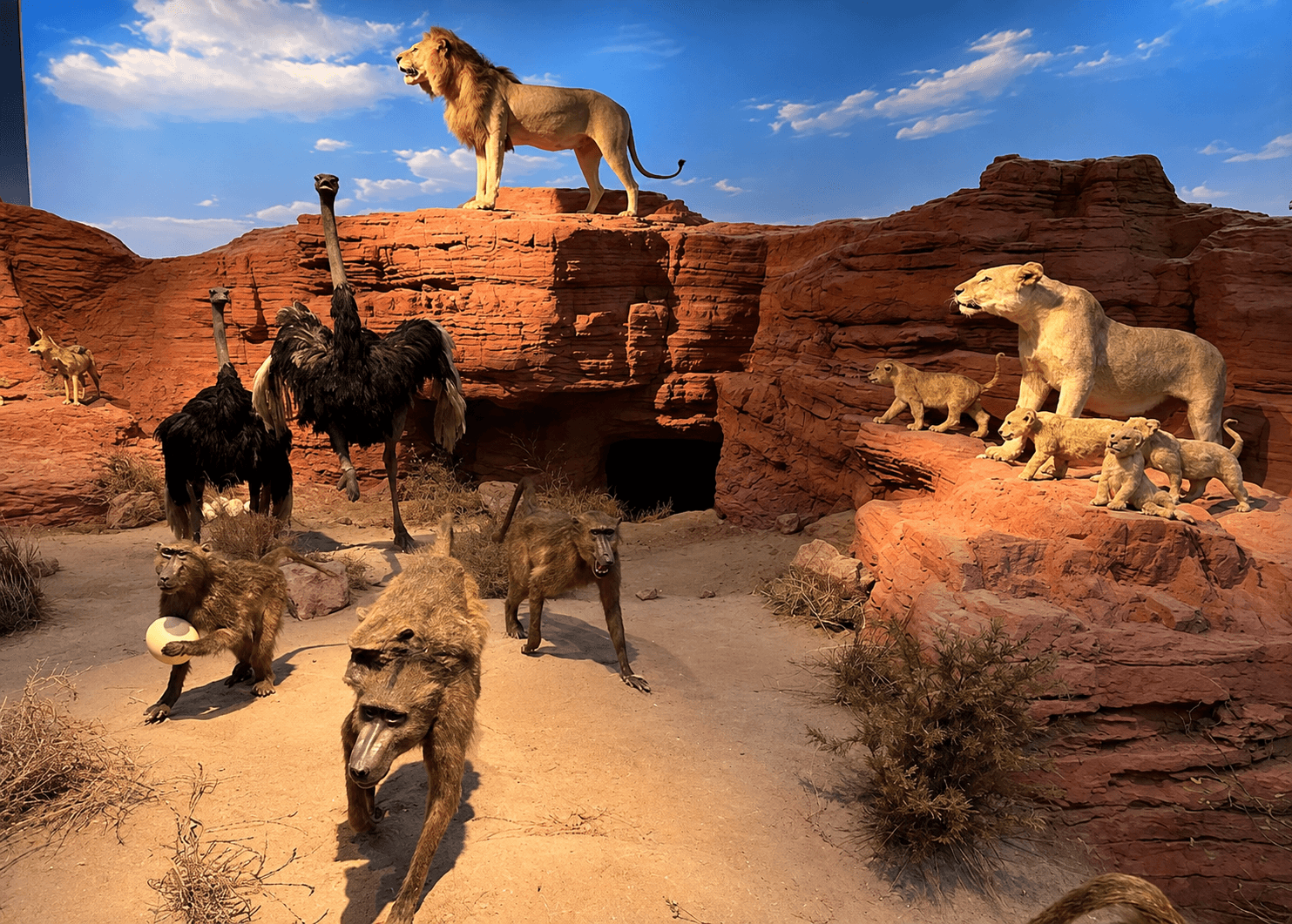
AI-generated illustration based on an official museum photograph, showing staged wildlife specimens. This is not a live-animal scene or a record of a recent visit.
Translate selectively. A title, species name or short explanatory passage can be more useful than a screen full of hurried machine translation. Check that the translation belongs to the object you are examining. Treat awkward scientific wording cautiously, especially if a translated sentence seems to make a surprising claim. Keep the original term so you can look it up afterward rather than confidently repeating a garbled explanation.
Before photographing a label for translation, check nearby restrictions and ask staff if unsure. Do not block a case while reading your phone. If your group prefers conversation to label reading, let each person choose one object and explain what they noticed. The aim is to leave with a few things understood, rather than a camera roll of text that nobody reads.
Small preparations that make a difference
The visitor rules prohibit eating in exhibition halls, touching exhibits, flash and tripods; they also prohibit video recording in the halls. Plan breaks outside the display spaces and follow local signs. Keep important belongings with you when depositing bags.
Avoid making a specific temporary exhibition the sole reason for travelling without confirming its run dates. Likewise, if step-free access, wheelchair availability or an English-language tour is essential, ask about it before you go. This research did not establish dependable current details for those services.
Before leaving, save the address, carry your passport, check current opening and last-entry times, and plan the return journey. Carrying a passport is a preparation reminder, not confirmation that it is a mandatory admission document.
Five useful phrases to save:
- 请问,去重庆自然博物馆怎么走? — How do I get to Chongqing Natural History Museum?
- 是北碚区金华路398号吗? — Is this 398 Jinhua Road in Beibei?
- 请问,用护照怎么入馆? — How do I enter with a passport?
- 恐龙厅在哪里? — Where is the dinosaur gallery?
- 今天几点停止入馆? — What time does entry stop today?
The strongest reason to visit is an interest you can name before leaving. Give that subject enough time, include the Chongqing Hall if the local landscape intrigues you, and leave room for the return journey. A selective visit will usually serve you better than rushing through every exhibition.
About This Guide
This is a desk-researched guide, not an account of an in-person visit. The cover is an attributed historical photograph. The transit connection is an original guide diagram. The three scene images are reference-based AI illustrations, individually labelled, and do not document current conditions.
Frequently Asked Questions
Q: Can I combine the museum with Jinyun Mountain?
A: Consider that only after deciding what the museum visit needs. Its setting near the mountain does not establish the distance to your intended trail entrance or the effort of a particular walk. Check that second destination separately, including weather, access and the return journey. Avoid treating a mountain outing as an automatic quick add-on.
Q: Is this a sensible stop before a flight or intercity train?
A: Only if your live routing leaves a comfortable margin for the onward trip and departure formalities. Count the entire journey from the museum to the correct terminal or station. If your plan depends on a short museum visit, an immediate vehicle pickup and clear roads all working perfectly, choose a less time-sensitive day.
Q: Can I bring a large suitcase?
A: The published visitor guidance mentions depositing bags, but the checked information does not establish suitcase limits, locker dimensions or guaranteed storage capacity. Ask the museum before travelling with bulky luggage. A general bag-deposit instruction is not enough evidence to build a luggage-storage plan around.
Q: Should I pay for a workshop to make the visit worthwhile?
A: Decide based on the activity itself. Before paying, confirm its language, age requirements, duration, meeting point and what the fee includes. The permanent galleries already provide subjects for a self-guided visit. Do not assume an activity advertised elsewhere runs daily or accepts walk-in participants.
Q: What should I do if the entrance is crowded?
A: Keep your return deadline in mind before joining a long queue. The museum's published walk-in announcement allows temporary visitor limits, so free admission does not guarantee immediate entry. Ask staff about the current situation, then decide whether the time left still suits your two main gallery priorities.
Traveler comments
Share a recent experience or ask a practical question about this guide.