
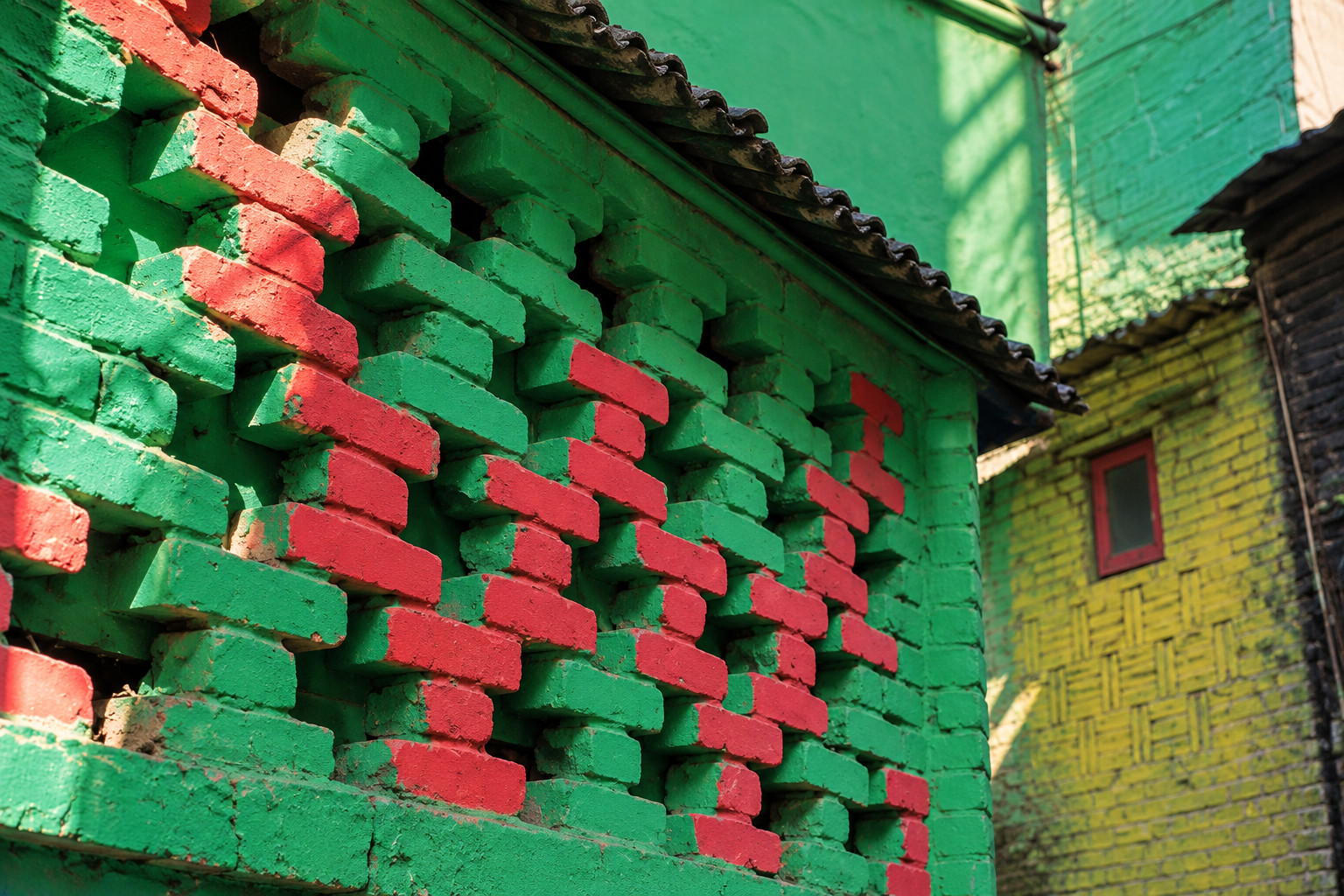
Cover illustration: AI illustration based on historical photo references. Mafangwan: a red-and-green brick screen and neighboring yellow wall; not a verified public approach. The scene and details are approximate, not a current photograph or proof of public access, a public path or an authorized viewpoint.
Historical photo reference only; original not republished; the reference grants no reuse permission: 华龙网-新重庆客户端 / Photographer not credited
This guide contains four explicitly labeled AI scene illustrations from historical photo references and one original localized planning diagram. Photograph capture dates and current access are not established by the page update dates. No independent review is claimed.
For Mafangwan Colorful Lanes in 2026, plan a small-scale photo walk that keeps residential access clear and treats murals as changeable. Chongqing’s planning authority identified Mafangwan Qicai Alley in its 2020 coloured-neighbourhood map. Local reporting describes painted older housing and connecting lanes, so the visit should follow public space rather than a hunt through private doorways.
Save 马房湾七彩巷, sometimes listed as 马房湾66号七彩巷. English versions include Mafangwan Colorful Alley and Colorful Lane, No. 66 Mafang Bay. Check that a map result refers to the lanes, because the Mafangwan No. 66 name also appears in restaurant listings.
The attraction is the meeting of paint and an existing neighbourhood: corners, walls, windows and changes of level. You can enjoy that without asking residents to perform for photographs or treating their belongings as props. A concise visit with a few carefully made pictures is a reasonable goal.
Check the identity before travelling for a particular wall
The municipal planning authority’s November 2020 map feature names Mafangwan Qicai Alley alongside other coloured neighbourhoods, including Shijingpo and Wenxingwan. Those are different destinations. A collection of rainbow-coloured houses in a search result is not enough to establish that the photograph was taken at Mafangwan.
Compare the Chinese place name, the post date and the image caption. If a guide mixes several neighbourhoods, identify where its Mafangwan section begins and ends before borrowing a route instruction. Directions to Shijingpo or Wenxingwan should not become directions to this alley simply because all appear in the same article.
For a specific mural, look for recent photographs that show recognisable context beyond the artwork. A close crop may conceal whether the picture is on a public wall, inside a business or on a temporary display. Avoid building a long cross-city journey around an image whose location and date you cannot establish.
Set an expectation that survives change. You might want to photograph painted architecture, observe how colour alters a lane, or compare wide and close compositions. These aims can still work if a favourite celebrity portrait has been repainted. An exact recreation of someone else’s image is a much less dependable plan.

AI illustration based on historical photo references. Mafangwan: colored upper-storey brickwork and windows, with mural and lettering outside the frame. The scene and details are approximate, not a current photograph or proof of public access, a public path or an authorized viewpoint.
Historical photo reference only; original not republished; the reference grants no reuse permission: 华龙网-新重庆客户端 / Photographer not credited
Use Yangongqiao as a lead, then verify the approach
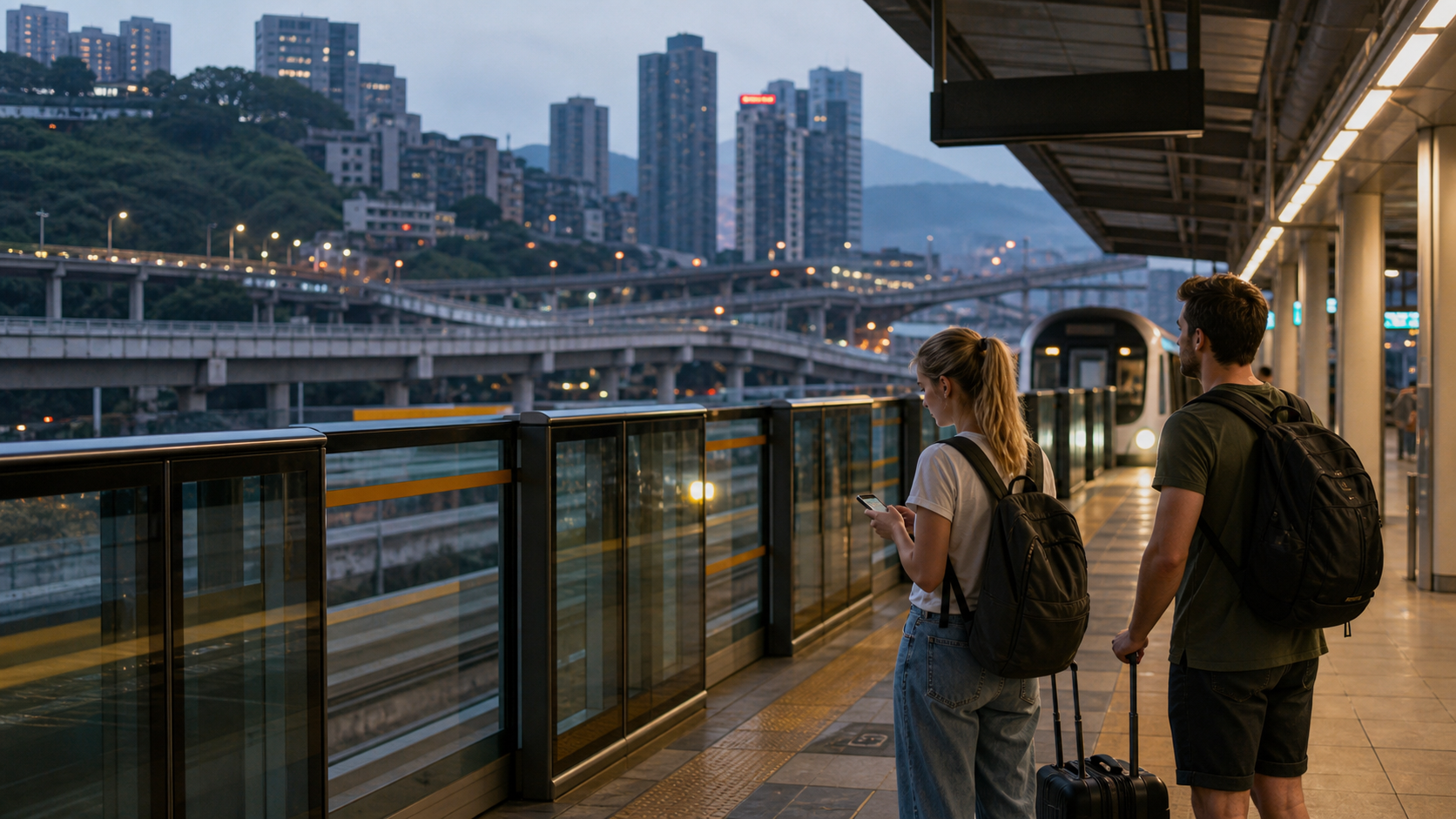
A CQNEWS route feature published in December 2020 places Mafangwan near Yangongqiao and names Line 1 as an approach. It includes an exit number and distance, but those historical details are not treated here as current walking instructions. Check the present station map and the pedestrian route to 马房湾七彩巷 before travelling.
When leaving the station, establish which side of the road you are on. If the phone route seems to lead into a vehicle entrance, private compound or unmarked stairway, stop and reassess. A nearby map pin can still sit beyond a barrier or on another level. Do not assume a narrow opening is a public shortcut because it points in the right direction.
If arriving by taxi, ask for a lawful street-side drop-off associated with the alley’s public approach. Do not request that a car enter a small pedestrian lane for convenience. Keep a photograph or saved pin for that approach so you can return without retracing every mural stop.
Our Chongqing metro guide provides general rail orientation, and the maps and road-levels guide explains the final approach problem. Neither replaces an entrance check on your travel date. This research did not confirm a current gate, opening schedule, step-free route or measured walking distance on 1 October 2026.
Let the lanes suggest a modest route
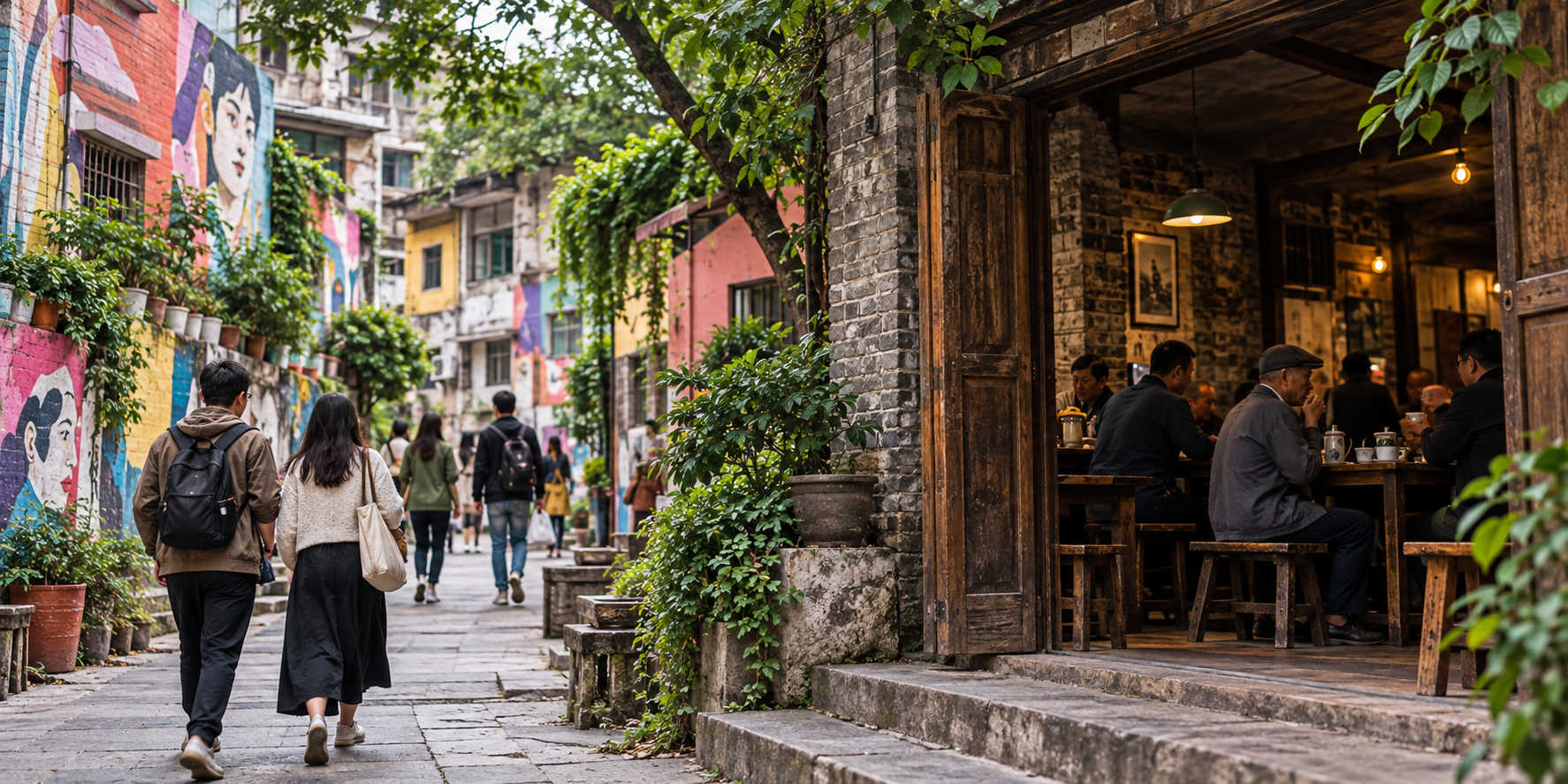
CQNEWS’s November 2021 on-location feature describes older residential buildings repainted with animal and plant imagery, with lanes connecting across different heights. That is enough to understand the character of the visit. It does not provide a complete public-access map of every passage between the buildings.
Start by walking through the clearly public portion without stopping at every wall. Notice where people need to pass, where an entrance serves a home or shop, and where a side passage becomes ambiguous. Then choose a few places where you can pause without blocking movement. This is a way to organise your visit, not a prescribed circuit.
At a junction, keep your return direction in mind. You do not need to explore a darker corridor or a staircase leading toward someone’s door to make the walk complete. If the public route ends sooner than expected, return by the known path. A short mural area does not become a larger attraction by extending into private space.
Wear shoes that let you pay attention to the surface as well as the walls. In rain, be especially cautious when changing position for a photograph. Keep bags compact and close to you, and do not leave equipment across the lane while you arrange a portrait. The neighbourhood’s everyday movement takes priority over your shot.

AI illustration based on historical photo references. Mafangwan: a painted lane bend; the composition does not establish public passage. The scene and details are approximate, not a current photograph or proof of public access, a public path or an authorized viewpoint.
Historical photo reference only; original not republished; the reference grants no reuse permission: 华龙网-新重庆客户端 / Photographer not credited
Photograph the relationship between colour and place
The June 2022 English CQNEWS feature identifies Mafangwan No. 66 Qicai Alley in Shapingba and describes animal murals across its small interconnected lanes. Use that as a starting subject, rather than a promise that every photographed animal remains on the same wall today.
Try a wide view first, showing how the painted surface belongs to the building and lane. Then make a closer image of a permitted detail. The wide photograph preserves context; the close one can explore texture, brushwork or the meeting of colours. This produces a more informative record than a series of tightly cropped walls that could be anywhere.
For a portrait of a companion, position them where other people can still pass. Wait for a brief opening rather than holding a route clear. Keep voices low and avoid repeated shouted directions beneath windows. If someone needs to enter a doorway, move immediately instead of asking them to wait while you finish.
Do not step backward while concentrating on the frame. Put the camera down, check the surface, and then change position. Avoid standing on furniture, utility covers, planters or rails to gain height. A slightly different composition is preferable to damage or a fall.
Use editing honestly when you later share the image. Adjusting exposure is different from adding a mural that was not there or removing barriers to suggest an open route. Include the capture date if the picture is intended to help another traveler. Colourful walls are a changing part of the city, and a truthful caption helps preserve that distinction.
Treat changing murals as part of the visit
A public Trip.com post explicitly dated February 2024 reports changes to celebrity imagery, standees and animal paintings at Mafangwan. The page also displays a relative “30 days ago” banner. The explicit original date is the more useful historical marker; neither label establishes the mural inventory for your visit.
If you are travelling for a particular performer’s image, look for a genuinely recent capture and be prepared for it to have moved or disappeared. Do not interpret a missing picture as a reason to search through a shop’s storage or a residential landing. Ask an open business courteously if you need help, and accept that staff may not know the history of every wall.
Treat small activities mentioned in old posts, such as collecting stamps, as possibilities to ask about rather than promised free services. Check whether an activity is still offered, what it costs and whether a purchase is expected. Avoid handling a display or borrowing a prop without permission.
The same applies to food. A restaurant mentioned beside the alley is a separate business, with its own menu, opening and queue. Decide whether to eat there after checking those details. This guide does not endorse a particular dish or reproduce a social review’s taste claims. You can visit the lanes without making a meal part of the plan.

AI illustration based on historical photo references. Mafangwan: painted brick and an awning detail; no mural is reproduced. The scene and details are approximate, not a current photograph or proof of public access, a public path or an authorized viewpoint.
Historical photo reference only; original not republished; the reference grants no reuse permission: 华龙网-新重庆客户端 / Photographer not credited, 华龙网-新重庆客户端 / Photographer not credited
Make neighbourhood respect visible in your choices
The 2021 local report explicitly describes older residential buildings. Read that as an instruction to notice how your visit affects the space, even when the walls have been made attractive to visitors. A painted window remains a window, and a picturesque doorway may still be someone’s route home.
Photograph buildings from public space without pointing into private rooms. Ask before taking a close portrait of a resident, worker or shopkeeper. If the answer is no, move on without bargaining or taking the picture from farther away. Children should not become incidental portrait subjects because they are playing near a colourful wall.
Leave stools, plants, laundry, deliveries and other belongings in place. Do not assume that an object outside a building has been placed there for visitors. If it obstructs your intended composition, change the composition. Avoid capturing readable personal details such as delivery labels when making close photographs.
For a group visit, keep the gathering small enough for people to pass and avoid staging repeated takes at the same narrow point. A commercial photo session, lighting setup or other activity that occupies space needs the relevant permission; this guide does not establish it. A phone camera and a light footprint are a more straightforward fit for a casual walk.
If you want to compare another Chongqing mural area, the Huangjueping graffiti guide concerns a different district and context. Choose between them according to your interest, then check the journey. Do not treat all painted neighbourhoods as interchangeable stops on an unverified continuous route.
Before leaving, check that you have not blocked a doorway, left rubbish or separated from your companions. Return to the known public approach and confirm the pickup or station direction there. A considerate visit ends as simply as it began, with the neighbourhood left usable for the people who live and work in it.

Original planning card; all labels also appear as selectable text below. Planning checklist only, not a route map or access audit. Follow current local signs and instructions.
Original editorial planning diagram based on this article; not a photograph or geographic map.
Visit planning: Mafangwan
Choose a small focus:
- Compare paint and building texture.
- Keep doors and walking space clear.
- Return by a known public approach.
Check before continuing:
- Is this the correct neighborhood?
- Which passages are public today?
- Can everyone manage the return?
Planning checklist only, not a route map or access audit. Follow current local signs and instructions.
About This Guide
This guide was researched on 1 October 2026 from municipal mapping, local reporting and a dated public traveler post. No visit or resident encounter is invented. The route is intentionally limited to checking and using public access; current murals, services, opening arrangements and accessibility remain unverified. Photography advice is editorial guidance, not a statement of site-specific legal permission.
Frequently Asked Questions
Q: What should I search for on a map? A: Search 马房湾七彩巷 or 马房湾66号七彩巷 and confirm the result is the colourful lanes in Shapingba. Mafangwan No. 66 can also lead to a restaurant listing.
Q: Is Yangongqiao the right metro area? A: A December 2020 CQNEWS feature names Yangongqiao on Line 1 for Mafangwan. Check the current exit and pedestrian approach before relying on that older route advice.
Q: Will a particular celebrity mural still be there? A: That was not verified for Mafangwan on 1 October 2026. A dated 2024 traveler post already reported changes, so use recent photographs as leads and expect the wall displays to evolve.
Q: Can I enter the buildings to take pictures? A: Stay in clearly public space at Mafangwan and ask before entering a shop, courtyard or other controlled area. Painted residential doors and windows do not grant permission to go inside or photograph private rooms.
Q: Do I need to eat at Mafangwan No. 66 to visit the lanes? A: Treat the lanes and the restaurant as separate destinations, and check any posted local access conditions. This guide has not verified a purchase requirement, restaurant menu or current meal service at Mafangwan No. 66.
Traveler comments
Share a recent experience or ask a practical question about this guide.