
AI disclosure: This guide was generated with AI from the cited sources. It is not a record of a personal visit or independent human verification. The editorial diagrams were created programmatically; the historical photographs are source-attributed photographs, not AI-synthesized scenes.

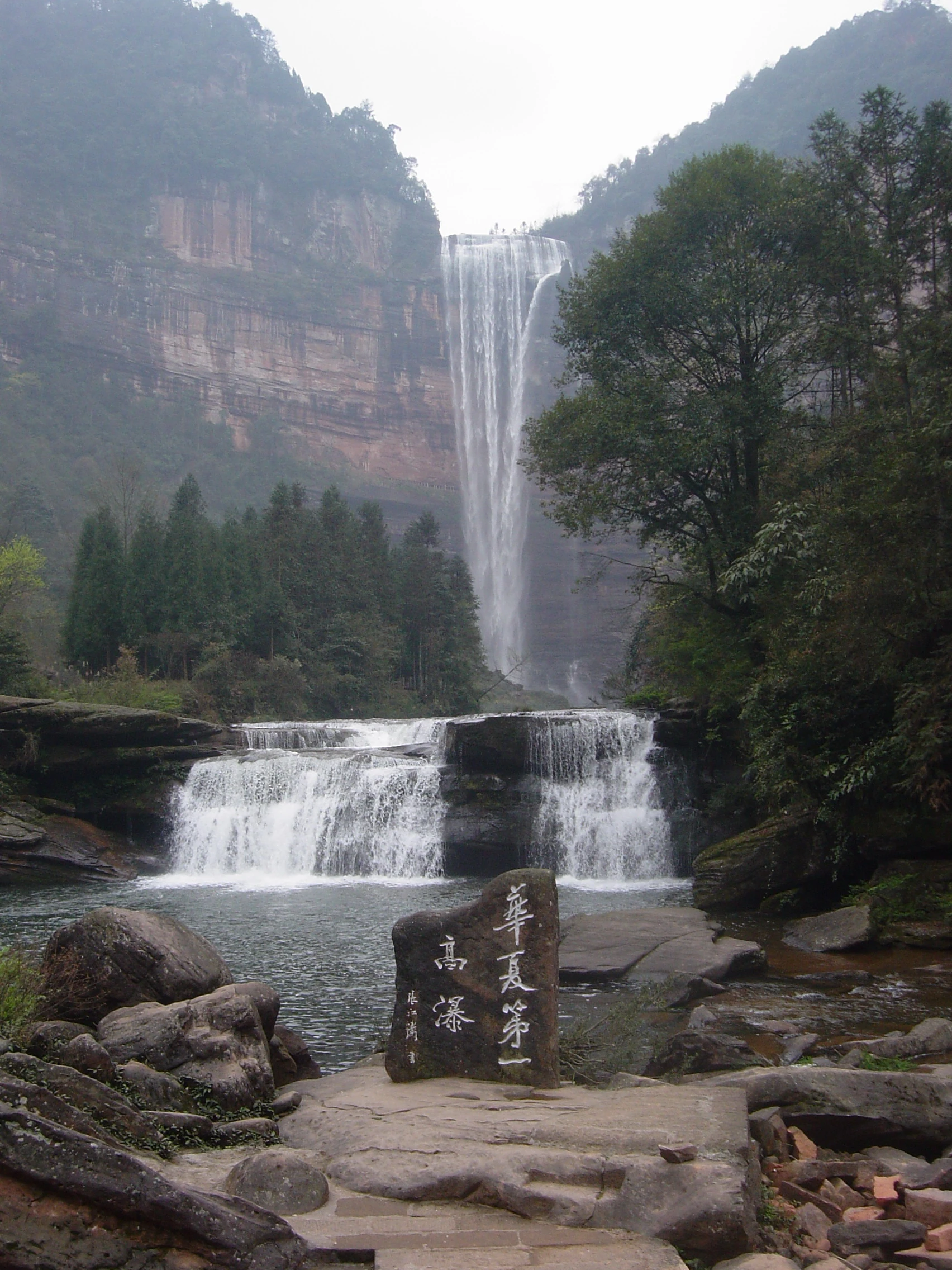
Wangxiangtai, also described as Nostalgia Balcony Waterfall, photographed on 18 March 2006. Water, paths and facilities are historical. The waterfall in Simian Mountain,Jiangjin,Chongqing.jpg — Chen Hualin; CC BY-SA 3.0. Source: https://commons.wikimedia.org/wiki/File:The_waterfall_in_Simian_Mountain,Jiangjin,Chongqing.jpg. Licence: https://creativecommons.org/licenses/by-sa/3.0. EXIF orientation normalized where applicable; entire image resized without cropping and encoded as WebP. No generative editing or scene alteration.
Simianshan in 2026 suits a waterfall-focused overnight when you want to explore beyond central Chongqing without racing between every named attraction. The municipal tourism authority describes a scenic area of 213.37 square kilometres. Choose Wangxiangtai Waterfall as the anchor, add one contrasting stop, and confirm road transfers and operating conditions before booking.
Save 四面山 for Simianshan, 江津 for Jiangjin, and 望乡台 for Wangxiangtai. “Simian Mountain” is another English rendering of the same destination. The municipal introduction locates the scenic area in southern Jiangjin; it is not a mountain viewpoint reached from a central-Chongqing metro exit.
This is a desk-researched planning guide. Its overnight structure is an editorial suggestion, not an operator itinerary or a report of our own visit. Current admission, internal transport and activity arrangements remain checks for your actual travel dates.
Choose a landscape, not a collection of pins
The municipal description of the 213.37-square-kilometre scenic area names five core areas: Wangxiangtai, Tudiyan, Longtan Lake, Honghai and Pearl Lake. Their inclusion in one scenic area does not mean that they form a compact, level walking circuit.
Begin with the feature that motivates the journey. For this guide, that is the waterfall at Wangxiangtai. Then choose a different kind of experience, such as a permitted red-cliff viewpoint or a lake visit, rather than adding several more stops with similar photographs.
A waterfall-and-cliff plan can work for someone interested in scale and landforms. A waterfall-and-lake plan creates a contrast between falling water and a more expansive waterside setting. Both are choices to discuss with the operator, not promises that a particular connection or activity is available.
For a group, choose the second stop according to the least flexible requirement: walking tolerance, motion sensitivity, departure time or interest. A single well-planned stop with time to look is preferable to spending the whole outing catching up with a crowded list.
Give Wangxiangtai attention before adding activities
The Japanese consulate’s 2021 travel account describes Wangxiangtai as 158 metres high and 48 metres wide. It treats the waterfall as one of several distinct Simianshan highlights. These dimensions provide scale; they do not predict how much of the face will carry water on your date.
At an open viewing area, look at how the fall relates to the cliff rather than concentrating entirely on a close-up of water. A wider frame can show the vertical setting and vegetation; a closer permitted position may emphasise spray and sound. Decide what interests you before repeatedly changing viewpoints.
Do not assume that a photograph from the bottom establishes an easy approach. Ask how much walking and climbing separates the vehicle stop from the viewing area, and whether the return uses the same path. A viewpoint shown from across a road also needs a permitted place to stand; it is not an invitation to stop in traffic.
The consulate account is useful as a dated first-person source. Its boat timings, shops and descriptions of the visit should not be carried forward as 2026 operating facts. This guide does not claim the editor experienced its spray or followed its route.
Use Tudiyan as a contrasting subject
The municipal introduction describes the red-cliff landform at Tudiyan, 土地岩, with dimensions of 376 metres in length and 127 metres in height. Its value in a selective outing is visual contrast: a broad rock face can help you read the landscape differently from a waterfall photograph.
Treat descriptive shapes and stories as interpretation. If a guide points out a face, animal or other outline in the cliff, enjoy that suggested resemblance without presenting it as a geological classification. Likewise, a promotional claim about international significance is not evidence of UNESCO inscription.
Ask which current public viewpoint suits your group and how it is reached. This research did not establish a continuous walking link between Tudiyan and Wangxiangtai. Do not join the two with a straight line on a phone map and assume the line is a visitor path.
If the day’s weather, route restrictions or transfer arrangement makes the second stop awkward, leave it out. The purpose of adding Tudiyan is to deepen the landscape experience, not create a compulsory checkpoint at the expense of a comfortable return.
A lake visit creates a different set of decisions
Honghai and Longtan Lake appear in both primary and travel descriptions. The consulate account describes a boat outing at Dahonghai and explicitly notes that entry and rides involve separate charges. That is a useful warning about product structure, even though the account is dated.
Separate two intentions: seeing the lake from a permitted public area and taking a boat. Before choosing the second, confirm the embarkation point, return arrangement, current operation and the restrictions for your party. A lake photograph with boats in it does not prove the service is running.
For anyone uncomfortable on boats, ask whether a shore-based visit is meaningful and what access it involves. Do not assume every jetty or lakeside path is a public through-route. If the only confirmed experience conflicts with your group’s needs, choose another stop rather than improvising along the shoreline.

Dahonghai, named Great Red Sea in the source, photographed on 1 July 2007. The photograph does not establish current shore access. The Great Red Sea in Simian Mountain,Jiangjin,Chongqing.JPG — Chen Hualin; CC BY-SA 3.0. Source: https://commons.wikimedia.org/wiki/File:The_Great_Red_Sea_in_Simian_Mountain,Jiangjin,Chongqing.JPG. Licence: https://creativecommons.org/licenses/by-sa/3.0. EXIF orientation normalized where applicable; entire image resized without cropping and encoded as WebP. No generative editing or scene alteration.
Keep historical lake imagery clearly dated. A photograph from 2007 or 2017 can show the landscape’s character, but it cannot establish today’s fleet, safety equipment, ticket office or timetable. Do not label an old boat photograph as the vessel a reader will board.
Make the overnight solve a specific problem
An overnight is useful if it removes pressure from the road journey and gives you room to enjoy one or two areas. It should not be added automatically as a promise that you can cover the whole mountain. The consulate’s May 2021 account also suggests a night locally to appreciate the wider setting.
A workable editorial outline has two parts. On the arrival day, complete the journey, confirm the next day’s transport and visit an open area if time and conditions allow. On the main sightseeing day, prioritise Wangxiangtai and add the second chosen landscape if the return arrangement remains comfortable.
This is deliberately not an hour-by-hour schedule. Actual transfer time depends on your starting address, road conditions, entrance and stops. A published promotional drive time from “Chongqing” cannot represent every hotel or every date.
An overnight creates extra questions, too. Where is the accommodation relative to the entrance you need? Who provides the morning transfer? What happens if weather changes the plan? How will you reach your onward station or accommodation? Settle those before treating the extra night as a convenience.

Editorial overnight-planning aid. Confirm every transfer; this is not an operator route or schedule. Project-original editorial diagram. Individual creator not identified in the source evidence. Reuse rights unspecified; provenance is not an open reuse license. No third-party photograph used. Diagram text unchanged; no route geometry is verified.
Choose accommodation by access and confirmed arrangements
For a one-night nature outing, the precise location of a property may matter more than a broad label such as “Simianshan hotel.” Ask for its Chinese address and the visitor entrance it normally serves. Check whether a claimed transfer is included, chargeable, limited to particular times or unavailable.
For foreign-passport guests, confirm the booking and document arrangements directly with the property. The passport hotel check-in guide explains the questions to prepare, but it does not verify any individual Simianshan accommodation.
Ask about meals if you are arriving late or leaving early. This research did not check restaurants, dietary provision or room availability, so no property or meal is recommended by name. If food requirements are important, confirm them in advance rather than assuming a rural stay has the same choices as a central-city neighbourhood.
An attractive listing image can obscure a practical problem such as an unclear pickup or a room reached by stairs. Request the details relevant to your group. Avoid turning an unverified mountain-view description into a reason to accept uncertain transport or access.
Check the transfer system at both scales
There are two transport systems to organise: reaching Simianshan from your starting point and moving between the subareas you choose. A booking that covers the first does not necessarily include the second.
Ask the operator whether your date uses private-car access, scenic transport or a combination, and which stops are actually served. Confirm the final departure from your last chosen area. This research did not verify a current internal route diagram or timetable, so it does not prescribe a fixed stop order.
If arranging a driver, write down the named destinations and what is included in the agreement. Does the driver wait at each stop? Where is the reunion point after walking? Can the return change if a path is closed? Avoid a vague agreement to “drive around the mountain.”
Older commercial guides describe bus connections and fares. Even a page with a 2026 update label may retain earlier details. Check a date-specific service with the actual provider instead of treating a general tourism article as a live departure board.

Boats at a Simianshan lake, source-dated 10 June 2017. The source does not identify this exact lake, and no present service is implied. Simian Mountain -- Boats in the lake.jpg — Fay in China; CC BY-SA 4.0. Source: https://commons.wikimedia.org/wiki/File:Simian_Mountain_--_Boats_in_the_lake.jpg. Licence: https://creativecommons.org/licenses/by-sa/4.0. EXIF orientation normalized where applicable; entire image resized without cropping and encoded as WebP. No generative editing or scene alteration.
Price the whole outing rather than the entry ticket
Make a list of the components you intend to use: admission, internal transfers, any boat, accommodation and road transport. Then confirm the terms for those specific components. A low entry price does not explain the complete cost of a multi-stop overnight.
Ask whether admission permits re-entry on a second day and what evidence is required. Do not infer two-day validity simply because you booked a room nearby. Likewise, a vehicle ticket may apply to a particular route rather than every attraction carrying the Simianshan name.
The municipal tourism page publishes the inquiry number 023-47666888. Prepare a focused request: your dates, chosen areas, document type and any walking limitation. Ask for current arrangements rather than a generic description of what the scenic area offers.
No current tariff is published in this guide. A commercial travel guide lists several separate products, but those figures were not corroborated as visit-date prices. Check the total and cancellation terms before paying.
Treat flow, rainbows and night shows as conditions to verify
Do not build the overnight around a promised waterfall appearance. Source photographs span different dates, and the research did not establish a dependable seasonal flow calendar. A dramatic rainy-period photograph is not a safety recommendation to visit after heavy rainfall.

A Simianshan waterfall in a source-dated 10 June 2017 photograph described by its photographer as after heavy rain. This is not a seasonal forecast or advice to visit after severe weather. Simian Mountain -- the fall after rain.jpg — Fay in China; CC BY-SA 4.0. Source: https://commons.wikimedia.org/wiki/File:Simian_Mountain_--_the_fall_after_rain.jpg. Licence: https://creativecommons.org/licenses/by-sa/4.0. EXIF orientation normalized where applicable; entire image resized without cropping and encoded as WebP. No generative editing or scene alteration.
Night illumination requires its own confirmation. Older travel copy describes lit waterfall visits, but a past programme does not establish a nightly 2026 show, admission arrangement or transport home. Ask about the exact date before booking accommodation specifically to see it.
Use three checks before setting out: local weather warnings, the operator’s open-area notices and the group’s readiness for the confirmed route. If one chosen subarea closes, ask about an appropriate open alternative; do not search for an unmarked path to the same viewpoint.
The heat and stairs guide helps with general pacing. If you are choosing among regional nature outings, compare the separate planning demands in the Wulong guide. They are different destinations, not interchangeable stops in one casual city day.
About This Guide
Researched on 1 October 2026 using municipal tourism information, a dated Japanese consulate travel account and secondary guides checked for conflicts. This is an automated English guide without an on-site inspection or human review. Current routes, transport, prices and night programmes remain unverified.
Frequently Asked Questions
Q: Is Simianshan one short mountain walk? A: No. The municipal source describes 213.37 square kilometres and several core areas. Choose specific stops and confirm how to travel between them.
Q: Do I need to stay overnight? A: An overnight near Simianshan is a planning option that can reduce pressure from road travel. Whether it helps depends on your starting point, chosen areas and onward arrangements.
Q: Which waterfall is the focus of this guide? A: Wangxiangtai, 望乡台, also described as Nostalgia Balcony Waterfall. Current flow and access still need checking for the visit date.
Q: Does admission include boats and every internal transfer? A: Do not assume Simianshan admission covers every ride. Sources describe separate products; confirm admission, transport and any boat individually, including second-day re-entry.
Q: Can I count on a waterfall light show at night? A: No current recurring night programme at Simianshan was verified. Check the exact date, entry arrangements and return transport before making a night visit central to your plan.

Traveler comments
Share a recent experience or ask a practical question about this guide.