
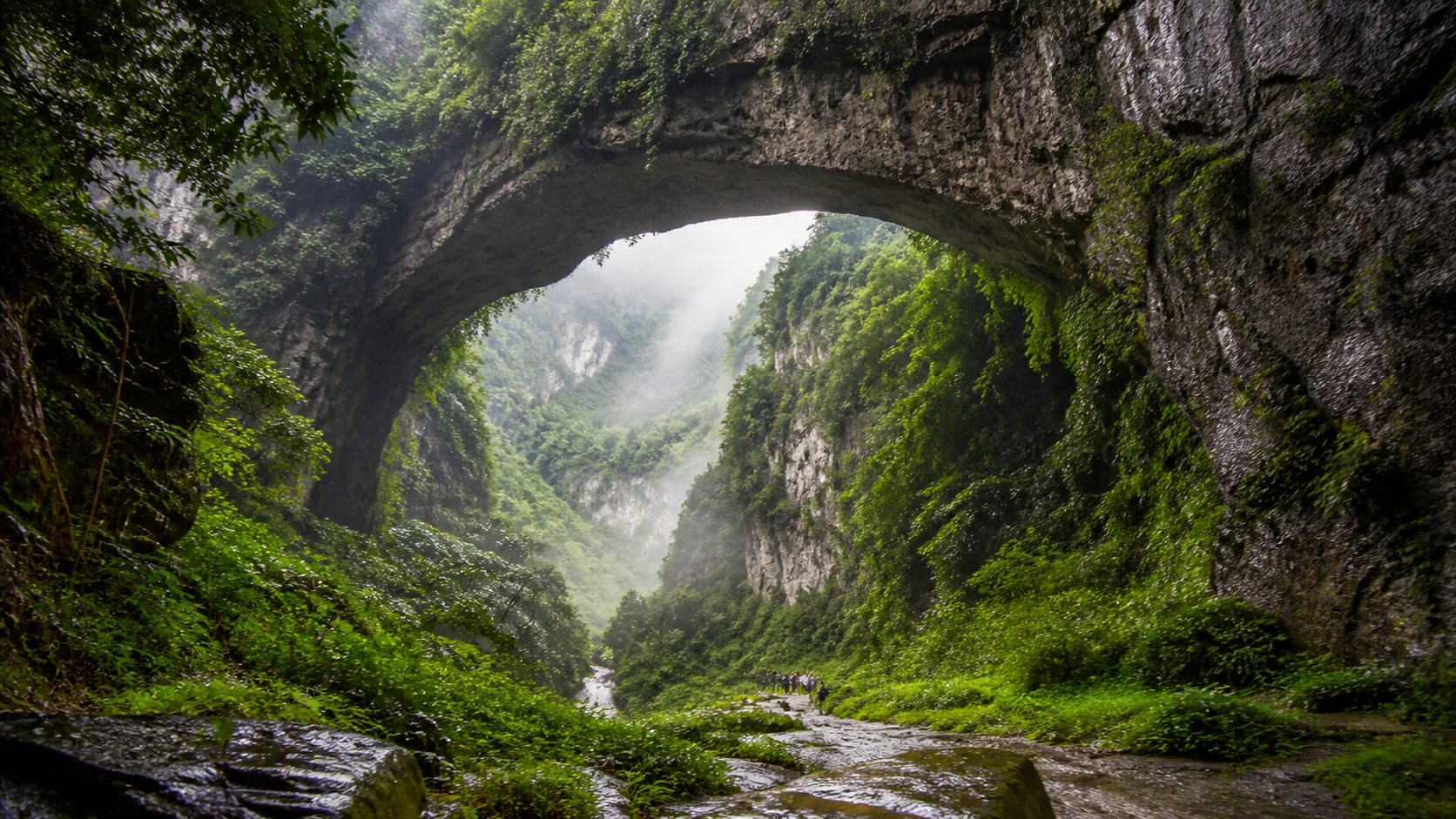
For a 2026 Wulong Karst day trip from Chongqing, plan one full day around Three Natural Bridges and treat Longshuixia as an optional second canyon, not an automatic add-on. I would choose Wulong when you can give the transfer and a 3–5-hour core visit room; a short city break should stay in Chongqing.

The Short Decision
Wulong is a large karst landscape in Chongqing's southeast, not one compact viewpoint. The UNESCO South China Karst listing describes the wider serial site as covering 97,125 hectares and identifies Wulong for giant dolines, natural bridges and caves. For a first visit, Three Natural Bridges is the clearest starting point because the visitor centre, shuttle, descent and valley route form one recognizable experience.
Choose it when you have a full day, enjoy stairs and uneven walking, and want a major nature contrast to Chongqing's towers and bridges. Avoid forcing it into an arrival afternoon, a departure morning, or a schedule where one late train would break the rest of the trip. My local rule is simple: Wulong is a regional day trip, not a quick photo stop.
| Situation | Practical choice | Why |
|---|---|---|
| First visit with one nature day | Three Natural Bridges first | The core route is easier to understand and is commonly planned as a 3–5-hour visit. |
| You have a long day and stable return plan | Add Longshuixia | It is a separate gorge with a darker, wetter and narrower feel; the extra transfer and walking need time. |
| You want open meadow and cooler mountain air | Consider Fairy Mountain | It is a different scenic area, with a highland landscape rather than the bridge-and-canyon route. |
| You have less than one full day | Stay in Chongqing | A compressed outer-district trip creates more transport risk than sightseeing time. |
- Situation
- First visit with one nature day
- Practical choice
- Three Natural Bridges first
- Why
- The core route is easier to understand and is commonly planned as a 3–5-hour visit.
- Situation
- You have a long day and stable return plan
- Practical choice
- Add Longshuixia
- Why
- It is a separate gorge with a darker, wetter and narrower feel; the extra transfer and walking need time.
- Situation
- You want open meadow and cooler mountain air
- Practical choice
- Consider Fairy Mountain
- Why
- It is a different scenic area, with a highland landscape rather than the bridge-and-canyon route.
- Situation
- You have less than one full day
- Practical choice
- Stay in Chongqing
- Why
- A compressed outer-district trip creates more transport risk than sightseeing time.
What the Wulong Area Actually Includes
Three places are often mixed together in short online lists:
Three Natural Bridges (天生三桥) is the natural-bridge and valley-floor route. Trip.com's current attraction listing gives a 3–5-hour sightseeing suggestion and places the attraction about 20 kilometres southeast of Wulong County. Its route names Tianlong, Qinglong and Heilong bridges. Treat the displayed opening hours as a same-day check, not a permanent promise.
Longshuixia Fissure (龙水峡地缝) is a narrower gorge. A Chongqing local gazetteer describes it as about 5 kilometres long, 200–500 metres deep, with the narrowest part under 1 metre. That scale explains why the experience feels damp, enclosed and physically more concentrated than the open bridge route.
Fairy Mountain (仙女山) is a highland landscape, not a synonym for Three Natural Bridges. A Chongqing government tourism page describes Fairy Mountain at 2,033 metres, with extensive forest and meadow areas. It can suit visitors who want open views and a different temperature profile, but adding it means you are combining separate scenic areas.
The UNESCO South China Karst profile is useful for the geological context. The Chongqing government attraction page is better for distinguishing the regional attractions. I would not describe all three as one walking loop.
Three Natural Bridges: How the Core Route Feels
The practical flow is usually: reach the Fairy Town visitor centre, take the scenic shuttle, verify the ticket, descend by the visitor route, walk through the valley and follow the exit transfer pattern. Klook's current activity description also presents the visitor centre, shuttle, elevator descent, valley walk and return shuttle as separate steps. That matters because the road-level entrance is not the same as the valley floor you see in photographs.

Save the Chinese name 武隆天生三桥游客中心 offline. Show it at the station, to a driver or at a local information desk. Keep your passport available for ticket verification if the booking or identity check requires it. I would also save a screenshot of the booking reference because a phone signal can be weaker in a deep valley.
The walk is scenic but not flat. Klook visitor notes mention steps and uphill sections, and my practical reading is to plan for wet surfaces, handrails and repeated changes of level rather than a boardwalk in a city park. Wear shoes with grip, leave a little space around slower members of your group, and do not turn the railings into a photo prop.

The three bridges are experienced through scale. A photo may show one arch, but the walk is about moving between cliffs, roofs, trees and the narrow line of the path. The Trip.com attraction guide names the three bridges and gives the current 3–5-hour sightseeing anchor; check its live page and the official ticket system again before departure.

Should You Add Longshuixia?
Add it when three conditions are true: your return transport is flexible, the group is comfortable with damp steps, and you still have a meaningful buffer after Three Natural Bridges. Do not add it merely because it appears next to the first attraction in a package listing.
The gorge's official description of roughly 5 kilometres and 200–500 metres of depth is a useful warning about atmosphere and effort. It is not a promise that every visitor will walk the entire geological length; the public route, transfers and current operation control what you actually see. The narrowest sections can feel close, and rain can make surfaces slower.

Save 龙水峡地缝 as the Chinese label. If you are travelling with a child, an older relative, a knee problem or a camera bag, ask staff about the current route condition before paying for an add-on. A shorter Three Natural Bridges visit with a calm return is a better day than two rushed canyon routes.
Getting There from Chongqing
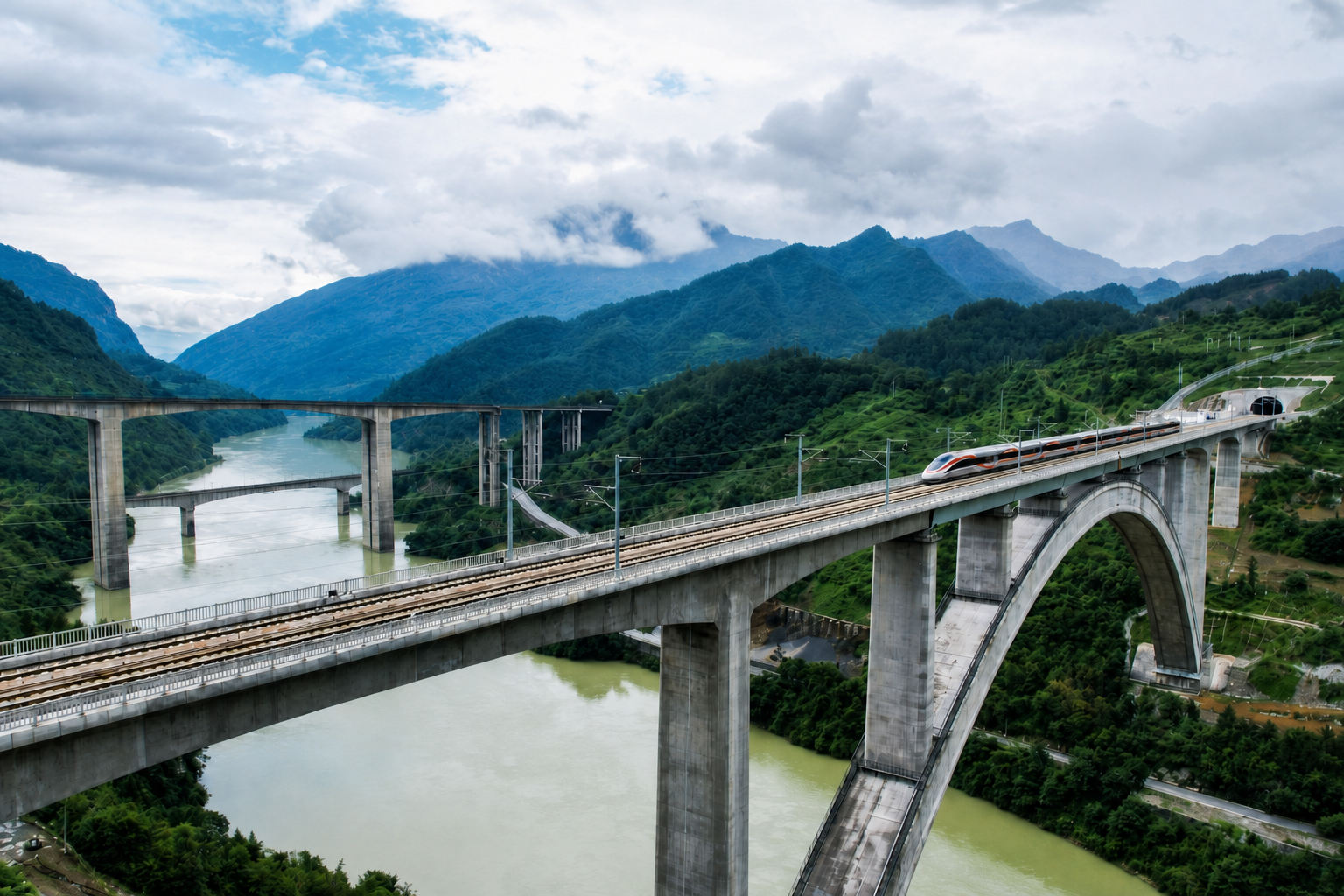
The fastest current rail option is high-speed rail from Chongqing East Railway Station (重庆东站) to Wulong South Railway Station (武隆南站). Current official reporting puts the fastest city-to-Wulong trip at about 40 minutes, while individual trains and fares vary. Wulong South has onward buses to the urban area and key scenic areas; check China Railway 12306 and the local transfer on your travel date.
| Transport shape | Works for | Main friction |
|---|---|---|
| Rail + local transfer | Independent travellers who can read a timetable and keep a buffer | The station-to-scenic-area leg still needs a booked or negotiated transfer. |
| Reserved car | Families, small groups and photographers carrying gear | Higher cost; confirm whether the driver waits and where the return pickup is. |
| Organized day tour | First-time visitors who prefer one ticket and transfer chain | Less control over how long you stay at each gorge. |
- Transport shape
- Rail + local transfer
- Works for
- Independent travellers who can read a timetable and keep a buffer
- Main friction
- The station-to-scenic-area leg still needs a booked or negotiated transfer.
- Transport shape
- Reserved car
- Works for
- Families, small groups and photographers carrying gear
- Main friction
- Higher cost; confirm whether the driver waits and where the return pickup is.
- Transport shape
- Organized day tour
- Works for
- First-time visitors who prefer one ticket and transfer chain
- Main friction
- Less control over how long you stay at each gorge.
Book the return before entering the valley. Save 请带我到武隆南站,我的车票是这里。 (“Please take me to Wulong South Railway Station. This is the station shown on my ticket.”). Always follow the exact Chinese station name printed on your ticket: 武隆站 and 武隆南站 are different stations.
A Realistic One-Day Shape
This is an illustrative order, not a fixed timetable:
| Block | Plan | Decision point |
|---|---|---|
| Early morning | Leave central Chongqing with the return plan already saved | If the departure slips, remove Longshuixia first. |
| Late morning | Reach the visitor centre, ticket check and scenic shuttle | Confirm the current entrance and shuttle flow. |
| Midday to afternoon | Spend about 3–5 hours on the Three Natural Bridges experience | Slow down for wet steps and group photos. |
| Late afternoon | Add Longshuixia only if the route, weather and return buffer still work | Ask staff about current conditions. |
| Evening | Return to Wulong station or Chongqing according to the booked plan | Keep a food and battery backup for the transfer. |
- Block
- Early morning
- Plan
- Leave central Chongqing with the return plan already saved
- Decision point
- If the departure slips, remove Longshuixia first.
- Block
- Late morning
- Plan
- Reach the visitor centre, ticket check and scenic shuttle
- Decision point
- Confirm the current entrance and shuttle flow.
- Block
- Midday to afternoon
- Plan
- Spend about 3–5 hours on the Three Natural Bridges experience
- Decision point
- Slow down for wet steps and group photos.
- Block
- Late afternoon
- Plan
- Add Longshuixia only if the route, weather and return buffer still work
- Decision point
- Ask staff about current conditions.
- Block
- Evening
- Plan
- Return to Wulong station or Chongqing according to the booked plan
- Decision point
- Keep a food and battery backup for the transfer.
The useful number is not “how many scenic spots can fit?” It is the return buffer. I would protect at least one transport block after the core visit and avoid scheduling an airport departure or non-refundable evening activity immediately after Wulong.
Walking, Rain and What to Carry
Mountain weather can change faster than a Chongqing city forecast suggests. Bring shoes with grip, a light rain layer, a small towel, water, a power bank and a dry bag for passport and phone. A compact umbrella can help around the visitor centre, but it is less convenient on narrow paths with handrails.

Do not promise yourself a dry route because the forecast says “cloudy.” Water, mist and shaded limestone are part of the setting, and a recent shower can change walking speed. If someone in the group is uncomfortable with stairs or enclosed spaces, say so before the ticket decision. The Klook route description and visitor notes are useful orientation, but they are not a personal accessibility assessment.
Chinese Phrases to Save
Book the return before entering the valley. Save 请带我到武隆南站,我的车票是这里。 (“Please take me to Wulong South Railway Station. This is the station shown on my ticket.”). Always follow the exact Chinese station name printed on your ticket: 武隆站 and 武隆南站 are different stations.
| Situation | Chinese | Meaning |
|---|---|---|
| Find the Three Bridges centre | 武隆天生三桥游客中心 | Wulong Three Natural Bridges Visitor Centre |
| Find the Fairy Mountain centre | 仙女山游客中心 | Fairy Mountain Visitor Centre |
| Ask about Longshuixia | 龙水峡地缝 | Longshuixia Fissure |
| Return to the booked station | 请带我到武隆南站,我的车票是这里。 | Please take me to Wulong South Railway Station. This is the station shown on my ticket. |
| Check today's route | 今天的路线怎么走? | How does today's route work? |
- Situation
- Find the Three Bridges centre
- Chinese
- 武隆天生三桥游客中心
- Meaning
- Wulong Three Natural Bridges Visitor Centre
- Situation
- Find the Fairy Mountain centre
- Chinese
- 仙女山游客中心
- Meaning
- Fairy Mountain Visitor Centre
- Situation
- Ask about Longshuixia
- Chinese
- 龙水峡地缝
- Meaning
- Longshuixia Fissure
- Situation
- Return to the booked station
- Chinese
- 请带我到武隆南站,我的车票是这里。
- Meaning
- Please take me to Wulong South Railway Station. This is the station shown on my ticket.
- Situation
- Check today's route
- Chinese
- 今天的路线怎么走?
- Meaning
- How does today's route work?
Keep the Chinese names as screenshots, not as a memory test. When a driver or station worker offers a different pickup point, compare the Chinese characters with your saved booking rather than guessing from pronunciation.
Common Mistakes
Treating Wulong as one viewpoint. The area contains separate scenic experiences. Decide between bridges, fissure gorge and highland meadow before buying a combined plan.
Leaving the return until the exit. Valley transfers and station connections can be less obvious than the main attraction. Save the return station and pickup point first.
Wearing city shoes. Wet stone and repeated steps are a poor match for smooth soles.
Packing a rigid schedule. A 3–5-hour core visit still has queue, shuttle and walking variation. Keep the evening light.
Assuming a package covers every route. Ask which attractions, shuttles and transfers are included and whether the route order changes on your date.
Frequently Asked Questions
Q: Can I visit Wulong Karst from Chongqing in one day?
A: Yes, when you start early, confirm the current rail or road plan and give Three Natural Bridges a full core block. A same-day return is less suitable if you also need a tight airport or evening connection.
Q: How long should I allow for Three Natural Bridges?
A: The current Trip.com attraction listing suggests 3–5 hours for sightseeing. Add time for the visitor-centre process, shuttle, queues, weather and your transport connection.
Q: Are Three Natural Bridges and Longshuixia the same place?
A: No. They are separate scenic experiences in the Wulong area. Three Bridges is the natural-bridge valley route; Longshuixia is a narrower fissure gorge.
Q: Is Wulong suitable for visitors who dislike stairs?
A: It may be uncomfortable. Visitor descriptions include steps and uphill sections, and wet weather can slow the route. Ask the current scenic-area staff about conditions before committing.
Q: What Chinese address should I show a driver?
A: Use 武隆天生三桥游客中心 for the Three Natural Bridges visitor centre, or 龙水峡地缝 for Longshuixia. Show the saved Chinese text and confirm the return pickup separately.
About This Guide
This guide was researched and checked on 2026-08-23 using UNESCO, Chongqing government, Wulong government, Trip.com, Klook and a current English route guide. The two web photographs in the internal reference folder were used for scene identity and composition planning only; all six public images are original AI-generated assets. Attraction hours, ticket bundles, train schedules, shuttle operations and weather conditions can change, so verify them again on the day.
Traveler comments
Share a recent experience or ask a practical question about this guide.