
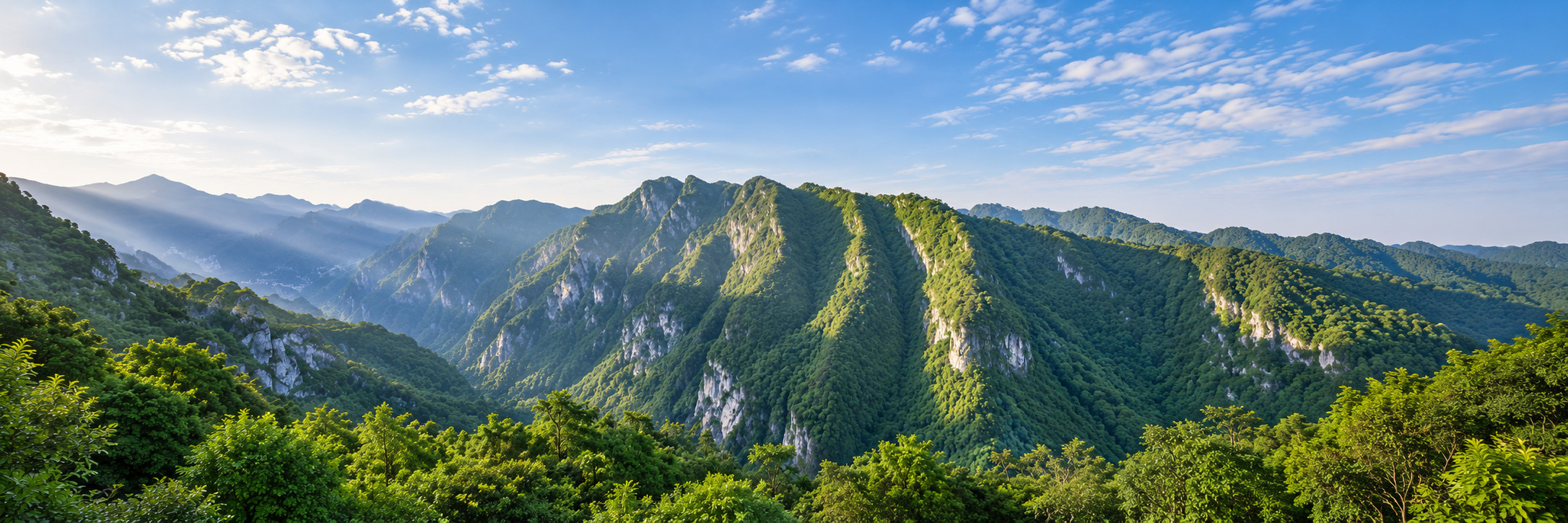
Cover: Forested limestone ridges at Wulingshan Great Rift. Approximate AI illustration based on historical real photographs; not a current photograph, route map or proof of access.
Reference photographs used only as internal inputs: Chongqing / E022-1
Four scenes are AI-generated approximations; the planning diagram is original. Reference-photo capture dates are unknown. No independent language, image, rights or browser-display review is claimed. Approximate AI illustration based on historical real photographs; not a current photograph, route map or proof of access. Bridge inspection began on 12 August 2026; this research has not established a later reopening. The illustration does not imply that the bridge is open.
Wulingshan Great Rift in 2026 requires a route check before a scenery checklist. A Fuling report dated 13 August describes two loops, with the large loop suspended for bridge inspection and the small loop operating. Confirm which route and return cableway your ticket supports before committing to a descent.
The place to save is 武陵山大裂谷, in Fuling, 涪陵. It is not Wulong's Three Natural Bridges, and a photograph labelled simply “Chongqing gorge” is not enough to identify it. Matching the full Chinese name matters when searching for transport, booking a tour or asking a hotel to help.
This is an automated, desk-researched planning guide. It explains how to resolve the trip's important dependencies without pretending to provide a presently verified turn-by-turn route. The most important unresolved point is what has changed since the dated maintenance report below.
Identify Wulingshan’s landscape and walking demands
The Chongqing municipal attraction profile, updated in June 2026, identifies the Qingtianxia fissure, Tianmendong suspension bridge and cableway scenery. These named features explain why visitors come: changes in viewpoint from mountain landscape to narrow rock passage, rather than a single lookout beside the road.
Keep three names separate in your planning notes: Wulingshan Great Rift, Wuling Mountain National Forest Park and Wulong. A regional tour may combine places or display photographs from several stops. Ask which site a picture and itinerary description belong to instead of assuming similarly translated mountain names are interchangeable.
For Wulong itself, consult the existing Wulong karst day-trip guide. Its gateway and transfer advice should not be transplanted into a Fuling booking. A correct railway destination for one attraction can still put you far from the entrance required by another.
The municipal profile is useful for recognising the landforms. It is not a live route-control system. Its bridge photograph can remain online while a bridge is under inspection, so visual identity and operational availability must be checked separately.
Assess the walking burden as well as the cableway
A cableway can remove one climb without making the remaining walk step-free. Ask for the number or nature of unavoidable stair sections, the surface of the selected path, any narrow passage and the ability to shorten the route legitimately. If staff cannot clarify a limitation that matters to your group, resolve it before entering.
For someone with a stroller, wheelchair, limited stamina or a strong dislike of heights, the decisive question is the actual route configuration. A panoramic photograph cannot show all transitions between walking and transport. A general “family-friendly” label is similarly insufficient to establish suitability for a particular child or adult.
The Trip.com attraction listing describes gorges and the suspension bridge, but its summary does not resolve the maintenance issue. Use it to identify the attraction and a possible product, then check the details that determine whether the experience fits your group.
Choose the day around the least flexible member of the party. If the available loop demands more than they want to do, selecting another outing is a reasonable outcome of good planning. Nobody needs to justify a transport booking by continuing into a route they are uncomfortable with.

Closer view of wooded mountain slopes and pale cliffs. Approximate AI illustration based on historical real photographs; not a current photograph, route map or proof of access.
Reference photographs used only as internal inputs: Chongqing / E022-1
Start with the August 2026 route notice
Fuling's original local-media report says specialist inspection of the Tianmendong suspension bridge began on 12 August 2026. At the time of reporting, the large loop was unavailable; visitors could enter the small loop using the Tangyakou cableway near the ticket-checking area. The article directed readers to the attraction's official account for reopening news.
No conclusive later reopening notice was established in this research pass. That does not prove the large loop remains closed on your date. Equally, a ticket platform displaying “open” does not establish that the bridge or every walking segment has reopened.
Ask the operator one precise question: “For my visit date, is the large loop through Tianmendong suspension bridge operating, and what route does my ticket use?” Save the answer with its date. If the bridge is the reason you want to travel, settle that question before paying for transport or choosing a non-refundable product.

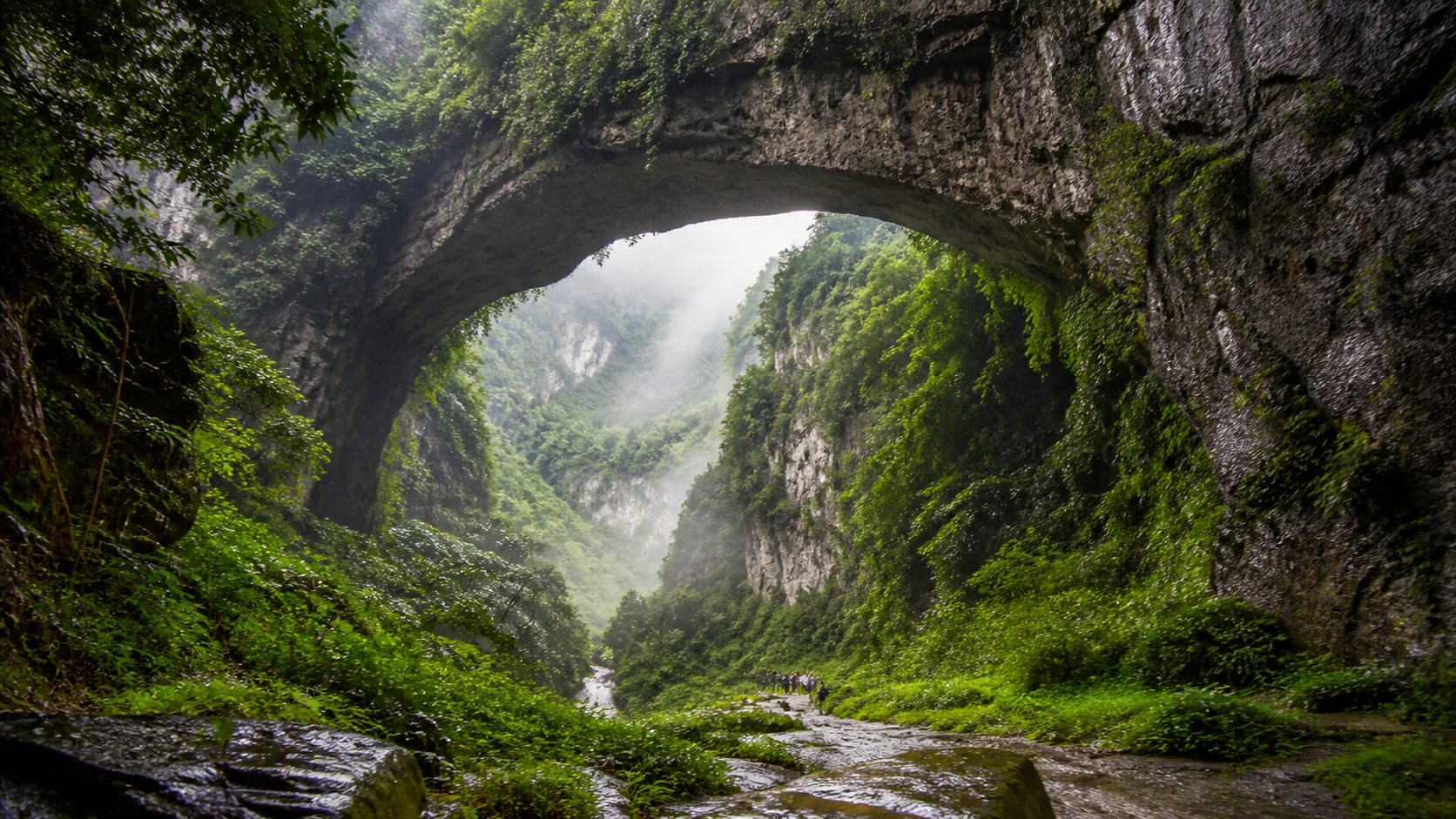
Light between high rock walls inspired by Qingtianxia fissure. Approximate AI illustration based on historical real photographs; not a current photograph, route map or proof of access.
Reference photographs used only as internal inputs: Chongqing / E022-3
Read the ticket as a sequence of movements
Instead of comparing a headline admission price, write a short sequence: arrival point, route entry, walking section, route exit, return to collection point. Beside every vehicle stage, identify whether it is included, optional or currently unavailable. A “cableway included” label is incomplete until you know which cableway and direction it means.
The August report names Tangyakou, 塘垭口索道, as the downhill entry to the small loop at that time. Do not assume this establishes the return arrangement. Ask the operator to show the complete current sequence, including any vehicle between the end of the walk and your pickup place.
Compare two offers using the same sequence. One may include a transfer that another sells separately; a group tour may specify a meeting time that a basic admission ticket does not. Ask about cancellation or partial refunds if a route changes, using the actual conditions attached to your selected date and product.
For foreign-passport bookings, establish how identification and ticket collection work before payment. An English-language product page does not by itself show whether the attraction can process every document type through that particular booking flow. Request an answer tied to the product, rather than a general reassurance that foreigners visit Chongqing.

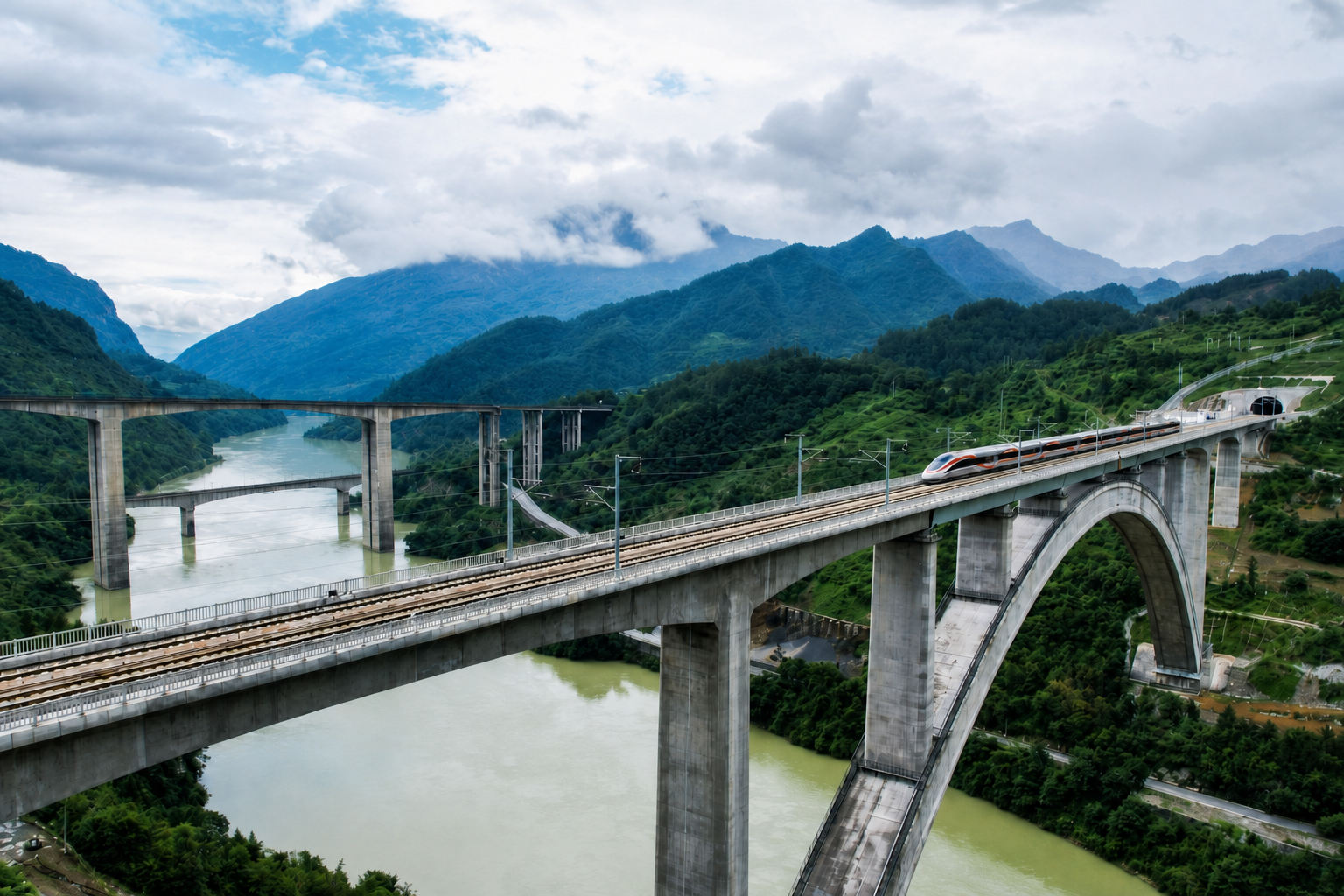
Historical Tianmendong suspension-bridge scene above a green gorge. Approximate AI illustration based on historical real photographs; not a current photograph, route map or proof of access. Bridge inspection began on 12 August 2026; this research has not established a later reopening. The illustration does not imply that the bridge is open.
Reference photographs used only as internal inputs: Chongqing / E022-2
Make the exit question concrete before going down
A descent feels easy to begin because the scenery draws attention forward. The planning task is to understand the exit while staff and the current route map are still close at hand. Ask where the walking section finishes, what carries you onward and what final departure controls the visit.
Do not use the attraction's closing time as a substitute for the final departure of an individual cableway or shuttle. Likewise, a final ticket-sale time does not tell you how late you can enter a specific loop. Request the times that apply to the route you have chosen and leave enough room for your own pace and foreseeable queues.
Ask what visitors are instructed to do if a lift or transfer pauses while they are inside. This guide does not invent an emergency walking alternative. An unauthorised trail, service road or staircase shown in an old post is not an acceptable replacement for the operator's instructions.
Keep the operator's contact and your driver or tour leader's contact available, but do not assume either can collect you from every internal point. The municipal profile publishes the scenic-area enquiry number; check the current contact details again when arranging your date.
Protect the connection back to Fuling or Chongqing
Separate the regional journey from the mountain transfer. If travelling by rail, copy the exact station name from your actual booking and arrange transport from that station to the confirmed scenic-area entrance. Do not shorten the name to “Fuling station” if the booking specifies something more precise.
Allow the return plan to govern how late you enter the route. A driver collecting you at the visitor centre cannot control a queue inside the scenic area, and an onward train does not wait for your final cableway. Avoid building a chain in which every stage depends on the previous one taking its shortest advertised time.
Ask whether the transfer is private, shared or part of a timed tour; where the group meets; and whether the collection point changes if the loop changes. These are concrete differences between products. Save the confirmed meeting point in Chinese as well as a map pin.
The site's railway-station guide helps prevent station-name mistakes. The map and road-level guide explains why a pin needs a usable pickup description. Neither supplies a verified current Wulingshan shuttle timetable, and this guide does not invent one.
Choose a visit that still works when a feature is unavailable
Before booking, identify your main reason for going. If it is the narrow fissure landscape, ask which open loop currently reaches it. If it is the suspension bridge, require a specific bridge-status answer. If it is a broad mountain day with minimal walking, request the available route's actual walking burden rather than assuming transport can replace it.
Keep a second plan that does not depend on the same closure or weather condition. It may mean remaining in Fuling, returning earlier or moving the mountain day. A second gorge with unverified access is not a useful contingency merely because it appears nearby in search results.
On arrival, compare the displayed route with your saved confirmation. A change is a reason to ask again, not to follow the older plan more determinedly. Staff instructions and barriers take precedence over this article, platform photographs and a route copied from a previous season.
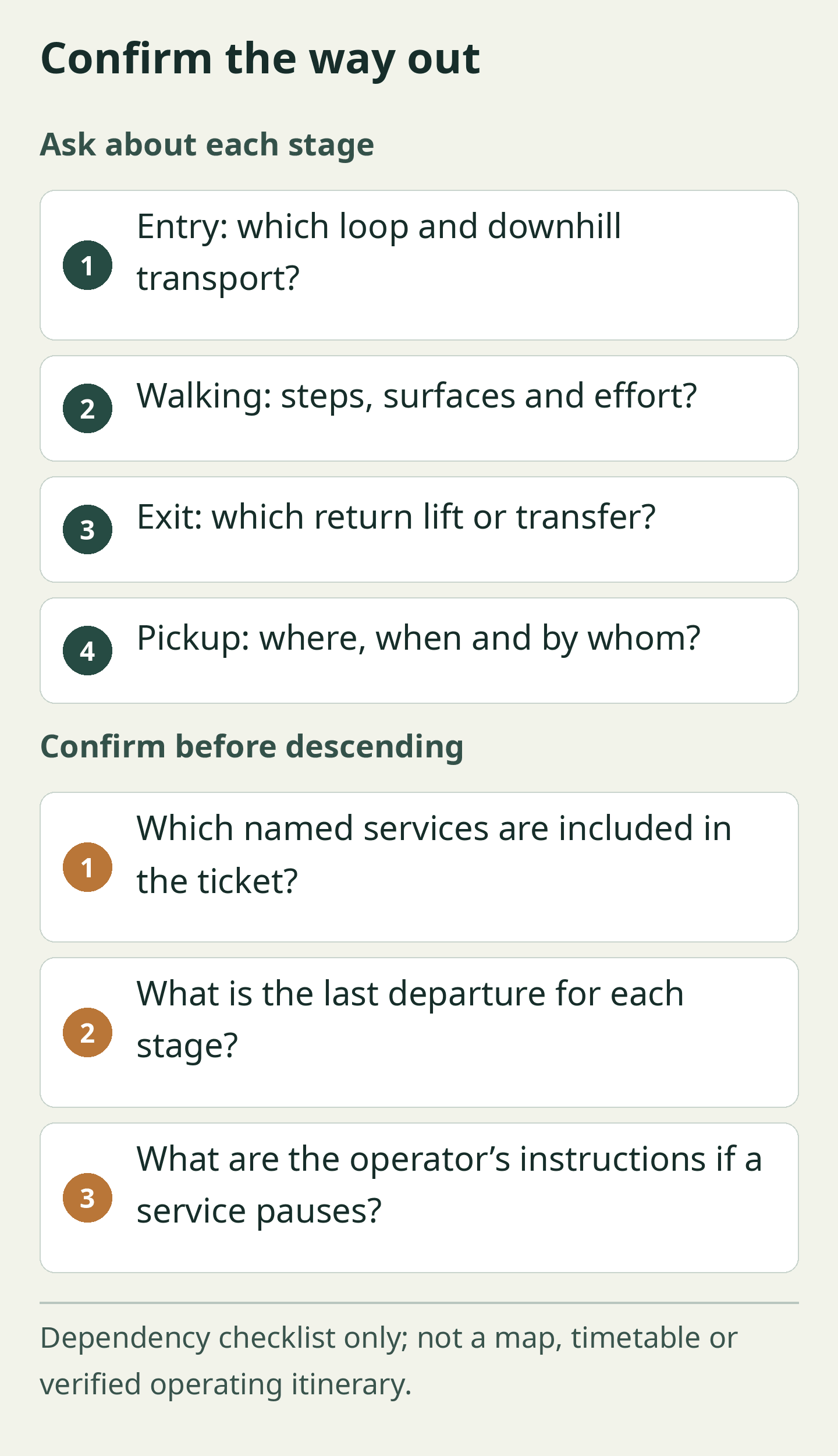
Original editorial planning diagram. Dependency checklist only; not a map, timetable or verified operating itinerary.
Original editorial planning diagram
Ask about each stage:
- Entry: which loop and downhill transport?
- Walking: steps, surfaces and effort?
- Exit: which return lift or transfer?
- Pickup: where, when and by whom?
Confirm before descending:
- Which named services are included in the ticket?
- What is the last departure for each stage?
- What are the operator’s instructions if a service pauses?
Dependency checklist only; not a map, timetable or verified operating itinerary.
About This Guide
This guide was created through automated source research on 1 October 2026. It distinguishes the June municipal landscape description from the August route-change report. No firsthand inspection, live operational confirmation or independent human review is claimed. Present access and ticket conditions need operator confirmation.
Frequently Asked Questions
Q: Is Wulingshan Great Rift the same as Wulong? A: No. This guide covers 武陵山大裂谷 in Fuling; Wulong's Three Natural Bridges is a different destination with different trip logistics.
Q: Is Tianmendong suspension bridge open now? A: A report dated 13 August 2026 said inspection had closed the large loop. This research did not establish a later reopening, so obtain a current answer from the Wulingshan operator.
Q: Does the small loop avoid all walking? A: No such claim is established here. Ask for the current Wulingshan walking sections, steps and transfers before judging whether that loop fits your group.
Q: Does an admission ticket include every cableway? A: Check the named inclusions, direction and route for your selected product. A general Wulingshan admission listing does not establish all transport rights.
Q: Can this guide provide a reliable last-cableway time? A: A reliable final cableway time for Wulingshan Great Rift needs date-specific operator confirmation. Ask about the final departure for each transport stage on your chosen loop, as well as the time needed to reach your pickup.
Traveler comments
Share a recent experience or ask a practical question about this guide.