

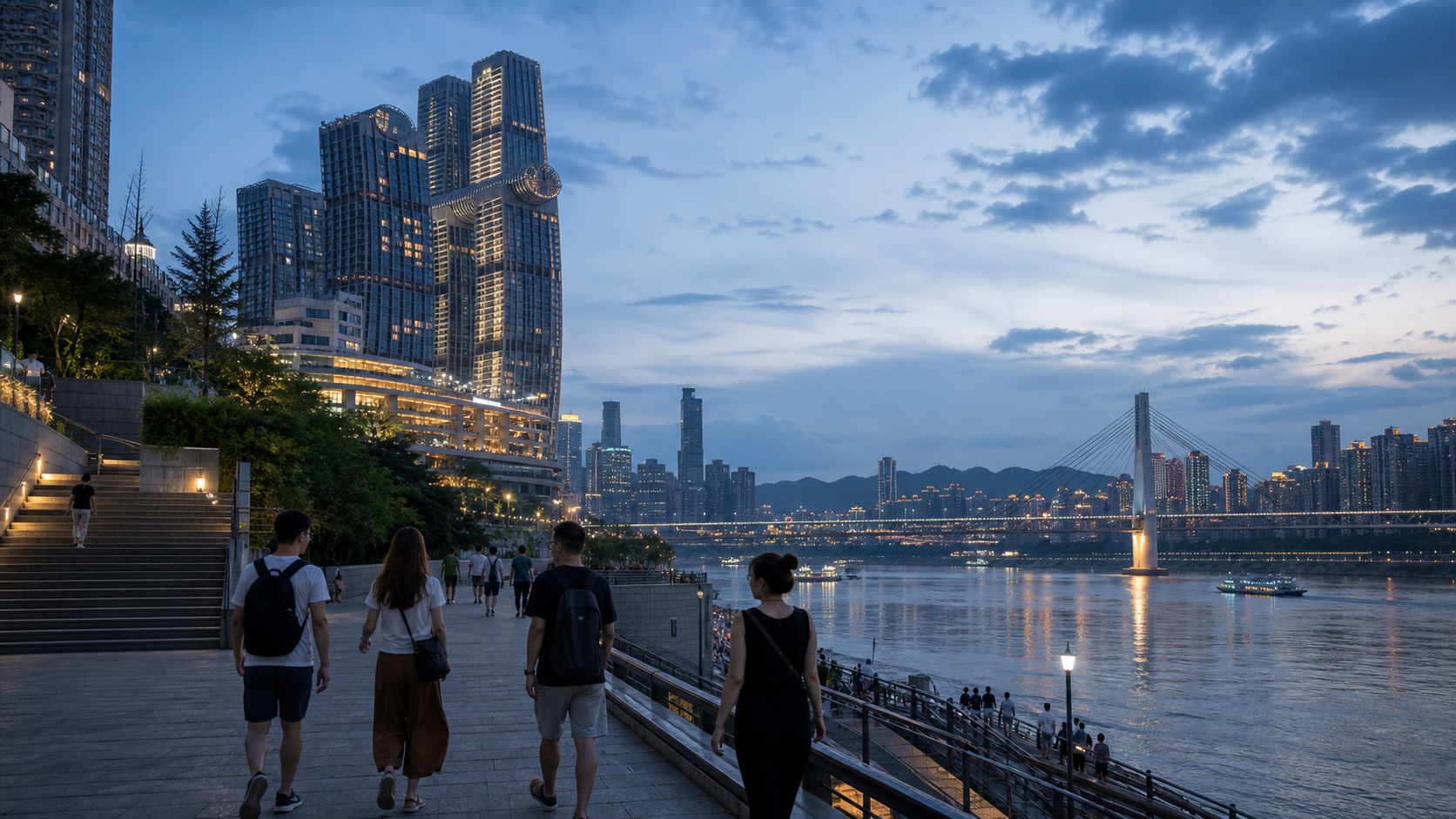
Cover: AI illustration: Jiefangbei Liberation Monument. Original AI illustration based on historical photographs. Capture dates are unverified unless stated in the source record. Approximate scene, not current conditions, opening hours, routes or an exact documentary record.
Visual reference: iChongqing / Mikkel Larsen / iChongqing
Original AI illustration based on historical photographs. Capture dates are unverified unless stated in the source record. Approximate scene, not current conditions, opening hours, routes or an exact documentary record.
A seven-day Chongqing itinerary in 2026 can balance central-city exploring with one overnight in Dazu: settle in, learn the city, spend time with the carvings, then return before departure. UNESCO lists Dazu’s heritage across 5 clusters. This plan selects Baodingshan and Beishan rather than trying to turn the whole municipality into a checklist.
The week below includes arrival and departure days. It is a proposed allocation of your time, not a set of verified transport connections or a promise that every attraction will be open on those weekdays. Place your actual travel dates against it, then rearrange museum visits and the regional overnight around confirmed opening arrangements.
The overnight has a purpose: it separates the effort of reaching Dazu from the effort of looking closely at its art. It also leaves time back in the city before your onward journey. If you mainly want central Chongqing’s streets, food and night views, you can keep the same broad rhythm and omit the regional excursion. There is no benefit in paying for a transfer that serves an interest you do not share.
Give the week a centre and a regional focus
Dazu’s UNESCO World Heritage record dates its inscription to 1999 and describes 5 clusters of carvings, principally from the 9th to 13th centuries. That is a heritage description, not a suggested number of stops for a visitor. Baodingshan and Beishan offer a coherent focus for the regional part of this week without pretending to cover everything in the inscription.
Keep a central Chongqing base for the city portion if it fits your plans. Before arranging the overnight, ask whether your accommodation can store your main bag while you are away and on what terms. Do not assume this service is available or free. If you need to move all your luggage, include that handling in your transfer plan instead of treating the day as a light excursion.
The suggested shape is straightforward. Day 1 is arrival and a short orientation. Day 2 gives you historical context at the Three Gorges Museum and its surroundings. Day 3 is a flexible western-city outing. Days 4 and 5 are the Dazu overnight. Day 6 is a recovery and catch-up day in Chongqing. Day 7 belongs to departure, with optional activity depending on the actual time available.
This allocation deliberately puts the regional return before the last city day. Weather, a slower visit or a changed connection should not immediately threaten a flight or onward train. It also means you can revisit a place you enjoyed, complete an errand or take an unhurried meal after travelling with a smaller bag.
Choose a theme for the week rather than giving every day the same list of objectives. You might concentrate on urban form in the city and religious narrative at Dazu, or pair museum interpretation with the carvings themselves. A clear interest helps you decide what to omit when a day becomes tiring. It is easier to drop an optional viewpoint than to recover attention after rushing through the site that mattered most.
Book the regional components together in your planning, even if they are bought separately: transport out, lodging, site admission requirements, local transfers and transport back. A cheap outbound ticket is not sufficient evidence that the whole overnight works. No same-day prices or bookable connections are asserted in this guide.

AI illustration: Chongqing China Three Gorges Museum exterior. Original AI illustration based on historical photographs. Capture dates are unverified unless stated in the source record. Approximate scene, not current conditions, opening hours, routes or an exact documentary record.
Visual reference: iChongqing / Photographer uncredited, iChongqing
Days 1–3: learn the city without exhausting the week
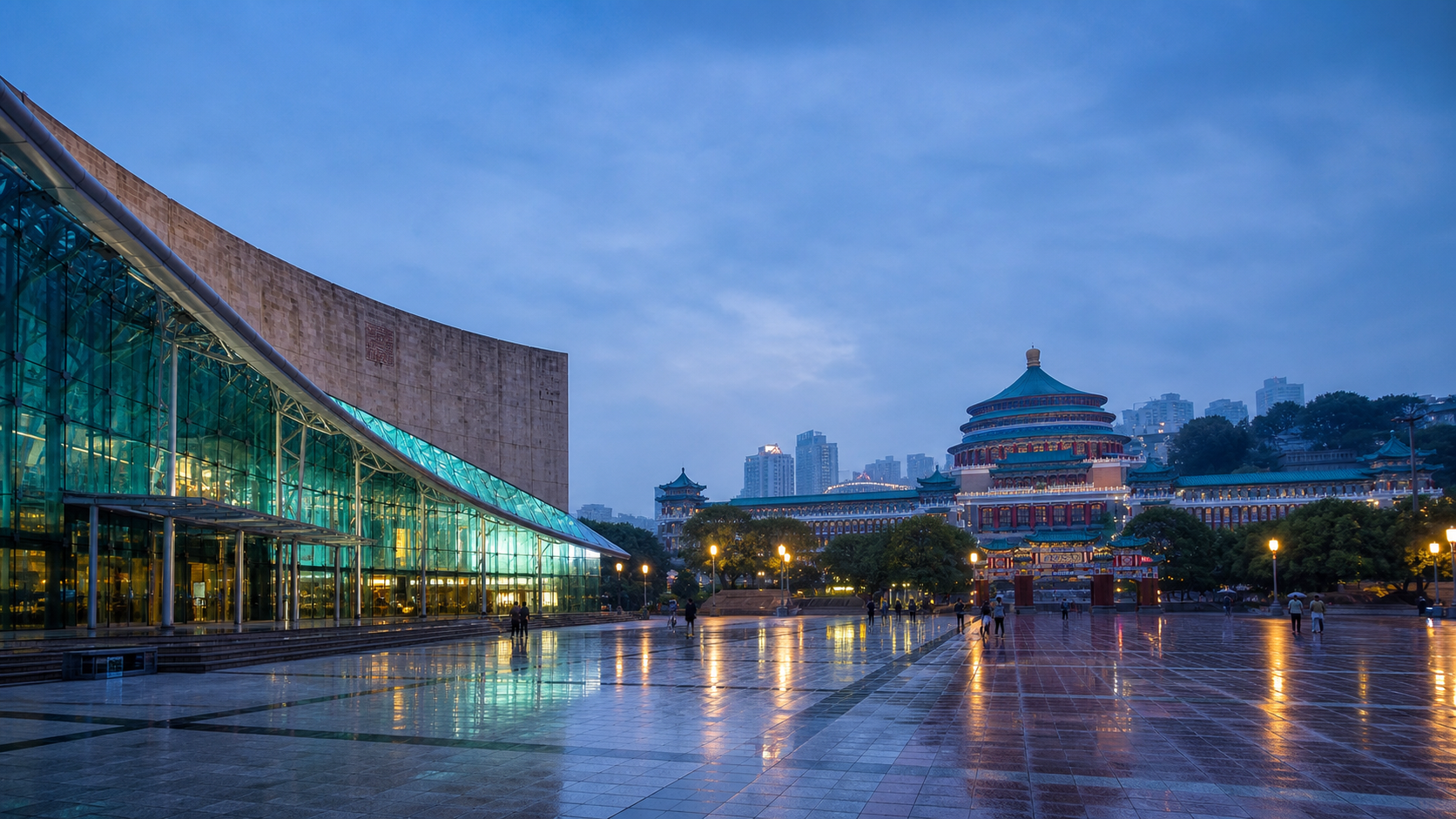
The municipal museum directory places Chongqing China Three Gorges Museum at 236 Renmin Road. That gives Day 2 a specific destination to build around. Check the museum’s current visiting arrangements for your date; a generic weekly listing does not settle holiday hours, exhibition access or temporary controls.
Day 1: arrive, orient and stop while you still have energy
After reaching your accommodation, make a short walk close to your base. If you are staying in the Yuzhong sightseeing area, Jiefangbei can be an orientation point rather than the beginning of a long cross-city circuit. Learn the route back to your entrance, locate a convenient meal and confirm how your payment and map tools work before adding more movement.
If daylight, energy and conditions allow, extend the walk toward a river view. Do not make a photographed night scene an arrival-day obligation. The Jiefangbei and Raffles City walking guide can help you choose a manageable portion, but it is reasonable to save most of that walk for later. A late arrival simply makes this a settling-in day.
Day 2: use the museum as context
Visit the Three Gorges Museum when its confirmed opening arrangements fit your dates. Choose galleries that relate to what you want to understand, then take a break before adding another destination. People's Square and the surrounding area can remain the focus of the outing rather than becoming a transfer point to a distant attraction.
The museum and square guide gives a more detailed starting point. Special exhibitions need separate checking: the commission’s September 2026 exhibition list includes both charged and free displays. A general description of the museum as free does not establish the cost of every temporary exhibition.
Day 3: make a western-city choice
Liziba and Ciqikou are possible interests for this day, but combining them is an optional itinerary choice rather than a compulsory circuit. Start with the one that matters more to you and decide on the other after assessing your energy and current route. An interest in a train passing through a building and an interest in an old commercial street do not have to receive equal time.
Use the metro guide to prepare, then check the actual journey. Save part of the evening for packing the overnight bag and reviewing the next morning’s transfer. Keeping this evening simple protects the regional day better than adding another late viewpoint.

AI illustration: Dazu: Beishan cave carvings. Original AI illustration based on historical photographs. Capture dates are unverified unless stated in the source record. Approximate scene, not current conditions, opening hours, routes or an exact documentary record.
Visual reference: iChongqing / Luo Guojia / iChongqing
Days 4–5: spend the night in Dazu for looking time
The Dazu Rock Carvings Research Institute’s visitor guide distinguishes Baodingshan in Baoding town from Beishan in the Longgang area and dates the start of Beishan’s carvings to 892. These are separate destinations. Arrange their local transfers rather than expecting a single entrance to cover both sites.
Day 4: transfer, then choose the site your arrival permits
Travel to Dazu with your destination written precisely. The institute’s guide describes onward connections from Dazu South railway station, including local bus and taxi stages. Reaching a railway station with “Dazu” in its name does not place you at the carvings. Compare the complete journey to your lodging or visitor centre, not just the time on the intercity train.
For this plan, aim to use the arrival afternoon at Beishan after sorting out your bag. This keeps Baodingshan for a day that starts in the region. Confirm that your actual arrival allows a worthwhile visit before committing to admission. If a delay removes that opportunity, shorten the regional scope rather than racing between the sites or assuming you can compensate at night.
An evening meal and a quiet night are enough. The institute’s notice dated 13 July 2026 scheduled reopening for 21 September after maintenance. Read the body, not just its closure headline. Even so, the notice is not a reservation or confirmation of a particular night session; this itinerary does not depend on one.
Day 5: Baodingshan, then return with margin
Check the visitor-centre arrangements before setting out. On the operational page read on 1 October 2026, the institute says Baodingshan visitors complete ticket checking at Dazu Rock Carvings Visitor Centre and lists a 16:10 ticket-check cutoff there. Treat that as a latest-entry constraint to reconfirm, not as a sensible arrival target for a substantial visit.
Decide how your bag will be handled after checkout. Ask your lodging or the destination service point about storage rather than assuming a locker exists. If nothing suitable is confirmed, choose transport and a bag arrangement that you can manage without leaving possessions unattended.
At the carvings, prioritise interpretation over coverage. Read the site’s explanations, consider a verified guide or available interpretation service, and leave time to look back at a scene after you understand its subject. You are not trying to collect all the heritage components before returning to Chongqing. The Dazu day-trip guide offers complementary site preparation; the overnight here changes the pacing, not the need to verify access.
Arrange the return so a longer local transfer does not force you to abandon the main visit. If the available connection makes the plan too tight, choose an earlier finish or a different confirmed service. Do not solve the problem by assuming a taxi, bus or train will appear when needed.

AI illustration: Dazu: Baodingshan rock reliefs. Original AI illustration based on historical photographs. Capture dates are unverified unless stated in the source record. Approximate scene, not current conditions, opening hours, routes or an exact documentary record.
Visual reference: iChongqing / Mikkel Larsen / iChongqing
Days 6–7: use the return day as breathing room
A museum notice carried by the Chongqing government on 3 April 2026 described temporary entrance controls when the Three Gorges Museum reached its instantaneous capacity. That past notice does not establish a current restriction, but it illustrates why a flexible day has practical value. An itinerary that can absorb a changed visit is more robust than one with every opening occupied.
Day 6: recover, revisit or finish what mattered
Keep the day close to your interests and current energy. If the museum visit was displaced, use the confirmed opening window now. If you have already seen enough indoor material, choose a modest neighbourhood walk or a riverfront view. If the regional overnight was tiring, a slow meal and routine errands are legitimate uses of the day.
Avoid converting every saved hour into another excursion. The point of returning early is to make the week less brittle. You can spend longer at a place you liked, reorganise luggage or simply enjoy being in Chongqing without an intercity departure controlling the afternoon. Make any evening activity optional and check its return route before committing.
This is also the moment to review your onward journey. Confirm the railway station or airport, terminal where relevant, document requirements and the current route from your lodging. Ask about luggage collection if checkout and departure are separated. A completed sightseeing plan does not mean the departure plan is finished.
Day 7: let the departure determine the day
With an early departure, leave the day for transport. With a later one, choose an activity near your luggage and return route rather than a new cross-city objective. Keep your booking and destination available offline and allow room for the practical work of collecting bags and finding the correct entrance.
If weather or a closure disrupts the week, change the order of the city days before complicating the regional overnight. If the overnight itself becomes impractical, cancel or amend it under the applicable booking terms and use the freed time in the city. A seven-day plan is a framework for decisions, not a test of whether you completed every line.

Seven-day planning checks. Ask staff before deciding.
Original editorial checklist
Seven-day planning checks
Check:
- Keep city days flexible
- Separate regional day trips
Confirm:
- Confirm bookings and transport
- Leave a weather buffer
Ask staff before deciding.
About This Guide
Sources were read on 1 October 2026. The sequence is an original suggested itinerary combining municipal visitor information and the Dazu operator’s guidance with UNESCO context. No journey, stay or admission purchase was tested. Transport times, hotel services and live ticket availability are intentionally not invented. No independent review is claimed. Operational information still needs confirmation for your travel date.
Frequently Asked Questions
Q: Does this seven-day Chongqing plan include arrival and departure? A: Yes. Day 1 is arrival and orientation in Chongqing, while Day 7 is organised around departure; the amount of sightseeing depends on your real travel times.
Q: Why stay overnight in Dazu instead of returning the same day? A: The proposed Dazu overnight separates regional travel from visits to Beishan and Baodingshan. It suits travelers who want more looking time, provided the lodging and onward connections work for their dates.
Q: Does arriving at Dazu South mean I am at the carvings? A: No. The Dazu institute’s guide lists local onward transport from Dazu South to the visitor areas, so include that stage in the journey.
Q: Is Beishan night visiting still closed? A: The Dazu institute’s July 2026 notice scheduled reopening for 21 September. Confirm the session for your date; this itinerary uses a daytime visit and does not depend on night admission.
Q: Can I replace Dazu with another regional destination? A: You can, but rebuild the transfer, lodging and return plan for that destination rather than treating Chongqing’s outer districts as interchangeable. Preserve time back in the city before your onward departure.

Traveler comments
Share a recent experience or ask a practical question about this guide.