
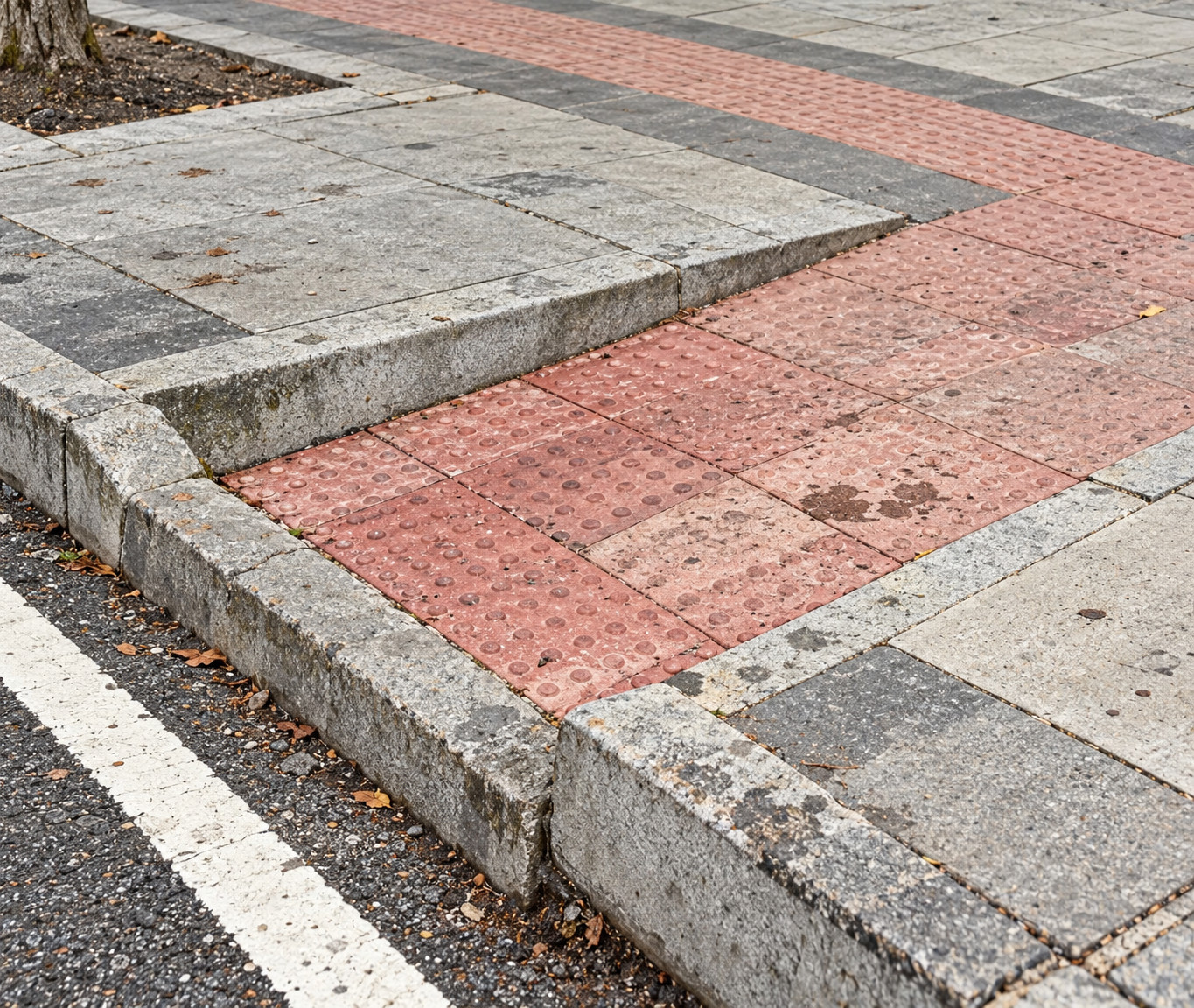
AI illustration of a kerb detail, based on a reference published in 2024. The exact street, measurements and current usability are unconfirmed.
AI illustration based on historical reference Reference creator Unknown; Reference publication date 2024-09-16; Reference capture date Unknown. Reference source
Planning Chongqing with a wheelchair in 2026 means verifying a continuous route, including entrances, vehicles, lifts and toilets. Municipal reports describe new accessibility facilities, including 20 additional lifts on metro Lines 2 and 3. Those improvements are useful leads, but they do not establish that a particular hotel-to-attraction journey works for your chair and transfer needs.
Begin with what makes an outing workable for you. Whether you remain in the chair during transport, can transfer into a car, use a powered chair or need a particular toilet arrangement changes the questions to ask. “Wheelchair-friendly” is too broad to answer those questions on its own.
This guide offers a way to investigate a trip, rather than an untested accessible itinerary. It does not infer access from a photograph, the presence of an elevator somewhere in a building, or another traveler’s experience with a different chair. The goal is to establish the complete chain before committing money or energy to the outing.
Define the access you need before comparing places
WelcomeCQ’s local accessibility overview, read on 1 October 2026, highlights the mismatch between modern facilities and inconsistent approaches on hilly streets. Use that caution to make your enquiry specific. A venue may truthfully have a lift while the route from the pavement to that lift still contains an obstacle.
Write a short equipment and access summary. Include your chair’s dimensions and weight where relevant, whether it folds, whether you can transfer, and any ramp, lift or securement requirements. For a powered chair, keep the manufacturer’s transport information available. Give a transport provider the facts needed to assess the equipment, rather than a general request for a “large car.”
Decide which conditions are essential and which are preferences. For example, remaining seated in the wheelchair during a transfer is a different requirement from carrying a folded chair in a luggage compartment. A suggestion that works for the second situation may be unusable for the first.
Ask services to reply to the concrete requirements. If someone says “we can help,” ask what equipment, staff and route that means. Assistance should be arranged with your agreement and within your own handling requirements. A vague promise to carry a person or chair up steps should not be treated as a verified access solution.

AI illustration of a station notice, based on a reference published in 2024. The station is unidentified and the lettering unreadable; no current assistance arrangements are established.
AI illustration based on historical reference Reference creator Tan Xinyu; Reference publication date 2024-09-16; Reference capture date Unknown. Reference source
Audit the whole route, including the last doorway
The Yuzhong accessibility report published on 26 May 2026 describes a Jiefangbei map containing more than 3,000 facility points across 11 categories. It suggests searching Amap for a building name plus 无障碍设施, accessibility facilities. This is a valuable discovery tool, not a live guarantee that each facility is open and suitable when you arrive.
Choose the exact destination entrance before plotting transport. Trace the route from your accommodation’s exit to the pickup point or station, through the vehicle journey, and from the arrival point into the venue. Include crossings, kerbs, steep surfaces, gates and any lift that depends on a shopping centre or other building being open.
Ask for current photographs or a short continuous video when a description is ambiguous. Request measurements for a narrow doorway or lift cabin if those dimensions determine whether your chair fits. A photograph should help identify what to ask; it cannot reliably supply a measurement or prove that a route continues beyond the frame.
Record who confirmed each important link and when. If the enquiry reaches a booking agent, ask whether the answer came from the actual venue or from a general listing. For a long outing, preserve an alternative return point that has also been checked. A route is incomplete if it works outward but leaves you dependent on an unknown exit or closed lift afterward.
Our road-level navigation guide explains the map problem in more detail. Its ordinary walking routes should not be interpreted as wheelchair-access approvals.
Check metro access station by station
The municipal rail-access update dated 14 January 2026 reports new lifts at stations including Dongwuyuan, the Zoo station, Huanghuayuan and Yangjiaping on Line 2. It also says wheelchair lifting platforms require staff assistance. These details distinguish an independent lift journey from a journey involving staffed equipment.
For your proposed trip, ask the departure station which street entrance to use and whether every lift needed to reach the platform is operating. Then ask the arrival station which exit provides a usable route to your destination. If you change trains, investigate the transfer itself; an accessible entrance and exit do not establish the connection between platforms.
Describe the chair and any limits relevant to the equipment. Ask whether a boarding gap, platform height difference or lifting platform needs staff support, and how to request it. Confirm whether assistance has been arranged at the destination as well as at the starting station. A friendly conversation at departure should not leave the receiving station unaware.
Recheck shortly before travel, especially if the planned route depends on a particular lift. If a facility is unavailable, ask staff to propose an alternative that meets the same requirements rather than accepting a direction toward stairs. Our metro guide supplies general system context; it does not replace this station-specific access check.

AI illustration of an unoccupied lifting platform, based on a reference published in 2024. The station, dimensions, operation and staff assistance are unconfirmed; this is not evidence of an accessible route.
AI illustration based on historical reference Reference creator Unknown; Reference publication date 2024-09-16; Reference capture date Unknown. Reference source
Ask about the actual bus or car, not the fleet label
A 30 April 2026 municipal transport report describes route 622 near Chongqing North as equipped with 30 low-floor buses, including kneeling capability and wheelchair restraints. That is a specific improvement. Other fleet additions in the report are plans or wider totals, so it would be wrong to convert them into a promise about every bus that arrives.
If considering a bus, ask the operator about your route, travel date and boarding stop. Confirm the boarding equipment, usable wheelchair space, securement and assistance procedure. The stop environment matters too: a suitable vehicle may still meet a difficult kerb, obstructed pavement or a temporary boarding location.
For a car transfer, say whether you can move into a vehicle seat. If you need to remain in the wheelchair, request a vehicle designed for that purpose and ask about the ramp or lift, clearances and securement. A larger ordinary car is not equivalent to an adapted vehicle. If you can transfer and fold the chair, verify the luggage space and the transfer arrangement separately.
Ask for the return pickup under the same conditions. Do not rely on finding an equivalent vehicle spontaneously at the end of a tiring outing. Keep the provider’s confirmation and contact details accessible, and agree how a change of vehicle will be handled. Our taxi and ride-hailing guide covers routine bookings, not a verified accessible-vehicle service.
Check accommodation and toilets as functional spaces
The May 2026 Yuzhong report describes mapped buildings, shopping centres and other facilities around Jiefangbei. A mapped facility can help you identify whom to contact. It does not establish that a particular guest room, restaurant doorway or toilet works for your body, chair and transfer method.
For accommodation, ask about the exact room category and whether the suitable room is confirmed for your dates. Request the route from the vehicle drop-off through reception to that room. Then check the details that matter: clear door widths, turning space, bed access, bathroom layout, shower threshold, grab-bar arrangement and transfer side. Do not accept a photograph of a different room as proof of the booked one.
For an outing, identify a usable toilet before committing to a long visit. Ask whether it is open during your intended hours, whether staff must unlock it, and whether the access route has steps. If space or transfer direction is critical, request measurements or a suitable current image. A wheelchair symbol tells you what a facility is intended for, not whether it meets your individual requirements.
Keep the enquiry focused on functional needs. You do not need to provide a medical history to ask about a doorway or toilet layout. If a provider needs additional information to assess assistance, ask why and share only what is relevant. Save the answers in a form you can show staff on arrival.
Record who confirmed each essential link and when. Images alone do not verify access.
Sources: guide references on accessibility planning
Audit each route segment
- Start at the doorway
- Check the exit, kerbs, slopes and route to the pickup.
- Check the vehicle link
- Ask about boarding, space, securement and any transfer.
- Finish at the destination
- Confirm lifts, door widths, toilets and the final entrance.
Protect the plan against crowds and access changes
The Yuzhong police notice dated 28 September 2026 describes National Day controls around Hongya Cave, Jiefangbei, Liziba and other visitor areas. Selected roads may be restricted in the evening, including periods between 16:00 and 24:00. A pickup point that works on another day may therefore need a new check during the holiday.
Ask the venue and transport provider whether barriers or crowd management change the step-free entrance or drop-off. Request the exact alternative before leaving, including the pedestrian connection between it and the venue. “The car can get close” is not enough if the remaining approach includes stairs or an unsuitable slope.
Choose an outing that can be shortened without losing the return arrangement. Agree on a comfortable stopping place and a checked pickup point. Make sure companions understand your preferred assistance and know not to redirect you into an unverified shortcut just because a map makes it look shorter.
Keep some flexibility in the day rather than relying on a chain of tightly timed connections. If a critical lift or vehicle becomes unavailable, it is reasonable to change the destination. A successful outing is one that meets your needs, not one that reproduces a visitor checklist at the cost of a difficult return.
Arrange longer-distance assistance as its own task
The 12306 English FAQ, read on 1 October 2026, describes priority assistance and wheelchair services at some stations and tells travelers to consult the station for details. It does not certify every train, station or connection as accessible. Make the rail booking and assistance enquiry work together before committing to an itinerary.
Ask about the specific departure station, train and arrival station, including the route to the platform and boarding assistance. Explain whether you need a wheelchair space, can transfer or have equipment that affects the arrangements. Confirm how to identify the assistance meeting point and what to do if the train or station changes.
For a flight, coordinate equipment and assistance requirements with the airline and airport rather than assuming railway arrangements carry across. Keep the equipment information available and obtain the carrier’s current instructions. This guide has not tested an airport-to-hotel accessible transfer or established a battery-handling policy.
Before travel, summarise the confirmed route in plain language: entrance, meeting point, vehicle, assistance, destination exit and return contact. Keep unresolved links visible. If an essential question has no answer, treat that part of the itinerary as unconfirmed rather than filling the gap with a hopeful assumption.

An unanswered essential question leaves that part of the trip unconfirmed.
Sources: guide references on access and assistance
Ask about a backup plan
- If access changes
- Which alternative meets the same access requirements?
- If assistance is needed
- Who will help, with what equipment and where?
- For the return
- Are the return vehicle and pickup point also confirmed?
About This Guide
This planning audit was researched on 1 October 2026 from municipal accessibility updates, official rail guidance and a local travel reference. No route, vehicle, room or toilet was physically tested. Facility announcements are leads for direct verification, and the wheelchair user’s own requirements determine whether the resulting plan is suitable.
Frequently Asked Questions
Q: Is Chongqing suitable for a wheelchair trip? A: It depends on the specific route, equipment and assistance you require. Chongqing has documented access improvements, but this guide does not verify a complete wheelchair itinerary; confirm each essential link before booking.
Q: Does an elevator symbol mean a Chongqing metro station is fully accessible? A: For a Chongqing metro journey, confirm the street entrance, platform route, transfer and destination exit, including which equipment needs staff support; the January 2026 update explicitly identifies staffed wheelchair lifting platforms.
Q: Can I use an ordinary taxi while staying in my wheelchair? A: Do not assume an ordinary Chongqing taxi supports occupied-wheelchair travel. Ask for the required adapted vehicle, boarding equipment and securement, or confirm a separate transfer-and-folded-chair arrangement if that meets your needs.
Q: How can I find accessibility information around Jiefangbei? A: The May 2026 Yuzhong report describes an accessibility map and Amap searches using a building name plus 无障碍设施. Use the results to contact the facility and check the current route and operating status.
Q: Are wheelchair-friendly hotels and toilets interchangeable? A: No. In Chongqing, confirm the exact booked room or named toilet against your doorway, space and transfer requirements, rather than relying on a general accessibility label or an image of another facility.
Traveler comments
Share a recent experience or ask a practical question about this guide.