
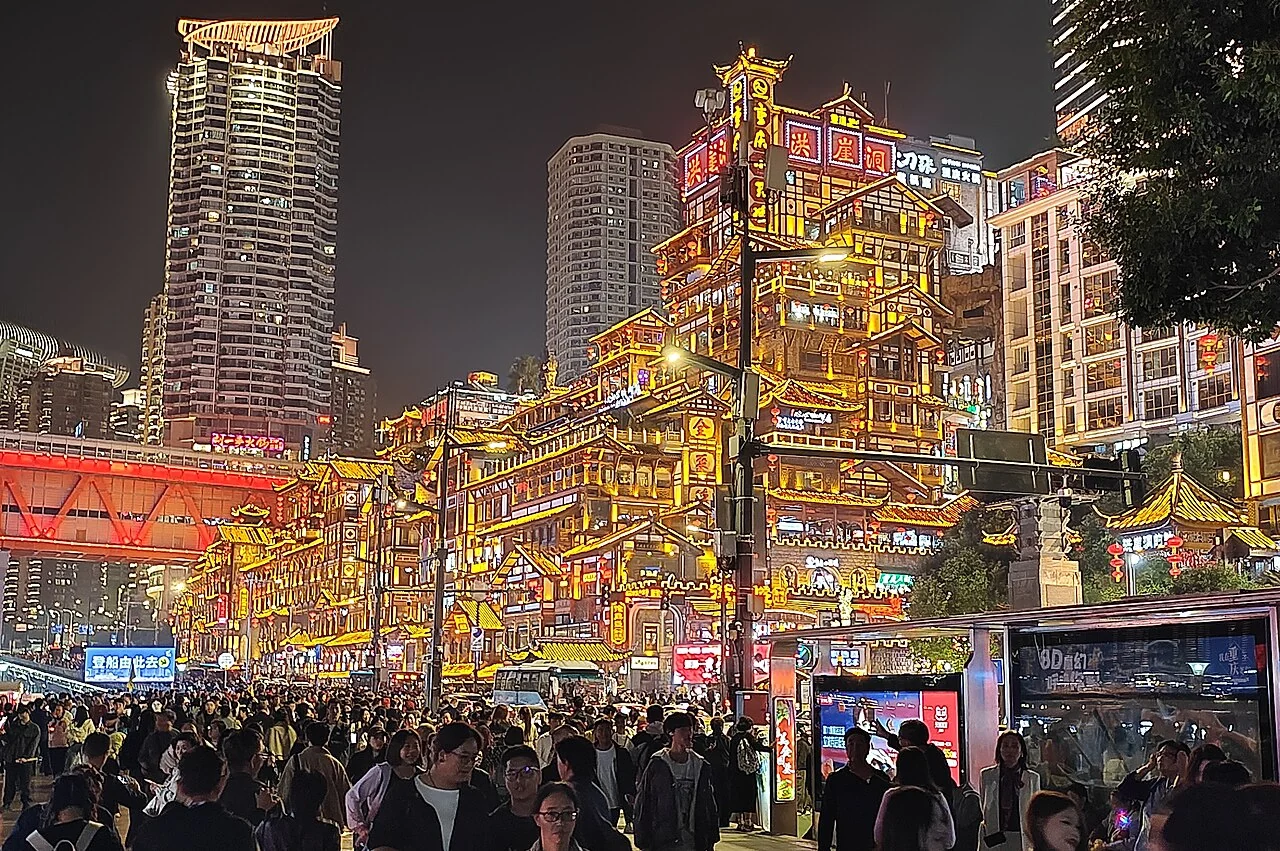
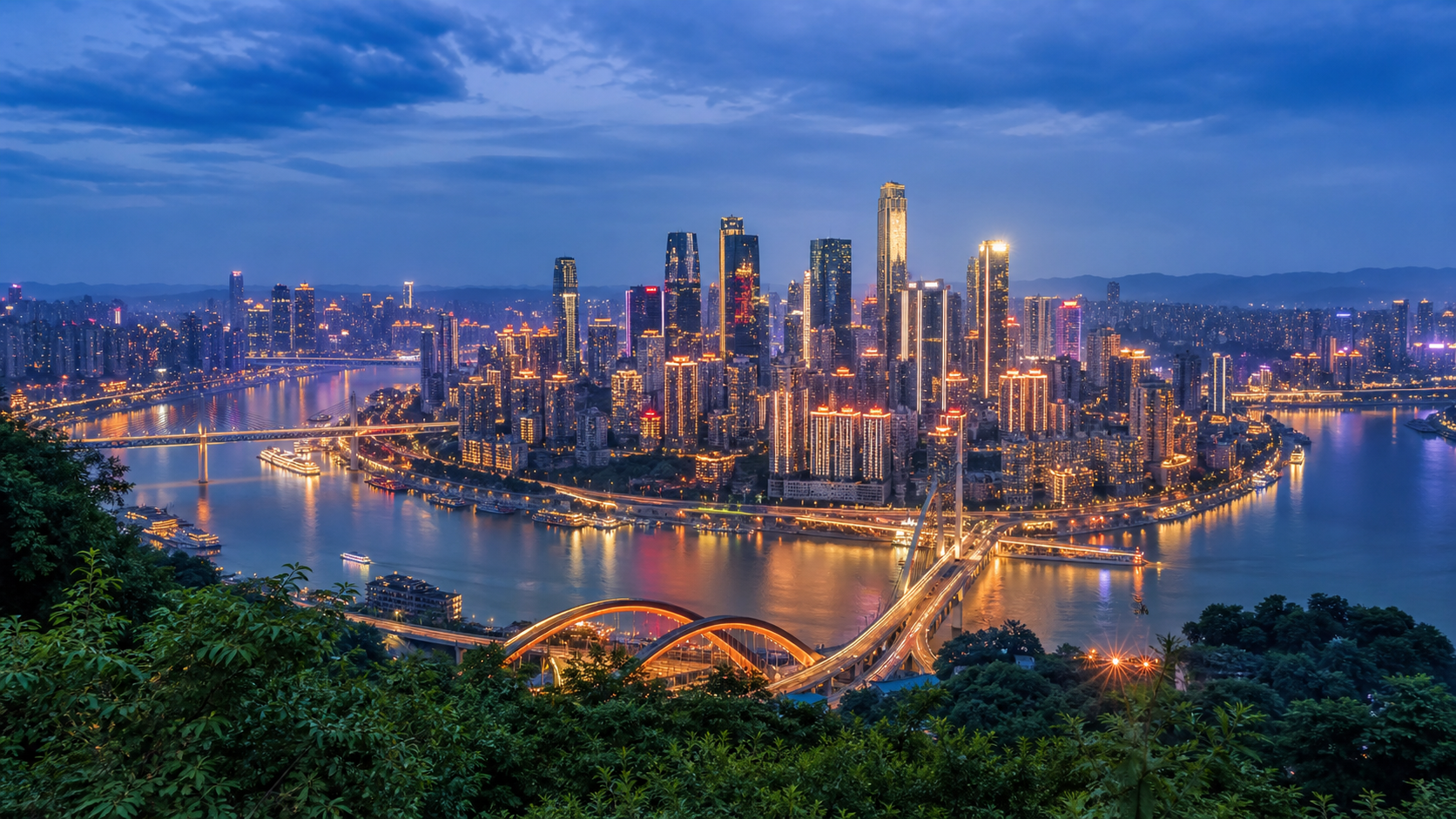
For a five-day Chongqing itinerary in 2026, we recommend five full sightseeing days: the central skyline, Eling’s creative streets, a museum-and-history day, Huangjueping’s art neighborhood and a slower south-bank finish. This plan groups nearby places and leaves room for meals and weather changes. Arrival and departure days are extra.
Cover photograph: Hongyadong illuminated above a busy street, photographed on 27 October 2025.
Photo: DvTor8303 / Wikimedia Commons · CC0 1.0. Re-encoded to WebP; no crop or retouching. Historical photograph, not current conditions.
Decide what five days means for your trip
This itinerary suits independent visitors who enjoy photography, cafes, street art and some cultural context. The extra time lets you stay with a neighborhood rather than collecting a photograph and immediately crossing the city. You can eat dinner near your accommodation on several evenings; a memorable Chongqing trip does not require a different night-view appointment every night.
We would keep one accommodation base for all five days. Before booking, compare the actual entrance, station exit and final walk rather than the straight-line distance on a map. Use the first-time accommodation guide for that decision. This route does not require a particular hotel or a room with a view.
If your booking covers five calendar days but the first and last are travel days, use the three-day version near the end. Do not squeeze the full plan around an airport arrival and an early flight. The day numbers below are movable: the Three Gorges Museum’s standing visitor notice closes the museum on Mondays except statutory holidays, so place Day 3 accordingly.
| Day | Main sequence | Movement and pace |
|---|---|---|
| 1 | Jiefangbei → Chaotianmen → Hongya Cave | Central-city walking, with breaks and a separately chosen evening approach |
| 2 | Eling Park → TESTBED2 → Liziba | Start higher; choose a permitted downhill walk or a vehicle for the last section |
| 3 | Three Gorges Museum → People’s Square → Zhongshan Fourth Road | Museum morning, lunch and a flexible historical street walk |
| 4 | Huangjueping Graffiti Art Street → Jiaotong Teahouse | Dedicated neighborhood outing; Yangjiaping meal optional by transit |
| 5 | Shangxinjie → Xiahaoli → Longmenhao | A south-bank afternoon, with time to stop before the evening view |
- Day
- 1
- Main sequence
- Jiefangbei → Chaotianmen → Hongya Cave
- Movement and pace
- Central-city walking, with breaks and a separately chosen evening approach
- Day
- 2
- Main sequence
- Eling Park → TESTBED2 → Liziba
- Movement and pace
- Start higher; choose a permitted downhill walk or a vehicle for the last section
- Day
- 3
- Main sequence
- Three Gorges Museum → People’s Square → Zhongshan Fourth Road
- Movement and pace
- Museum morning, lunch and a flexible historical street walk
- Day
- 4
- Main sequence
- Huangjueping Graffiti Art Street → Jiaotong Teahouse
- Movement and pace
- Dedicated neighborhood outing; Yangjiaping meal optional by transit
- Day
- 5
- Main sequence
- Shangxinjie → Xiahaoli → Longmenhao
- Movement and pace
- A south-bank afternoon, with time to stop before the evening view
These are editorial route allocations, not measured walking tracks or booked connections. A day can end after its first two stops if that is enough.
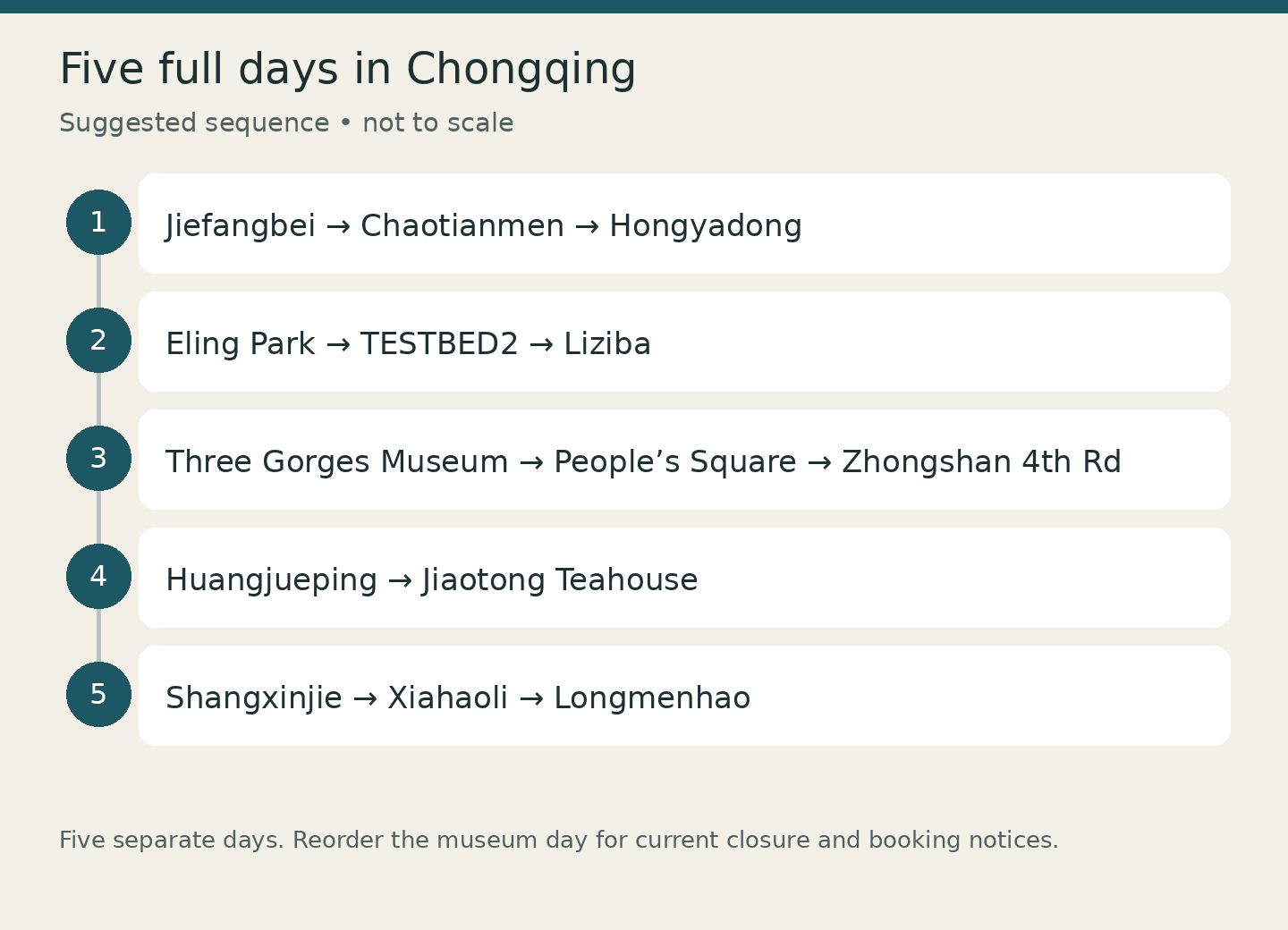
Suggested sequence • not to scale. Five separate days. Reorder the museum day for current closure and booking notices.
Day 1 Get your bearings before the night view
Start at Jiefangbei, saving 解放碑步行街 in your map app. Use the pedestrian area to orient yourself and have a meal before continuing toward Chaotianmen and the exterior of Raffles City. Follow public walking directions to the place you actually want to reach: a mall entrance, a river-facing public area and a cruise pier are different destinations.
Our recommendation is to see this eastern end of the peninsula in daylight first. Notice which roads connect at street level and where a route sends you into a building. Sit down for a proper break before deciding how to approach Hongya Cave after dark. You can return to your accommodation between the two parts if it is conveniently placed.
Hongya Cave has upper and lower road approaches, which is why two visitors following the same attraction pin can end up on different levels. The TravelChinaGuide profile describes the cliffside complex and approaches from Linjiangmen and Xiaoshizi. Save 洪崖洞 and check whether your route ends on 沧白路, Cangbai Road, or 嘉滨路, Jiabin Road, before setting a meeting point.
Choose one legal, comfortable viewing position and enjoy it. Keep moving when staff direct pedestrian flow, leave road lanes clear and avoid stopping on narrow stairs for a posed photograph. This guide does not promise a particular lighting time or an uncrowded window. The facade view, entry to commercial interiors and a river cruise are separate choices; you do not need to book all three.
For more entrance detail, use the Hongya Cave guide. A missed photograph is easy to try again on another evening because the itinerary has spare time.
Day 2 Link the hilltop garden with factory streets and the monorail
Save 鹅岭公园, then 鹅岭贰厂文创公园. Beginning with the park gives the day a clear order before the creative complex. We would reserve about half a day for these two places, allowing the pace to depend on whether you want a brief look, a long coffee break or time in an open exhibition. This is a planning allowance, not a tested circuit time.
TESTBED2 occupies former printing-factory buildings at 1 Eling Main Street. The iChongqing profile describes the industrial setting and its studios, shops and exhibition spaces. Look at the relationship between original walls, later additions and the hillside rather than hunting for a single storefront seen in an old post. Businesses change, and an attraction’s general opening listing does not establish access to every roof or gallery.
After lunch, decide whether Liziba still appeals. The CNR report on Yuzhong’s walking routes connects Liziba, Sanceng Malu, TESTBED2 and Eling in the same broader corridor. Our proposed order reverses that uphill sequence. It does not mean every connecting section is continuously downhill or step-free: use current pedestrian directions and public paths, and take a vehicle if steps or weather make the link unattractive.
At Liziba, use the designated public viewing area for the train-through-building scene. Leave entrances and residents’ access clear. If you want to ride the monorail as well, treat that as a separate transit journey and check the platform direction before boarding. Finish there rather than adding another distant district to an already hilly day. The Eling and TESTBED2 guide provides a shorter version of this outing.
For this stop, the operator’s 13 June 2026 construction schedule plans full closure of station Hall A from 1 September through 31 October and work on parts of the railway platform from 16 June through 30 November. These are published work periods, not a live access check. Allow extra time, follow current station signs and ask staff about step-free assistance before relying on it. Do not assume an older station-exit route is still usable.
A separate police traffic adjustment, reproduced by Chongqing Evening News on 10 October, took effect on 13 October 2026. It removes the crossing directly beside the viewing platform and directs pedestrians to the crossing at the Jialing Xinlu junction (嘉陵新路路口). Vehicles may not stop or pick up or drop off passengers along the platform section; taxis, ride-hailing vehicles and other small passenger cars should use the marked temporary area behind the Liziba bus stop. Use the current signs and police directions, not an old “cross straight over” or platform-front pickup instruction. This is the published arrangement, not an on-site access inspection.
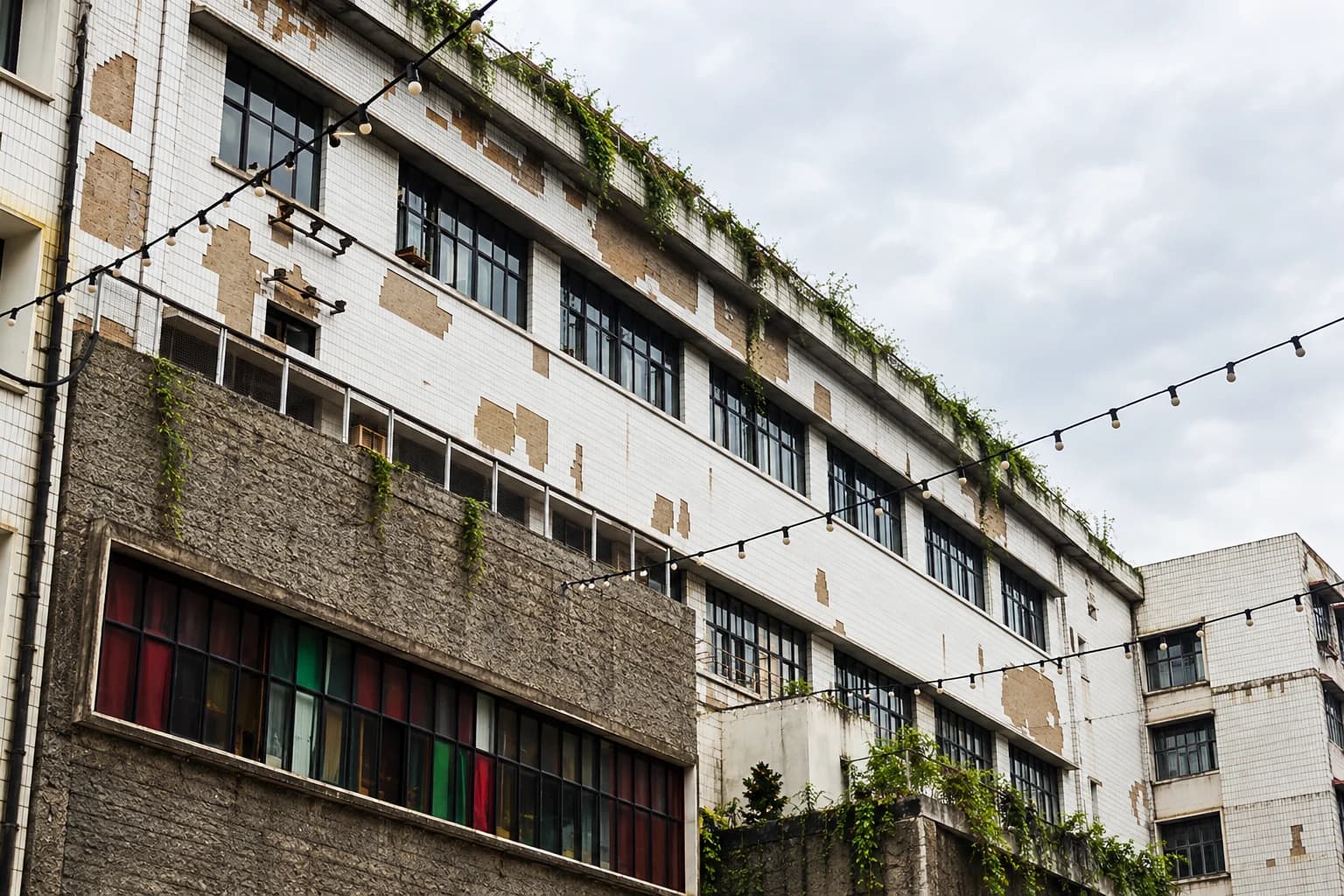
TESTBED2’s weathered industrial facade, shown as an AI-generated illustration informed by a historical photograph. Details may differ from the site today.
AI-generated illustration; approximate historical reference, original photograph not republished. Historical visual reference: iChongqing; individual photographer not identified.
Day 3 Give the city some historical context
Make the Three Gorges Museum the main appointment, then keep the afternoon flexible. Save 重庆中国三峡博物馆, 人民路236号. Its standing visitor instructions list free basic displays, 09:00–17:00 opening and Monday closure except statutory holidays, with entry stopping after 16:00. However, 12 October 2026 guidance for a different temporary exhibition lists 16:30 last entry. These official pages differ; do not assume the later cutoff applies to every gallery or visit. Arrive before 16:00 or confirm that day’s admission deadline with the museum.
One important correction to older travel advice: the museum’s 30 September 2025 notice introduced entry without reservations from 1 October, using valid identification. Bring your passport and check for a special notice before setting out. Capacity controls can still apply; this guide has not tested a foreign-passport entry process.
We would allow two to three hours for a selective visit, choosing a regional-history display and a Three Gorges-focused display rather than treating every room as compulsory. Read the current gallery map on arrival. Exhibition dates and locations matter: an announcement from the museum organization may concern another branch rather than the main building on Renmin Road.
Afterwards, pause in People’s Square and look toward the Great Hall of the People. This plan uses the outdoor setting; entry to the hall is a separate decision. Have lunch before heading to Zhongshan Fourth Road, 中山四路, for an afternoon street walk. Use the Zhongshan Fourth Road guide to choose historical stops, and confirm any individual building’s admission rather than assuming a street address means an open interior.
This is also a useful day to leave the evening unbooked. A quiet dinner and time to sort photographs can make the next neighborhood outing more enjoyable.
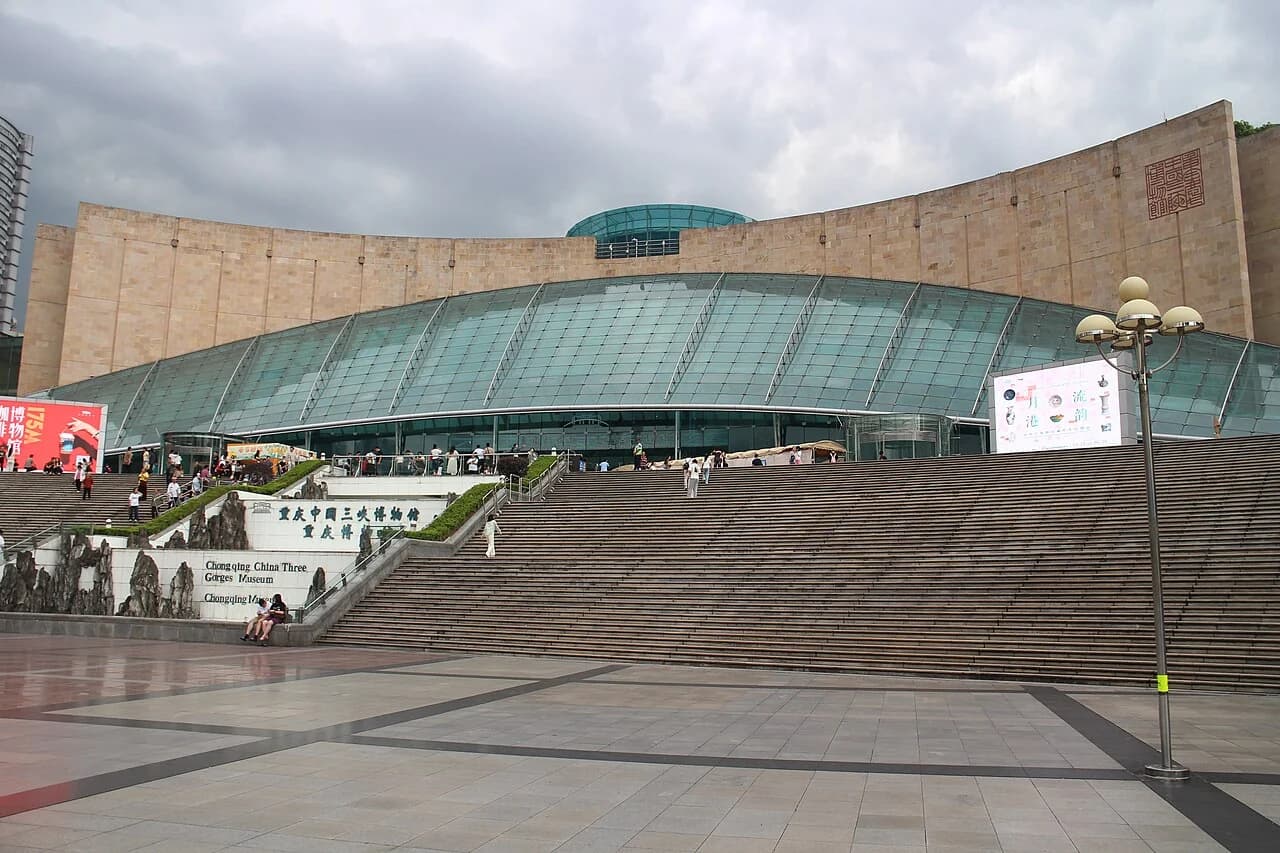
Three Gorges Museum, photographed on 7 May 2026.
Photo: Suicasmo / Wikimedia Commons · CC0 1.0. Re-encoded to WebP; no crop or retouching. Historical photograph, not current conditions.
Day 4 Spend time in Huangjueping instead of racing through it
Today’s destination is 黄桷坪涂鸦艺术街 in Jiulongpo. This is the neighborhood of the older Sichuan Fine Arts Institute campus. It is a different trip from the university’s Huxi campus and Xi Street in University Town, so check the Chinese destination before accepting a route.
The iChongqing art-street profile places the painted streets around the original campus and links a visit with Jiaotong Teahouse. We recommend one unhurried street section followed by tea, leaving time to notice how artwork shares space with everyday shops and homes. Ask before photographing someone at close range; do not enter a stairwell, studio or classroom because its doorway looks interesting.
For rail planning, search 四川美术学院站 on Line 18 and compare the final walking leg to your chosen street entrance. The city’s Line 18 opening account lists both Huangjueping and Sichuan Fine Arts Institute stations. Their names are not interchangeable. Use the live planner for today’s transfers, fare and exit, rather than following an old bus list.
At 交通茶馆, confirm what a seat and tea service cost before settling in. We have not established the current price, closing time or seat availability. If it is full or closed, keep the neighborhood walk and find another open cafe; the day should not depend on one table or one mural.
A meal around Yangjiaping can be an optional transit extension, not an assumed continuous walk. Otherwise return toward your base. The Huangjueping and Jiaotong Teahouse guide helps you keep this day focused.
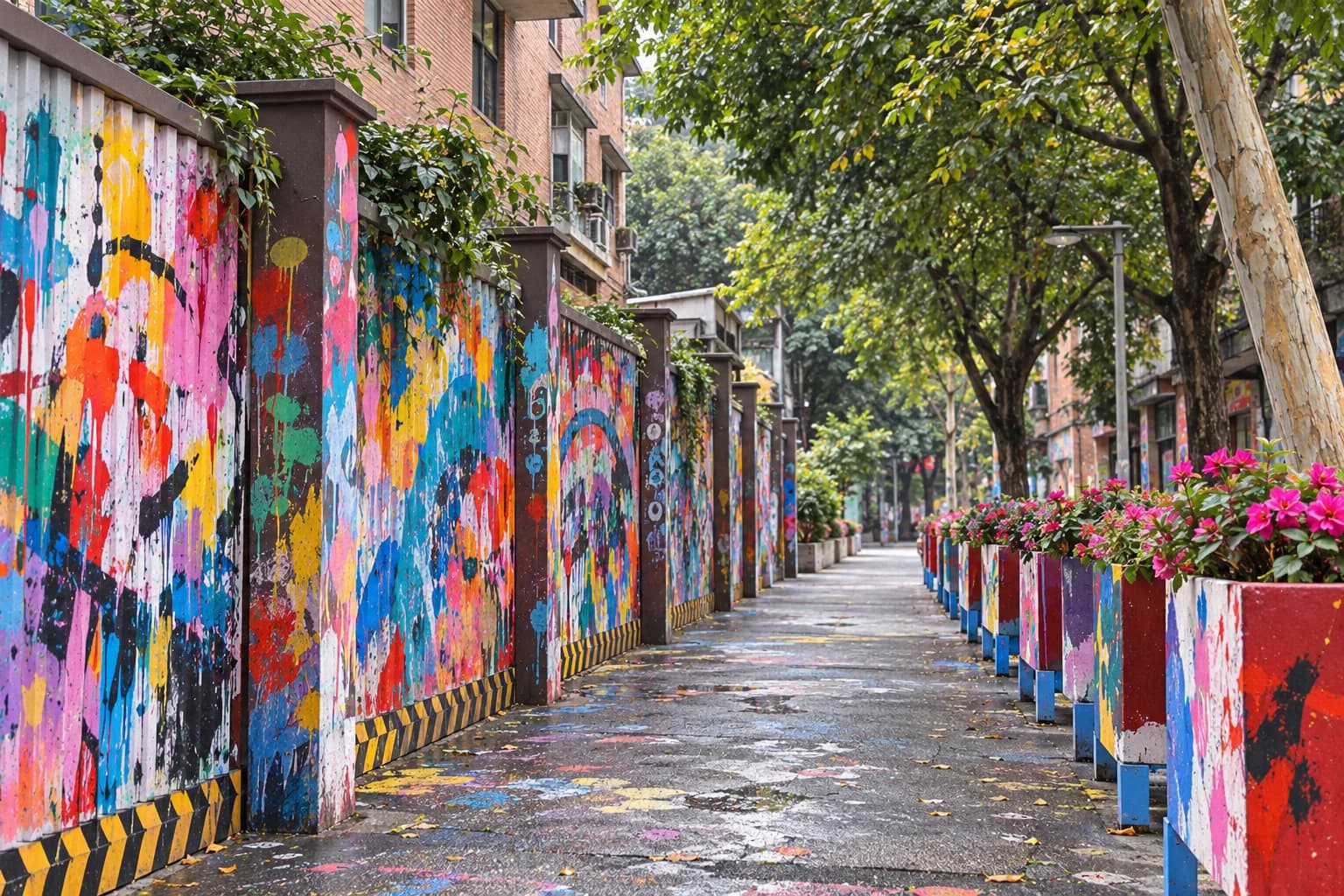
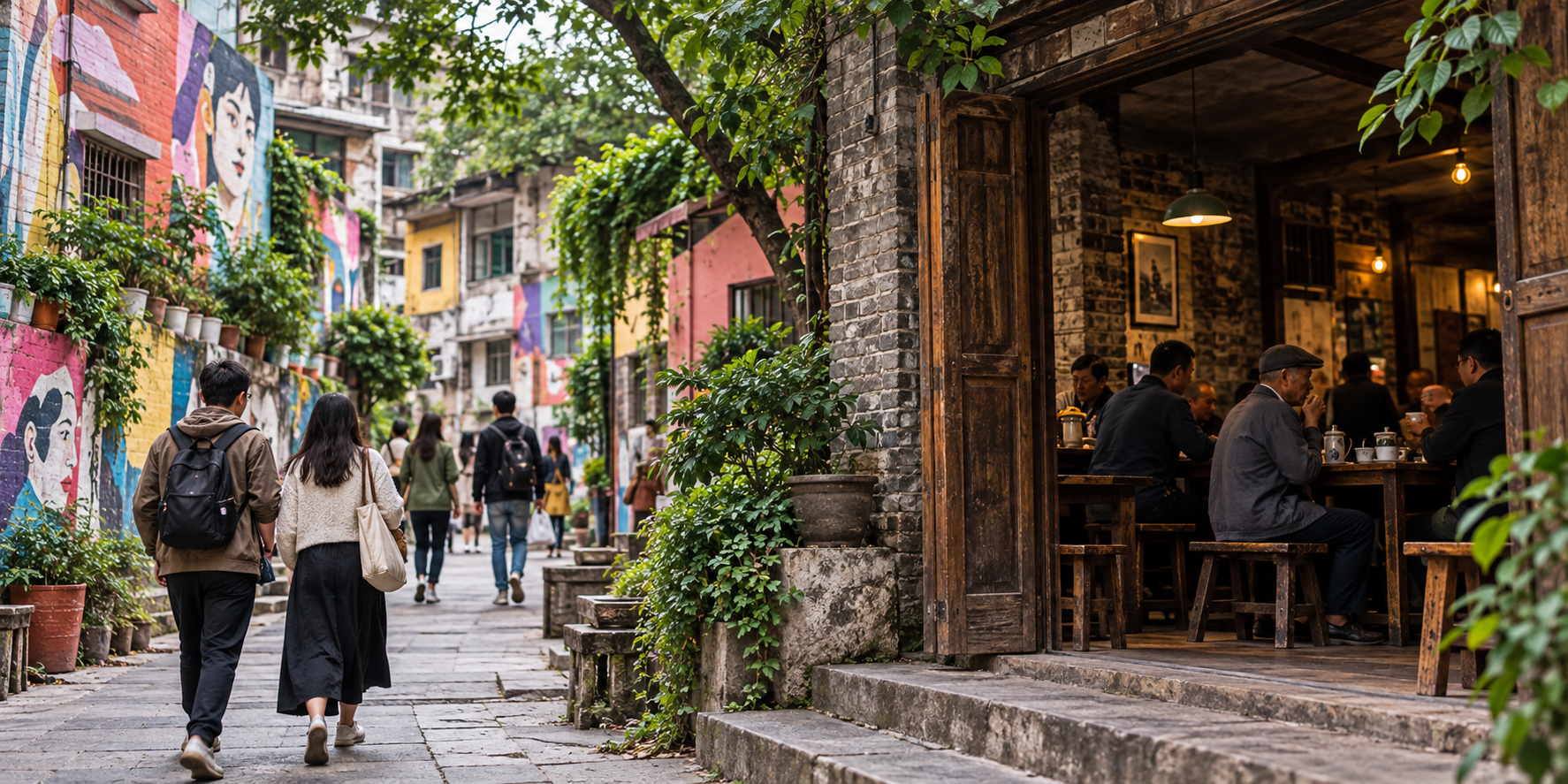
AI-generated illustration of Huangjueping’s painted-street atmosphere, informed by a photograph published in 2022. Designs are approximate, not a record of current murals.
AI-generated illustration; approximate historical reference, original photograph not republished. Historical visual reference: Jiulongpo District via iChongqing.
Day 5 Finish with a slower south-bank afternoon
Begin with a route to Shangxinjie, 上新街, then use the specific destinations 下浩里 and 龙门浩老街 for the last walking legs. Choose one public entry point and move through the lanes at a comfortable pace. Our recommendation is to start in the afternoon with enough daylight to see the steps, then decide whether to remain for a river view after dinner.
Xiahaoli and Longmenhao are neighboring parts of the wider hillside precinct. The Nan’an tourism account published in July 2026 describes Xiahaoli’s place within that area. The Longmenhao profile identifies the Yangtze-facing hillside and adapted old buildings. A source describing a cultural event or a particular shop does not establish that it is operating on your travel date.
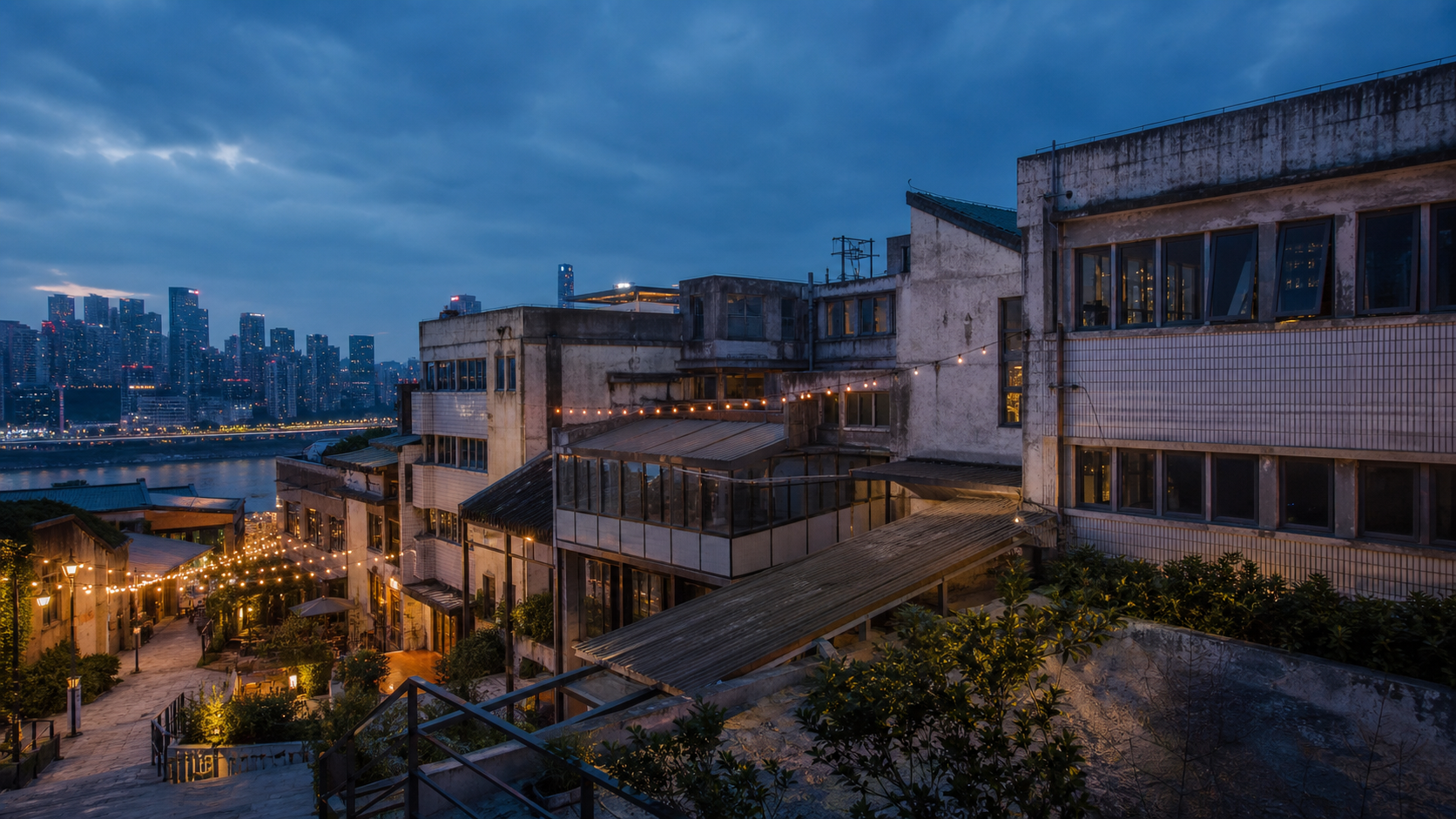
Give yourself permission to stop at a cafe with a view you enjoy. You have already spent four days moving around the city; the final afternoon can be about looking back at the peninsula and choosing a meal. Use the Xiahaoli guide for the detailed lane visit.
There is no need to add the cableway, a cruise and a Nanshan viewpoint to finish the trip. If one of those is a priority, replace part of the afternoon and check its own operating arrangements. In wet weather, shorten the lanes and choose a clearly accessible venue. Do not use an unlit stairway as a shortcut to a riverside pickup.
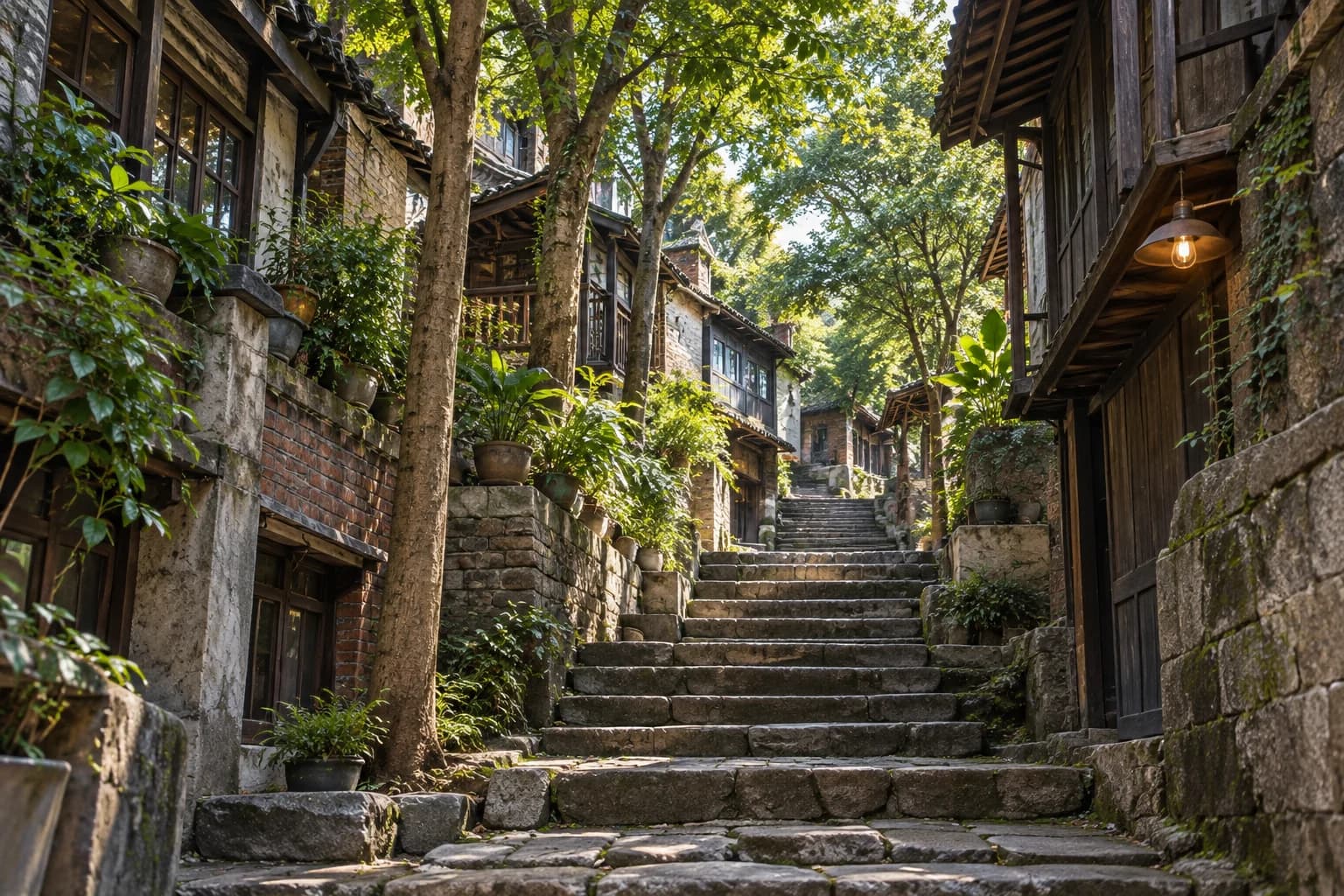
AI-generated illustration of a stepped old lane in Longmenhao, informed by a historical photograph. It does not establish current shops or access.
AI-generated illustration; approximate historical reference, original photograph not republished. Historical visual reference: iChongqing; individual photographer not identified.
Save useful map searches and leave room for changes
Save these five groups before leaving your accommodation: 解放碑步行街 / 朝天门 / 洪崖洞; 鹅岭公园 / 鹅岭贰厂文创公园 / 李子坝轨道站; 重庆中国三峡博物馆 / 人民广场 / 中山四路; 黄桷坪涂鸦艺术街 / 交通茶馆; 上新街 / 下浩里 / 龙门浩老街. Add 重庆 to a search if results show another city.
Map pins identify places, not guaranteed public entrances or accessible routes. Screenshot the chosen approach and your accommodation address, then check the final road level. The maps and navigation guide explains that last-step problem. We would use rail for longer cross-city moves and decide individual short links by the current walking route, weather and energy. No live first or last train timetable was established in this research.
For budgeting, separate meals and drinks, local transport and optional paid activities. The museum’s basic galleries are a verified free component. Shop purchases, special exhibitions, rooftops, cruises and temple or hall interiors are separate; this itinerary does not assert an all-in daily cost. Check the displayed price and what it includes before paying.
If rain or poor visibility changes the day, move the museum to a suitable open day and shorten the outdoor photo route. Avoid steep wet steps, obey riverfront barriers and cancel a walk when local warnings or closures apply. These are planning precautions, not a forecast for your dates.
Frequently asked questions
Q: Is this a five-night itinerary? A: It covers five usable sightseeing days. The number of nights depends on arrival and departure times. Keep airport and railway transfers outside these day plans unless you deliberately shorten one.
Q: How do I reduce it to three days? A: Keep Days 1, 2 and 5 for skyline, creative streets and south-bank lanes. Replace Day 5 with the museum day if history matters more, or Day 2 with Huangjueping if street art is your priority.
Q: Can I add Wulong or Dazu? A: Give the regional trip a full replacement day or extend your stay. Do not attach it to the end of a city-walking day. Check the separate attraction and transport guide before booking.
Q: Does the Three Gorges Museum need a reservation? A: The official 30 September 2025 notice says entry without reservations begins on 1 October with valid ID. It remains linked from the visitor guide when checked on 13 October 2026. Check current notices and bring your passport.
Q: Is the route suitable for travelers who need step-free access? A: A continuous step-free route has not been verified. Choose individual venues with confirmed entrances, lifts and toilets, and check each transfer. Removing the longest walks alone does not resolve stairs inside a hillside attraction.
About This Guide
This original, source-based itinerary was researched online on 13 October 2026 UTC. The five-day sequence, suggested pauses and alternatives are editorial recommendations. No firsthand visit, timed journey, booking, safety inspection or independent human review is claimed. Standing notices and dated historical photographs do not establish every day’s access or appearance; follow current operator information and on-site directions. The verification date field uses 13 October 2026 in America/Los_Angeles, corresponding to this research on 13 October 2026 UTC.
Targeted update on 23 October 2026 UTC (22 October in Los Angeles): we rechecked the published Liziba traffic arrangements and the museum’s conflicting entry-cutoff notices. This supplements the original research above; it is not a new on-site visit or confirmation of every route and business.
Traveler comments
Share a recent experience or ask a practical question about this guide.