
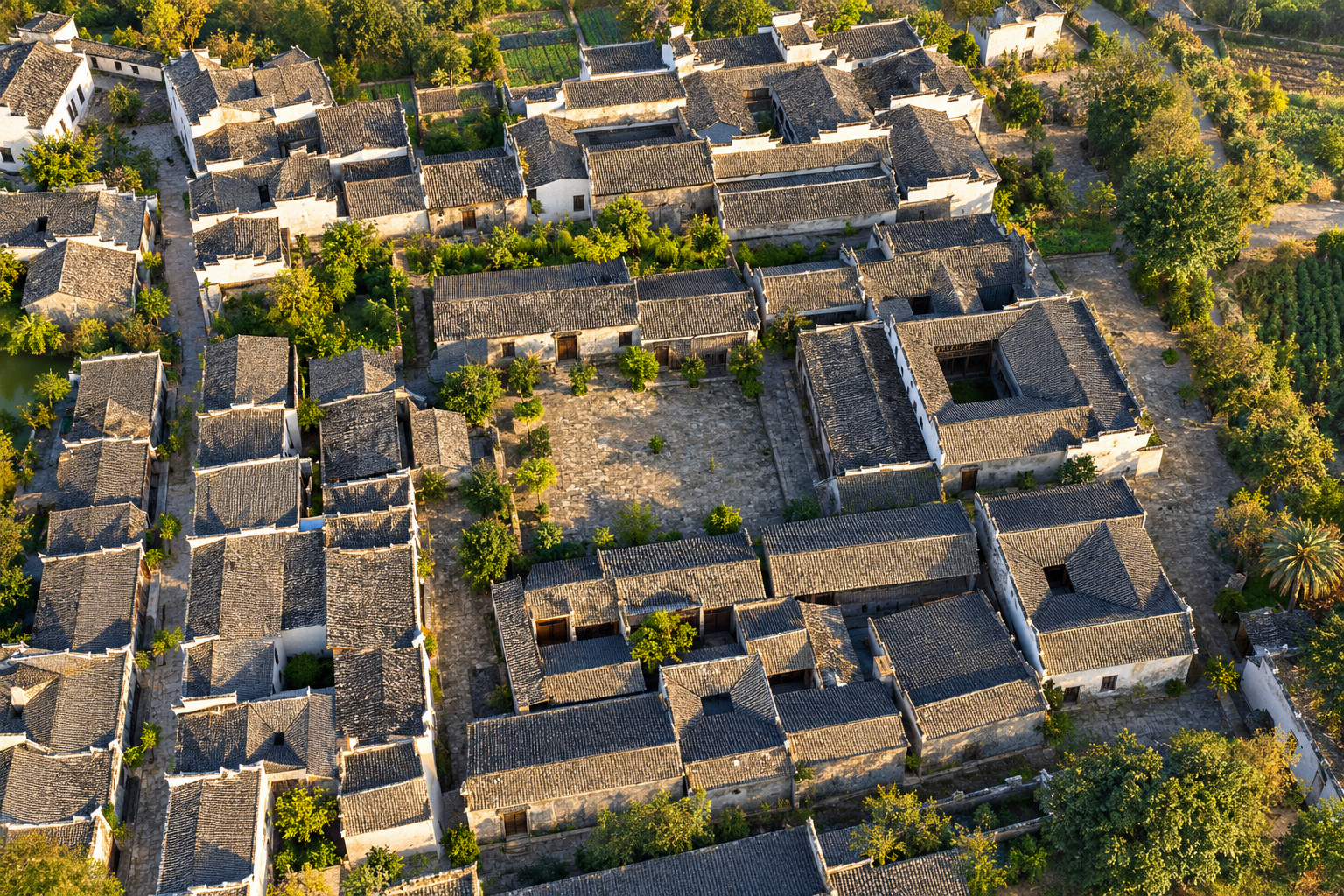
AI illustration approximating the roofscape and courtyards of relocated, rebuilt Dachang. Reference photo taken 2015-11-21, published 2015-11-24. No specific courtyard is identified. AI-generated illustration; historical reference: Reference photo credit Liu Chan / Xinhua; Reference published 2015-11-24; Reference photo taken 2015-11-21. Reference source
Dachang in Wushan is a relocated heritage town to understand in 2026 through its buildings, former river-trade role and Three Gorges resettlement context. Chongqing's 2024 account identifies three historic gates in the preserved ensemble. Visit for that layered story, while confirming access separately from any Lesser Three Gorges boat itinerary.
Save 巫山大昌古镇, including Wushan, when arranging the journey. Other places called Dachang appear in search results, including a village in Shanxi. The destination here is connected with the Daning River and the Three Gorges reservoir region in northeastern Chongqing.
Research was read on 1 October 2026. This is a guide to interpreting a relocated historic place, not a current boat timetable or a claim that the whole settlement survives unchanged on its original ground. No personal visit, resident interview or building-access survey is claimed.
Understand what “relocated heritage” means here
The Chongqing Civil Affairs account dated 15 July 2024 connects Dachang's move with the rising waters of the Three Gorges project. It describes historic residential buildings and gates being preserved through relocation. A TravelChinaGuide account updated in August 2025 explains the marking and reassembly of components, with replacement material where needed.
That history calls for a more precise description than either “untouched ancient town” or “entirely fake reconstruction.” Ask what was moved, what was restored or replaced and how the new setting changes the relationship between buildings and river. Those are different questions, and a single photograph cannot answer all of them.
Look for interpretation panels or a guide who can distinguish the historic structure from later conservation work. Do not assign an exact age to a doorway because its timber looks weathered. Relocation can preserve meaningful material and form while changing location, use and the surrounding community.

AI illustration approximating a gate and forecourt in relocated, rebuilt Dachang. Reference photo taken 2015-11-21, published 2015-11-24. The scene does not establish current visitor access. AI-generated illustration; historical reference: Reference photo credit Liu Chan / Xinhua; Reference published 2015-11-24; Reference photo taken 2015-11-21. Reference source
Keep the people in the story
A CCTV documentary synopsis republished by Sina in January 2003 records families facing relocation and decisions about work, home and where to live. It is an older source from the period of change, not an account of today's residents. It reminds the visitor that moving a building and moving a household are not the same process.
Use that distinction when reading heritage interpretation. A carefully reassembled façade can preserve architecture without recreating the former social world behind it. Some families moved elsewhere, and present uses may differ from those of an earlier street. Avoid describing every person you meet as a descendant of an original resident unless they volunteer and substantiate that connection.
If someone is working or living in a building, ask before photographing them or entering. Do not turn a personal resettlement history into an interview without consent. A respectful visit can acknowledge the scale of change without requiring residents to perform memories or explain private family decisions for visitors.
Read the gates as a structure, not a checklist
The 2024 municipal account names the east Chaoyang Gate, west Yongfeng Gate and south Tongji Gate. These three names provide useful anchors for interpreting the ensemble. They do not establish that every gate is open, that each serves as a ticket entrance or that a present-day walking route follows the original street connections unchanged.
Begin at the entrance staff direct you to use. Look at how a gate frames the street beyond it and how the buildings relate to that axis. Then compare a second viewpoint if it is publicly accessible. A simple sketch of relationships can be more informative than collecting photographs of every entrance without knowing what they represent.
Public descriptions disagree on some street lengths and building totals. This guide avoids turning those inconsistent numbers into a measured circuit. If you need a precise route for limited mobility or a timed group visit, obtain a current visitor map and confirm its conditions instead of relying on a historic-town summary.
Give Wen Family Courtyard a focused visit
Both the municipal account and TravelChinaGuide's architectural description identify the Wen family compound, 温家大院, as a significant Qing-era building. Its existence in the heritage story does not establish today's interior opening hours or whether admission is separate.
If access is available, choose two things to understand: the sequence from entrance to interior court, and how the structural or decorative details relate to that sequence. Ask which elements were moved and which were repaired. Read labels before interpreting an inscription or a room's historical function.
If the interior is closed, do not use a side door or follow someone into a working area. You can still examine the permitted exterior view and learn about the compound's role from interpretation. For a specialist architectural visit, arrange qualified interpretation in advance; a brief stop cannot independently verify every family story attached to a building.

AI illustration approximating relocated Dachang above the riverbank. Reference photo taken 2015-11-21, published 2015-11-24. Water level and shoreline access are not current-condition evidence. This depicts the general relocated Dachang ensemble; it is not a verified view of Wen Family Courtyard. AI-generated illustration; historical reference: Reference photo credit Liu Chan / Xinhua; Reference published 2015-11-24; Reference photo taken 2015-11-21. Reference source
Use the Daning River to understand the setting
The 2024 local-history source places Dachang on the Daning River and describes its former role in regional trade. It also relates the present landscape to the reservoir and Dachang Lake. Historical river connections are part of the interpretation, not proof of a currently operating passenger route.
From an authorized public viewpoint, consider the relationship between the heritage ensemble, slopes and water. How does the current setting help explain why a river settlement mattered? Which connections are described on panels, and which are visible today? Keep those observations separate from assumptions about where a former wharf or street once lay.
Do not descend exposed banks to search for submerged remains or use a low-water photograph as a route guide. Water levels, shoreline surfaces and permitted access can differ. A maintained viewing area is enough to appreciate the landscape without treating the reservoir edge as an archaeological playground.
Separate Dachang from a boat product
A TravelChinaGuide page updated in 2025 groups Dachang with Lesser Three Gorges information and retains river-access language. That relationship is understandable geographically, but it does not establish a stop on every current sightseeing cruise. A boat advertised with “Daning River” in its description may have a different route and turnaround point.
Ask the operator whether Dachang is an actual disembarkation stop on your booked date. If so, clarify the time ashore, guide arrangements, entrance charges, luggage handling and how you rejoin or leave the service. If not, plan a separate land journey rather than assuming you can simply stay aboard longer.
This article deliberately leaves boat tickets and route products to their own guide. Its focus is the town's relocation and architectural interpretation. Combining the two experiences may suit a longer Wushan stay, but a thematic connection is not a confirmed transport connection.

AI illustration approximating gate masonry in relocated, rebuilt Dachang. Reference photo taken 2015-11-21, published 2015-11-24. It does not show an untouched structure at the original site. AI-generated illustration; historical reference: Reference photo credit Liu Chan / Xinhua; Reference published 2015-11-24; Reference photo taken 2015-11-21. Reference source
Plan the land connection with a clear return
Treat Wushan arrival and the onward trip to Dachang as two separate legs. Compare current services for your travel date, then confirm the specific heritage-area entrance. Our railway-stations guide helps with station identity, but this article does not establish a direct train, coach or timed transfer to the town.
For a private vehicle, agree on the exact pickup point, waiting arrangements and whether the return uses the same entrance. Save 巫山大昌古镇 with an entrance pin; a general search for 大昌 may lead to a town centre, administrative address or a different province. The maps and navigation guide explains how to make that handoff clearer.
A suggested half-day local block can leave time for interpretation, a break and the return transfer, but it is not a measured visit duration. Start from your fixed departure and work backward. If the transport plan leaves little room for delays, shorten the number of stops rather than promising yourself that an unfamiliar regional journey will be fast.
Keep demonstrations and street life optional
The 2024 official article describes cultural presentation and local performance themes. It does not verify a daily programme today. Likewise, an older account of craft activity is not a guarantee that a visitor can watch or join a demonstration on demand.
If a performance or workshop matters to you, ask for a current date, start time, location and ticket scope. Decide whether the town still appeals without it. For many heritage-focused travellers, a well-interpreted gate, one courtyard and a river view can make a coherent visit without adding a staged event.
Keep food and shopping modestly planned. Choose a place with a clear menu and agree on portions and price rather than chasing an unsourced “traditional banquet.” If dietary requirements matter, use the vegetarian and vegan ordering guide as a communication aid, not evidence that a named Dachang restaurant can meet them.
Photograph change honestly
The 2003 documentary synopsis and later relocation account represent different moments. Archive images can help explain the move, but their date and subject need to remain visible. A pre-relocation photograph should never be used as if it shows the town a traveller can visit now.
For your own record, take one establishing view, one permitted architectural detail and one image explaining the relationship to water. Note the names before leaving, while signs or staff can help resolve them. Avoid filtering the scene so heavily that later additions disappear or the water level becomes misleading.
Ask before photographing a resident, artisan or occupied room. Do not shift furniture, open shutters or block a doorway to create an “old China” image. The interest of Dachang is precisely that preservation, relocation and present use coexist; your photographs do not need to erase that complexity.

Original editorial planning card; not a map or confirmed booking Relocated heritage; any boat stop needs separate confirmation
Plan a Dachang heritage visit
- Save the right town
- Use 巫山大昌古镇 and the current entrance
- Confirm what is open
- Ask about gates, courtyards and permitted viewpoints
- Check both journey legs
- Confirm Wushan–Dachang travel and your return
About This Guide
Public sources were read on 1 October 2026 across Chongqing Civil Affairs, TravelChinaGuide and the CCTV synopsis hosted by Sina. They supply different kinds of evidence: official place history, a commercial architectural overview and reporting from the resettlement period. Conflicting measurements and simplified claims of complete unchanged survival are not repeated as facts.
No current admission price, opening schedule, boat stop or performance time has been verified. Confirm those details and the accessible route before travel. The proposed sequence is editorial guidance, not a route walked by the author or a claim of independent human review.
Frequently Asked Questions
Q: Is Dachang still on its original historic site? A: The heritage ensemble discussed here was relocated in connection with the Three Gorges project. Distinguish preserved and reassembled buildings from an unchanged town on its original ground.
Q: Which Dachang does this guide cover? A: It covers 巫山大昌古镇 in Wushan, Chongqing, associated with the Daning River. Include Wushan in map searches to avoid similarly named destinations elsewhere.
Q: What should I focus on during a visit? A: Start with the relocation story, the three named gates and Wen Family Courtyard if open. Add a permitted river viewpoint to understand the changed setting.
Q: Does every Lesser Three Gorges boat trip stop at Dachang? A: No such universal stop was verified. Ask your operator whether Dachang is explicitly included, with disembarkation, time ashore and return arrangements stated.
Q: Are craft demonstrations and performances available every day? A: A current daily programme was not established on 1 October 2026. Treat them as optional activities requiring a dated confirmation, rather than a reason to wait indefinitely.
Traveler comments
Share a recent experience or ask a practical question about this guide.