
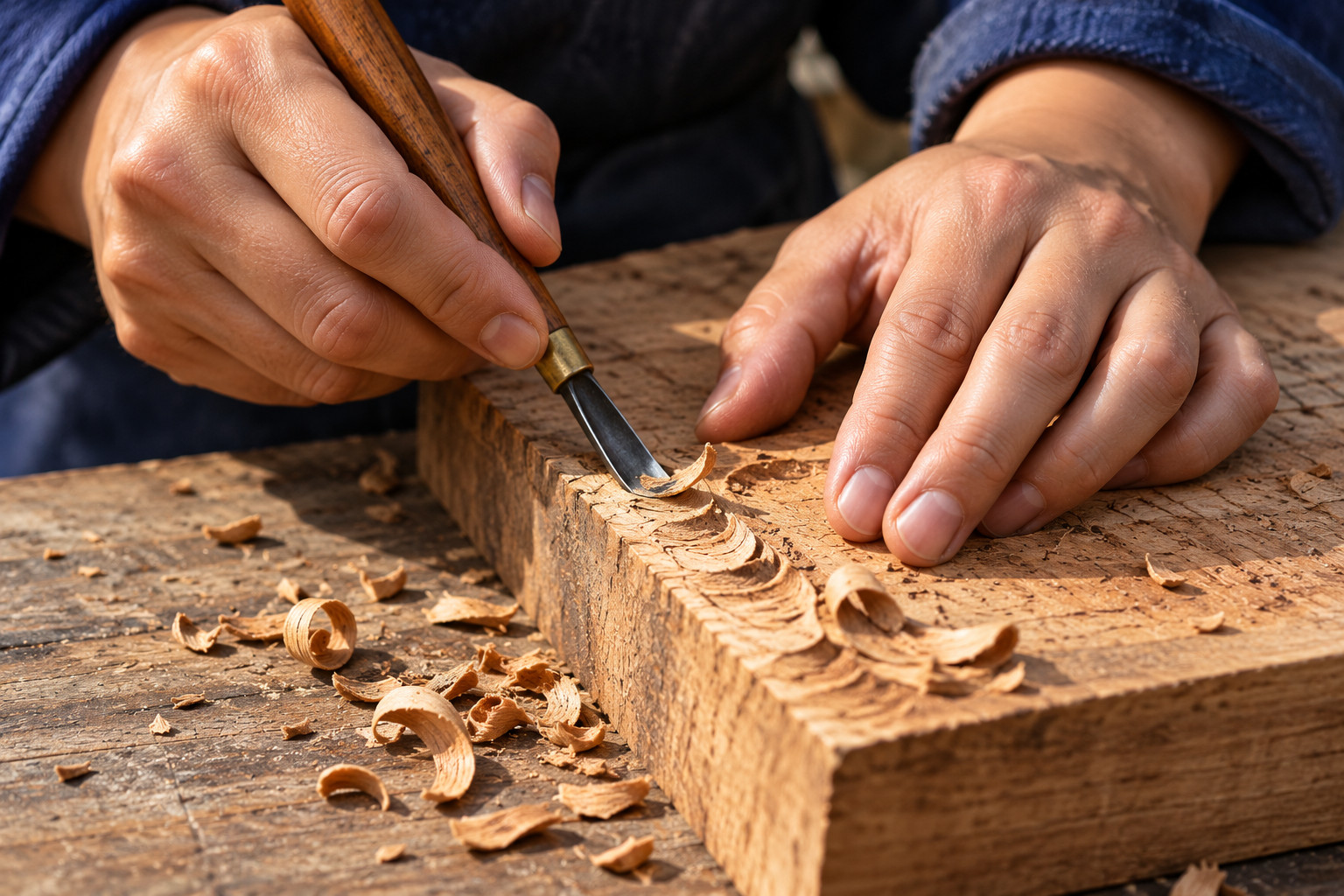
Cover: AI illustration: Carving a small area of a woodblock. Technical process illustration; not a reproduction of a complete modern artwork, artisan portrait or current workshop offer.
Visual reference: Xinhua / He Penglei (何蓬磊), China News Service; republished by Xinhua
AI illustration: Technical process illustration; not a reproduction of a complete modern artwork, artisan portrait or current workshop offer.
For Liangping woodblock prints in 2026, distinguish seeing finished work, watching a maker and joining a confirmed printing session. China’s national heritage register lists the craft from 2006 and names its protection center. That recognition establishes the tradition; it does not supply a public workshop timetable or guarantee that a named artisan accepts walk-in visitors.
Liangping woodblock New Year prints, 梁平木版年画, reward slow looking. A finished picture can be approached through its subject, printed layers, paper and hand-applied details. Understanding those elements makes a display useful even when no demonstration is running. It also helps you ask a maker something more precise than whether an object is “traditional.”
Keep the full Chinese craft name when searching. General woodblock printing, paper rubbing and New Year-themed souvenirs can appear in the same results. They may be enjoyable activities, but they do not necessarily teach Liangping's particular tradition. This guide explains what to look for and how to arrange participation without turning an old event report into a current booking promise.
Read the image as a local craft, not a generic decoration
The national heritage register identifies Liangping woodblock prints as project 309, announced in 2006. It groups much of the subject matter into 3 categories: door guardians, mythological stories and scenes from opera. Use those categories as a starting point for looking, rather than assuming every figure is a portrait or every picture tells the same story.
Ask for the title of the work and the names of its main figures. A short explanation of their relationship can reveal why they face a certain way, carry particular objects or appear as a pair. If you cannot follow a long spoken explanation, ask the seller or demonstrator to write the title in Chinese so you can retain it accurately.
Look for how the composition directs your attention. Which lines create the figure, which colored areas make clothing or scenery legible, and where does the hand finishing appear? These questions are useful in front of a display case as well as at a workshop. Do not touch a print or carved block unless the person responsible invites you to do so.
A contemporary design can still be an interesting part of the tradition. Ask what comes from an older pattern and what the maker has changed. Avoid treating a modern subject as automatically less meaningful or a faded object as automatically older. Provenance and the maker's explanation matter more than your first impression of the style.

AI illustration: Applying color at a block edge. Technical process illustration; not a reproduction of a complete modern artwork, artisan portrait or current workshop offer.
Visual reference: Xinhua / He Penglei (何蓬磊), China News Service; republished by Xinhua
Understand why a short session cannot show the whole craft
A People’s Daily report published on 1 February 2025 describes Xu Jiahui working in Pingshan Street, Pingjin Town. It discusses pearwood blocks, bamboo-based paper and more than 30 making steps. That account helps explain why printing from an already prepared block is a limited introduction rather than the entire production process.
At a demonstration, ask which stages have already been completed. Was the block carved for this design beforehand? Has the paper been prepared? Will the visitor apply a single layer, work through several colors or add a finishing detail? Knowing the boundary makes the activity more satisfying because you can recognize the part you are actually learning.
Watch alignment and the relationship between line and color rather than expecting a perfect impression on the first attempt. Ask the instructor what they look for when judging a print. If the session is designed for beginners, a simplified block may be a sensible teaching tool. It should be described honestly rather than sold as the complete work of a master artisan.
Carving is another activity altogether. Do not infer access to knives or carving instruction from a printing ticket. If that is your interest, ask specifically whether it is taught, what prior experience is expected and what supervision is provided. A family introduction can remain focused on printing while leaving sharp-tool work to the trained demonstrator.
Verify participation through the current organizer
The Chongqing government organizer’s February 2026 announcement described a Liangping-themed program at Yuzhou Hotel lasting 3 months, including woodblock-printing participation. That event was in central Chongqing and its advertised period has passed by October. It is evidence that an activity happened, not an available booking for a Liangping trip today.
When you find a workshop lead, identify the current organizer and the place where you would attend. Ask for the date, time, exact address, price, teaching language and what the fee includes. A cultural-center notice, a studio account and a reseller's activity page may refer to different arrangements. Make sure the organizer recognizes the offer you are discussing.
Confirm whether a demonstration is scheduled for the general public, arranged for a group or dependent on an artisan being present. A school program or an official delegation's visit does not automatically accept independent travelers. Likewise, a maker's name in a newspaper does not give permission to arrive at their workplace or home without an appointment.
If no current session can be confirmed, build a viewing visit rather than treating participation as certain. Ask a museum, cultural venue or shop whether Liangping prints are currently displayed and whether explanatory material is available. No specific walk-in workshop or permanent public display was operationally verified for this article. Keeping that limitation clear can prevent a wasted trip.
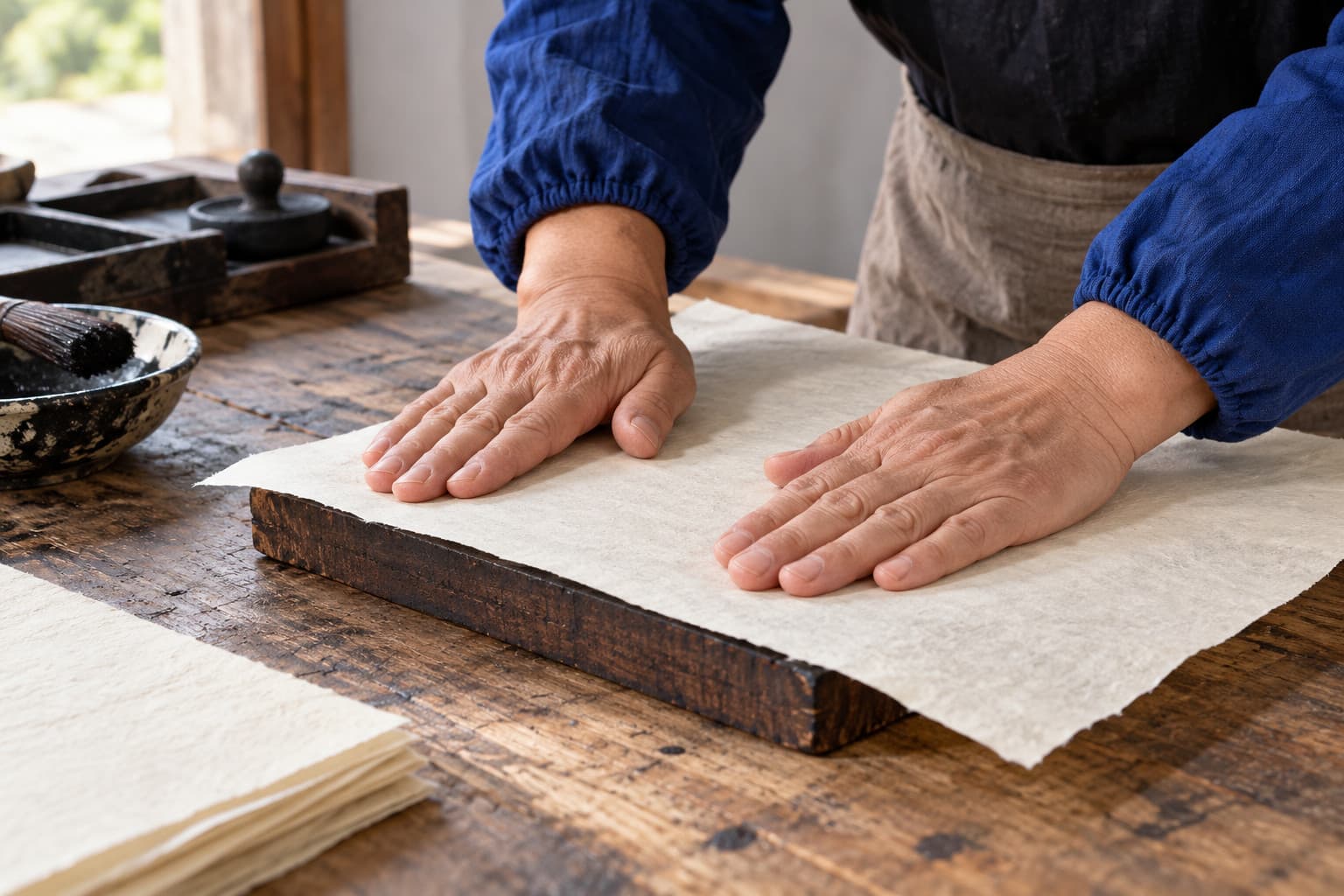
AI illustration: Pressing paper over a block. Technical process illustration; not a reproduction of a complete modern artwork, artisan portrait or current workshop offer.
Visual reference: Xinhua / He Penglei (何蓬磊), China News Service; republished by Xinhua
Choose a learning outcome that fits the visitor
The national register’s 2006 listing names Liangping’s Cultural Heritage Protection Center as the safeguarding organization. A safeguarding role concerns the craft's protection; it is not a promise of a commercial class, an English-speaking guide or a service desk for every visitor. Use the official identity to check context, then obtain the actual session details from its organizer.
Decide what would make the visit worthwhile: recognizing a traditional subject, watching a print emerge, trying alignment or understanding the maker's own design. Share that goal when asking about the activity. A short printing introduction may suit a curious beginner, while someone interested in design history may prefer a conversation and a carefully explained display.
For children, ask about the materials and the specific tasks rather than relying on the word “family.” Confirm whether clothing protection is provided, whether an adult must help and whether the child can comfortably reach the work surface. Ask about any pigment or material concern directly. This guide does not certify workshop materials or set a universal suitable age.
For travelers with access needs, ask about the entrance, steps, seating and worktable arrangement at the actual venue. An accessible entrance alone does not establish that the activity can be performed comfortably. If interpretation is important, ask whether written bilingual explanations or translation assistance are available. Do not assume that a heritage designation determines visitor facilities.
Buy a print with its identity and making method clear
The February 2025 People’s Daily account describes new presentation formats, including smaller framed works and scroll-style mounting. It demonstrates that Liangping printing is not confined to a single display format. The same report's individual sale prices are historical examples, so they are not used as a current shopping budget here.
Ask whether the piece you are buying is a hand-pulled woodblock print, a printed reproduction, a visitor-made impression or another product inspired by the craft. Each can have a place in a trip, but the description and price should match. “Heritage souvenir” is too broad to answer the question. Ask who designed it, who printed it and whether hand finishing was involved.
Request the title, maker or workshop name and any available description of the materials. If it is sold as part of a pair, establish whether the price covers both pieces and how the pair is intended to be arranged. Retain the receipt and any provenance information rather than relying on memory after you return home.
Ask how the maker recommends carrying and storing the work. Let staff advise whether it should be kept flat or rolled and whether any fresh pigment needs time before packing. Do not fold a print simply because it fits inside a small bag that way. If shipping is offered, obtain destination-specific terms and packaging details; no delivery service is verified by this guide.

AI illustration: Lifting paper from a printing block. Technical process illustration; not a reproduction of a complete modern artwork, artisan portrait or current workshop offer.
Visual reference: Xinhua / He Penglei (何蓬磊), China News Service; republished by Xinhua
Match the location to the rest of the journey
The 2025 field report places its artisan encounter in Pingjin Town's Pingshan Street. That is more specific than “Liangping,” but it remains a reported location rather than a verified visitor entrance. Obtain the current meeting point directly before arranging transport, especially if a listing uses an older county name or a broad district pin.
Plan the craft visit around a confirmed appointment when participation matters. Do not book a tight onward connection on the assumption that a demonstration starts immediately when you arrive. Ask what happens if the instructor is unavailable and whether an alternative date or refund applies. If your schedule cannot absorb a change, a viewing or shopping stop may be more practical.
Use our railway-station guide to check the wider rail plan and our taxi and ride-hailing guide for destination communication. Neither supplies a tested journey time to a Liangping studio. Save the address, return pickup point and booking conversation before leaving a reliable connection.
If you remain in central Chongqing, check current cultural listings rather than relying on the expired Yuzhou event. The Three Gorges Museum guide offers broader cultural planning, but it does not prove that a Liangping woodblock session or display is presently available there. Travel to a confirmed opportunity, not merely to a promising keyword.

Woodblock visit checks. Ask staff before deciding.
Original editorial checklist
Woodblock visit checks
Check:
- Viewing or demonstration
- Visitor printing
Confirm:
- Carving taught separately?
- Current date and organizer
Ask staff before deciding.
About This Guide
Researched on 1 October 2026 from the national intangible-heritage register, Chongqing government material and dated reporting. The 2006 listing is verified; a current public workshop, fee, opening schedule and English-language service are not. Source accounts differ on the craft's age, so this guide does not assign a precise origin anniversary. No artisan was interviewed and no session was attended for this article. Image permissions and independent factual review are outstanding.
Frequently Asked Questions
Q: What are Liangping woodblock New Year prints? A: Liangping woodblock prints are a local traditional art recorded in China’s national heritage list from 2006. Common subjects include door guardians, mythological stories and opera scenes.
Q: Can I book a Liangping woodblock-printing workshop now? A: No currently bookable Liangping workshop was verified for this guide. Ask the actual organizer for a date, venue, price, language and precise activity before arranging travel.
Q: Does the Yuzhou Hotel Liangping event still run? A: The February 2026 announcement described a three-month Liangping-themed program at Yuzhou Hotel in Chongqing. That advertised period has passed, so it cannot be treated as an October booking option.
Q: Will a short Liangping session teach me to carve a block? A: Not necessarily; visitor printing may use a prepared block. Ask the Liangping organizer whether carving is included, what supervision is provided and which stages participants perform.
Q: How should I choose a Liangping print to take home? A: Ask whether the Liangping item is hand-pulled, a reproduction or a visitor impression, and retain its title and maker details. Follow the seller's packing advice and confirm any shipping arrangement separately.



Traveler comments
Share a recent experience or ask a practical question about this guide.