
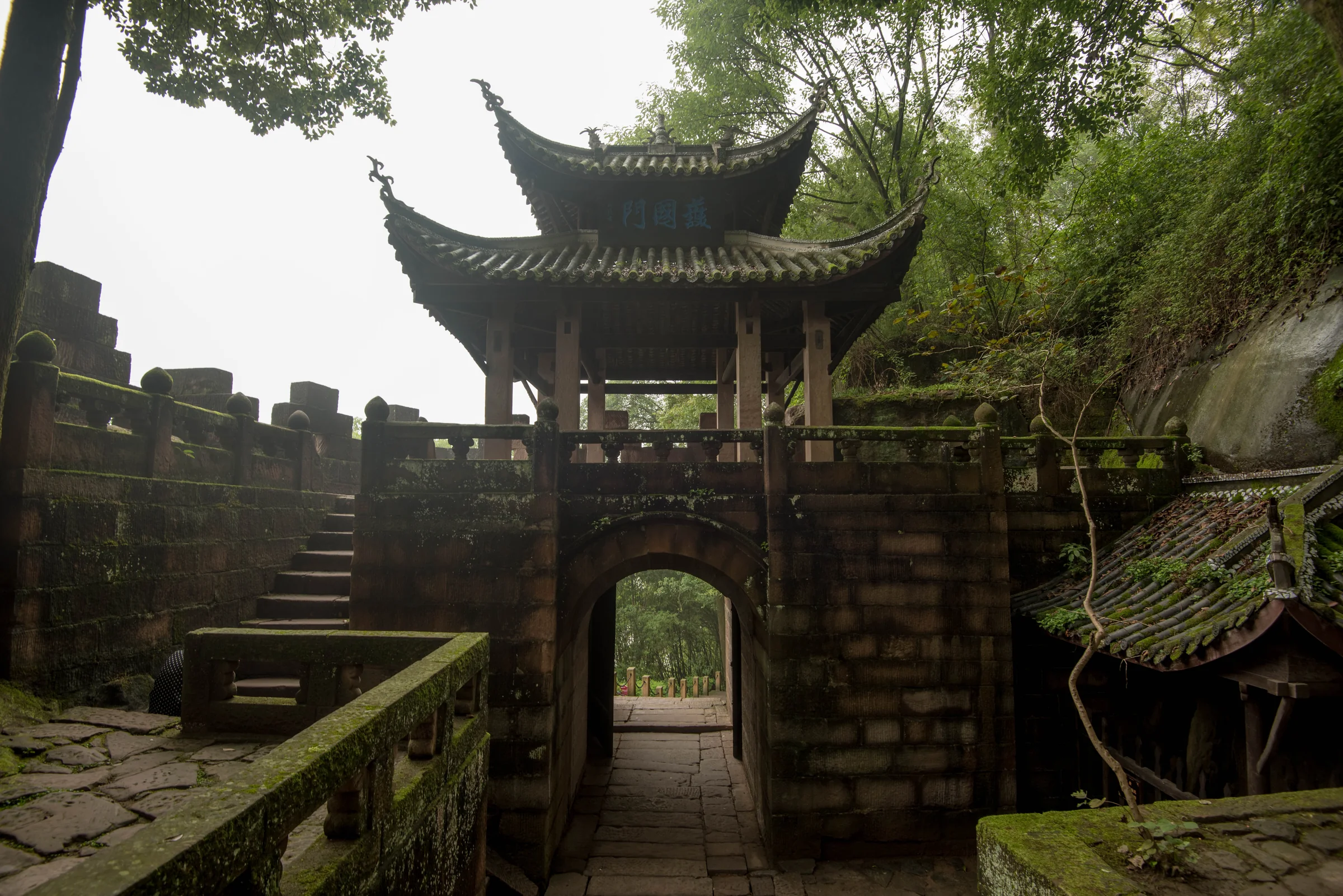

Cover image: Huguomen at Diaoyu Fortress, photographed on 23 September 2017. This historical view does not establish current route access. Creator: Siyuwj; Source: Diaoyu Fortress, 2017-09-23 49.jpg; License: CC BY-SA 4.0; Changes: Resized and converted to WebP; full composition retained.
Diaoyu Fortress in Hechuan is a history-focused Chongqing outing in 2026, with gates, stone paths and a river-shaped defensive landscape. The operator dates its fortress construction to 1243. Plan one dedicated outing, choose a manageable section of the hill, and arrange the journey back before treating it as an easy city excursion.
The Chinese destination name is 钓鱼城, also rendered as Diaoyucheng or Fishing City. “City” here means a historic fortified site. It does not mean a downtown shopping district, a fishing activity or an attraction within walking distance of Chongqing's central riverfront.
This is a desk-researched planning guide. The route choices below are editorial suggestions rather than a report of an on-site walk. Current gate access, ticket products and transport connections need checking against the visit date.
Decide whether the fortress fits this trip
Give Diaoyu Fortress one clear purpose: understanding how a hill, its approaches and its supply needs shaped a defensive settlement. The Hechuan government's March 2026 description identifies the attraction as a protected heritage site and national archaeological site park. Its interest is broader than a single famous viewpoint.
Choose it if you enjoy connecting physical remains with an explanation. A gate is more meaningful when you ask what an approaching visitor or army could see from below, where the entrance narrows and how the higher ground changes movement. A photograph of a wall can become the starting point for those questions.
For a mixed-interest group, agree on that focus before buying transport. Someone looking for indoor galleries throughout the day or a level shopping street may want a different plan. A shorter, selective visit is more useful than insisting that every person completes every advertised point.
Read the mountain before memorizing the battle story
The operator's introduction places the fortress in the landscape of the Jialing, Qu and Fu rivers and dates construction to 1243. Those two ideas, terrain and preparation, are enough to begin reading the site without trying to memorize a complete military chronology.

The river landscape at Diaoyu Fortress, photographed on 5 June 2017. The image illustrates the site's setting; it is not a current water-level or access report. Creator: AmbroseLim; Source: 釣魚城江山勝景(二).jpg; License: CC BY-SA 4.0; Changes: Resized and converted to WebP; full composition retained.
Look for the relationship between three elements: the slope outside a defensive line, the controlled entrance through it and the space protected behind it. Ask how people would bring water and supplies into a settlement and what happens when an approach is deliberately narrow. These are observation prompts, not claims that every surviving structure retains its medieval form.
The Hechuan government’s historical account dated 30 April 2025 identifies Möngke Khan as the Mongol ruler who led the 1259 siege; he died during that campaign. The precise cause and location of his death remain uncertain: the operator’s Chinese museum description presents both as subjects of historical discussion. Distinguish that uncertainty from the ruler’s identity and year. A guide may discuss competing accounts, but a dramatic projectile story should not be presented as settled fact.
A useful distinction is between a structure's origin, its surviving fabric and later restoration. They can have different dates. A site associated with the thirteenth century does not make every roof, handrail or stone surface you see thirteenth-century construction.
Choose a few interpretation anchors
Start with two or three features rather than collecting a list of names. The operator's Huguomen description identifies it as one of eight gates and describes an earlier cliff-side plank approach that could be interrupted for defense. Read that as historical interpretation, never as an invitation to seek an unofficial cliff route.

Huguomen's pavilion and name plaque, photographed on 3 October 2009. A barrier visible in this historical image must not be read as today's access arrangement. Creator: 天王星; Source: 护国门楼阁 - panoramio.jpg; License: CC BY-SA 3.0; Changes: Resized and converted to WebP; full composition retained.
At a gate, look from a permitted position at the opening, the wall around it and the terrain outside. You can ask how movement was funnelled through the entrance. Do not climb masonry, cross a barrier or stand in a passage long enough to obstruct other visitors for a photograph.
The district media's May 2025 account discusses walls, gates and water-storage features, and describes historical interpretation at the Huguo Temple museum. These provide a second strand: a defended settlement also needed everyday systems that allowed people to remain there.
If interpretation spaces are open during your visit, use a model or plan to orient yourself before following a long path. Ask which features can be reached on the route you have chosen and which would require additional climbing. A museum description on a source page does not establish that every gallery or exhibit is operating today.
Treat the visitor centre as the destination
The operator's visitor information, read on 1 October 2026, places the scenic area's visitor centre at Shuishi Wharf on Shuijun Road in Hechuan. For navigation, save 钓鱼城景区游客中心 and the address supplied by the operator, rather than relying on a pin dropped anywhere inside the hilltop site.
For an independent rail visit, make three separate checks: the train arriving in Hechuan, the local connection to the visitor centre and the journey back. The operator describes rail access followed by a local transfer, but its general journey estimates are not a date-specific timetable. This guide therefore does not promise a particular train, bus departure or door-to-door duration.
Before buying the outward journey, look at return options. Save the station name in Chinese, the departure time and the meeting place for the final local transfer. If a car is part of the plan, confirm whether the driver is waiting, returning at an agreed time or providing a one-way ride.
Our railway-stations guide explains why a city name and a station name should not be treated as interchangeable. Keep that distinction when comparing tickets or arranging a pickup. A short advertised rail segment does not include getting to the departure station, boarding procedures or the transfer at the other end.
Check entry and the day's operating limits separately
On the operator page read on 1 October 2026, the displayed opening window was 08:30–17:00. Because the page did not carry a clear update date for that panel, treat it as a planning baseline and confirm the visit-day arrangement through the operator's current information. A later shuttle or path closing time does not automatically extend admission.
The research also found a price-restoration announcement whose substantive content was an image. Its amount and effective date were not verified, so this guide does not turn an older discount into a current ticket price. Compare the current ticket description with what you actually want to do.
Ask whether the ticket includes any internal transfer, whether you need a separate service, and how the purchase handles a foreign passport. Confirm the document to bring. Do not assume that a discount described for a particular document or resident group applies to every international visitor.
The operator's published inquiry number is 023-42718788. If language support is uncertain, prepare the questions in writing: date, party size, document type, intended entrance and any walking limitations. A precise question is easier to answer than “Is everything open?”
Build a selective route with a turn-back decision
Use a two-part visit: an orientation stage followed by the selected outdoor features. This is a planning method, not a measured circuit. The operator's attraction descriptions can help you choose what to ask about, while the current entrance board and staff should determine which paths are open.
At arrival, identify the exit and return-transfer point before going uphill. Ask whether your selected features can form a loop or require retracing steps. A loop drawn on a promotional illustration may not reflect a temporary closure, maintenance work or a route that is unsuitable for your party.

Steps toward the naval wharf at Diaoyu Fortress, photographed on 3 October 2009. This is a historical approach view, not a photograph of the current visitor centre or a recommended open route. Creator: 天王星; Source: 通往水军码头 - panoramio.jpg; License: CC BY-SA 3.0; Changes: Resized and converted to WebP; full composition retained.
Agree on a turn-back trigger that everyone understands: a fixed return connection, increasing fatigue, worsening weather or a staff instruction. Do not let the next photogenic gate continually move that decision. For a group with different walking speeds, choose an actual permitted meeting place rather than separating without a plan.
Avoid attaching another distant attraction merely because it shares the name Hechuan. Additional transfers can remove the time you intended to spend interpreting the fortress. If you finish earlier than expected, an unhurried meal is a reasonable outcome; a completed trip does not need to fill every remaining minute.
Plan for feet, weather and access needs
The district account describes hill paths and the relationship between the site and its slopes. That is enough reason to ask access questions, but it is not an accessibility audit. This guide does not certify a step-free route.
Make one concrete access checklist for your party: the vehicle drop-off, the distance to the entrance, steps on the selected route, toilets, seating and the way out. Ask about the complete chain rather than whether the scenic area has a shuttle. Transport within a site does not establish that every destination reached from it is accessible.

A gateway and ascending steps within Diaoyu Fortress, photographed on 23 September 2017. The photograph illustrates the hill site's surfaces and changes in level; current access needs separate checking. Creator: Siyuwj; Source: Diaoyu Fortress, 2017-09-23 53.jpg; License: CC BY-SA 4.0; Changes: Resized and converted to WebP; full composition retained.
Use the weather forecast and official closure information for the actual day. Carry what you need for your chosen walk and use permitted resting places. Wet surfaces, heat and fatigue are reasons to shorten an itinerary, not challenges that must be overcome to complete it.
For children, a small observation task can replace a long historical lecture: find one gate, one defensive advantage and one sign of everyday life. Keep them on the public route and away from wall edges. The historical function of a fortress does not make its surviving barriers modern play equipment.
Photograph the site without turning it into a set
Aim for three types of picture: an establishing view, a structural detail and a context image that helps explain the feature. The Huguomen page is a useful naming reference, but its photographs are not automatically available for reuse.
Leave room for other visitors, follow photography notices in interpretation spaces and ask before photographing identifiable people closely. Avoid props or captions that imply you witnessed a historical scene. A reenactment, when officially scheduled, should be described as a performance.
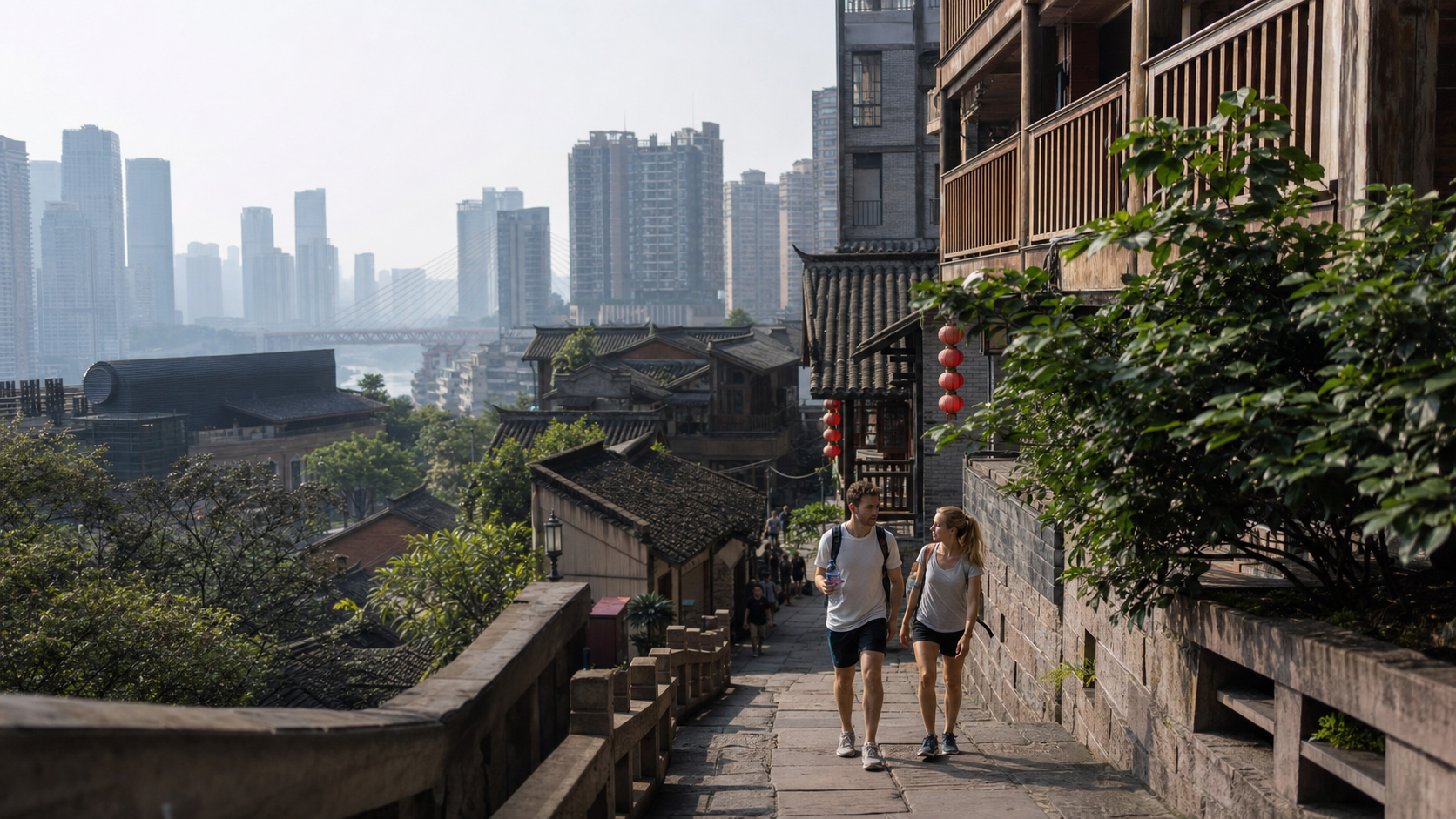
Likewise, a digitally generated travel image must not be labelled as today's documentary photograph. For planning a real visit, current operator information and on-site signs carry more weight than an attractive image with no capture date.
About This Guide
This guide was researched on 1 October 2026 using the attraction operator, Hechuan government, district reporting and historical cross-checks. It does not claim an editorial visit or a field survey checked by a person. Suggested pacing and observation prompts are editorial recommendations. Ticket conditions, local transport and access details should be checked again before travel; the operator is the starting point for those checks.
Related planning: our guides to Dazu Rock Carvings, Chongqing railway stations, and heat and stairs cover different outings or practical needs.
Frequently Asked Questions
Q: Is Diaoyu Fortress in central Chongqing? A: It is in Hechuan District. Plan the journey to 钓鱼城景区游客中心 and the return connection as a separate outing from central Chongqing.
Q: Does “Fishing City” mean visitors go fishing? A: Here the name refers to Diaoyu Fortress, a historic fortified site. This guide concerns its gates, hill landscape and historical interpretation.
Q: What is the current ticket price? A: A current amount was not verified during the 1 October 2026 research. Check the operator's dated ticket announcement or purchase screen, including any transfer charges and document conditions.
Q: Is the fortress step-free? A: No complete step-free route was verified. Ask the operator about the chosen gate, paths, toilets and return transport for your specific needs.
Q: Should I combine it with another Hechuan attraction? A: Begin with one dedicated fortress outing. Add a second stop only after checking its transfer, opening conditions and the return journey; sharing a district name does not make two sites adjacent.
Traveler comments
Share a recent experience or ask a practical question about this guide.