
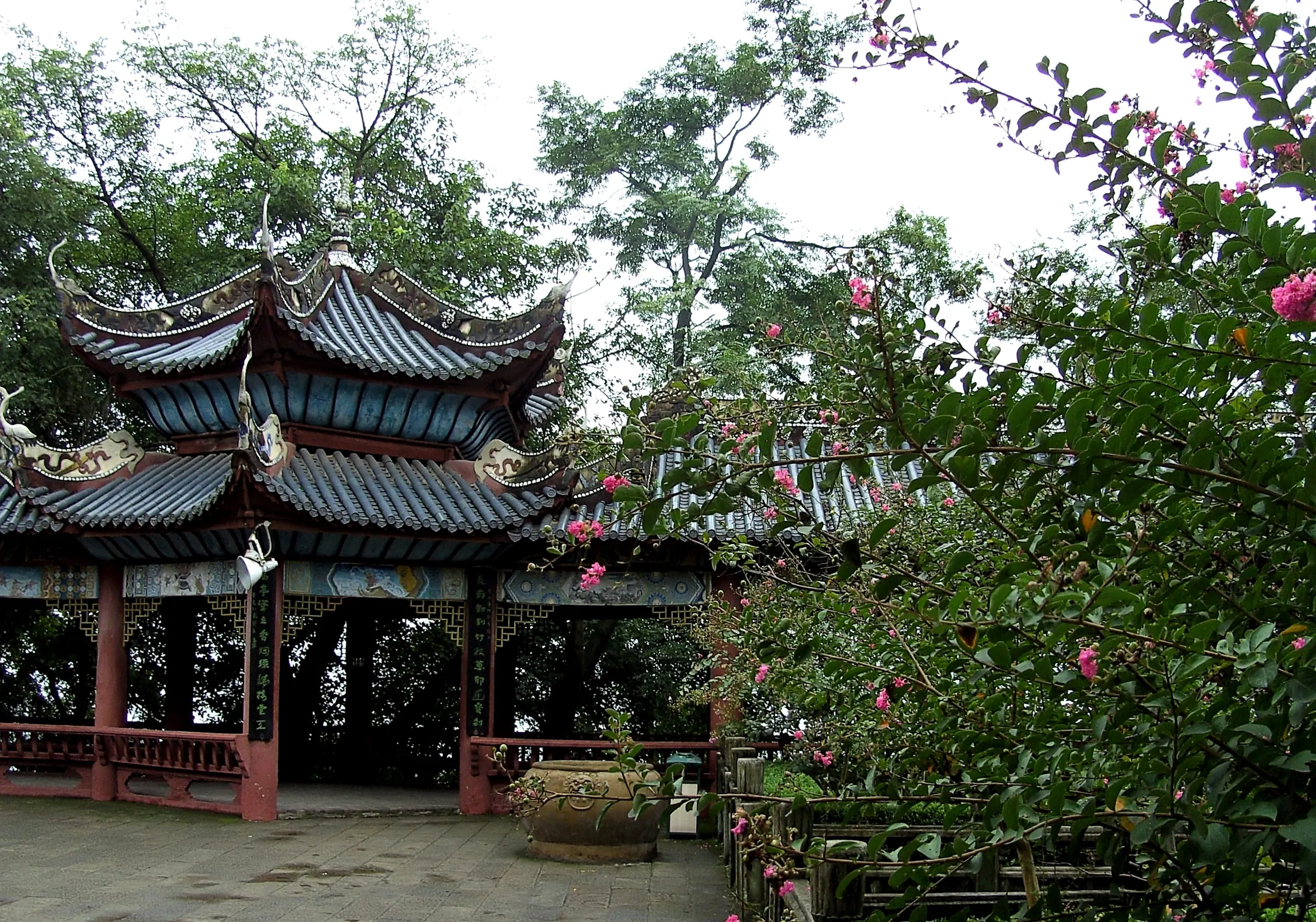

Cover image: A courtyard pavilion at Fengdu Ghost City, photographed in September 2008. This historical architectural view does not show current operating conditions. Creator: High Contrast; Source: Fengdu Ghost City, China -01.jpg; License: CC BY 2.0 de; Changes: Resized and converted to WebP; full composition retained.
Fengdu Ghost City at Mingshan is a 2026 cultural outing about afterlife folklore, symbolic judgment and temple architecture. Fengdu's official directory lists daytime admission separately from nearby attractions, while the county describes a distinct night experience. Choose one visit format first, then arrange the full journey instead of assuming a cruise is required.
The useful destination name is 丰都名山风景区, also widely called 丰都鬼城. “Ghost city” here refers to cultural stories and religious imagery. It is not a claim that the town is abandoned, that supernatural events occur there or that visitors are entering a horror attraction with a single standardized experience.

The Fengdu Ghost City entrance arch, photographed on 24 August 2009. This historical arrival view is not a current navigation reference; the large face-shaped building in the background is not being identified as a Mingshan shrine. Creator: Nyx Ning; Source: 重庆 三峡-丰都鬼城景区大门 - panoramio.jpg; License: CC BY-SA 3.0; Changes: Resized and converted to WebP; full composition retained.
This guide is based on source research rather than an editorial visit. It separates what the published sources establish from what still needs confirmation for your date, including transport, foreign-document ticketing and the operation of any uphill assistance.
Understand what the place is presenting
In its 6 January 2026 description, the county tourism authority frames Mingshan through ideas of goodness, wrongdoing, justice and harmony, with Daoist, Buddhist and Confucian influences. This is a more useful starting point than a social-media promise that the site is frightening.
Approach the visit through three questions: who or what is being represented, what moral idea the image conveys, and how the setting turns that idea into a visitor route. A bridge, gate or hall can be part of a symbolic sequence without being evidence of a literal afterlife.
Different visitors will find different aspects compelling. Some will concentrate on architectural detail; others will want a guide's explanation of unfamiliar figures and stories. If you are visiting with children, discuss the possibility of intense or unsettling imagery beforehand and let them skip a section that makes them uncomfortable.
Avoid presenting every Chinese belief as one uniform system. The site brings together several traditions and later interpretations. Describing a figure as part of this particular attraction's narrative is more precise than saying all Chinese people believe the same thing.
Use a small set of landmarks to follow the story
The county names Naihe Bridge, the Ghost Gate and Tianzi Hall among the site's representative features. The Century Cruises destination description also explains the use of symbolic trials and judgment imagery. Treat those descriptions as a way to prepare questions, not as a script you must reenact.

Guimenguan, often translated as the Gates of Hell, photographed at Fengdu Ghost City on 14 September 2014. Its imagery belongs to the site's cultural interpretation, not a claim of a supernatural event. Creator: Jpbowen; Source: Gates of Hell at Fengdu Ghost City.JPG; License: CC BY-SA 4.0; Changes: Resized and converted to WebP; full composition retained.
Choose two or three landmarks you want to understand and ask how to reach them on the currently open route. At a bridge, the useful question is what crossing represents in the story. At a gate, consider how a threshold signals entering a different narrative space. In a hall, ask which figure is central and how the surrounding images relate to it.
You do not need to perform a ritual, accept a supernatural claim or buy an additional experience to appreciate the cultural interpretation. Follow staff instructions around religious objects and other visitors. If participation is offered, clarify whether it is voluntary and whether it carries a separate charge before agreeing.
Translation tools can help with a short sign, but a literal machine translation may not explain the cultural meaning. Save unfamiliar names and ask for context. Do not let an uncertain translation become a confident claim in your own travel notes.
Separate old associations from the age of surviving buildings
The county description explains that Tianzi Hall has been rebuilt more than once and dates the surviving main hall to a 1664 rebuilding. That distinction matters: a place can have a long cultural history while its present buildings, fittings and visitor infrastructure come from different periods.
Look for one dated explanation of the building in front of you instead of transferring an attraction-wide age to every object. A reconstructed part can still help communicate a story, but it should be understood as a reconstruction when the interpretation identifies it that way.

The building signed 平都宗祠 at Fengdu Ghost City, photographed in September 2008. This historical architectural detail does not establish its construction date or current visitor access. Creator: High Contrast; Source: Fengdu Ghost City - building.JPG; License: CC BY 3.0 de; Changes: Resized and converted to WebP; full composition retained.
The same discipline applies to photographs. A picture of a newly staged night scene does not illustrate an unchanged ancient ritual. A dramatic statue close-up does not establish the age of the whole complex. Ask what the image actually shows, when it was made and which part of the attraction it represents.
This approach also helps with visitor expectations. You are choosing a layered cultural site that has been adapted for public visits, rather than expecting an untouched landscape from a single historical moment.
Read the daytime admission baseline carefully
The county attraction directory dated 26 May 2026 lists Mingshan admission at RMB 90. For March through November it lists 08:00–17:20, with entry ending at 16:50. Those are a dated official baseline, not a promise that a holiday, closure or special product cannot change your visit.
Read the current ticket screen for the exact date and product. Confirm whether internal transport or any cableway is included, separate or unavailable. This research did not establish current cableway operation, its price or a complete step-free alternative.
The directory also lists discounts and concessions tied to specified conditions and documents. It does not fully explain how each concession applies to every foreign passport holder. Ask before relying on a reduced price, and bring the original document the operator requires.
Do not treat a nearby attraction's ticket as part of the same purchase. The directory lists Xiaoguanshan separately, for example. A broad marketing name can cover more than one independently ticketed visit. Before paying, check the place name, inclusions, visit date and cancellation terms on the actual product.
Choose an independent visit or a cruise excursion
A public traveler discussion asks whether Fengdu can be visited without a multiday cruise. It is a useful reader question, but replies on a forum are not current timetables. The county's public attraction listing provides a land address; a cruise is one possible format rather than the definition of the destination.
For an independent trip, plan three connections: reaching Fengdu, travelling from that arrival point to Mingshan and returning to your onward transport. Verify each part for your date. This guide does not publish an unverified rail departure, bus number or travel-time promise.
For a cruise visit, ask the cruise operator which shore excursion is in your booked itinerary. Century Cruises describes Fengdu as a common cultural stop, but that does not establish that every sailing includes the same excursion or that it is included in every fare.
Confirm the meeting time, pickup arrangement, included transport, walking demands and guide language. If you decide to skip a shore excursion, ask what arrangements apply to staying on board. Do not assume you can independently leave and rejoin the ship at a different place without the operator's agreement.
The comparison should be between complete arrangements, rather than between an attraction ticket and a cruise package that also includes accommodation and travel.
Treat the night experience as a separate decision
The county's January 2026 page describes an immersive night product using performance and visual effects. The existence of that description does not prove a performance is scheduled on every evening, that it uses the daytime ticket or that its route suits the same audience.
Before choosing it, ask four questions: is it operating on your date, which entrance or meeting point does it use, what does the ticket include, and how will you leave afterward? Confirm whether spoken interaction is important to understanding the experience and whether assistance is offered in a language you can use.
A night production may appeal to someone who enjoys staged storytelling. A daytime cultural visit may suit someone who wants to read signs and look closely at architecture. These are different aims; neither needs to be sold as the universal choice.
If a child or adult in your party dislikes intense sound, darkness or startling interaction, describe the format before booking. Do not infer a gentle family experience from a bright promotional photograph. Obtain the operator's current description and decide as a group.
Ask about the hill route before committing
The cruise operator's description places the main complex on Mingshan and describes exploration on foot. That does not amount to an accessibility assessment. A transfer that reaches partway into an attraction does not prove the remainder has no steps.
Make one practical list for your party: the drop-off, entrance, selected landmarks, toilets, places to rest and exit. Ask the operator which parts require stairs, whether assistance is available and what a shorter visit would include. Do not assume that a cableway, if operating, removes all walking or makes every hall accessible.

Naihe Bridge at Fengdu Ghost City, photographed on 6 April 2002. This historical image illustrates steps and built setting, not the current entrance, route condition or cruise-excursion path. Creator: lienyuan lee; Source: 奈何橋 Naihe Bridge - panoramio.jpg; License: CC BY 3.0; Changes: Resized and converted to WebP; full composition retained.
For a cruise group, communicate needs before the excursion is assembled rather than waiting at the gangway. For an independent visit, leave time to adjust the route after seeing the current site information. Choosing fewer landmarks can be a sensible plan, not a failed visit.
Use the actual weather forecast and closure information. On a wet or uncomfortable day, shorten the outdoor portion rather than trying to follow a photograph-led checklist. This article provides no medical advice or certification of fitness for the route.
Keep the return plan and everyday needs visible
The official directory gives the scenic area's address as No. 152 Mingshan Road and the inquiry number as 023-70600966. Save the Chinese place name and your actual pickup point in addition to a translated address.
Set one clear deadline for leaving the attraction based on the confirmed return connection. Work backward through the local transfer and boarding requirements. Do not spend the remaining margin on a second product merely because someone offers it at the exit.
Before starting the selected route, identify where you can pause, obtain water and use a toilet. Carry the essentials your party needs rather than assuming a particular shop is open. If you arrange a car, keep the agreed pickup details and a way to contact the driver accessible when your phone battery is low.
The existing Chongqing railway-stations guide can help with transport-name checks. The city's Two Rivers night-cruise guide concerns a different, central-Chongqing experience; it should not be used as a timetable or itinerary for a Fengdu shore excursion.
About This Guide
Research was completed on 1 October 2026 using Fengdu county sources, a cruise operator, a public Mafengwo destination page and a traveler question. Social and travel-platform material informed questions, not copied prose or images. No editorial visit, interview or human field review is claimed. Recheck the official visitor directory and the operator's latest notices before relying on dated operating information.
Frequently Asked Questions
Q: Do I need to book a Yangtze cruise to visit Fengdu Ghost City? A: Mingshan has a public land address in Fengdu and is not defined by a cruise booking. For an independent visit, verify the complete outward and return transport arrangements rather than relying on forum suggestions.
Q: What daytime ticket price did the official source list? A: The county directory dated 26 May 2026 listed RMB 90 for Mingshan. Confirm the price, inclusions and document conditions for your actual visit date.
Q: Is the daytime ticket the same as the night experience? A: The county describes a separate immersive night product. Check its current date, entry point and ticket conditions; this guide does not assume it is included in daytime admission.
Q: Is Fengdu Ghost City suitable for every child? A: Some Mingshan imagery concerns judgment and punishment. Explain the format beforehand, consider your child's preferences and be ready to skip a section without forcing participation.
Q: Does a cableway make the whole visit step-free? A: No complete step-free route or current cableway operation was verified. Ask about the full journey from the drop-off to the chosen Mingshan landmarks and back.
Traveler comments
Share a recent experience or ask a practical question about this guide.