AI disclosure: Prepared with AI using cited sources and automatic editorial checks. No on-site visit or human review is claimed. Historical photographs are attributed real images; the labelled editorial diagrams are programmatically drawn planning aids.

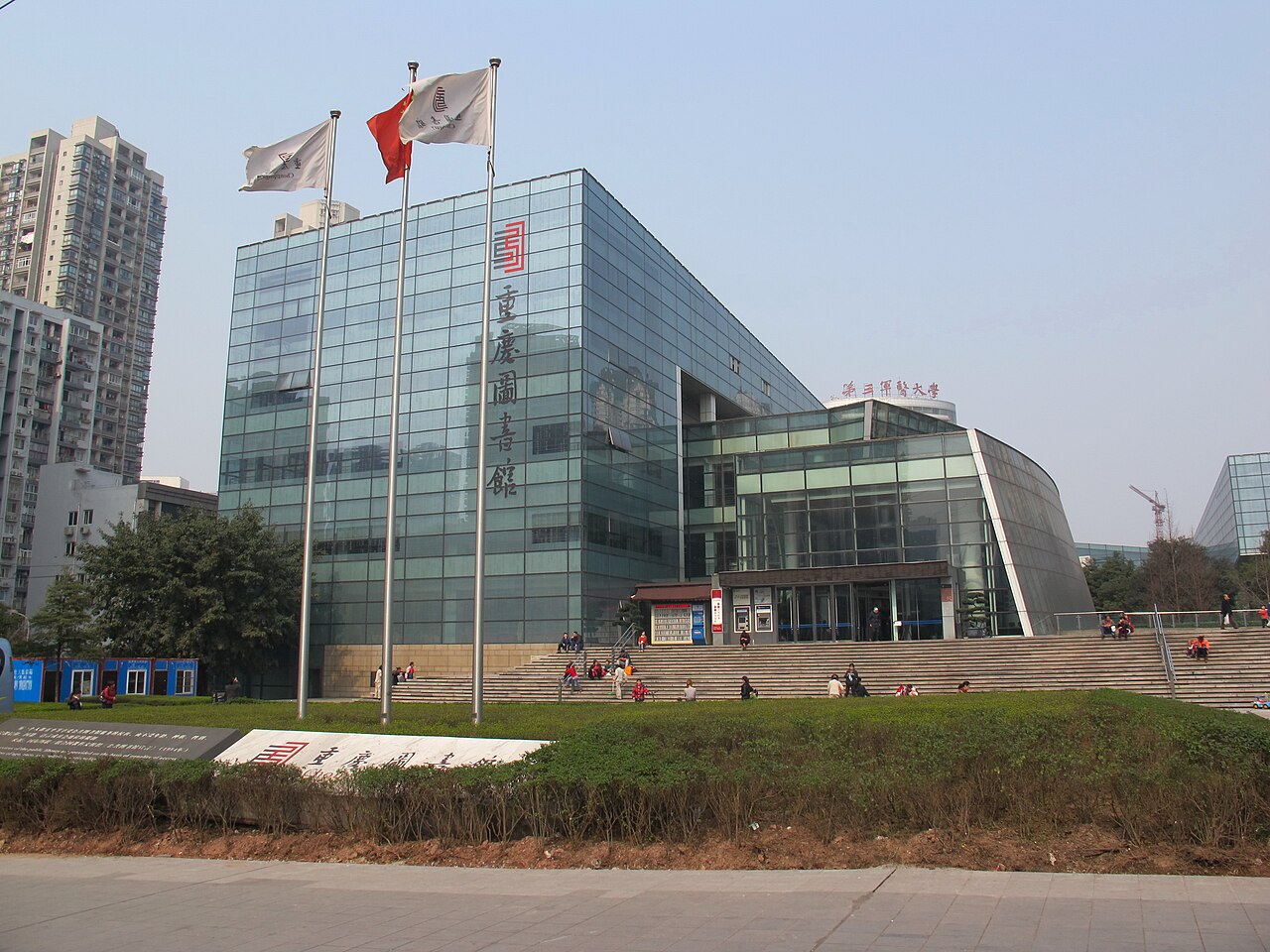
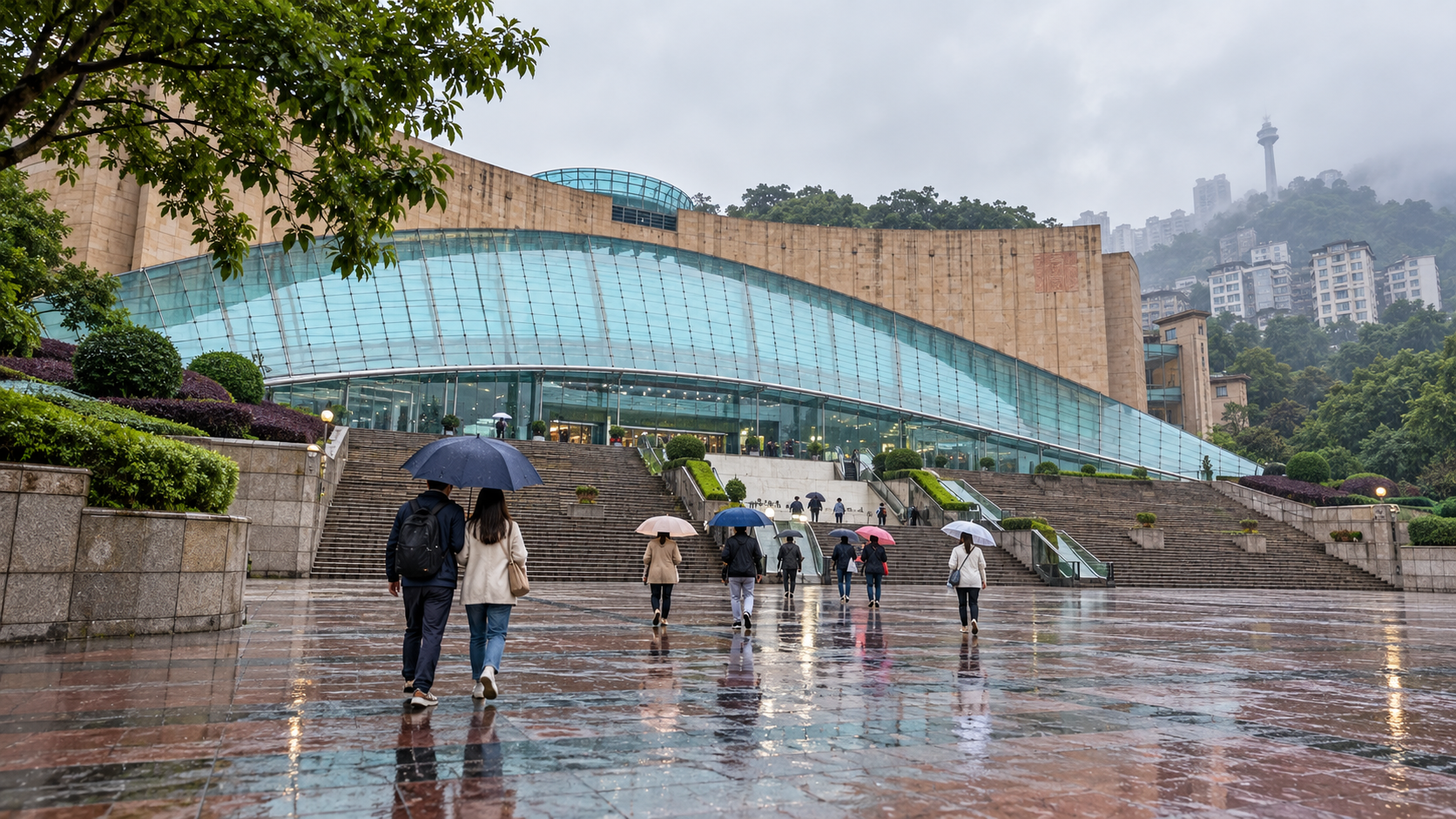
Chongqing Library exterior, photographed 17 February 2013. The historical entrance view does not establish current access or facilities.
Photo: Nyx Ning. Work: File:重庆-图书馆 - panoramio.jpg. Capture date: Taken on 17 February 2013. License: CC BY-SA 3.0. Source. Changes: Commons-served full-frame 1280px downsample of the 3648px source; copied byte-for-byte, with no local edits.
For Chongqing libraries in 2026, start with Chongqing Library at 106 Fengtian Avenue and check the room you want, not just the building’s headline hours. The library’s September holiday notice sets general services to 09:00–17:00 on 1–7 October, while specialist collections close. Passport-based physical reader cards and electronic registration also follow different published routes.
A public library can add a quieter cultural stop to a trip, especially if you want to browse local history or spend time reading. It is also a working institution for people using its collections. A useful visit begins with a purpose: general reading, a particular book, a specialist collection or an advertised event.
This guide focuses on the main Chongqing Library and explains how to assess smaller reading spaces encountered elsewhere. It does not treat every place called a “library” as an interchangeable tourist attraction, nor assume that a public-facing service automatically supports every foreign document or phone number.
Choose the institution and collection first
The municipal English introduction dated 13 June 2026 locates Chongqing Library in Shapingba at 106 Fengtian Avenue. It traces the institution to 1947 and identifies notable Republican-period publications, traditional thread-bound books and United Nations materials. These collection strengths explain why the library is more than somewhere to sit out a shower.
Save the Chinese name and address: 重庆图书馆, 沙坪坝区凤天大道106号. Confirm that a map result points to this institution rather than a branch, a bookshop or a small reading room. The official service pages list the Loop Line’s Chongqing Library station and Exit 2 as an arrival reference; check station signs for the current usable approach.
Decide what you would like to find before making a long cross-city trip. For local history, save a subject, place name or book title in Chinese if you can. For a particular edition or language, keep the author and publication details together. A general search for “English books” gives staff less to work with than a title or a clear subject.
Do not infer unrestricted handling or photography from the fact that the library holds a collection. Specialist and older materials may have their own consultation arrangements. Ask the relevant service desk how to request an item and what identification, advance contact or restrictions apply. The presence of a title in a catalogue does not mean it is on an open shelf today.

Bookshelves in Chongqing Library, photographed 18 April 2010. Historical collection setting; specific holdings, access and room arrangements must be checked separately.
Photo: NewSpeaks. Work: File:CQLIB-Bookshelves.jpg. Capture date: 2010-04-18. License: CC BY-SA 3.0. Source. Changes: Exact original-source bytes, unchanged.
Read the room timetable and the holiday notice together
The official room-by-room schedule, read on 1 October 2026, gives different hours for different services. For example, the fourth-floor foreign-language lending area and United Nations collection are listed for Tuesday–Saturday, 09:00–17:00, excluding public holidays. The building’s general evening hours do not extend those specialist services.
For the current holiday, the notice issued on 16 September 2026 gives 09:00–17:00 on 1–7 October for the listed general desks, children’s and youth rooms, self-study spaces and Chinese lending areas. It closes the named specialist collections and Bashu translator collection over that period. General normal opening resumes from 8 October according to the notice.
The practical distinction is important: “the library is open” can be true while the material that motivated your visit is unavailable. If you want foreign-language holdings, check the standing specialist-room schedule as well as any dated notice. If the wording does not name your exact service clearly, ask the library to confirm rather than extending another room’s hours by analogy.
For an event, use the event’s own date, location and admission instructions. A room marked “according to activity arrangements” should not be treated as continuously available. Save the current notice before setting off and check again if your plans move to another day.
After the October holiday, the dates above become historical context. They should not be reused for a later National Day or another public holiday. Readers visiting later need the notice covering their actual date, even if the ordinary weekly timetable appears unchanged.

Service-and-date planning diagram. Check the named room’s timetable and the notice for your visit date, including maintenance; if unclear, ask the library and keep a fallback.
Original project diagram, programmatically rendered with AI assistance on 2 October 2026. No third-party photograph is used. No open reuse license is stated. New rendering; source-bound planning guidance, not a site map, official interface or current service guarantee.
Bring the right document for a physical reader card
The library’s reader-card guide, checked on 1 October 2026, includes passports among the documents for a physical reader card. Its electronic registration routes list different credentials and procedures. A passport appearing in the physical-card list does not prove that a visitor can complete every digital route or self-service kiosk flow.
Bring the original document and ask the service desk which card or reading arrangement fits your purpose. Explain whether you want to read on site or borrow books to take away. Do not begin by selecting a credit-linked app option simply because it is the first button you see; it may not be necessary or suitable for your account.
The published guide describes a temporary reading card with a CNY 10 deposit, validity for one day and same-day return. It also lists ordinary borrowing limits of eight items, including no more than three foreign-language books or periodicals, with different loan periods for some material. These are the published terms checked on the research date, not a promise that every item or visitor uses the same arrangement.
Ask staff to explain the reader-service agreement before signing or registering. Confirm return dates and any deposit procedure in a form you understand. For a short trip, on-site reading can avoid the problem of carrying a borrowed item beyond the network or forgetting it before an international departure.
If you do borrow, check each item’s recorded due date and the permitted return location. Keep your account and card details private. A helpful person can explain a screen without needing your password, and a public computer should not retain your login after you finish.

Reading-versus-borrowing decision diagram. Confirm documents, conditions and any return commitment with the library. Physical-card guidance does not establish digital registration eligibility.
Original project diagram, programmatically rendered with AI assistance on 2 October 2026. No third-party photograph is used. No open reuse license is stated. New rendering; source-bound planning guidance, not a site map, official interface or current service guarantee.
Match a reading room to your visit, including children
The official service table read on 1 October 2026 identifies children’s reading on the first floor, youth reading on the second, and separate self-study provision divided around age 14. This helps a family ask for the appropriate area rather than arriving at a quiet adult study room expecting a play space.
For children, choose material and a visit length that suit their interest, and keep an adult responsible for them. Ask whether an activity requires advance registration and whether its language or format suits your family. A colourful picture-book room appearing in a photograph does not establish that a session is running when you arrive.
For general reading, bring the essentials you need without turning a table into a luggage-storage area. Keep calls, voice messages and conversations away from quiet readers, and follow the room’s signs on food and drink. Ask staff where a conversation or a snack is appropriate instead of assuming a café-style arrangement.
If you need power, Wi-Fi, a particular seat or assistance with a device, enquire on arrival. This guide did not test foreign-number Wi-Fi registration, laptop sockets or seat-reservation systems. Do not promise yourself a full remote-work session based on an image of desks; reading access and a workable workspace are different questions.
Photography should be considerate and permission-led. Ask about photographing the interior or materials, avoid identifiable readers and do not publish documents or screens that expose someone else’s information. A quiet room full of people studying is their working environment, not a backdrop that makes their consent unnecessary.

Chongqing Library hallway, photographed 18 April 2010. This is historical main-library interior context, not a railway reading corner, kiosk or current facilities audit.
Photo: NewSpeaks. Work: File:CQLIB-Hallway.jpg. Capture date: 2010-04-18. License: CC BY-SA 4.0. Source. Changes: Exact original-source bytes, unchanged.
For broader family pacing, the Chongqing family-trip guide offers context. Keep this stop focused on the library experience your family actually wants.
Treat railway reading corners as a different service
A 4 February 2026 iChongqing report describes a reading initiative launched at 17 high-speed railway stations, with dedicated reading areas at 12 of them. Named examples include Chongqing East, Chongqing West, Yongchuan East and Fuling North. This is a useful cultural addition to an existing train journey, rather than a reason to assume unrestricted station access.
The report describes integration with the Sichuan–Chongqing library-card network. It does not establish that every foreign passport works directly at the unattended borrowing kiosk, or that every station has the same seating and collection. If the kiosk rejects your document or account, ask staff what alternative is available; repeatedly entering a different identity format is unlikely to clarify eligibility.
Use the reading area within the time available for your train. Keep the departure display in view or set a reminder, and return to the gate before boarding closes. The reading service should fit the transport task, not obscure it. A library activity inside a station does not change the conditions for entering the waiting hall.
If borrowing is possible, confirm where you can return the book before taking it away. A cross-regional network is helpful only if your actual onward route includes an eligible return point, or you have another accepted arrangement. A souvenir shop purchase and a library loan are different commitments.
Our railway-station guide helps distinguish Chongqing’s similarly named transport hubs. Match the reading-space information to the correct station rather than transferring a facility claim between East, West and North.
Keep a fallback for closures and a realistic return journey
The library’s 18 September 2026 maintenance notice announced a temporary closure of the 24-hour urban study room from 21:30 on 20 September to 06:00 on 21 September. That window has passed. It demonstrates why the name “24-hour” is not an unconditional operating promise; it is not evidence of a continuing closure on 1 October.
Before a late visit, check whether the specific study space is operating, how admission works and whether the route home remains practical. The full library’s collections are not automatically accessible because one study room has extended hours. Ask what services remain available inside the space you intend to use.
If a collection is closed, decide whether general reading still makes the journey worthwhile. You may prefer to choose another day rather than arrive expecting staff to make an exception. A plan that depends on a particular book, exhibition or specialist room should be confirmed before the trip across town.
For a rainy day, separate “indoors” from “easy to reach.” Check the station exit, outdoor approach and the place where a car can legally stop. Keep your bag manageable and avoid assuming there is storage for large luggage. If the library cannot accommodate your immediate needs, use a different stop rather than treating a public reading room as a waiting lounge by default.
The rainy-day planning guide offers other cultural options. Confirm each venue on its own terms: opening days, documents and visitor rules do not carry over from one institution to another.
About This Guide
Researched on 1 October 2026 using the library’s service pages and dated notices, municipal information and local reporting. Guidance distinguishes building hours, room access and borrowing. No on-site visit, passport-registration test, interview or human editorial review is claimed. Holiday arrangements and digital eligibility need fresh confirmation for a later visit.
Frequently Asked Questions
Q: Where is the main Chongqing Library? A: Chongqing Library is at 106 Fengtian Avenue in Shapingba. Its official pages name Chongqing Library station on the Loop Line and Exit 2 as the arrival reference; follow current station signs.
Q: Is Chongqing Library open during National Day 2026? A: Chongqing Library’s September notice lists general services at 09:00–17:00 on 1–7 October 2026 and closes named specialist collections. Check the specific room rather than relying on the building’s general hours.
Q: Can a foreign visitor use a passport for a Chongqing Library card? A: The physical-card guide includes passports among accepted documents. Chongqing Library’s electronic routes list different credentials, so take the original passport to the service desk and confirm the arrangement for your purpose.
Q: Are foreign-language collections available every evening? A: No such arrangement is listed. Chongqing Library’s current service table gives the fourth-floor foreign-language area Tuesday–Saturday, 09:00–17:00, excluding holidays, even though some general rooms have later hours.
Q: Can I visit a railway library without taking a train? A: The 2026 reading initiative does not establish separate public admission to Chongqing station waiting halls. Confirm railway access rules; use a station reading corner as part of an authorised journey rather than assuming it bypasses ticket controls.
Traveler comments
Share a recent experience or ask a practical question about this guide.