
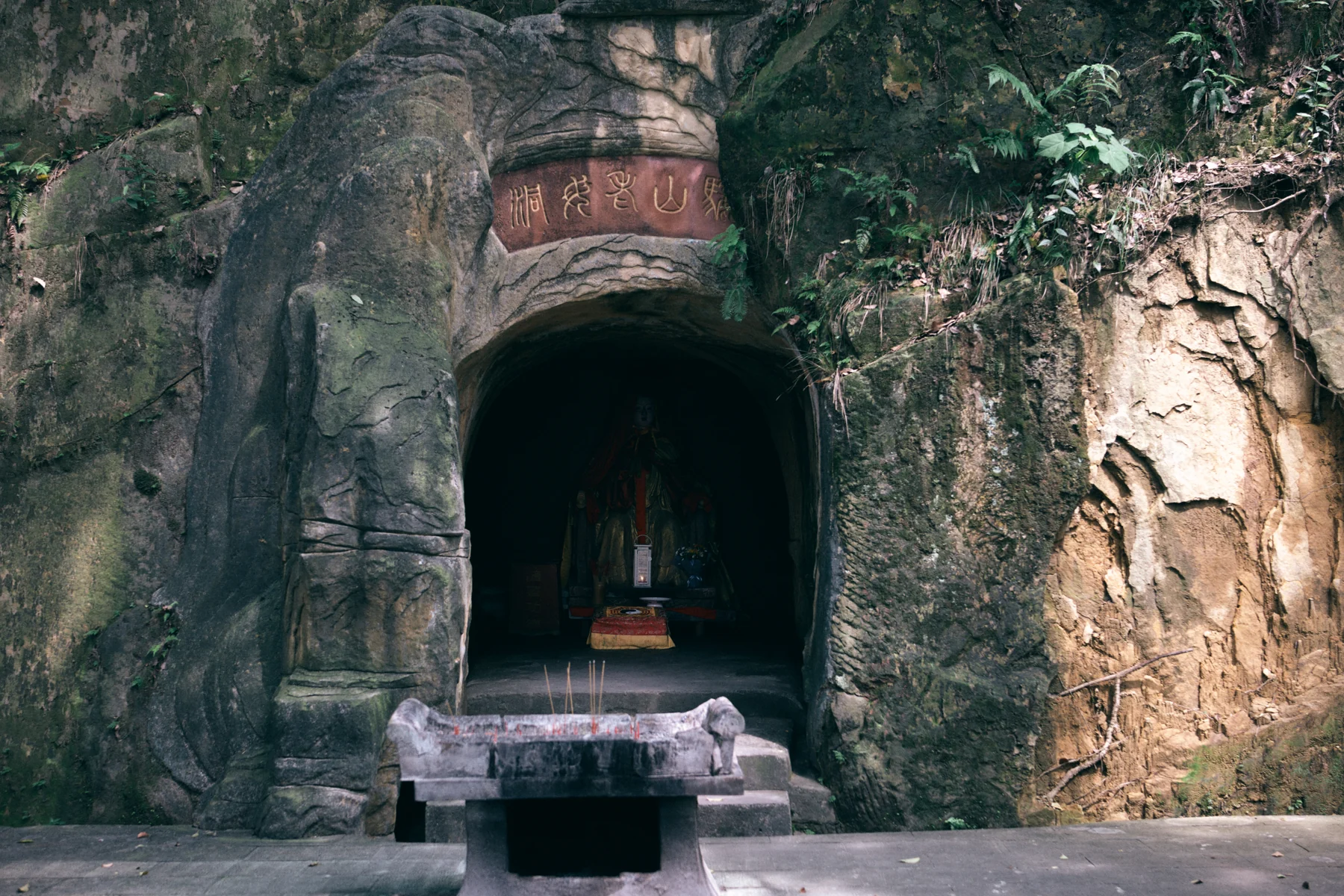
Laojundong Taoist Temple in Chongqing makes a rewarding 2026 half-day cultural visit if you plan for stairs rather than a quick viewpoint stop. Our source-based recommendation is to reserve about 2 hours on site, confirm the entrance and closing arrangements, and prioritize the temple’s rock carvings, hillside architecture and living religious setting.
Decide whether this temple fits your day
Laojundong, also written Laojun Dong or Laojun Cave, is on the Nanshan side of Chongqing’s Nan’an District. The word “cave” can be misleading: this is a hillside religious complex with halls, rock-cut features and connecting steps, rather than a level underground show cave. The Amap place record identifies the destination as 老君洞道观, at 老君坡29号.
I would allocate roughly 2 hours for a first visit, treating that as a planning allowance rather than a timed circuit. Choose it for close looking at stone, roofs and devotional spaces. If your main goal is an evening panorama, use the separate Nanshan One Tree guide instead. A temple visit should not depend on remaining inside after closing.
This itinerary suits travelers comfortable with uneven steps and a flexible turning point. It is a poor choice for a tightly scheduled transfer day or anyone who needs a verified step-free route. We have not confirmed lift access, accessible toilets or a continuous wheelchair route; a vehicle reaching a gate does not resolve the climbing inside.

Save the correct destination before leaving
Use the Chinese name 老君洞道观 and the full address 重庆市南岸区南山街道老君坡29号. Save both in your phone with 1 screenshot that remains available offline. The Amap listing also gives 023-62881055; from an international-format dialer, use +86 23 62881055. Ask someone who speaks Chinese to help if a call is needed.
For a straightforward approach, request a taxi or ride-hailing trip to the temple, then confirm the particular entrance with the driver before setting off. “老君洞西门” means Laojundong West Gate and appears in recent travel posts, but an app’s suggested drop-off point is not proof that the gate is open that day. Show the whole temple name, not simply “Nanshan.”
For public transport, build the journey in a live local route planner to the chosen entrance. Shangxinjie is a useful search point mentioned by visitor sources; do not turn that into an assumption that the station is beside the temple. We are not prescribing an exit, bus number or walking time without a current operator check. Compare the complete uphill approach, transfers and return journey before choosing the cheaper-looking option.
Recheck hours and admission on your travel date
At our 6 October 2026 UTC research check, the Trip.com attraction listing described entry as free, but published hours differed across travel listings and their own page modules. We could not establish a current operator-confirmed timetable or fee notice. Treat both as items to recheck, not settled promises in this guide.
Ask these 3 questions before committing transport: which gate is open, when admission stops, and when visitors must leave. Last admission and closing can be different. Also ask whether a ceremony, maintenance work or weather restriction affects the area you want to enter. A current gate notice or direct staff answer should take precedence over an old travel post.
Keep a small discretionary budget for the outing without assuming incense, rituals or any optional purchase is included. Confirm an item’s price before paying. Visiting respectfully does not require making a religious purchase, and this guide makes no claims about the effectiveness of blessings or fortune-telling.
Understand the history without confusing legend and dates
The Chongqing Daily historical account describes an earlier Buddhist Guanghua Temple, a 1581 change to a Taoist establishment and a 1739 revival associated with the Quanzhen tradition. These are milestones in a changing site, not proof that every visible structure has the same age. The complex has been rebuilt and expanded over time.
Read the site through 3 layers: religious use, architecture fitted to a slope, and carved rock surfaces. Instead of racing to name every deity or hall, choose a few details and consult the interpretation available there. The carvings and inscriptions deserve time even if haze obscures the city. Distinguish an interpretation panel’s historical claim from a legend, and avoid treating a translated travel caption as a specialist identification.

A flexible three-part visit inside
Start with 1 orientation pause at the entrance. Read current notices, establish which paths visitors may use and decide where your party will regroup. Photograph a permitted entrance sign or save the gate name for your return. Ask about toilet locations at this point rather than assuming a facility exists farther uphill. The map listing helps identify the complex, but it is not an interior accessibility survey.
Next, explore the accessible-to-you public courtyards and carvings slowly. Watch the relationship between the rock face, steps and structures. Pause on a level area, not a narrow staircase. At each new climb, consider the descent as well: energy spent going up still has to be matched by a safe return. Your visit remains worthwhile if you choose a shorter route.
Finally, continue toward upper viewing areas only if the route is open, the weather is suitable and everyone is comfortable. Turn back before your agreed departure margin, even if you have not reached the highest point. This is a sequence of decisions rather than a fixed numbered-hall trail; temporary restrictions and the entrance you use can change the order.
Photograph details while respecting worship
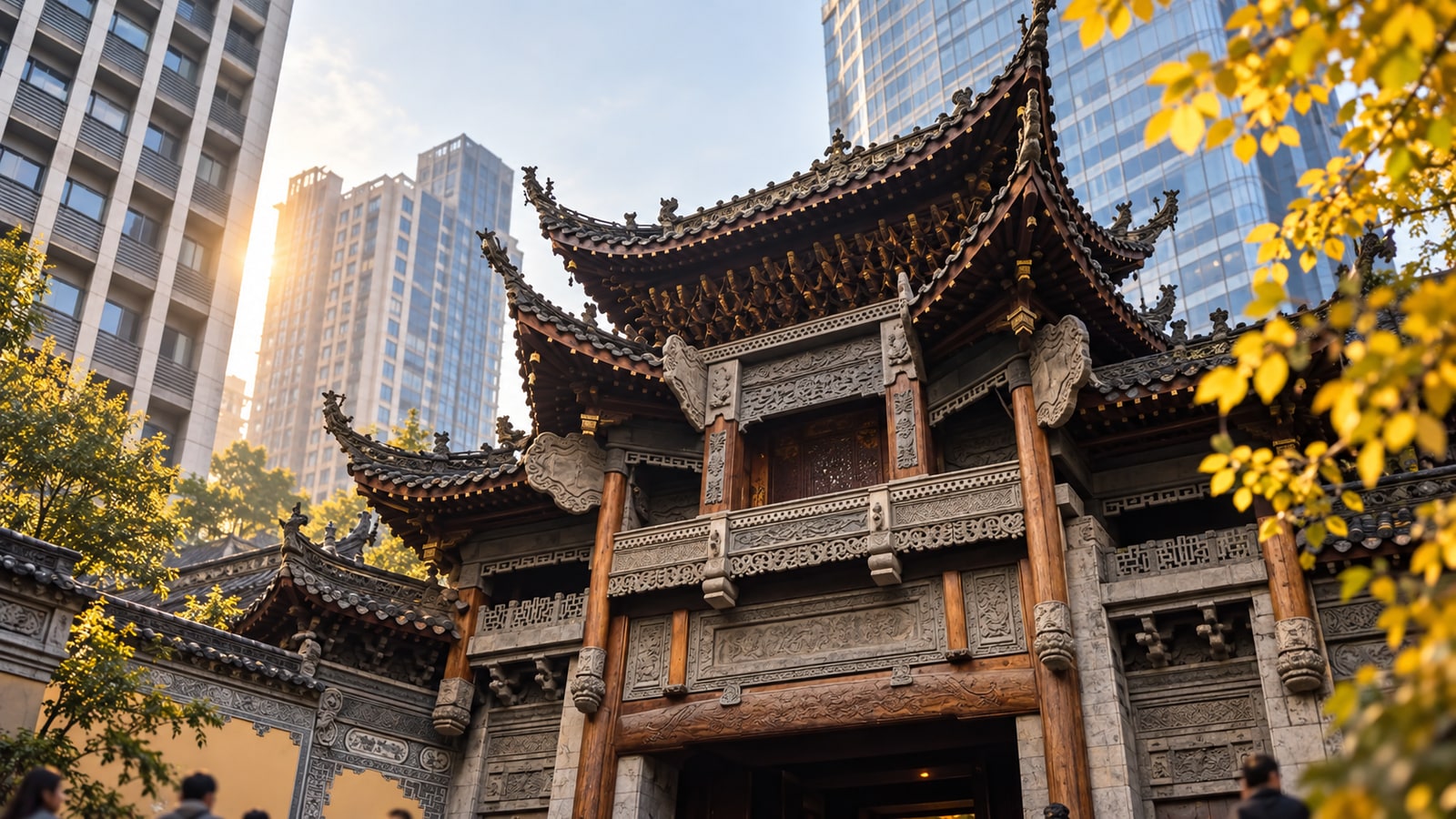
I would plan 3 kinds of image: a wider architectural frame, a stone detail photographed without touching it, and a view outward if visibility allows. The Commons archive shows why close details can carry a visual story without relying on a skyline. Its photographs are dated 2023, not evidence of today’s access or appearance.
Ask before photographing inside halls, rituals, clergy or worshippers, and follow signs even if someone else is taking pictures. Do not place a tripod across a route, climb on architectural features or stand in a doorway to arrange a portrait. Keep flash off around devotional interiors unless staff explicitly permit it. A photograph is not worth interrupting someone’s religious practice.
Look closely at carved surfaces, but do not rub, trace, lean bags against or add anything to them. Avoid naming a figure from appearance alone. The roof-detail photo here shows a different visual scale from the relief: change your viewpoint within permitted standing areas rather than staging a scene.

Plan for stairs, rain and different energy levels
Carry water, shoes with grip and 1 light bag that leaves your hands free. Check the actual weather before departure; wet steps call for a more conservative route. Do not interpret a social post’s description of an “easy” climb as advice for your knees, mobility or fitness. Historical stair totals in the local history account refer to a particular approach, not every gate-to-gate visit.
For families or mixed-ability groups, agree that anyone may turn around without pressure to complete the climb. Choose a clear meeting point and keep children beside an adult on stairs. Travelers who need frequent rests should ask where seating is available before committing to an upper section. We do not confirm a stroller-friendly circuit; carrying a stroller can make the descent harder.
Eat before or after the visit according to your needs rather than counting on an unverified temple meal. Bring an appropriate snack if necessary and eat where allowed. Vegetarians, travelers with allergies and Muslim visitors should verify ingredients or certification directly; a religious setting does not establish a particular food standard or guarantee suitable facilities.
Choose one continuation and a clear way back
A practical half-day has 1 anchor activity and an optional continuation. Give Laojundong its own unhurried visit, then decide whether you have energy for another Nanshan destination. Do not treat the botanical garden, One Tree platform and temple as a single attraction with shared admission, hours or a proven short walking connection.
For a second stop, compare the Nanshan Botanical Garden guide or Nanshan One Tree and Nanbin Road guide. If religious heritage interests you more than hilltop views, the Luohan Temple guide covers a separate urban Buddhist site. These are choices for your wider trip, not a recommendation to fit all three into one afternoon.
Before leaving the temple, confirm the pickup location with the driver or reopen the live return route. A remembered arrival pin can point to the wrong side of a hillside complex. Leave time for the journey down and a transport wait without assuming a fixed travel duration. If your phone battery is low, prioritize reaching the agreed meeting place over another photograph.

About this guide
This guide was researched online on 6 October 2026 UTC using 4 independent source domains. It is an editorial planning guide; we did not conduct an on-site visit or interview for it. Operational details that could not be confirmed remain explicit recheck items. No human-review or first-hand inspection claim is made. The place record and linked listing help you make a current check.
All 4 photographs, including the cave-exterior cover, are real 2023 photographs by JL Cogburn, used under CC BY-SA 2.0. The cover source and body sources are linked for attribution. Each was proportionally resized and compressed; the adaptations retain the same license. They are not current-condition photographs, and the photographer does not endorse this guide.
Frequently Asked Questions
Q: Is Laojundong a cave attraction or a Taoist temple? A: It is a hillside Taoist temple complex in Nan’an, with halls, carved rock and steps. Search 老君洞道观 to distinguish the destination from similarly named places.
Q: How long should I allow for Laojundong? A: We suggest about 2 hours on site as a flexible planning allowance, plus transport. Shorten the route if stairs, weather or closing arrangements make an upper-section visit unsuitable.
Q: Is admission free and what are the opening hours? A: At the 6 October 2026 check, travel listings described free entry but differed on hours. Confirm today’s gate, admission rules, last entry and closing directly before departure; this guide does not promise a current price or timetable.
Q: Can I avoid all the stairs by taking a taxi? A: A taxi can reduce the approach walk, but it does not establish a step-free route inside Laojundong. Confirm the entrance and accessibility needs before making the trip.
Q: Can I visit for sunset or take photographs of worship? A: Do not plan to stay beyond Laojundong’s confirmed closing time for sunset. Follow photography notices and ask permission before photographing rituals, interiors or people.
Traveler comments
Share a recent experience or ask a practical question about this guide.