
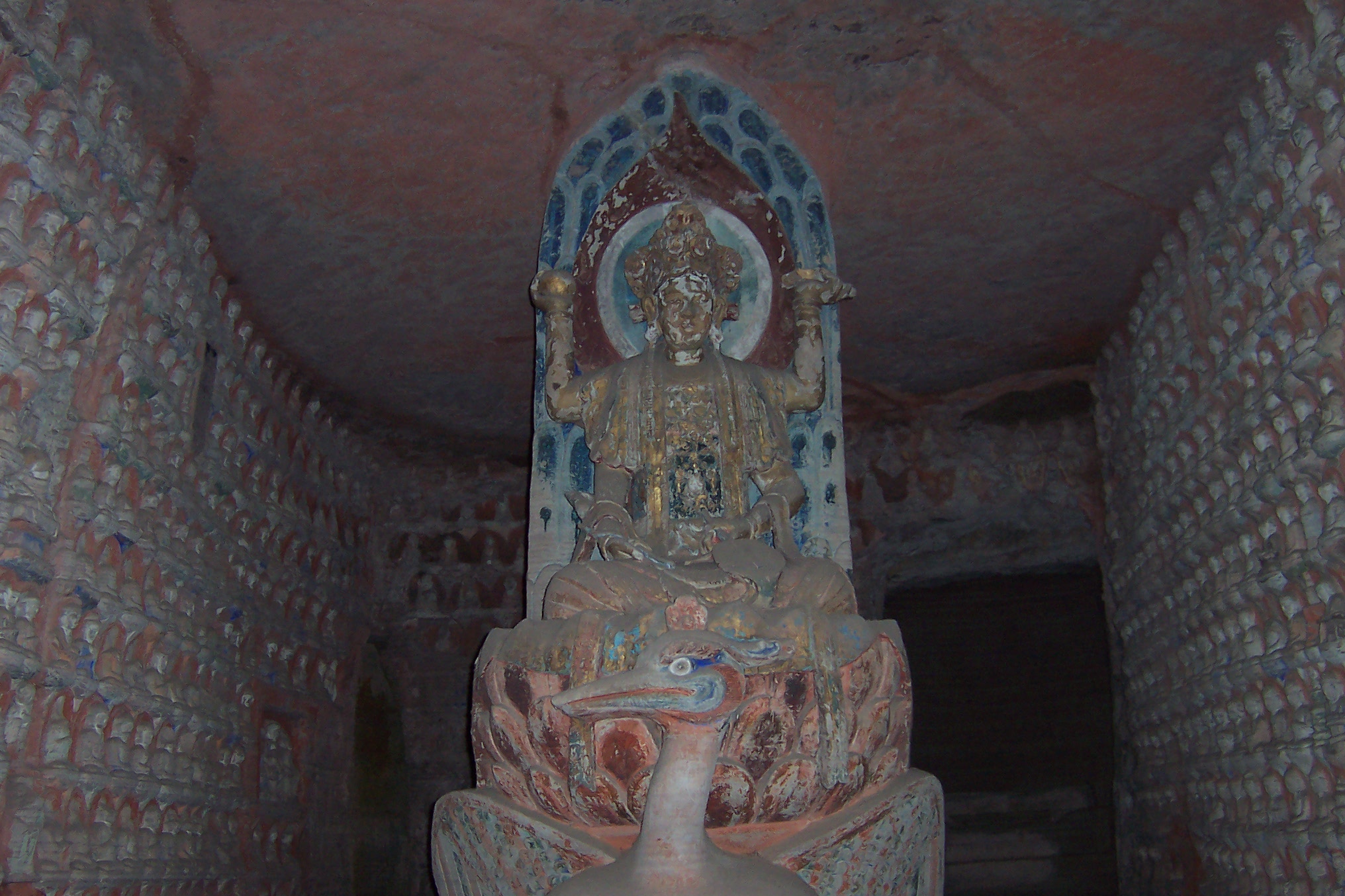
Beishan Rock Carvings in 2026 suits visitors who want to study individual sculptures in Dazu rather than collect several attraction entrances. UNESCO describes a carved cliff stretching around 300 metres. Our suggestion is to build the visit around three looking tasks: read a whole niche, compare a figure’s posture, then examine its smaller details.
The practical distinction is the purpose of your day. Beishan can be the main art stop, including on a first visit, when close-looking interests you more than a broad introduction. It is also useful after Baodingshan if you still have energy and a confirmed connection. It should not be a compulsory extra added because a ticket includes two sites.
Cover: Beishan carved group photographed by Truthven in 2007, CC BY-SA 3.0, unchanged. All four photographs show historical views, not current access or conservation conditions.
Decide whether Beishan matches your visit
The UNESCO property description identifies five separate carving groups in the Dazu heritage property. Beishan and Baodingshan are different stops. Their shared heritage name does not mean the same entrance, a common walking route or identical ticket conditions.
Choose Beishan as your anchor if you enjoy sculpture, religious imagery, carved clothing and the differences between neighboring figures. An interest in art is enough; you do not need to identify every deity. Give yourself permission to leave with three scenes understood rather than a phone full of unidentified images.
If your group prefers large narrative compositions and a wider introductory day, compare the existing Dazu day-trip guide before choosing. If someone needs reliable step-free access, resolve that question with the operator first. A relatively short carved frontage does not establish a step-free route from vehicle to viewing point.
For a two-site day, decide which site has priority before paying. If the first visit overruns, reduce the second stop rather than the return buffer. We would not promise a quieter visit from the name Beishan alone: holidays, groups and temporary controls can change the experience.
Read the cliff as a collection, not a checklist
UNESCO places Beishan’s main historical sequence between the late 9th and mid-12th centuries. This makes the changing appearance of figures part of the interest. Its approximate 300-metre cliff description is a heritage measurement, not the total distance you will walk, and certainly not a time estimate.
Begin with the number on a niche label. A niche is a carved recess or grouping; English sources sometimes use “cave” for the same numbered location. Save the Chinese name beside the number. This is more reliable than trying to match every translated title, and makes a later question to a guide much clearer.
Use a three-step reading method. First, stand back within the permitted area and identify the composition: central figure, attendants, framing and repeated forms. Second, choose one figure and follow the tilt of the head, hands and drapery. Third, look for the small surrounding figures or architectural details. None of this requires touching the stone or pushing closer to a barrier.

Seated Guanyin, Beishan, 2007: Truthven, CC BY-SA 3.0, unchanged. This image illustrates posture; it is not a photograph of niche 125.
Three numbered subjects to ask about
Use 125, 136 and 245 as a compact study list, not a guaranteed opening sequence. Follow the actual permitted route and ask which areas are accessible that day. The Three Gorges Museum’s historical exhibition page independently identifies Beishan 125 and 136; its exhibition dates are from 2018, not a current event.
125: Guanyin with a rosary
Save 125 数珠手观音. Start with the whole figure before chasing a facial close-up. How does the placement of the hands relate to the body? What shapes do the clothing and ornaments create? Treat these as questions to explore, not a test with a correct emotional response. Avoid assuming that every seated Guanyin image in a web search shows this niche.
136: the rotating sutra-repository cave
Save 136 转轮经藏窟. The museum identifies this as Southern Song work. English names vary, including “Prayer Wheel Cave”; the Chinese label and number keep your conversation anchored. Look at how the central structure organizes the surrounding figures and empty spaces. Ask a guide how the architectural form relates to Buddhist practice rather than assuming it is a working mechanism you can approach or operate.
245: a Pure Land narrative
Save 245 观无量寿佛经变相. The Beishan reference entry identifies the numbered subject. Here the looking task changes: start with the overall arrangement before inspecting the smaller scenes. Ask which elements belong together and how they relate to the scripture. If the religious terminology is unfamiliar, “What story is being shown here?” is a useful question.
You can enjoy these works without buying a specialist tour. If you do want interpretation, ask about the language, duration and specific Beishan coverage before booking. Do not assume an English-language product description means the guide will speak English throughout.
Give the looking time a realistic place in the day
Our suggested 90–120 minutes of focused viewing is a planning allowance, not an official visit duration or a measured on-site report. Add all travel, ticketing, entry walking, breaks and meals separately. Visitors interested in detailed interpretation can take longer; access restrictions may change what is possible.
A Beishan-led day has four flexible blocks: travel to the correct site, settle the entry arrangements, look carefully, then return with a buffer. Within the viewing block, orient yourself first, concentrate on a small selection, and revisit a detail if the permitted route allows. Do not design the visit around an assumed ability to walk backward through every section.
If arriving after Baodingshan, reassess before the transfer. Can everyone still concentrate? Is the next entry session valid? Is the return transport confirmed? An additional carving site adds value when you can look with attention. Fatigue is a sensible reason to stop, especially with children or travelers who need frequent seated breaks.

Beishan landscape, 2007: Truthven, CC BY-SA 3.0, unchanged. The photograph does not establish present-day access to the pagoda or any connecting path.
Tickets, destination names and the evening-visit trap
Before paying, verify four things in the institute’s current visitor and reservation channels: the named site, your date and entry session, the supported identity-document method, and the cancellation conditions. This guide deliberately does not reproduce a price or timetable that might belong to another site or ticket combination.
For a Beishan-led trip, save 大足北山石刻 and show the actual entrance pin to your driver. Do not automatically reuse a Baodingshan visitor-centre destination from a general Dazu itinerary. For rail travel, the station is a separate transfer decision; compare the exact characters on your ticket with our Chongqing railway-station guide. Agree on the return pickup point before entering.
Passport holders should confirm the current supported purchase route. If a form demands a Chinese resident identity number or rejects your name, ask the official channel or staffed ticket service how to proceed. Do not invent an identity number, change your legal name or assume that another attraction’s workaround applies here.
There is a particular reason to open notices rather than read their headlines. The institute’s July 13, 2026 night-tour notice announces maintenance from July 20 and says night tours resume September 21. On our October 6 research check, that notice was still linked from the homepage. It does not prove an ongoing October closure, or confirm a particular evening session. Verify the travel date, evening admission and return transport separately; this article’s suggested visit is a daytime plan.
Photography, conservation and physical comfort
A useful photo record has two parts: the permitted view and a note of its niche number. If you photograph a label where allowed, it can prevent confusion later. Keep your lens and bag clear of the stone and other visitors. Ask about flash, tripods and any temporary photography restrictions instead of relying on a historical image’s camera metadata.
The 2007 photographs used here show real sculpture, but their age matters. They should not be used to judge today’s barriers, lighting, pigment condition or repair work. UNESCO’s conservation account explains why the surrounding heritage landscape and historical material both matter. A closed viewing position is a reason to adapt your visit, not to reach across a boundary.

Small figures at Beishan, 2007: Truthven, CC BY-SA 3.0, unchanged. Start with the arrangement before isolating individual figures.
Bring shoes with grip and a manageable bag. Check the forecast, carry water, and ask about resting places before committing to the route. Our heat and stairs guide helps with general Chongqing preparation. We have not verified a continuous accessible path, wheelchair provision or specific restroom arrangements at Beishan; travelers who depend on these should obtain current confirmation.
Save a small visit card
Keep these three Chinese prompts with your booking: 我想去大足北山石刻 means “I want to go to Beishan Rock Carvings in Dazu”; 请问今天哪些龛窟开放? asks which niches are open today; 请问在哪里等车? asks where to wait for your vehicle. Show the map or booking alongside the words rather than relying on pronunciation alone.
Download the relevant details before travel. Keep the return booking, pickup location and a contact method together. Reserve a meal break outside the focused viewing block; if you have dietary requirements, arrange a suitable option rather than assuming the attraction’s nearby choices meet them. A family can use the same three-step looking game, choosing one visible detail each, without turning the visit into a race.

Original observation aid. This is a way to study a carving, not a site map or an official walking sequence.
Frequently Asked Questions
Q: Is Beishan worth choosing instead of Baodingshan? A: Beishan is a reasonable main stop if your interest is individual sculpture and close-looking. Compare the two sites by what you want to understand, and avoid buying a two-site day that leaves neither enough attention.
Q: How long should I set aside for Beishan? A: We suggest 90–120 minutes for focused viewing as an editorial planning allowance. Add transfers, entry procedures, walking to the viewing area, breaks and food separately.
Q: Which Beishan niche numbers should I save? A: Start with 125 数珠手观音, 136 转轮经藏窟 and 245 观无量寿佛经变相. Check access on the day and follow the permitted route rather than this numerical list.
Q: Can I rely on a Beishan night visit in October 2026? A: The institute’s July notice specifies September 21 resumption after maintenance. Confirm the particular October session, ticket and return journey before planning around it; this guide does not verify live evening availability.
Q: Are the photographs recent site-condition checks? A: No. They are actual Beishan photographs taken by Truthven in 2007 and reused under CC BY-SA 3.0. Use them for visual context, not current access or conservation status.
About This Guide
Research was checked on October 6, 2026 using opened UNESCO, institute, museum and reference pages. This is a source-based guide, not an account of a personal visit or interview. Recommendations about pace and observation are editorial suggestions; no current price, transport schedule or guide-language availability is promised.
The four photographs retain their original image content and the creator’s CC BY-SA 3.0 license. The observation diagram is original and localized for all eight article languages. Historical imagery, current operational notices and our suggested viewing method are identified separately so you can judge what each supports.
Traveler comments
Share a recent experience or ask a practical question about this guide.