
For a Huangjueya-to-Huangge Ancient Trail walk in 2026, ride uphill first and allow 3–4 hours for the old street, a tea break and a careful descent toward Shangxinjie. Nan’an’s tourism commission links these places in its published Nanshan itinerary. Reversing that connection makes a useful half-day, provided your group is comfortable with stone steps.
This is a proposed time allowance, including stops, rather than a measured walking time. The focus is Huangjueya Old Street and the wooded historic path below it. Laojundong is an optional addition; visiting its higher terraces adds climbing. You do not need to combine every Nanshan attraction to make the journey worthwhile.
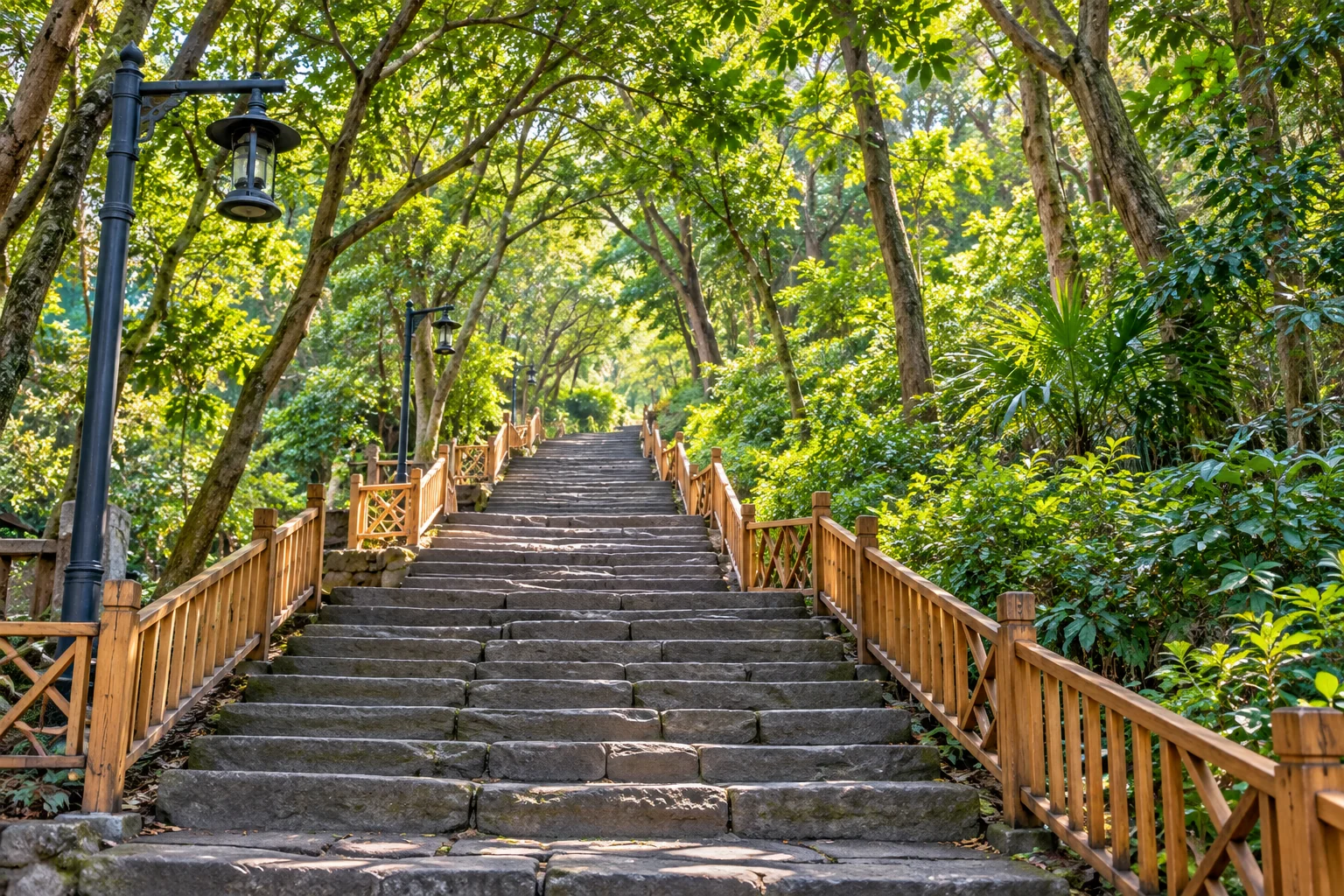
Cover illustration: AI-generated illustration of the shaded stone steps on Huangge Ancient Trail, informed by a photograph published in November 2025. It is not a current condition report. Original AI illustration: OpenAI imagegen. Reference capture date unknown; the reference photograph is not licensed for republication. No exclusive-copyright claim. Photo reference: Nan’an Culture and Tourism, via Chongqing Local Chronicles.
Decide whether a downhill walk suits your group
The useful question is whether everyone can manage repeated steps. Going downhill removes much of the uphill effort, but it does not make the surface level or eliminate strain. Wear shoes with grip, leave wheeled luggage behind and keep the afternoon flexible. If a member of your group needs a step-free route, use a vehicle to reach the old street, check the immediate access there and arrange a vehicle return rather than committing to the trail.
The lower route has 2 branches. A Chongqing Daily report hosted by the municipal government identifies connections through Qianqu Road in Shangxinjie and through Haitangxi. Its approximately 3.6-kilometre figure describes the wider network. It should not be treated as the exact length of your selected walk, including street browsing and the final metro approach.
Choose the Qianqu Road/Shangxinjie branch for the plan below. Save the destination names before leaving, check the route board on arrival and follow current local signs. No junction-by-junction survey has been completed for this guide, so a phone’s shortest-path suggestion is not a reason to enter an unsigned staircase or a closed passage.
Get uphill before you start walking
For a straightforward arrival, book a taxi or ride-hail vehicle to Huangjueya Old Street, using 贵州商会馆, the Guizhou Guild Hall, as a more specific landmark. A July 2026 Meet Chongqing report places the old-street entrance beside the hall. Check that the result is in Huangjueya on Nanshan, and agree on a legal roadside drop-off rather than expecting a vehicle to enter pedestrian lanes.
Public transport is also practical. Shangxinjie, 上新街, is served by Line 6 and the Loop Line, as shown in MetroMan’s station information with an August 2026 data version. The dated notice below lists Bus 346 for the uphill connection to Huangjueya; confirm its current stops and direction before relying on it.
An important change makes older instructions unreliable: the operator’s route-change announcement of October 2025 moved Bus 346’s terminus to Youshan Road, 悠山路. The announced uphill sequence includes Shangxinjie, Chongwen Lukou and Huangjueya. Look for the uphill direction toward 悠山路, and confirm 黄桷垭 with the driver or current route display before boarding.
The metro station and a bus stop bearing a similar name are not interchangeable pins. Use live transit directions to locate the correct boarding point; this guide does not promise that a particular metro exit deposits you beside it. No current fare, frequency or door-to-door journey time has been verified. Allow room for the transfer, or choose a taxi if navigating the stops would consume the time you wanted for the walk.
Begin with Huangjueya Old Street
Plan roughly an hour for the street and its immediate stops, adjusting for open businesses and your interests. The district government’s January 2026 profile describes a 600-metre street on Chongwen Road, with traditional residential buildings and former homes. It also explains the restoration work. Some historic buildings were reconstructed, while residents remained in the neighbourhood.
That background gives you something more useful to look for than a checklist of supposedly untouched buildings. Notice the relationship between the lane, entrances, tiled roofs and places where people sit. Keep doorways clear and ask before photographing residents at close range. A building’s appearance or historic name does not automatically mean its interior is a visitor attraction.
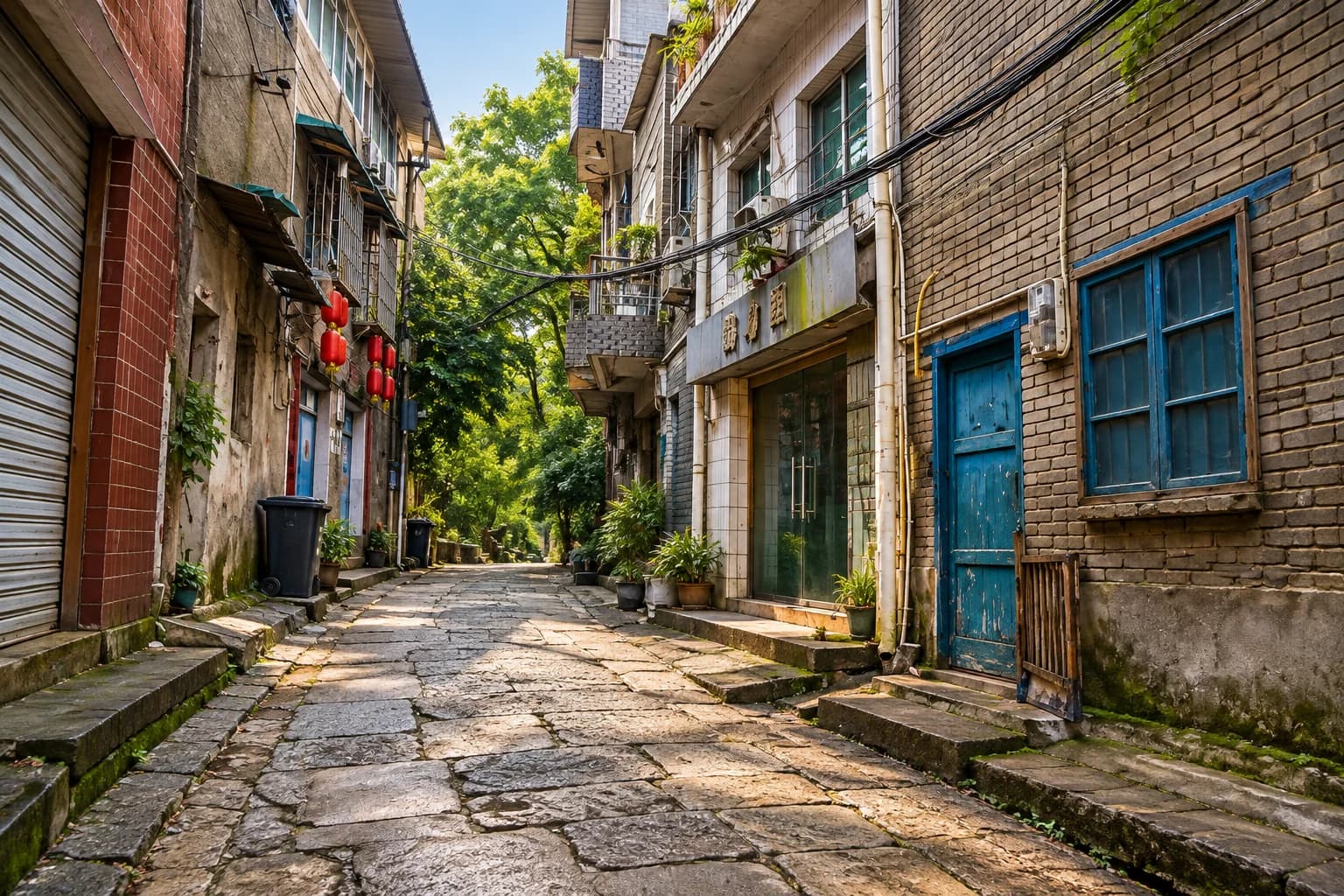
AI-generated illustration of an everyday lane in Huangjueya, informed by a government-published historical photograph. Exact surfaces and storefronts may differ today. Original AI illustration: OpenAI imagegen. Reference capture date unknown; the reference photograph is not licensed for republication. No exclusive-copyright claim. Photo reference: Nan’an District Government; photographer not identified.
Sanmao’s Former Residence, 三毛故居, gives the walk a literary stop. The district profile confirms that the writer spent part of her childhood here. Find the house, read any available interpretation and decide whether to enter after checking the current arrangement at the door. Online reports describe admission differently, and this guide does not treat an old quoted price as a confirmed tariff.
If the house is closed or its displays do not interest you, continue without treating the visit as incomplete. A short pause on the street can be enough. The neighbouring café described in the recent field report is another possibility, but its hours and prices have not been independently confirmed. Ask what a drink costs before sitting down, especially if a table or minimum spend is involved.
Join Huangge Ancient Trail and keep the route simple
The geographic connection is supported by Nan’an’s June 2026 leisure itineraries. One route climbs from Shangxinjie through Qianqu Road and Huangge Ancient Trail, includes the Laojundong area and a tea pavilion, and reaches Huangjueya Old Street. This guide uses the same connection in the downhill direction, with the temple visit optional.
Leave the old-street area on the signed connection to 黄葛古道, Huangge Ancient Trail. The name may also appear as 黄桷古道. Before starting the longer descent, identify the direction toward 前驱路 or 上新街. If the signs are unclear, show those Chinese names and ask someone working nearby to point out the public route. Do this at the upper end while changing plans remains simple. The optional temple visit is not a required through-route. Do not use an unmarked path through temple grounds or a closed gate to rejoin the trail.
A useful sequence is:
- Arrive at Huangjueya Old Street near the Guizhou Guild Hall
- Explore the lane and locate Sanmao’s Former Residence
- Join the signed upper Huangge Ancient Trail
- Take a seated break if an open tea stop suits you
- Continue down the Qianqu Road/Shangxinjie branch
- At street level, check the onward walking route to Shangxinjie metro or arrange a vehicle
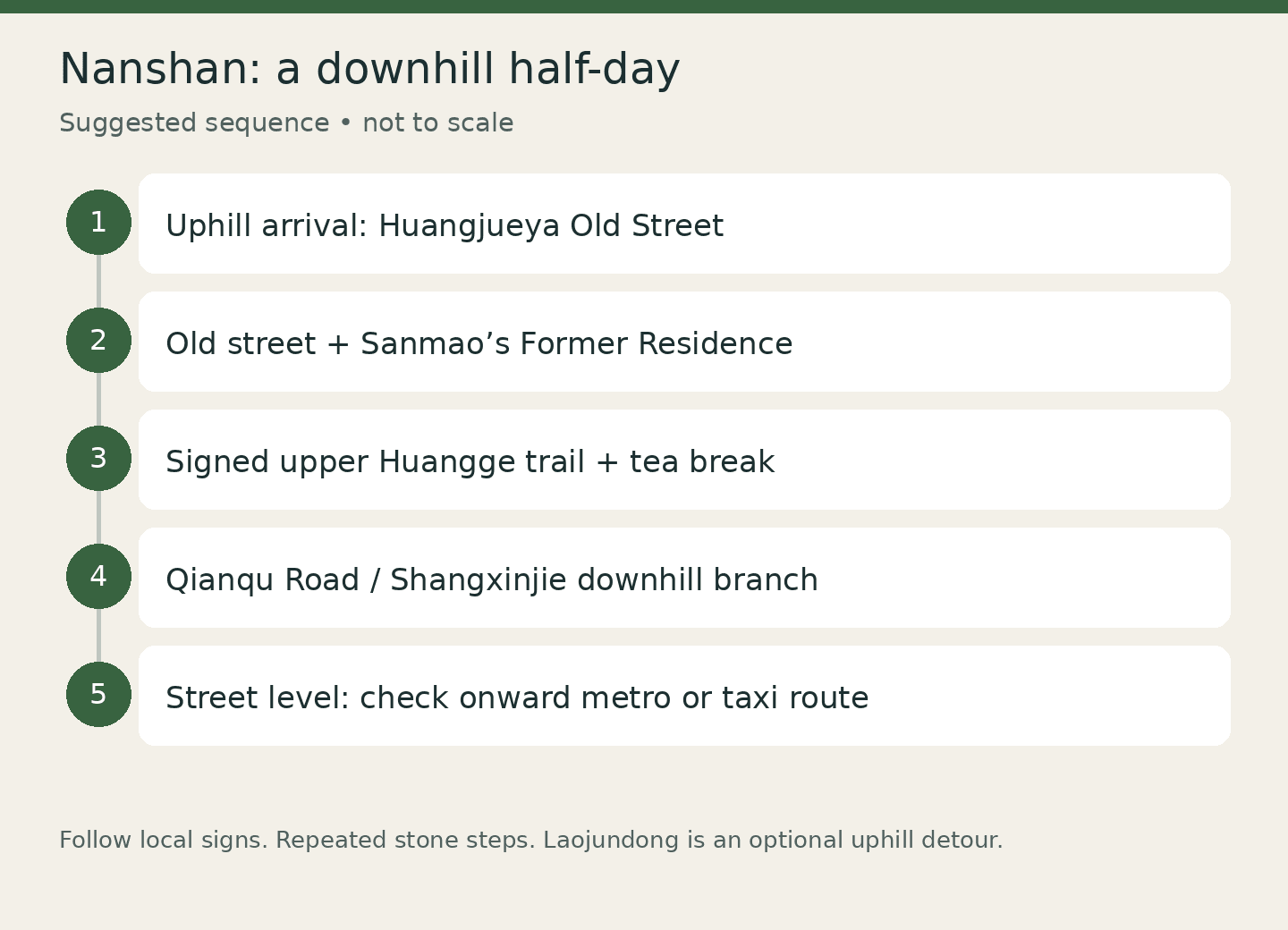
Suggested sequence • not to scale. Follow local signs. Repeated stone steps. Laojundong is an optional uphill detour. Original editorial diagram; no external map tiles or geographic geometry used.
The list is route order, not turn-by-turn navigation. Allow 60–90 minutes for the descent and pauses as a planning buffer, then take longer if the steps require it. Do not chase a travel post’s quickest time. If conditions deteriorate before you commit, returning to your upper arrival point is a reasonable alternative.
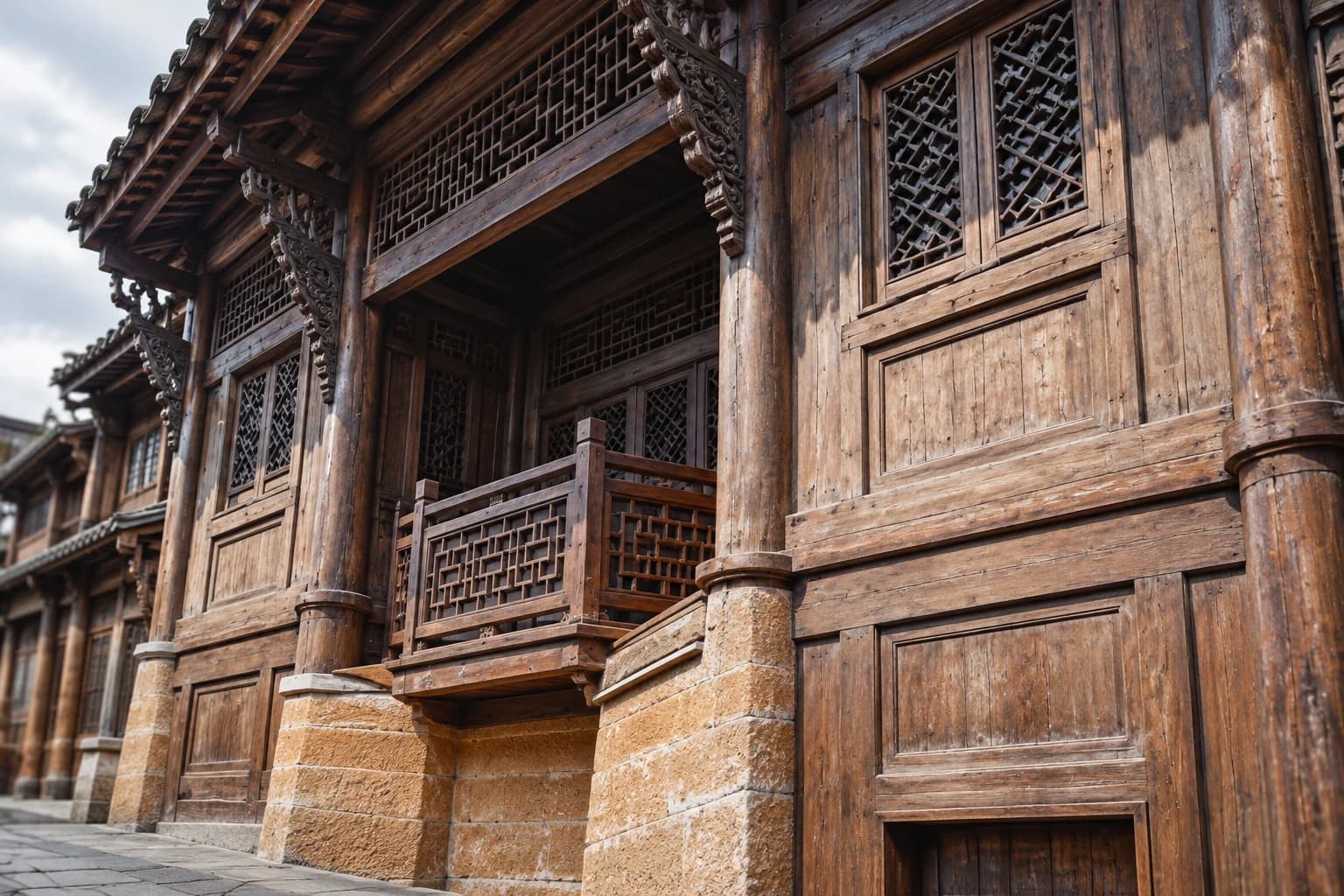
AI-generated architectural detail informed by a historical Huangjueya Old Street photograph. This is not an identification of Sanmao’s Former Residence or a promise of interior access. Original AI illustration: OpenAI imagegen. Reference capture date unknown; the reference photograph is not licensed for republication. No exclusive-copyright claim. Photo reference: Nan’an District Government; photographer not identified.
Read the old road as you descend
The trail’s interest is in the combination of stairs, trees and traces of movement through the mountain. The Chongqing Local Chronicles Office’s 2025 history places it within the old southbound route toward Guizhou and describes commercial traffic, porters and pack animals. It also identifies a horse trough and uninscribed rock carving among the surviving details.
Look for these features when signs or clearly identified interpretation make them recognisable; there is no need to leave the public path to search for them. The small-scale evidence can explain the road’s former use more effectively than calling every stretch an ancient monument. Repairs and later additions are also part of the route’s story.
The wooded stairway is the main experience. Take photographs from a stable position, leaving passing space for people moving in the opposite direction. Keep to the protected side of railings and do not climb on stone features for a clearer view. A shaded route still requires water and weather awareness.
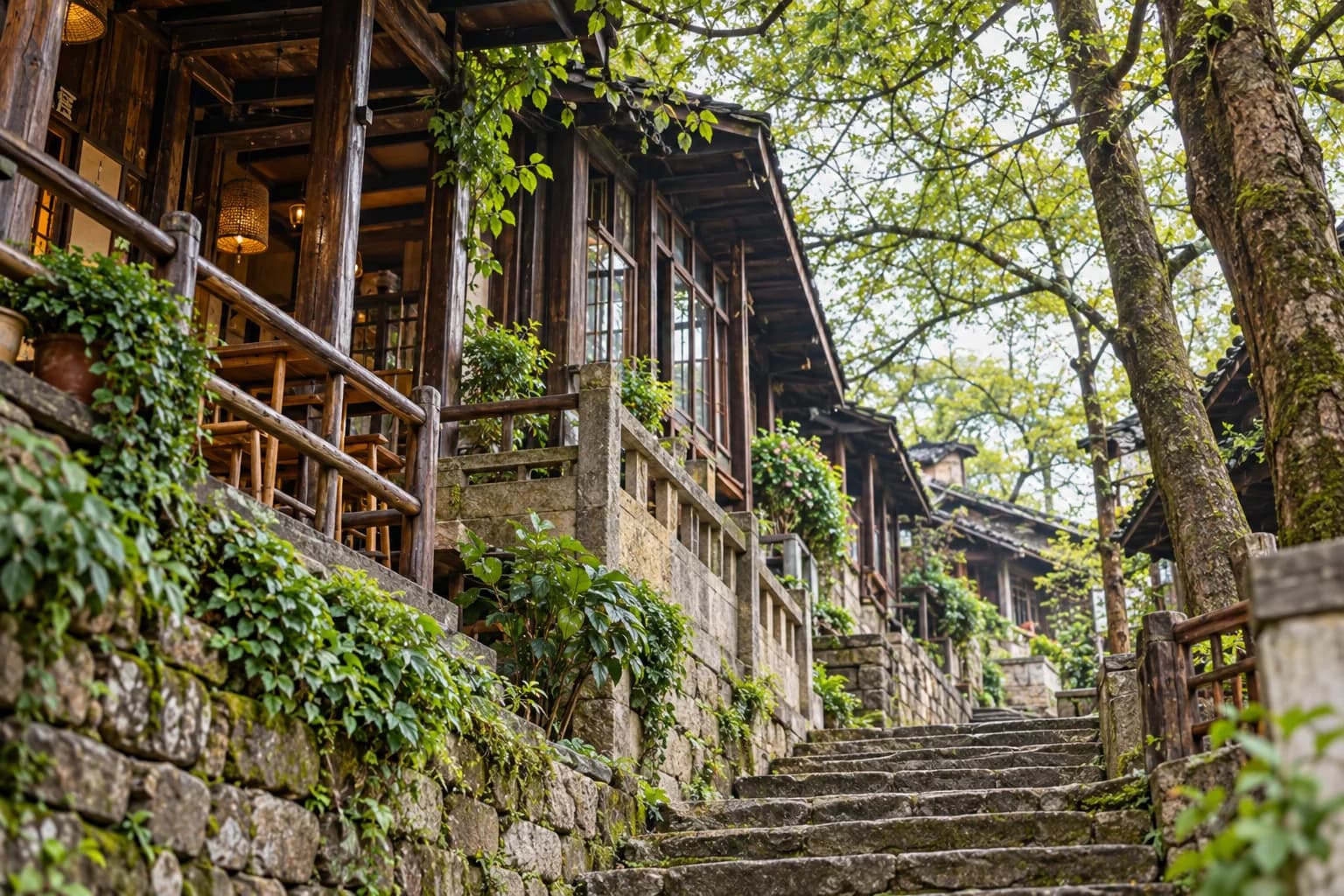
AI-generated illustration of a tea-stop lane beside Huangge Ancient Trail, informed by a November 2025 publication. It does not identify an operating business or current prices. Original AI illustration: OpenAI imagegen. Reference capture date unknown; the reference photograph is not licensed for republication. No exclusive-copyright claim. Photo reference: Nan’an Culture and Tourism, via Chongqing Local Chronicles.
Give yourself 1 proper seated break rather than relying on a series of standing photo pauses. Carry water from the start. Although published accounts show places to drink tea, a photograph does not guarantee that a particular business will be open when you arrive. Ask the price, check that you can comfortably resume the descent and leave enough daylight for the lower section.
Handle the lower branch and your return
On the selected route, keep following the public connection toward Qianqu Road and Shangxinjie. Reaching the lower trail entrance does not mean you have reached a metro gate. Pause where it is safe, check your actual location and request walking directions to 上新街地铁站. Use road crossings and signed pedestrian connections rather than treating a nearby station symbol as an invitation to cut across traffic.
Shanghao, 上浩, is a different station. CQNEWS’s report of its 2023 opening places it on Haitangxi New Street on the Loop Line. It may be relevant to someone choosing the Haitangxi-side branch, but it is not the planned endpoint here. Xiahaoli, 下浩里, is another different place name. Save the Chinese characters to reduce confusion when discussing your destination.
These 3 map searches are orientation aids, not verified entrance coordinates or a surveyed route:
- Huangjueya Old Street and Guizhou Guild Hall
- Huangge Ancient Trail at Qianqu Road
- Shangxinjie metro station
If Google Maps is unavailable on your connection, paste the Chinese names into your preferred local map app. Check the selected place and route mode each time. A point labelled with the whole ancient trail may sit somewhere along it rather than at an entrance.
Know what to skip and what to check
Keep 1 optional addition at most. Choose the Laojundong temple guide if Taoist architecture is your priority, allowing extra climbing and checking access. Choose the Nanshan Botanical Garden guide for a separate plant-focused outing. If your group still wants another old-street visit after the descent, consult the Xiahaoli guide and recheck the onward route before committing.
Do not build your walk around the air-raid shelter as a guaranteed shortcut or indoor refuge. A 2022 report carried by Xinhua described renovation and an intended reopening. It does not establish October 2026 hours or access.
No current operator-published all-route timetable or admission schedule was verified for this guide. The street, trail, house, temple and cafés may have different arrangements. Do not assume the entire outing is free or open 24 hours. Budget for transport, drinks or food and any optional indoor visit after checking posted prices; keep enough flexibility to pay for a vehicle return.
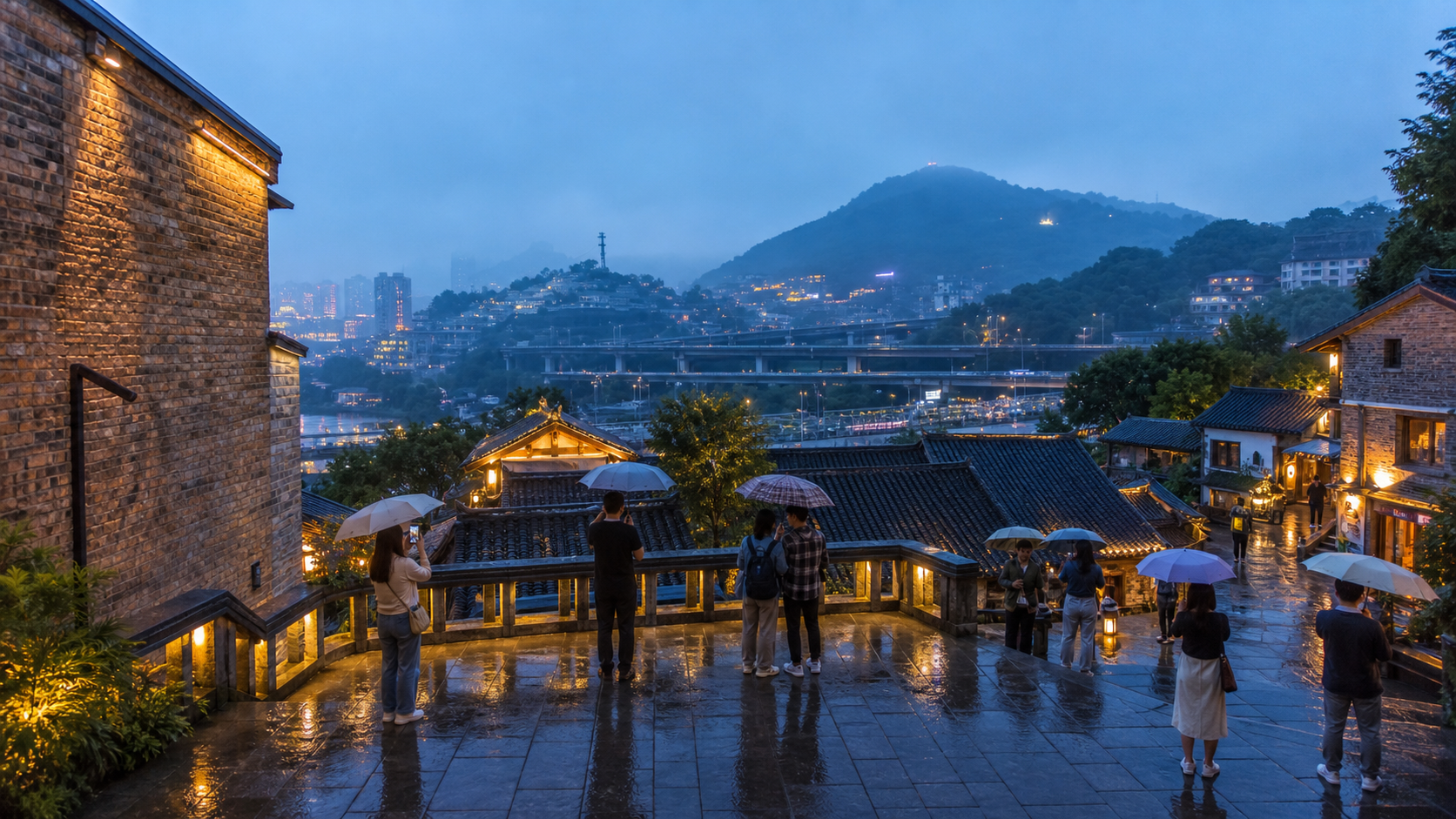
Choose daylight and reasonably dry conditions. In rain, after heavy rain, or during a local closure, shorten the outing or postpone the trail. Follow barriers even if a map still draws a route through them. Before leaving the street, check the nearest available toilet, fill your water bottle and make sure your phone has enough charge for the return.
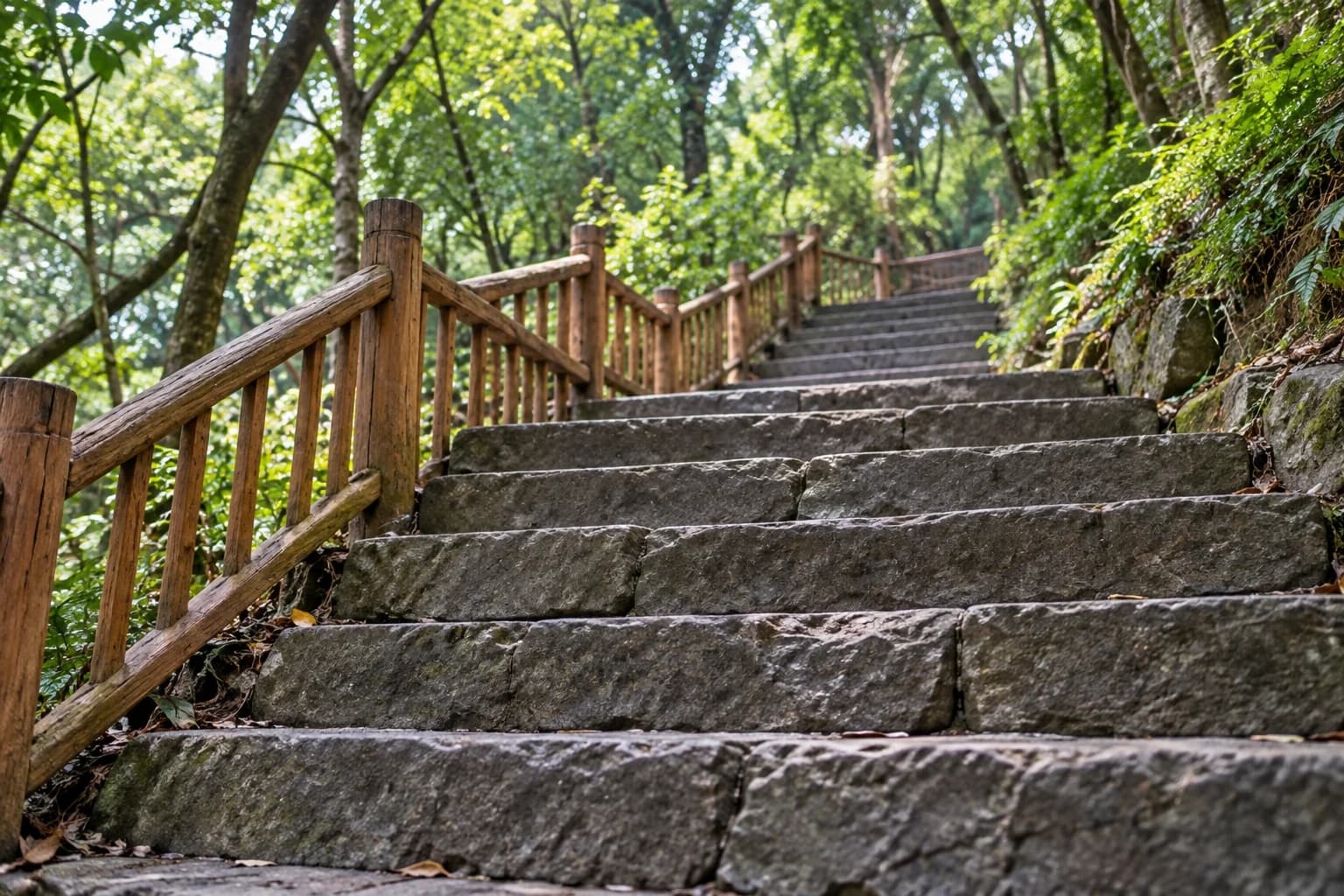
AI-generated close view of uneven stone steps, informed by a historical Huangge trail photograph. Actual surfaces and conditions must be checked on site. Original AI illustration: OpenAI imagegen. Reference capture date unknown; the reference photograph is not licensed for republication. No exclusive-copyright claim. Photo reference: Nan’an Culture and Tourism, via Chongqing Local Chronicles.
Frequently asked questions
Q: How long should I allow for Huangjueya and Huangge Ancient Trail?
A: Set aside 3–4 hours for this proposed half-day, including arrival orientation, the old street, a break and the descent. That is an editorial allowance, not a timed route. Temple visits, transfer delays and your walking pace can extend it.
Q: Is the route completely downhill?
A: Starting at Huangjueya avoids the main climb from the city, but local links can still include steps and short rises. Laojundong’s higher areas add climbing. Do not interpret “downhill” as step-free or effortless.
Q: Can I take a stroller or rolling suitcase?
A: This itinerary is built around a stone-stepped trail and should not be treated as a wheeled-access route. Arrange vehicle access and check the immediate old-street terrain if your group needs to avoid repeated stairs.
Q: Are the street and trail free and always open?
A: An authoritative current schedule covering the whole route was not verified. Optional interiors and businesses have separate arrangements. Check local notices and posted prices, and do not rely on a blanket free-entry or 24-hour claim.
Q: Which metro station should I use after the walk?
A: The selected Qianqu Road branch is planned around returning to Shangxinjie, 上新街. Verify the final pedestrian approach from your actual exit. Shanghao, 上浩, belongs to a different lower-side option; the names should not be substituted.
About This Guide
Sources were checked on 13 October 2026 UTC. This guide combines official route and heritage information, dated transport announcements, an independent recent travel report and a current journey-planner listing. The route sequence and time allocations are editorial recommendations. No on-site visit, measured journey, current safety inspection or independent human review is claimed. Local notices and operator information take precedence over older published material.
13 October 2026 is the initial research date for this draft. The site’s first-publication date is the publication date shown at the top of this article, using America/Los_Angeles. The update and verification fields use 22 October 2026 in America/Los_Angeles, corresponding to the additional desk review on 23 October 2026 UTC. The earlier research and original source dates are retained.
This additional review re-read route, heritage and transport material, including indexed text of official pages that could not be opened directly. It did not establish current trail opening or closure status, on-site safety, bus service, fares, or business hours. A refreshed verification date is not confirmation that every section is open.
Traveler comments
Share a recent experience or ask a practical question about this guide.