
AI disclosure: This guide was generated with AI from the cited sources. It is not a record of a personal visit or independent human verification. The editorial diagrams were created programmatically; the historical photographs are source-attributed photographs, not AI-synthesized scenes.

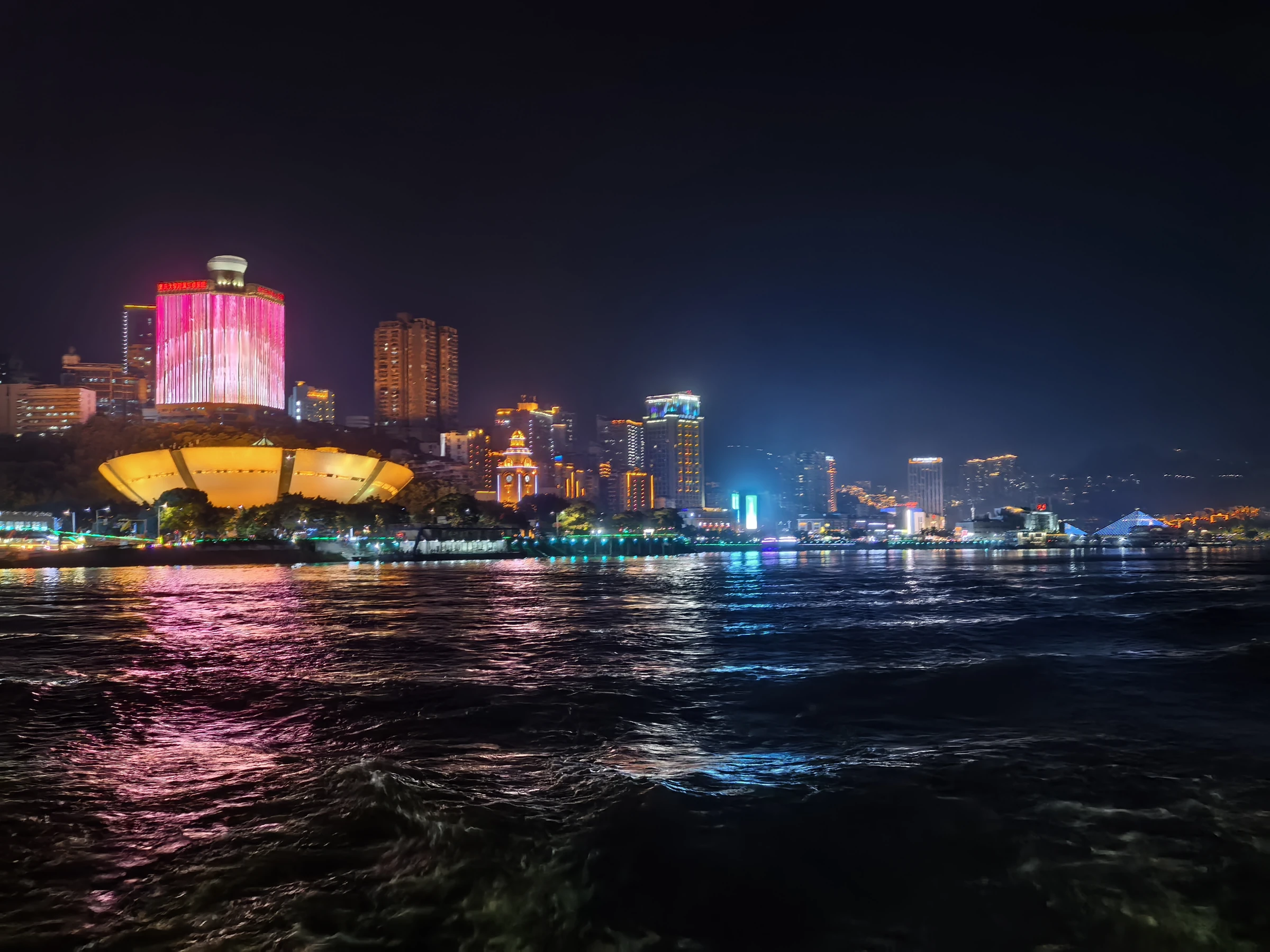
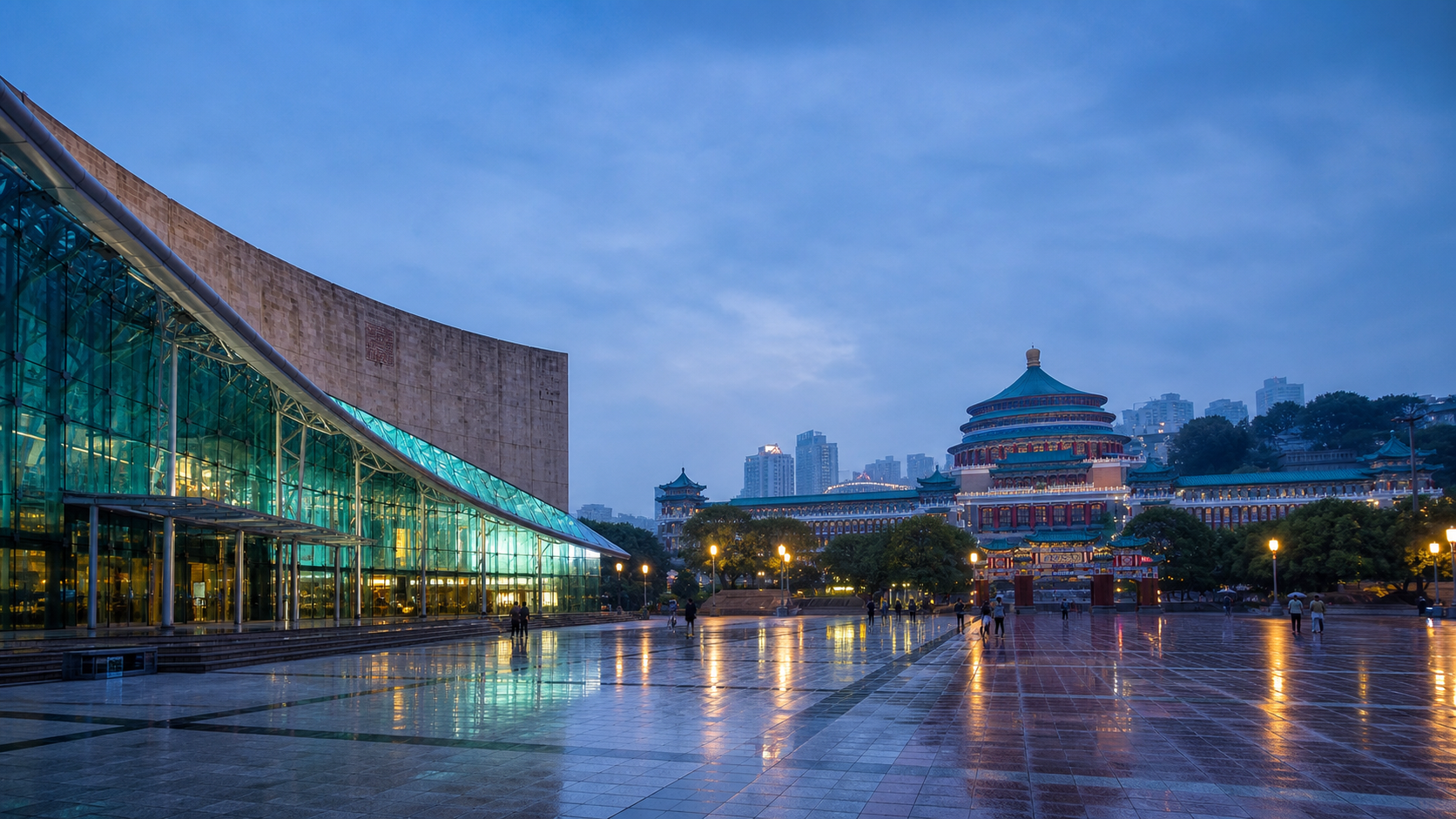
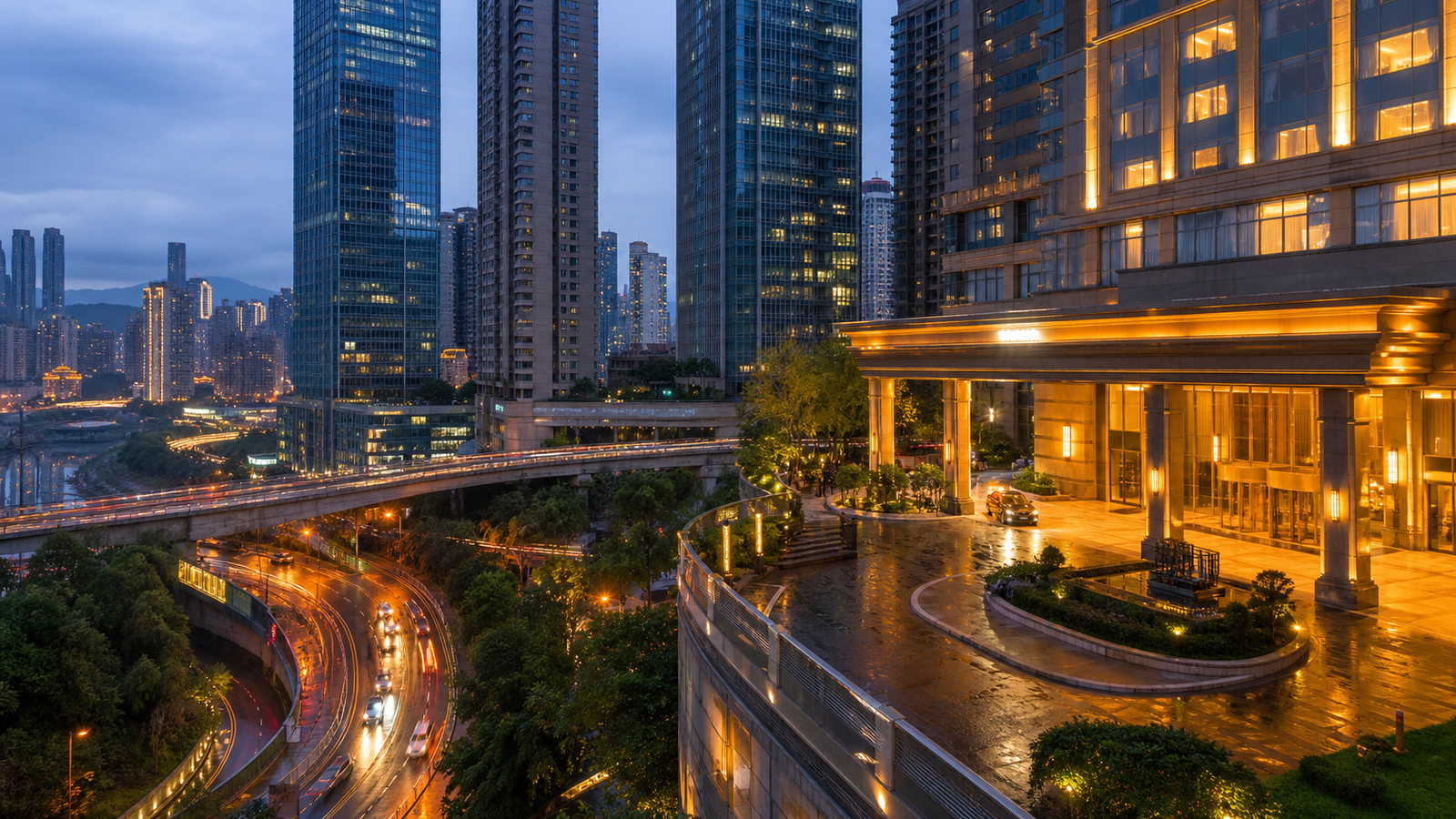
Wanzhou’s riverfront at night, photographed on 4 October 2025. The image does not promise a particular light programme or walking connection. Wanzhou nighttime skyline 01.jpg — STW932; CC0. Source: https://commons.wikimedia.org/wiki/File:Wanzhou_nighttime_skyline_01.jpg. Licence: http://creativecommons.org/publicdomain/zero/1.0/deed.en. EXIF orientation normalized where applicable; entire image resized without cropping and encoded as WebP. No generative editing or scene alteration.
Wanzhou’s old-port riverfront in 2026 is an opportunity to understand a changing river city, rather than follow an invented heritage trail. The district dates Xishan Clock Tower’s completion to 1932. Begin with that documented landmark and choose nearby public spaces cautiously: a continuous, currently open waterfront walking route has not been verified here.
That limit matters. “Old port” is a useful theme for exploring Wanzhou, but it is not presented in this guide as the name of a single enclosed attraction or an unchanged historic quay. Public parks, redeveloped waterfront areas, passenger facilities and working freight infrastructure have different purposes and access rules.
The guide below is a selection of interpretation points and planning choices. It is desk research, not a report of walking every connecting segment. Where a link is uncertain, visit the places separately or stay within one confirmed public space.
Begin with Xishan Park and its clock tower
Save 西山公园 for Xishan Park and 西山钟楼 for the clock tower. The district government’s April 2026 description places the tower inside the park, dates construction from 1930 to August 1932, and describes a 12-storey structure 50.24 metres high.
Those are architectural and historical facts, not an invitation to climb. The source does not establish current access to the interior or upper floors. An exterior visit is therefore the appropriate starting assumption until staff or a current notice confirms otherwise.
Look at the tower as a landmark within a much larger modern city. Its height, silhouette and clock faces offered a recognisable point of reference, but the surrounding skyline has changed. The interesting question is not whether the park looks exactly as it did in an old picture; it is how a surviving landmark sits within later layers of development.
Choose a park entrance you can confirm on a current map. For anyone who needs a step-free approach, check the entrance-to-tower route specifically rather than accepting “the park is accessible” as a complete answer.
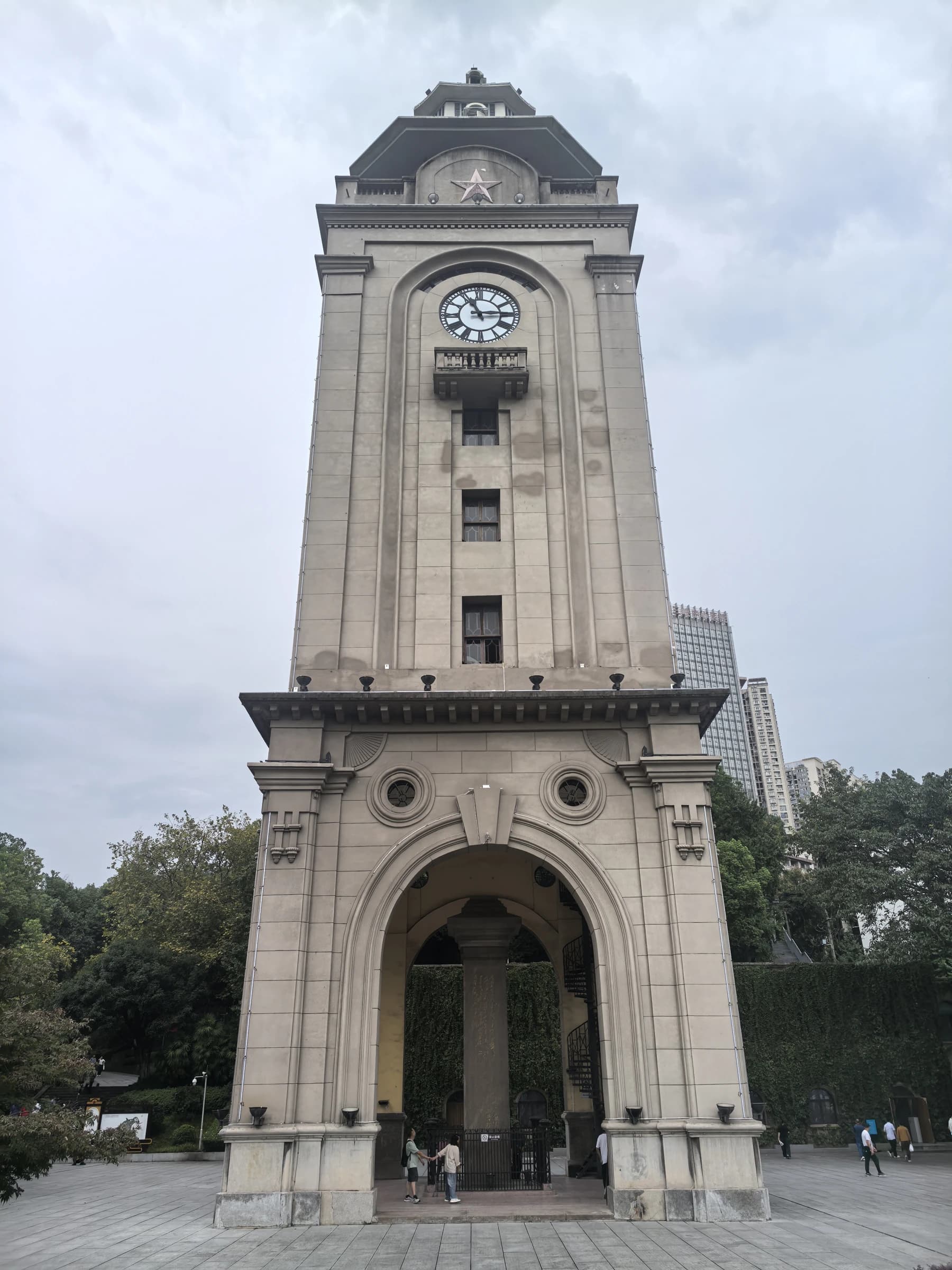
Xishan Clock Tower in Xishan Park, photographed on 4 October 2025. The view does not establish interior opening or step-free access. Xishan Clock Tower 01.jpg — STW932; CC0. Source: https://commons.wikimedia.org/wiki/File:Xishan_Clock_Tower_01.jpg. Licence: http://creativecommons.org/publicdomain/zero/1.0/deed.en. EXIF orientation normalized where applicable; entire image resized without cropping and encoded as WebP. No generative editing or scene alteration.
Read the port story at the scale of the city
The Wanzhou District Archives account published in March 2025 distinguishes Wanxian’s designation as a treaty port in 1902 from the opening of its customs office in 1917. These are milestones in the city’s commercial history, not construction dates for every quay or building beside the river.
The 2023 report on Wanzhou’s port development discusses modern Xintian freight-port development. Keep that contemporary logistics story distinct from a leisurely public waterfront visit. A working port is not an open-air museum simply because it is connected to a city’s history.
When looking at a boat, landing or riverside structure, ask what its present function is. A passenger terminal, a cargo facility and a redeveloped leisure space can all relate to river transport without being interchangeable. Do not enter loading areas, boarding passages or controlled port land for a closer photograph.
Historical names can also shift. Older English sources often use Wanxian; contemporary travel arrangements generally use Wanzhou. Keep the present Chinese destination name with any historical reference so that a search for a photograph does not become an ambiguous instruction to a driver.
The public-space network is real; its every connection is not confirmed
There is a documented basis for considering this side of Wanzhou on foot. A January 2025 itinerary attributed to the district tourism commission lists Wangjiang Park, Honghuadi Wharf, the Eye of Three Gorges, Xishan Park and the Wangjiang steps as one city-walk sequence.
However, a list of five stops does not supply street-by-street instructions, crossing locations, current barriers or a gradient audit. This guide does not turn that list into a verified trail or give a made-up completion time.
Use the published sequence to choose your interests. A visitor focused on architecture might remain in Xishan Park. Someone interested in the river’s scale could choose one confirmed public viewing area. An energetic visitor may want the steps, but should assess their actual approach and return rather than inherit a “relaxed walk” label.
The source’s seasonal entertainment and lighting descriptions are also not permanent operating promises. A January holiday itinerary cannot confirm an October performance, a particular light display or a market being open when you arrive.
Choose public stops through the redevelopment story
The district’s September 2022 urban-renewal report describes Shiqi Wharf, 十七码头, as a renewed public waterfront place. It also discusses work at Honghuadi Wharf, 红花地码头, linking neighbouring riverside areas.
The report is precise about a useful limitation: at that time an upper landscape section was already in use, while lower-level work was still being completed. That is evidence of how the area developed, not a current statement that every lower platform and path is open.
For a visit, identify the public-space entrance rather than simply the word “wharf.” Ask whether the part you want to see is a public promenade, a passenger facility or a restricted operational area. If the route leads to a gate, works compound or boarding checkpoint, stop and clarify rather than following the river line on a map.
A renewed waterfront can be historically meaningful without all its surfaces being old. New landscaping, interpretive panels and public seating may help a city remember its port history. They should not be captioned as original treaty-port fabric unless that exact claim has been verified.
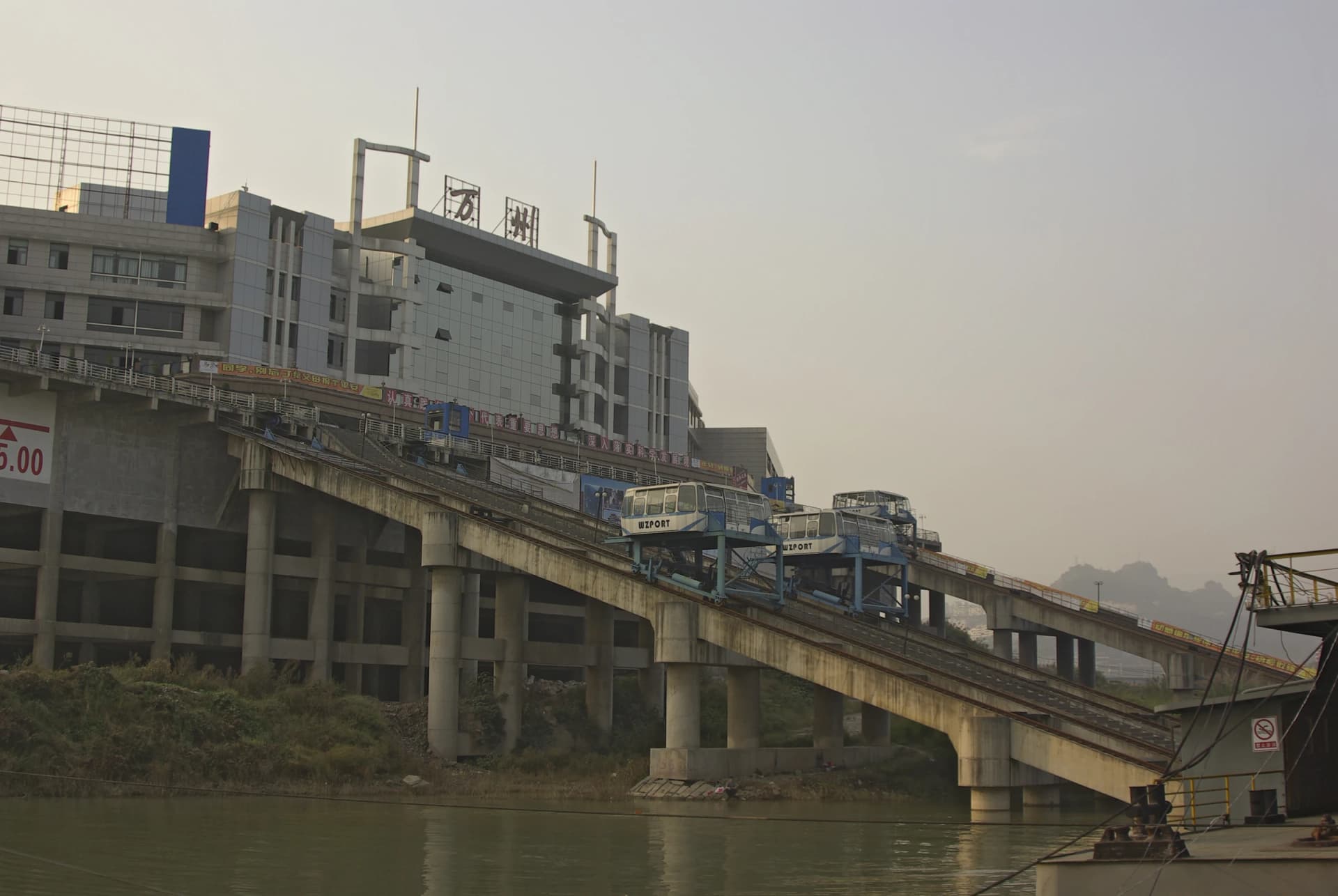
Wanzhou dock photographed on 16 October 2008. The source does not establish that this is Shiqi Wharf, and the image is not a present-day access guide. Wanzhou Dock on the Yangzi.jpg — Ray Devlin from New Orleans (for now), USA; CC BY 2.0. Source: https://commons.wikimedia.org/wiki/File:Wanzhou_Dock_on_the_Yangzi.jpg. Licence: https://creativecommons.org/licenses/by/2.0. EXIF orientation normalized where applicable; entire image resized without cropping and encoded as WebP. No generative editing or scene alteration.
Use a two-node plan rather than force a long waterfront circuit
A practical starting plan is Xishan Park plus one public riverfront place whose approach you can confirm. This is an editorial suggestion, not a measured itinerary. Decide on the second place after checking current access, the weather and the group’s energy.
At the park, complete a coherent visit: see the clock tower from a permitted area, read available interpretation and notice the relationship between the landmark and the contemporary city. There is no need to reserve all your attention for a finish line elsewhere.
Then check the intended riverfront destination by its Chinese name. Ask a local visitor-service point or your accommodation about the pedestrian link and road level. If a clear public connection cannot be established, use a permitted vehicle transfer or omit the second stop. Do not descend an unmarked staircase because the river looks close.
If you do walk a verified segment, choose a visible endpoint and a return option. Avoid committing to an entire riverbank merely because several attractive pins appear near one another. A short public-path walk can still reveal the city’s changing relationship with the water.
Keep the Wangjiang steps optional
The January 2025 tourism itinerary describes the Wangjiang steps, 望江大梯子, as a climbing element. Their presence should prevent this outing from being sold indiscriminately as a gentle or step-free stroll. A view from below and an ascent are different activities.
Before adding the steps, answer two questions: does everyone want the climb, and how will the group leave from the top or return from it? This research did not verify the current stair count, accessible bypass, landing arrangement or lighting schedule.
Avoid asking a tired companion to keep climbing simply because the next place appears close on a flat map. If a person is comfortable within the park but not on a long staircase, keep the shared visit at the level they can manage. A group split should have a confirmed reunion point reachable by everyone.
Rain changes the practicality of an outdoor stair outing. Follow any closure or maintenance notices and choose another activity if footing or visibility is poor. An illuminated social-media photograph does not prove the steps have the same lighting or crowd conditions every evening.
Historical photos are evidence of change, not route instructions
For this subject, three kinds of photographs do different jobs: a dated landmark image, an older dock view and a wider city-and-river scene. Together they can explain continuity and transformation without pretending that the photographer followed today’s visitor route.
Check each caption’s location as carefully as its date. A file called “Wanzhou Dock” does not establish that it depicts Shiqi Wharf. A city panorama may be taken from a hillside or across the water, outside the places proposed for a short walk.
Use old photographs to ask better questions: what structures remain recognisable, what part of the river edge changed, and which features belong to a later period? Do not infer the age of a building from a traditional-looking roof or the wording of a nearby themed sign.
For your own pictures, keep the scene honest. Avoid framing a busy passenger landing as an abandoned historic harbour or treating current residents as decorative evidence of the past. Ask before taking close portraits, and keep clear of ordinary work and movement.

Wanzhou cityscape, source-dated 24 September 2016. The camera position and a connection to the proposed visitor stops are not established. View of Wanzhou.jpg — Luckysomething; CC BY-SA 4.0. Source: https://commons.wikimedia.org/wiki/File:View_of_Wanzhou.jpg. Licence: https://creativecommons.org/licenses/by-sa/4.0. EXIF orientation normalized where applicable; entire image resized without cropping and encoded as WebP. No generative editing or scene alteration.
Arrival and departure are separate from the walking theme
Check the exact station on your train ticket. Wikivoyage’s Wanzhou listing distinguishes Wanzhou North from Wanzhou station, and neither should be treated as the automatic starting point for a riverfront walk.
Save two practical destinations: your confirmed arrival point near the park or chosen waterfront space, and the point from which you will leave. Do not rely on a generic “Wanzhou Port” pin when the intent is leisure sightseeing; it may resolve to facilities unrelated to the public place you want.
An agreed pickup should include a visible landmark and a road accessible to vehicles. A promenade can be easy to walk along without allowing a car to reach the exact photo spot. Send the street-side pickup details rather than asking a driver to locate you from a river photograph.
The railway-stations guide covers station distinctions, and the maps and road-levels guide explains why an entrance matters more than a nearby pin. Use both as preparation, while checking Wanzhou’s actual local approach separately.
Leave room for the wider reservoir story
The port-city theme becomes clearer when it includes change as well as preservation. River transport, modern logistics, public waterfront redevelopment and surviving landmarks are related strands, but they should not be collapsed into a simple story of an unchanged old town.
For a later central-Chongqing museum visit, the Three Gorges Museum guide provides a starting point for broader regional interpretation. Treat that as a separate visit, not a nearby stop on this Wanzhou outing.
One thoughtful question can give the walk structure: how does a river city preserve its identity while its shoreline and transport systems change? The clock tower, a documented public waterfront space and a dated photograph offer different evidence. You do not need to enter a working port or complete every staircase to explore that question.
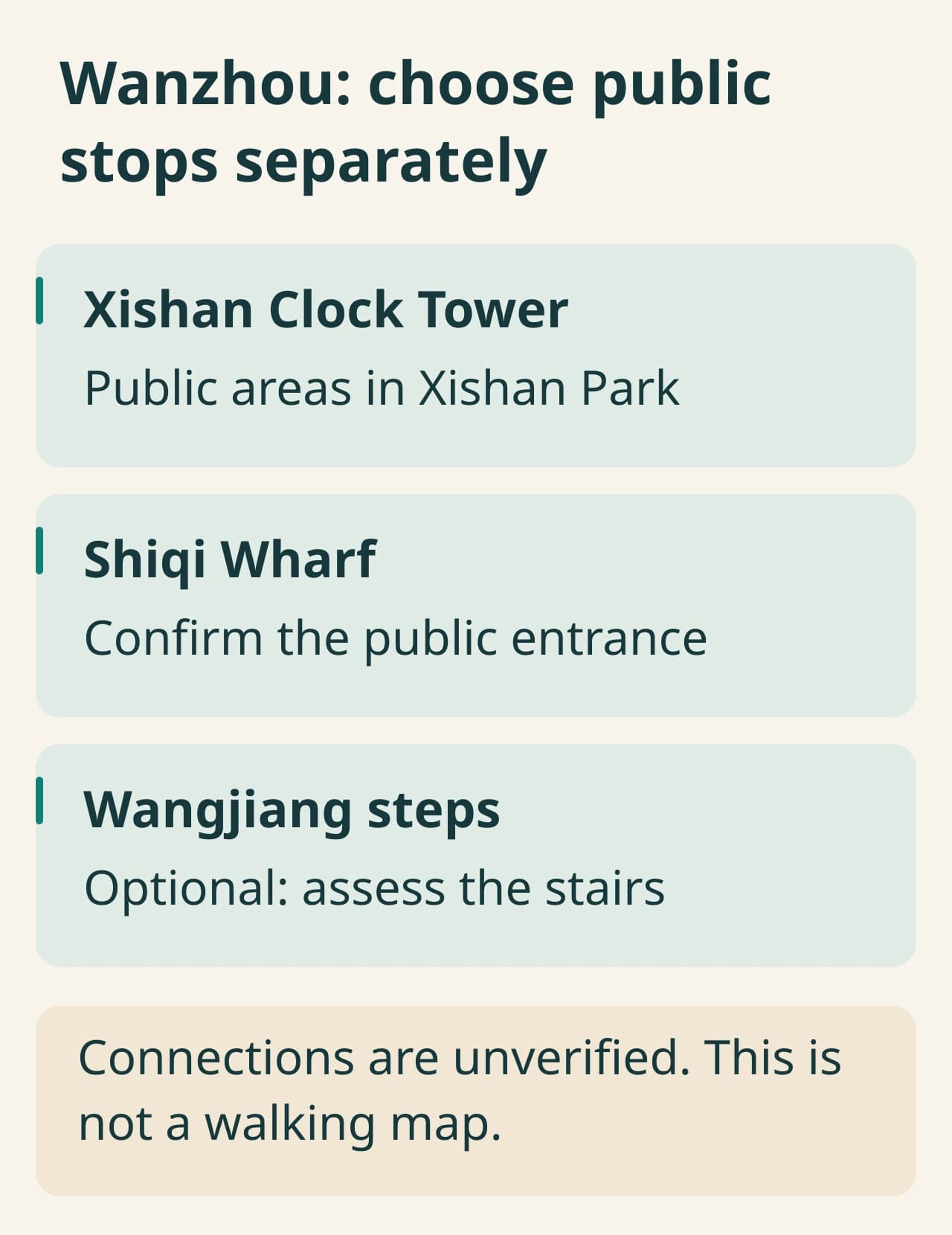
Editorial node-selection aid. Connections between these places remain unverified; this is not a walking map. Project-original editorial diagram. Individual creator not identified in the source evidence. Reuse rights unspecified; provenance is not an open reuse license. No third-party photograph used. Diagram text unchanged; no route geometry is verified.
About This Guide
Researched on 1 October 2026 from district government history, public-space reporting and tourism itineraries. This automated guide claims neither an on-site walk nor human review. Current continuous route access has not been verified, so this guide presents individual places to consider rather than turn-by-turn navigation.
Frequently Asked Questions
Q: Is “Wanzhou Old Port” one official visitor attraction? A: This guide uses it as a historical theme. Xishan Park, public waterfront spaces and operational port facilities have different identities and access rules.
Q: Can I follow a continuous waterfront route from this article? A: No current continuous route has been verified. Choose Xishan Park and a separately confirmed public riverfront place, checking any connection before walking it.
Q: Can I climb Xishan Clock Tower? A: Interior and upper-floor access were not established. The district confirms the tower’s location and 1932 completion, but that does not establish climbing permission.
Q: Is the suggested outing step-free? A: No step-free route is certified here. In particular, the Wangjiang steps are an optional climbing element, and park entrances need individual checking.
Q: Does an old Wanzhou dock photo show Shiqi Wharf today? A: An old Wanzhou dock photograph does not establish that it shows Shiqi Wharf today. Keep the actual file’s date and location description, and do not infer current access or an exact quay identity.
Traveler comments
Share a recent experience or ask a practical question about this guide.