
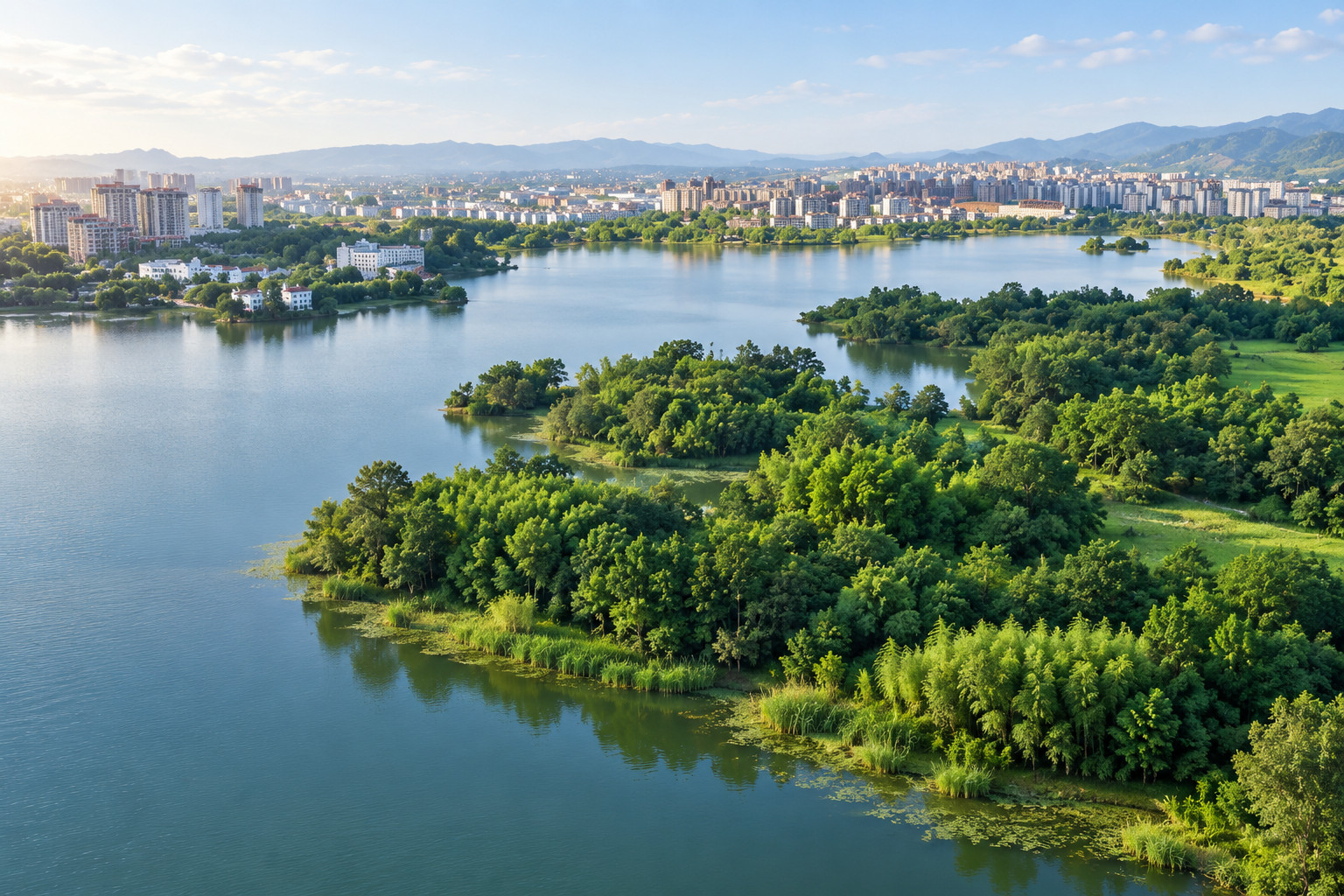
Cover illustration: AI illustration based on historical photo references. Shuanggui Lake and its urban edge in an overview. The scene and details are approximate, not a current photograph or proof of public access, a public path or an authorized viewpoint.
Historical photo reference only; original not republished; the reference grants no reuse permission: iChongqing / Bridging News / Zheng Junxing
This guide contains four explicitly labeled AI scene illustrations from historical photo references and one original localized planning diagram. Photograph capture dates and current access are not established by the page update dates. No independent review is claimed.
Shuanggui Lake Wetland in Liangping suits a quiet nature outing in 2026, provided visitors stay on permitted paths and accept uncertain bird sightings. Chongqing's June 2026 official record identifies 113.35 hectares of wetland habitat. Choose a manageable public shoreline section rather than treating the entire protected landscape as an unrestricted walking circuit.
Save 梁平双桂湖国家湿地公园 as the destination. Shuanggui Lake is separate from Shuanggui Hall, the Buddhist temple covered in another guide. A shared name does not make the two entrances interchangeable, and a wetland outing needs different expectations from a temple visit.
This guide's suggested observation routine is an editorial planning method, not a surveyed trail. Research was checked on 1 October 2026. No current opening hours, entrance charges, platform availability, complete loop distance or guaranteed species list has been established for a particular visit date.
Start with the habitat, not a bird checklist
The municipal wetland record published on 4 June 2026 identifies threatened waterbirds and migratory-bird habitat among the conservation priorities. Its wetland-area figure should not be converted into an estimate of how long a visitor will walk: habitat boundaries and public paths are different things.
Plan around three kinds of observation: open water, the vegetated edge and the transition to surrounding land. These are things to look for from an authorized viewpoint, not instructions to move into each habitat. A distant duck feeding, a change in shoreline vegetation or an explanation of water management can all make a worthwhile stop.
A species checklist becomes counterproductive if it pressures the group to chase one rare bird. Decide beforehand that an unidentified silhouette is acceptable. Record what you can see, leave uncertain identifications uncertain and enjoy the setting without turning an absence into a failed excursion. Children can compare movement or colour rather than competing to collect names.

AI illustration based on historical photo references. Shoreline vegetation and a small shelter at Shuanggui Lake; the shelter is not verified as a public birdwatching platform. The scene and details are approximate, not a current photograph or proof of public access, a public path or an authorized viewpoint.
Historical photo reference only; original not republished; the reference grants no reuse permission: Chongqing Civil Affairs Bureau / Photographer not credited
Choose a permitted section when you arrive
A February 2025 report hosted by the national forestry administration distinguishes conservation areas, areas without visitor access and leisure areas. That distinction matters more than a route drawn around the lake on a general map. A visible track may serve monitoring or maintenance rather than public recreation.
At the entrance or information point, ask which shoreline section is open today, where the public observation points are and whether any seasonal barriers apply. Photograph the visitor map if permitted. Pick one outward section with an obvious return, then add distance after seeing the actual surface and the group's energy.
Do not interpret the absence of a fence as permission. Stay outside reeds, island margins, agricultural plots and signed conservation zones. If a path ends at a barrier, return by the authorized route rather than joining a narrow waterside trace. This guide does not assert that every platform, educational facility or path mentioned in an older article is currently open.
Use a patient observation routine
A Bridging News report on the lake describes birdwatching platforms and ecological interpretation during its reporter's visit. That is a useful lead for questions to ask staff, not a booking confirmation. Check the current public observation location before planning around a named facility.
Try a simple three-stage routine. First, stop before lifting a camera and let nearby wildlife continue its activity. Second, scan a broad area with binoculars or your eyes. Third, choose a subject already visible from where you are standing. Moving less can reveal more than repeatedly rushing to the next patch of water.
Keep conversation low and avoid sudden approaches. If birds stop feeding, repeatedly watch your group or move away, increase the distance. Do not use food, recorded calls or thrown objects to bring wildlife closer. These are conservative observation practices recommended by this guide, not a claim about the wording of every local regulation.
Understand what winter reports can and cannot tell you
The 2025 forestry report discusses wintering birds, while the 2024 local-history account also describes seasonal migration. Neither establishes an arrival date, a daily abundance forecast or a promise that a particular species will be visible from a public path.
Before committing a long journey, ask for a recent observation update and its date. Separate “recorded at the lake” from “seen this week at an open viewpoint.” A photograph without a capture date may be beautiful and still tell you little about your travel day.
Use a flexible success test: suitable weather, a permitted route and a chance to observe the wetland are enough. Strong wind, heavy rain or poor visibility may make a shorter visit more sensible. If the forecast deteriorates, keep the regional journey flexible rather than treating the calendar season as a reason to stay outside. No particular month removes the need to check conditions.

AI illustration based on historical photo references. Generic birds among wetland vegetation, offered as observation context. They do not verify species, current numbers or a promised sighting. The scene and details are approximate, not a current photograph or proof of public access, a public path or an authorized viewpoint.
Historical photo reference only; original not republished; the reference grants no reuse permission: Chongqing Municipal Government / Photographer not credited
Look at the restoration story around you
The September 2024 municipal account describes a composite landscape of lake, streams and rice-field wetlands, with different micro-wetland areas around its shores. It records pilot work beginning in 2015 and national wetland-park acceptance in 2017. These dates explain the conservation story without requiring a visitor to inspect the whole site.
From a public path, look for relationships rather than decorative features alone. Where does vegetation meet water? How does a small water body connect visually with the wider lake? Where does the urban edge stop? Interpretation panels may help distinguish planted restoration areas from habitat that has regenerated in other ways.
Avoid assuming that tidy landscaping is healthier than a dense, untidy-looking patch. Equally, do not infer water quality from its colour in a photograph. Read the panel's explanation and date, and keep your observations separate from scientific conclusions. The lake is a place to learn how protection works, not a laboratory visitors can assess by appearance.
Plan a family outing that can finish early
For a first visit, a suggested 60–90-minute observation block can be easier to manage than a full-day birdwatching ambition. This is a time allocation, not a verified circuit duration. Use the official habitat description as a reminder that the destination is a protected landscape with wildlife needs as well as visitor interests.
Give children a small task: notice one diving bird, one floating plant and one sign explaining the wetland. If those things are not visible, adapt the task. Avoid promising wildlife close-ups. One pair of shared binoculars can be useful, provided nobody points them at private homes or blocks a busy path while taking turns.
Carry drinking water, sun or rain protection and something to keep devices dry. Identify toilets and a comfortable rest point before extending the walk. For a wheelchair or stroller, ask about the exact entrance-to-viewpoint surface, gradients and barriers; “park” does not establish step-free continuity. A short accessible section is preferable to an uncertain long route.

Original visitor-planning card; all labels also appear as selectable text below. Planning checklist only, not a route, facility guarantee or bird forecast. Respect current barriers and staff guidance.
Original editorial planning diagram based on this article; not a photograph or geographic map.
Plan a Shuanggui Lake visit
Observe without disturbing:
- Pause quietly before raising a camera.
- Scan the water and vegetated edge.
- Watch a subject already visible.
Check before setting out:
- Which entrance and section are open?
- Do weather, surfaces and toilets suit us?
- Where and when is the return pickup?
Planning checklist only, not a route, facility guarantee or bird forecast. Respect current barriers and staff guidance.
Separate the regional journey from the shore walk
Allow two planning decisions: how to reach Liangping, and how to reach the confirmed wetland entrance. Use the railway-stations guide to check the exact station on any ticket, then confirm the last-mile pickup and return point. This article does not establish a direct train, bus number or transfer time for your date.
The 2024 municipal description explains the lake's relationship to Liangping's urban landscape, but a broad district location is not an arrival pin. Save the Chinese park name and a confirmed entrance, and show both to the driver. Arrange the return before heading to a distant section of shore.
If you also want the temple, give it a separate block rather than assuming the two places share an easy pedestrian link. Avoid stacking a long wetland walk, temple visit and tight departure into one inflexible day. Our maps and navigation guide explains how to communicate an actual pickup point rather than a large destination label.
Photograph responsibly and share cautiously
The Bridging News account includes photographs credited to named photographers. Those images establish visual references, not public-domain status or permission for another website to reuse them. Your own pictures should likewise have an honest place and date attached.
Choose a photograph from the public path and accept the available angle. Do not cross a barrier, lean over an unprotected edge or move vegetation to clear a sightline. Keep tripods out of narrow passageways. Leave drones at home for a wildlife-focused visit unless you have separately established all required permissions and an appropriate setting; this guide does not confirm drone permission anywhere in the park.
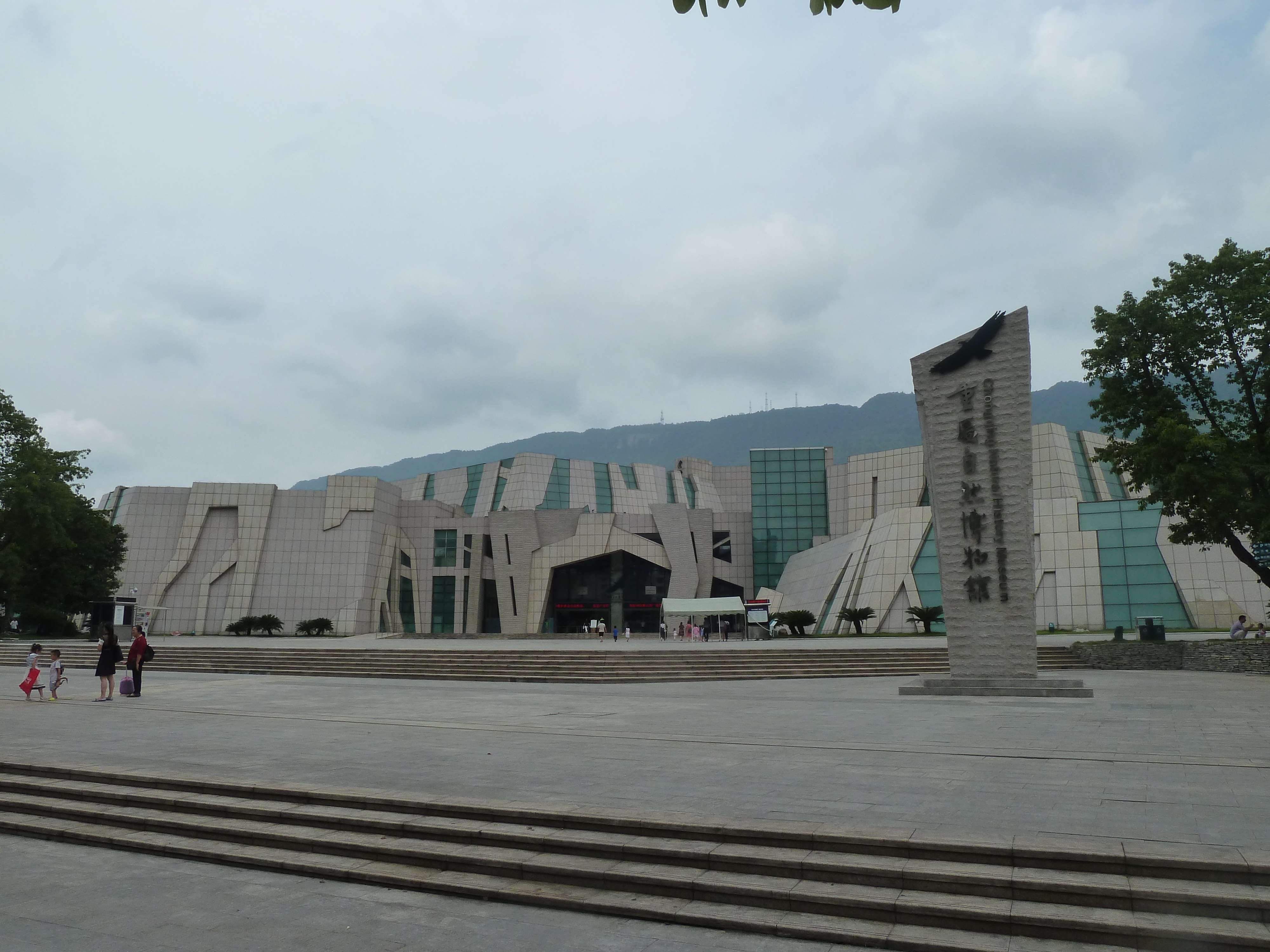
When sharing an unusual sighting, avoid publishing precise nesting or roost locations that could draw a crowd. Report injured wildlife to site staff rather than handling it. For families considering a different nature-related outing, the Natural History Museum guide covers a separate indoor destination, not a nearby wetland facility.

AI illustration based on historical photo references. Generic waterbirds on open water, offered as illustrative observation context, not evidence of restoration results, species identity, current counts or a promised sighting. The scene and details are approximate, not a current photograph or proof of public access, a public path or an authorized viewpoint.
Historical photo reference only; original not republished; the reference grants no reuse permission: Chongqing Municipal Government / Photographer not credited
About This Guide
Research was read on 1 October 2026 across Chongqing government sources, the national forestry administration and Bridging News. The guide combines attributed habitat facts with an original suggested observation method. It is not an on-site access audit, current bird census or firsthand trip report. Current fees, operating hours, educational bookings and exact accessible routes remain unverified.
Before leaving, resolve three practical questions: which entrance is open, which public section fits your group and how you will return. Then let conditions decide the pace. The purpose of a successful Shuanggui Lake visit is to understand a living wetland while leaving its wildlife undisturbed.
Frequently Asked Questions
Q: Is Shuanggui Lake the same place as Shuanggui Hall? A: No. 双桂湖 is the Liangping wetland destination; 双桂堂 is the separate Buddhist temple. Confirm the full Chinese destination and entrance before travelling.
Q: Will I see rare birds at Shuanggui Lake? A: Official reports document notable species at Shuanggui Lake, including winter visitors, but no species is promised for your date or viewpoint. A dated recent observation report is more useful than an undated photograph.
Q: Can I walk all the way around the lake? A: A complete public circuit was not verified on 1 October 2026. Follow current signs and staff guidance, respecting conservation zones and temporary closures.
Q: Is Shuanggui Lake suitable for children or wheelchairs? A: A short public-section visit at Shuanggui Lake may suit a family, but the actual route needs checking. Confirm surfaces, gradients, toilets and access from the chosen entrance rather than assuming the entire park is step-free.
Q: Should I bring food to attract the birds? A: No. Observe from a permitted position and let Shuanggui Lake's birds feed naturally; do not use bait, playback or close approaches to manufacture a photograph.
Traveler comments
Share a recent experience or ask a practical question about this guide.