
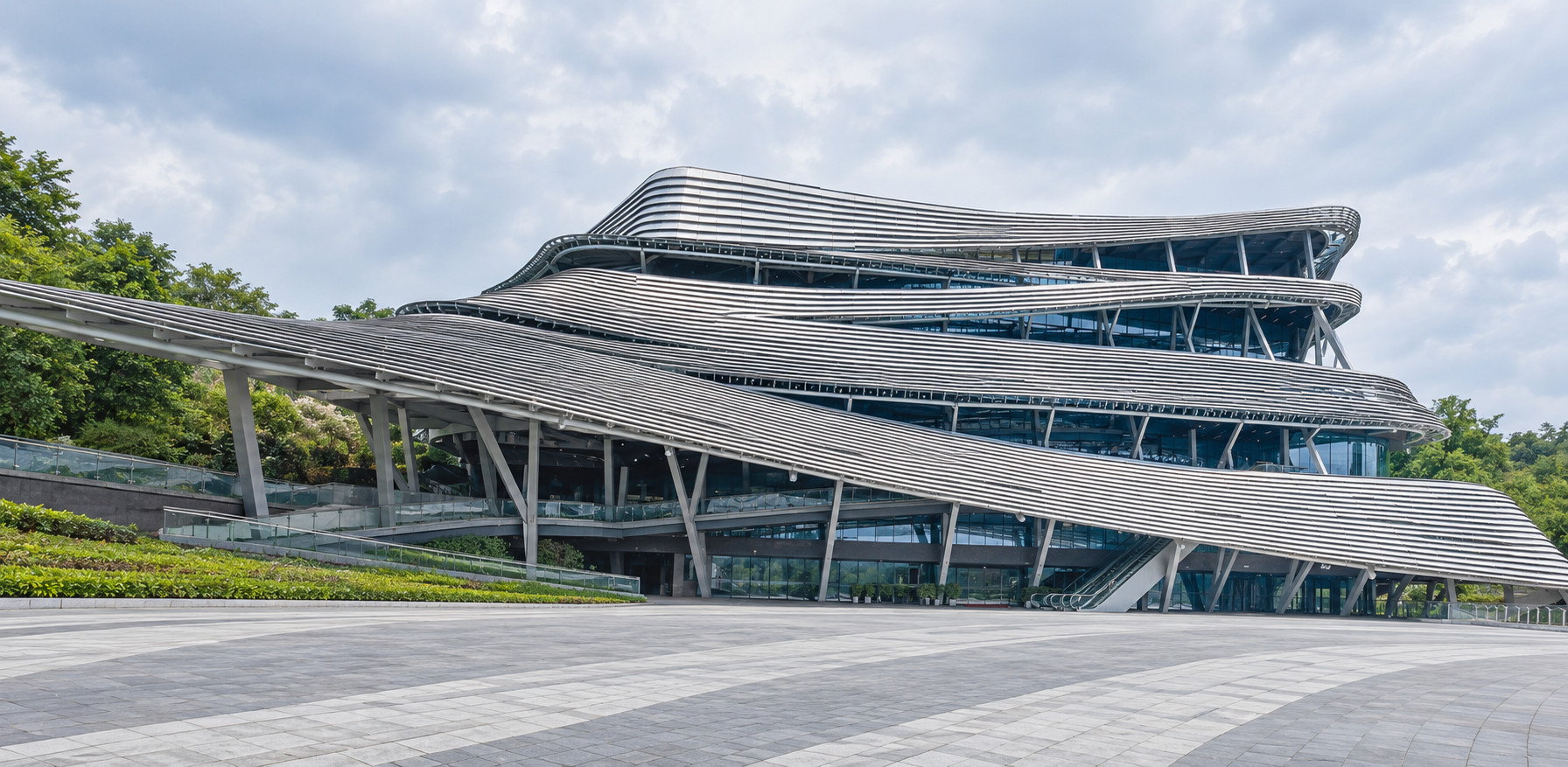
Chongqing Planning Exhibition in 2026 is a useful starting point for understanding the city’s rivers, ridges and changing urban form. The operator lists the current venue at 131 Nanbin Road, beside Danzishi Square. Visit for geographic context and planning displays, then compare the exhibition’s explanation with the real waterfront outside.
Save the full name 重庆市规划展览馆 with 南滨路131号. Older visitor accounts can refer to a former Chaotianmen location. The current operator’s address should guide your journey, even when a review platform places several generations of photographs and comments under the same attraction listing.
You do not need professional planning knowledge to enjoy this exhibition. Bring a concrete question from your travels: why does a road seem to pass above another street, why are the riverbanks so different, or why does a short distance on a map become a much longer walk? The galleries can provide context for those experiences without replacing a current navigation app.
Start at the Nanbin Road venue
The official visitor-service page, checked on 1 October 2026, gives the driving destination as 131 Nanbin Road. It describes an approach by the Loop Line to Danzishi station, followed by bus 373 or 375 to the Nanbin Road Industrial and Commercial Bank stop and a walk. Recheck the live route before travel, including the final pedestrian segment.
Do not turn the station name into a promise that the exhibition is immediately outside the metro. The operator itself describes a connecting bus. If you prefer a taxi for the last leg, show the venue name and street number, then confirm the permitted drop-off point. A driver should not have to infer your destination from the English phrase “planning museum.”
A public Ctrip listing matches the current Nanbin Road address but also contains older comments about Chaotianmen. Filter visitor material by date and location. An old photograph may be useful history while being a poor guide to the entrance you need today.
Once outside the building, take a moment to understand which side faces the river and where your return route begins. Keep the arrival point saved, especially if your group plans to continue walking afterward. The road-level navigation guide helps with the wider problem of following routes through Chongqing’s layered streets.

Editorial planning card. The selectable text below contains the same labels and advice. Verify arrangements for your visit.
Plan your exhibition visit
- Find the venue: Save 重庆市规划展览馆 · 南滨路131号. Use the Nanbin Road venue; older Chaotianmen reviews describe a previous site.
- Choose a question: For layered streets, start with mountains and rivers. For city growth, compare the model’s date and legend with a familiar place.
- Check before travel: The listed regular pattern is Tue–Sun 09:00–17:00, last entry 16:30. Recheck holiday notices, ordinary-entry booking and foreign-passport handling.
Ask separately about guides and immersive attractions: booking, price, language and operation are not settled by general admission. Waterfront walk optional.
Use the introductory hall to establish the big picture
The operator’s introductory-hall page places this display on the 1st floor and describes the large spherical Chongqing Eye installation alongside city-history screens. Use it as an orientation point: establish the exhibition’s scale and storyline before becoming absorbed in individual displays.
A moving screen can be striking without giving you a clear mental map. Look for labels that connect the imagery to real places, and identify whether a sequence concerns the central urban area or the municipality as a whole. These are different scales. A place shown as part of Chongqing may be far beyond the neighbourhoods used in a short city break.
If a presentation is already running when you arrive, consider waiting for a complete cycle rather than interpreting the middle as the beginning. Ask staff whether the programme has a schedule and whether an English summary is available. This research did not establish a fixed English presentation or narration timetable.
Choose a question to carry upstairs. For example, look for how waterways affected settlement, or how transport connections changed the relationship between districts. Treat dramatic imagery as an introduction, then seek the map, model or dated panel that supports the explanation. That habit makes the visit useful even when the language of the soundtrack is unfamiliar.

AI illustration: Introductory hall and Chongqing Eye. Original AI illustration based on the linked reference photographs. Buildings, spatial relationships and exhibits are approximate. This is not a documentary photograph or evidence of current opening, access or accessibility.
Private visual reference: Chongqing Planning Exhibition Gallery (Publication: unknown; Capture: unknown).
Read mountains and rivers before reading development plans
The official Natural Landscape gallery page identifies the 2nd-floor area as an explanation of geology, mountains, rivers, scenery and place names. This is a practical place to slow down. Understanding the physical setting first makes the later urban-development displays easier to interpret.
Find the rivers and ridge lines before searching for famous buildings. Notice where the display changes scale or shifts from a geological account to a contemporary city map. An attractive overview can flatten differences that become significant when walking. A model may reveal a ridge or valley, but it does not show every staircase, lift entrance or pedestrian restriction.
Try comparing the display with a place you have already visited. Which riverbank were you on? What was above the road you used? Did a bridge connect the route you expected, or did its approach lead to another level? Use these remembered experiences as questions, while allowing the exhibition to correct your first impression.
Place names are also useful clues. Save the Chinese characters of a district or landscape feature that recurs on the panels. They can help you recognise the same place in a map app later, where an English transliteration may differ. Avoid translating a local name so freely that it becomes impossible to search.
For children, make the task visual rather than a reading test. Ask them to trace a river through the model or find where a road crosses it. Keep hands off displays unless interaction is expressly permitted. An explanation that connects the museum to something seen outside is more memorable than a list of geological terms.
Treat the city model as an explanation, not a live map
A Bendibao guide dated 8 April 2025 describes a 13,000-square-metre exhibition using models, multimedia and reconstructed scenes. These different formats answer different questions: a model helps with spatial relationships, a timeline with sequence and a recreated setting with how a past environment is being interpreted.
At a model, look for its date and legend. Determine what already existed when it was made and what represents a proposal or planning horizon. An illuminated line or building is not proof that a transport service or attraction is open today. Check current operating sources before turning a planning display into tomorrow’s itinerary.
Locate a familiar reference point first, then expand outward. If you begin with every district at once, the model can become a field of anonymous towers. Trace how your reference point connects with a river, ridge or major crossing. Ask whether the display is showing administrative boundaries, built-up land or a specific planning project; those boundaries need not mean the same thing.
Do not photograph the model as a substitute for a current walking map. The streets you need may be too small to read, and access details can change faster than a large exhibit is rebuilt. Use the model to understand why a journey is shaped as it is, then use a current route service for the journey itself.
The operator’s gallery overview lists history and culture, overall planning and specialised planning among its themes. Select the sections that answer your question rather than assuming the most futuristic-looking display is the most relevant to your visit.

AI illustration: Miniature city-planning exhibit. Original AI illustration based on the linked reference photographs. Buildings, spatial relationships and exhibits are approximate. This is not a documentary photograph or evidence of current opening, access or accessibility. Synthetic model details; not a live map or completed-city record.
Private visual reference: Chongqing University Law School cadre training center (Publication: unknown; Capture: unknown).
Separate entry, interpretation and immersive attractions
The official visitor page, read on 1 October 2026, lists free admission Tuesday to Sunday, 09:00–17:00, with entry ending at 16:30. Holiday or special-event arrangements are announced separately. Check the latest notice rather than assuming the regular pattern applies to every Monday during a public holiday.
Booking instructions need a fresh check. The April 2025 local guide recommends advance reservation through the official WeChat account or 渝快码, while the current operator page explicitly describes guide booking without clearly establishing a universal ordinary-entry reservation requirement. Ask the exhibition what is required for your visit and how a foreign passport is handled. Do not interpret that uncertainty as a promise of walk-in entry.
The same distinction applies to immersive experiences such as Fly over Chongqing. The operator’s website lists the attraction, but this research did not verify a current schedule, price, language or availability. A ticket or reservation for the general exhibition should not be treated as a reservation for a separate experience.
Ask about restrictions before committing to a show, especially if someone dislikes motion, darkness or loud sound. If an attraction is closed, use the galleries as the substance of the visit instead of spending the afternoon waiting for an unconfirmed restart. A dated visitor review reporting a closure is a reason to check, not proof that the same closure continues.
For language support, request an English summary or guide if available and verify any charge in advance. Translating a short label is useful; relying on an assumed English guided service can reshape the entire outing. Save the main gallery names in Chinese so staff can understand the sections you want.
Follow the venue’s rules and keep the waterfront optional
The operator’s visitor instructions, read in October 2026, prohibit food and drinks and restrict flash, selfie sticks or supporting equipment, broadcast activity and unauthorised commercial photography. Check the current rules at security before entering with snacks, equipment or a filming plan.
Families should organise food and drink breaks around those rules. Do not assume that a sealed drink or a child’s snack is exempt; ask staff if an essential item needs special handling. The page mentions small-item storage, but that is not a verified solution for a large suitcase. Travel light enough that baggage does not dominate the visit.
Accessibility also needs a specific enquiry. The official instructions mention stairs, escalators and uneven surfaces. Ask for the current lift route, accessible toilet location and any displays that cannot be reached without steps. Neither the modern appearance of the building nor the word “exhibition” proves continuous step-free access.
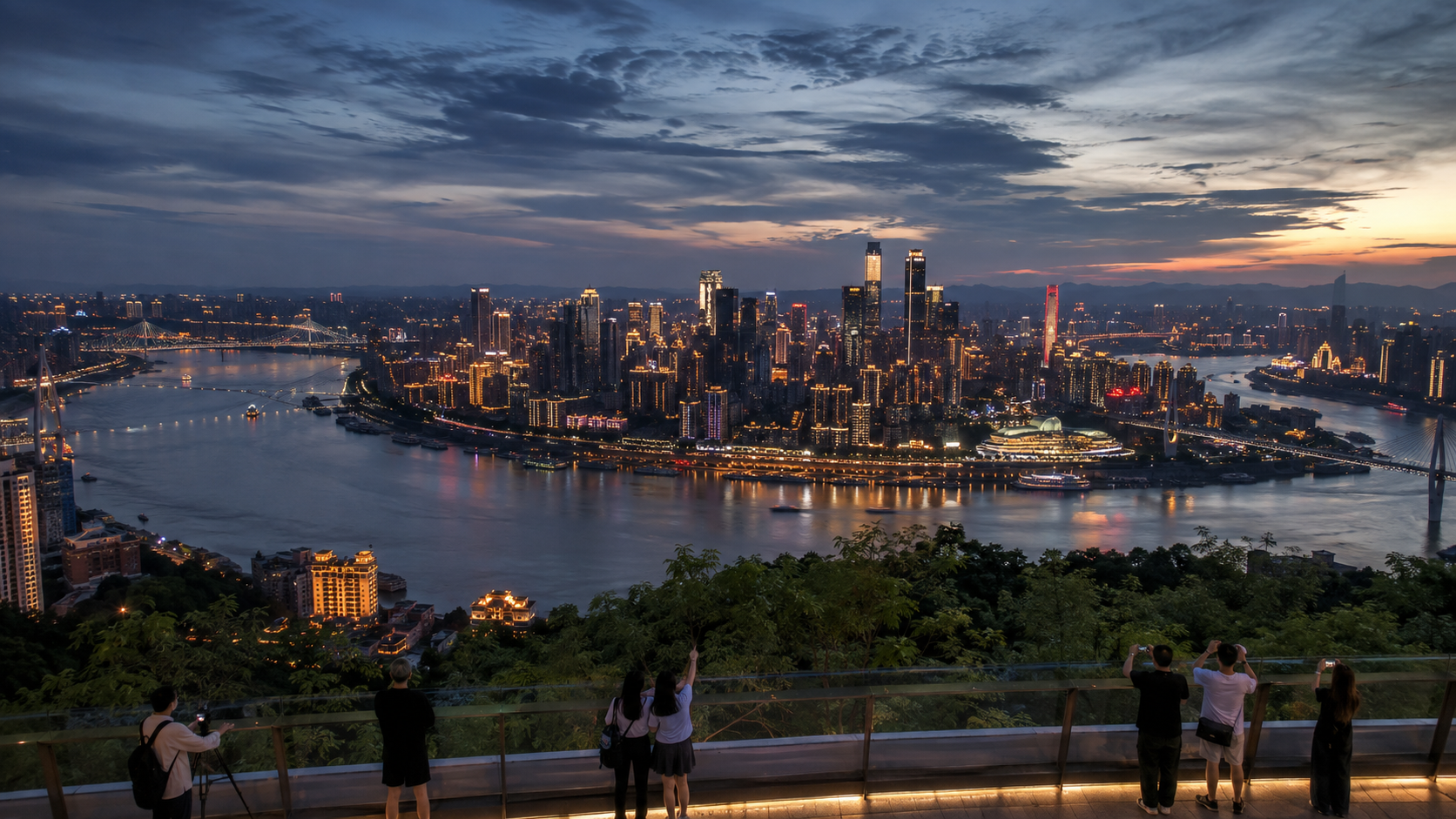
Afterward, consider a short Danzishi or Nanbin Road walk if the weather and the group’s energy allow. Use it to compare the real skyline and river with what you have just seen. The Nanshan and Nanbin Road guide provides wider riverbank context, while the rainy-day indoor guide helps if an outdoor extension no longer makes sense.
Keep the return flexible. A satisfying planning-exhibition visit ends with a clearer understanding of the city, not necessarily another attraction completed. If you leave recognising why your route crosses a river or changes level, the displays have already improved the rest of your trip.

AI illustration: Adjacent Danzishi Wharf river edge. Original AI illustration based on the linked reference photographs. Buildings, spatial relationships and exhibits are approximate. This is not a documentary photograph or evidence of current opening, access or accessibility. Adjacent Danzishi Wharf river-edge approximation; not a full skyline. Water level, birds and access are unverified for today.
Private visual reference: Li Yinfan / Visual Chongqing (Publication: 2025-12-02; Capture: unknown).
About This Guide
This article was researched on 1 October 2026 from operator pages, a dated local visitor guide and carefully filtered public travel accounts. No personal museum visit or tested route is claimed. The official visitor-service page is the primary starting point for refreshing access, rules and transport information before travel.
Frequently Asked Questions
Q: Where is the current Chongqing Planning Exhibition? A: Chongqing Planning Exhibition is at 131 Nanbin Road, beside Danzishi Square in Nan’an. Use 重庆市规划展览馆 and 南滨路131号, rather than older reviews describing the former Chaotianmen venue.
Q: Is Chongqing Planning Exhibition free? A: Chongqing Planning Exhibition’s official visitor page, read on 1 October 2026, lists free general admission. Check separately whether guided interpretation or an immersive attraction needs its own booking, ticket or fee.
Q: What can I learn at Chongqing Planning Exhibition? A: Chongqing Planning Exhibition covers the city’s natural landscape, history and planning. The operator places the introductory Chongqing Eye display on the 1st floor and the Natural Landscape area on the 2nd floor.
Q: Do I need to reserve Chongqing Planning Exhibition in advance? A: A dated 2025 guide recommends booking Chongqing Planning Exhibition through its official WeChat account or 渝快码, but the current operator text does not clearly settle the ordinary-entry requirement. Ask the venue about the current process and foreign-passport handling before travelling.
Q: What are Chongqing Planning Exhibition’s regular hours? A: Chongqing Planning Exhibition’s official visitor page, read on 1 October 2026, lists Tuesday to Sunday opening from 09:00 to 17:00, with last entry at 16:30. Monday, holiday and special-event arrangements should be checked against the latest operator notice.
Traveler comments
Share a recent experience or ask a practical question about this guide.