
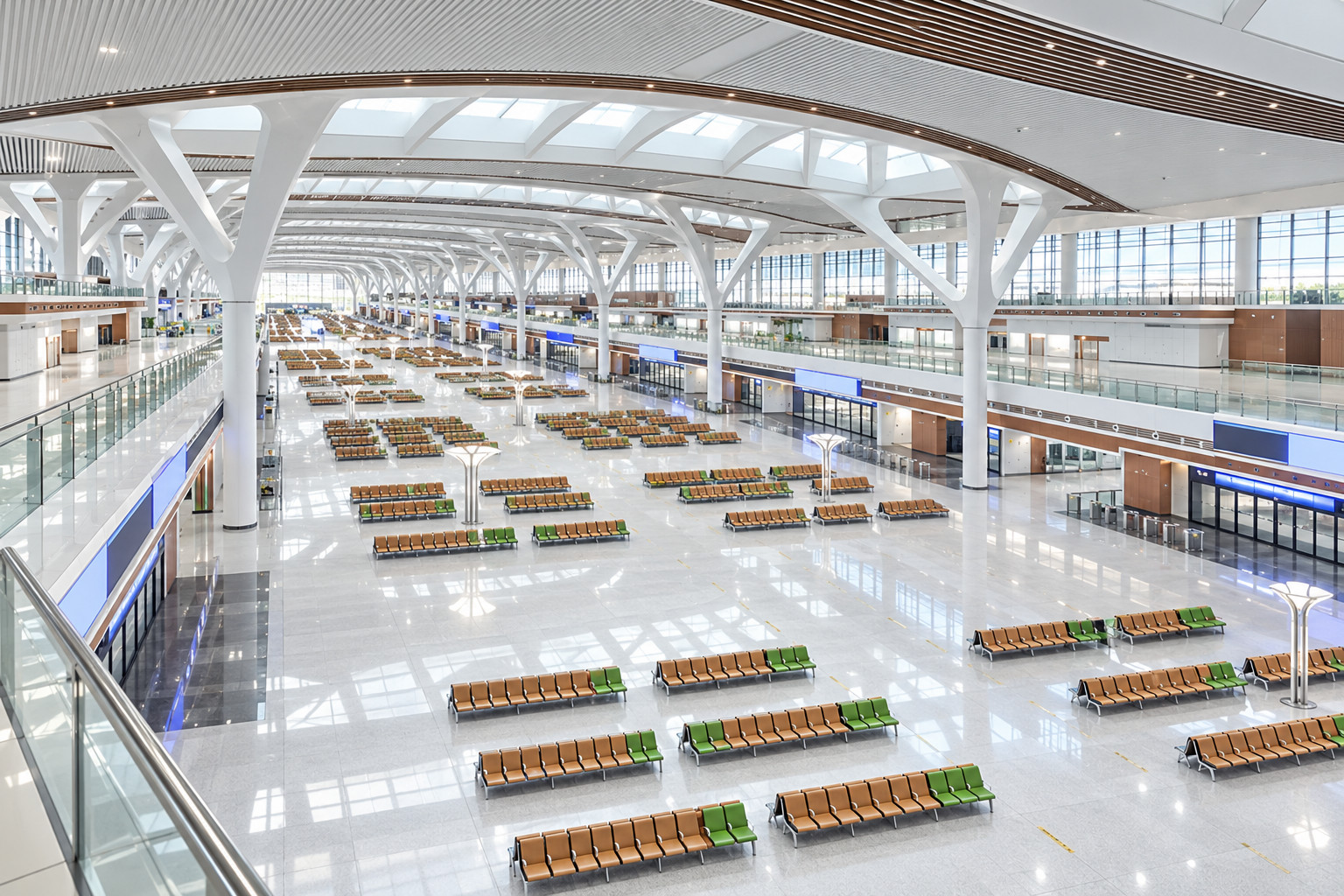
Cover: AI illustration: Public railway information area. Approximate scene inspired by a historical photograph; not a current photograph or verified service. Written-notice and public-display context only; no tested captions, sign-language service, non-voice callback or visual alarm is established.
Historical visual reference: iChongqing / China Railway Construction Engineering Group
Approximate scene inspired by a historical photograph; not a current photograph or verified service. Written-notice and public-display context only; no tested captions, sign-language service, non-voice callback or visual alarm is established.
Chongqing travel for deaf and hard-of-hearing visitors in 2026 is easier to plan around written confirmations, visible journey information and your preferred communication method. Municipal accessibility rules effective since 2022 call for subtitle stop announcements. They support asking for accessible information, but do not prove that every screen, staff interaction or emergency alert will meet your needs.
Start with the information you need to receive, rather than a general label such as “special assistance.” A traveler who uses written English, someone who uses a sign language, and someone who relies partly on speechreading may need very different arrangements. You decide what works for you and how much personal information to disclose.
The practical aim is to remove important voice-only steps before they become urgent: a callback confirming a booking, a platform change, a driver describing a pickup point, or a hotel explaining an alarm procedure. The suggestions below are preparation tools, not a claim that an accessible itinerary has been tested.
Describe your communication preference clearly
An iChongqing report published on 16 September 2024 records local discussion of basic rail-staff sign-language training and the limits of automated captions. Its useful lesson is that a service can be well intentioned without providing the communication format a particular passenger needs. Staff training does not establish fluency in your sign language.
Prepare a short message in your preferred written language, with a Chinese version if useful. For example: “I am deaf. Please type your answer and show me the total price.” An optional Chinese rendering is “我听不见,请打字告诉我,并写明总价。” If you are hard of hearing and prefer a different approach, change the request accordingly; you do not need to use wording that misrepresents you.
Keep the immediate request separate from a longer explanation. A ticket seller needs to understand the destination, date and passenger details. A hotel needs to understand how to contact you. Putting an entire travel history on the screen can hide the action you want them to take.
If written Chinese is not accessible to you, a Chinese response still needs translation into a form you understand. Ask staff to use short sentences, repeat important names and show the result before proceeding. Pointing to a price, time or map pin can supplement communication, but a nod should not substitute for understanding a purchase or route change.

AI illustration: Written public-service notice. Approximate scene inspired by a historical photograph; not a current photograph or verified service. Written-notice and public-display context only; no tested captions, sign-language service, non-voice callback or visual alarm is established.
Historical visual reference: iChongqing / Tan Xinyu
Make the airport request about information, not a generic escort
CAAC’s published air-transport measures, displaying an issue date of 22 January 2015, address timely flight information in Article 17 and written cabin announcements in Article 43. The page was read on 1 October 2026. These are useful grounds for a specific enquiry to your airline, rather than proof of what happens at every Jiangbei Airport counter.
Ask the operating airline how it will communicate a gate change, delay, boarding call and onboard safety information. If you booked through an agent, verify that the airline received the request. Preserve the response with the flight booking, including any instructions about where to identify yourself on arrival.
At check-in, show the request again and ask for the current gate and boarding time in writing. Keep checking the airport display rather than relying on a single saved screenshot. At the gate, tell staff which visual or direct notification method you can use. Ask how you will receive a change if you step away briefly.
Do not assume deafness means you need a wheelchair or cannot travel independently. Explain the information support you want. If you also need another service, ask about that service’s own notice requirements; a deadline for specialist equipment is not automatically a deadline for every communication request.
A CAAC announcement dated 2 July 2026 describes further accessibility improvements. It sets a direction for service development, without confirming the present setup on your flight. Our airport-transfer guide covers onward choices once the airport information handoff is settled.
Use station names and screens as a connected set
Article 18 of Chongqing’s accessibility regulations, effective from 1 January 2022, calls for audible and subtitle stop announcements on buses and urban rail. The useful planning response is to save the written station names and direction before boarding, while allowing for a display that is difficult to see or temporarily unavailable.
Keep your destination in Chinese as well as English. Record the line, direction and transfer station separately. A photograph of a station sign can help you recognise the name, but confirm that it belongs to the platform and direction you are using. The name on an exit sign is not necessarily the train’s next stop.
Where possible, position yourself so you can see the onboard route display without blocking doors or priority spaces. If the display and your saved plan disagree, ask staff at a staffed point. Do not continue a journey purely because nearby passengers seem to be following the same route.
For a bus, show the driver the destination before you set off and ask whether this vehicle stops there. A phone map can help you follow progress, but it does not replace a safe place to board or alight. Request information while the vehicle is stationary and avoid putting a screen into the driver’s working view.
The Chongqing metro guide explains general system use. Add your own visible checkpoints to that information rather than depending on announcements you may not receive.

AI illustration: Railway concourse information display. Approximate scene inspired by a historical photograph; not a current photograph or verified service. Written-notice and public-display context only; no tested captions, sign-language service, non-voice callback or visual alarm is established.
Historical visual reference: iChongqing / China Railway Construction Engineering Group
Remove the telephone callback from assistance arrangements
The rail-assistance launch notice dated 28 August 2023 describes booking through a telephone service or the 重庆轨道爱心预约 WeChat mini-program. It states a 1–3-day advance window, a 07:00–20:00 service period and a telephone confirmation after booking. Those are dated published arrangements, not a fresh test of the service today.
The callback matters. Submitting a form through an app does not establish that the rest of the process is text accessible. Before relying on the service, ask whether confirmation and changes can be handled in writing, which account sends them, and what happens if a voice call goes unanswered. A booking request and an accepted, workable arrangement are different things.
For a hotel or driver, use the same approach. Request a written meeting point that includes the entrance, street level and recognisable landmark. Ask the provider to send changes through the agreed channel rather than “call when nearby.” Chongqing’s stacked roads make an ambiguous pickup location especially unhelpful when resolving it requires an unexpected voice conversation.
You can authorise a companion to relay information if that suits you, but the arrangement should preserve your choices. Ask providers to address you directly and to show any changed destination, charge or timing for your approval. Keep a compact copy of the confirmed plan offline in case the messaging app or mobile connection fails.
For the geography behind this problem, see our road-level navigation guide. A precise door and street level are often more useful than a broad attraction name.
Ask accommodation and attractions about the actual alert method
Article 27 of the municipal accessibility rules addresses information access and service training. Use that framework to ask about the exact room and venue, without inferring that an “accessible” label covers hearing-related needs. A step-free entrance, for example, says nothing about how an alarm reaches you while asleep.
Before booking accommodation, ask what alert equipment exists in the room you would receive, how staff will communicate an urgent instruction, and whether your requested setup is confirmed. If a property describes a visual or vibrating device, ask whether it is installed, portable, available for your dates and demonstrated at check-in. This guide has not verified such equipment at any named hotel.
At an attraction, ask whether an audio-led exhibit has readable information or captions and whether a guided experience depends on live spoken instructions. Choose according to the content you can access, rather than paying first and discovering that the experience is largely unavailable to you. A written overview may help, but it is not necessarily equivalent to the full guided interpretation.
For meal service, preserve the written order and final total. If you have a dietary requirement, ensure the restaurant understands it separately from the communication request. Do not assume a translation app has correctly handled a regional food name. The immediate goal is a clear exchange, with an opportunity for both sides to correct misunderstandings.
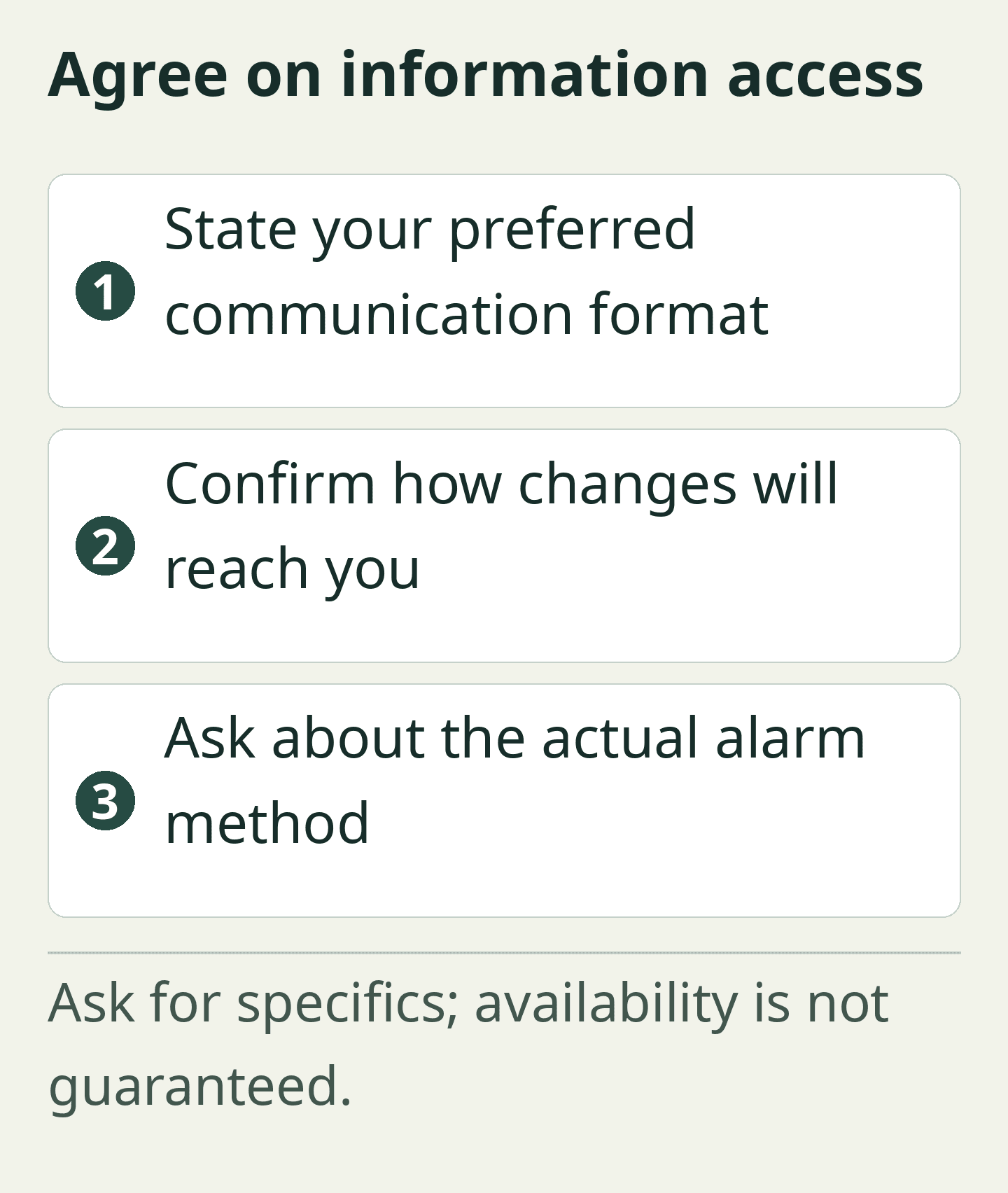
Original editorial planning card; the complete text is also provided below.
Original editorial diagram
Agree on information access
- State your preferred communication format
- Confirm how changes will reach you
- Ask about the actual alarm method
Ask for specifics; availability is not guaranteed.
Plan for changes, crowded streets and a flat phone
The Yuzhong police holiday advice published on 28 September 2026 warns of dynamic traffic controls around places including Jiefangbei and Hongya Cave. Its named evening control periods include 16:00–24:00. A previously agreed pickup point may therefore need a written replacement during the National Day holiday; this is not a permanent timetable for ordinary visits.
Save a short message asking staff to write where you should go next. Carry the accommodation name and address on paper as well as on your phone. If you use captions or text translation, check how the chosen tool works without mobile data and how much battery it consumes. Do this in a calm setting, before an unfamiliar counter or crowded pavement makes troubleshooting harder.
Agree a visible reunion point with companions and a clear plan if you become separated. Avoid relying on someone calling your name. If you use hearing devices, follow their manufacturer’s care and charging instructions; this article does not replace individual clinical or equipment advice.
For an emergency, seek an identifiable staff member or emergency responder and show a concise written request for help. Local non-voice emergency channels and foreign-phone compatibility were not verified for this guide. Do not build your safety plan around an untested number or app feature. Ask your accommodation or transport provider to explain the usable local procedure in a form you understand before an outing.
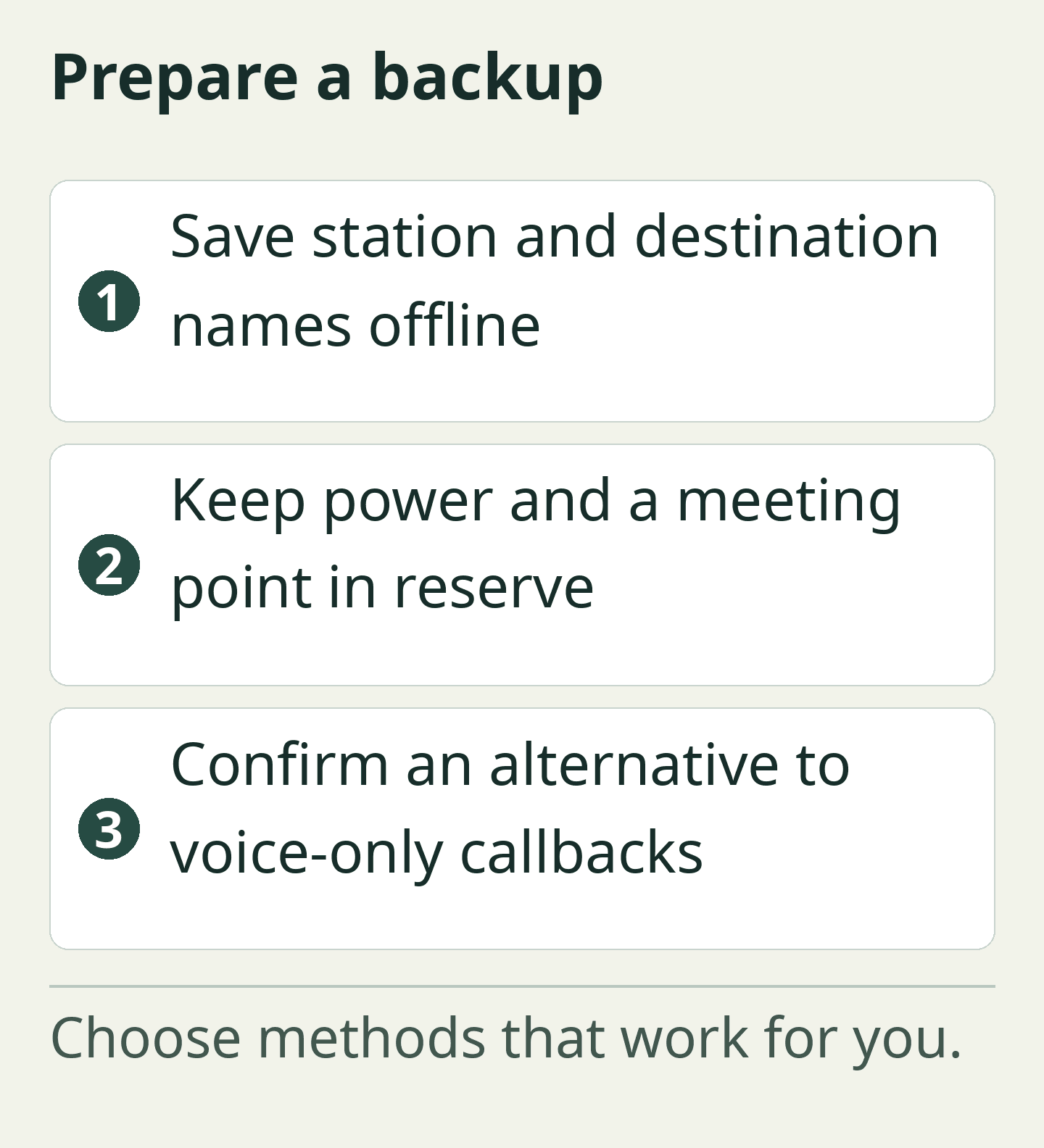
Original editorial planning card; the complete text is also provided below.
Original editorial diagram
Prepare a backup
- Save station and destination names offline
- Keep power and a meeting point in reserve
- Confirm an alternative to voice-only callbacks
Choose methods that work for you.
About This Guide
Prepared from public official material and attributed local reporting read on 1 October 2026. The service questions are original planning suggestions. No visit, accessibility test, personal interview or human editorial approval is claimed. Providers should reconfirm current arrangements for your dates and preferred communication method.
Frequently Asked Questions
Q: Can deaf travelers use Chongqing’s metro independently? A: Chongqing’s rules call for subtitle stop announcements, but individual displays and information handoffs were not tested. Save the Chinese station names and direction, and ask station staff for written clarification when needed.
Q: Will Chongqing staff understand my sign language? A: Do not assume so. A 2024 report describes basic sign-language training for Chongqing rail staff, without establishing fluency in a visiting traveler’s sign language or interpreter availability on a particular shift.
Q: What should I request at Chongqing Jiangbei Airport? A: At Chongqing Jiangbei Airport, ask your operating airline for accessible gate-change, boarding and safety information, and show the agreed request at check-in and the gate. CAAC Article 43 addresses written cabin announcements for passengers with hearing disabilities.
Q: Is Chongqing’s rail-assistance app entirely text based? A: That was not established for Chongqing’s rail-assistance service. The 2023 launch notice says staff confirm applications by telephone, so ask whether confirmation and changes can be completed in writing before relying on it.
Q: Does an accessible Chongqing hotel room include a visual alarm? A: The label alone does not establish that. Ask the Chongqing property about the specific booked room, actual alert equipment and how urgent instructions reach you, including while asleep.


Traveler comments
Share a recent experience or ask a practical question about this guide.