
AI disclosure: Prepared with AI using cited sources and automatic editorial checks. No on-site visit or human review is claimed. Historical photographs are attributed real images; the labelled editorial diagrams are programmatically drawn planning aids.

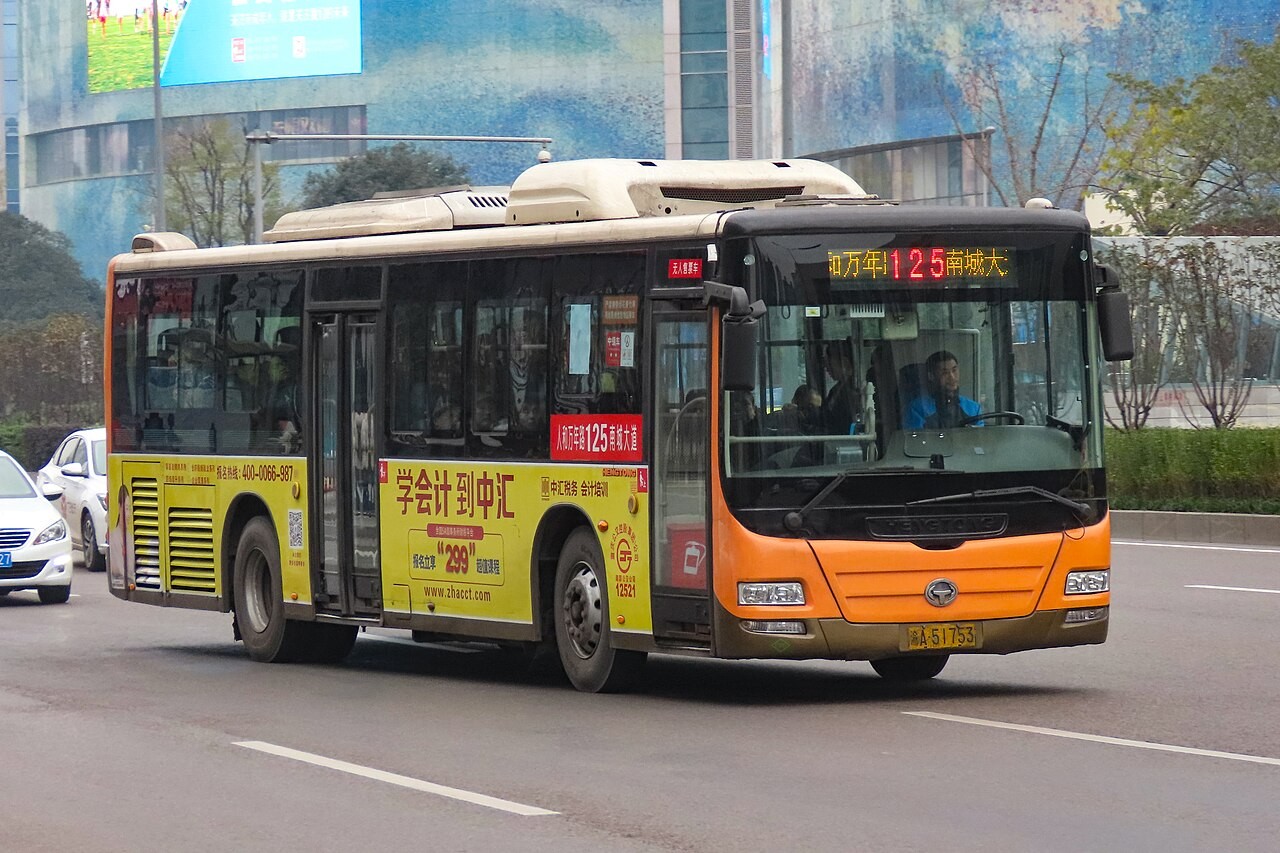
Chongqing city bus near Jiazhoulu, photographed 24 December 2019. Historical vehicle context; check current routes and services separately.
Photo: N509FZ. Work: 12521 at CRT Jiazhoulu (20191224131012).jpg. Capture date: 2019-12-24 13:10:12. License: CC BY-SA 4.0. Source. Changes: Prior delivered JPEG reproduced byte-for-byte via EXIF orientation normalization where applicable, RGB conversion, proportional 1920px maximum and JPEG quality90 optimization; no crop or scene alteration.
For a short Chongqing city-bus ride in 2026, confirm the direction, boarding stop and payment method before the bus arrives. Chongqing’s transport authority documents a shared bus-and-rail code in the Yutongxing app, while the current holiday notice changes selected services. A route number alone does not tell you which side of the road to use.
A surface bus can be useful when your destination is awkward to reach from a metro exit or when a short ride saves an uphill approach. It also asks more of a visitor: reading a stop list, recognising the correct vehicle and noticing when to leave. Start with a simple journey whose destination you can identify in Chinese.
Keep 公交车, city bus, separate from 旅游观光巴士, sightseeing bus, and 长途汽车, long-distance coach. They can appear together in search results but have different tickets and boarding arrangements. This guide concerns an ordinary urban ride, rather than a sightseeing pass or a seat on an intercity coach.
Choose the right kind of bus before choosing a number
iChongqing’s bus overview distinguishes ordinary services from tourism routes such as T480. Its fare and sightseeing-pass tables are undated, so they are useful for recognising product categories rather than setting a current budget. Read the service description and fare shown for the vehicle you intend to use.
For a first attempt, choose a direct route with an identifiable boarding stop and a destination that is still easy to reach if you need to get off elsewhere. A complicated transfer is a poor place to discover that a transport code has not activated. Save the destination’s Chinese name, then save the actual alighting stop separately. A museum, shopping centre and nearby bus stop may use different names.
Compare the whole journey with the metro alternative. Include getting to the bus stop, waiting, road traffic and the final walk. A short line on the screen is not necessarily a short door-to-door trip. Conversely, a bus that stops on the useful road level can save an awkward climb after a rail journey.
Our Chongqing metro guide helps with that comparison. Treat the bus as a practical choice for the particular trip, rather than a transport experience you need to complete.

Yunzilu intersection bus-stop context in Chongqing, photographed 12 March 2024. This historical view does not establish present service or direction.
Photo: 重庆轨交18. Work: 云紫路口站.jpg. Capture date: 12 March 2024 (according to Exif data). License: CC BY 3.0. Source. Changes: Prior delivered JPEG reproduced byte-for-byte via EXIF orientation normalization where applicable, RGB conversion, proportional 1920px maximum and JPEG quality90 optimization; no crop or scene alteration.
Check direction at the stop, not just on the map
The 22 September 2026 operator announcement names routes 10 and 321 in the Jiefangbei area. Knowing those numbers is useful, but the notice is not a stop-by-stop route map. Use a current journey planner for your own destination, then compare its direction and stop sequence with the board where you are standing.
Look for your present stop and the stop you want further along the displayed direction. If the sign has arrows, follow them rather than assuming that the order reads the same way as your phone. Check the terminal destination on the arriving bus as well as its number. A vehicle with the right number can still be going away from your destination.
Do not assume the return stop is directly across the road. Search the reverse journey independently and inspect the pedestrian route to its boarding point. This matters around one-way streets, large junctions and river roads, where crossing at the nearest visible gap may be unsafe or prohibited.
If you cannot reconcile the signs, stay on the pavement and ask before boarding. Show the Chinese alighting-stop name and ask “这辆车到这个站吗?” meaning “Does this bus go to this stop?” A clear answer about the stop is more helpful than pointing at a broad neighbourhood name.

Conceptual stop-sequence comparison. The labels are hypothetical; use the displayed direction and match the terminal on your actual bus.
Original project diagram, programmatically rendered with AI assistance on 2 October 2026. No third-party photograph is used. No open reuse license is stated. New rendering; source-bound planning guidance, not a site map, official interface or current service guarantee.
Prepare the fare while you can still step aside
The TravelChinaGuide transport page updated on 25 August 2026 describes RMB2 as a standard city-bus fare and advises exact cash because change is not provided. Treat that as a common example, not a tariff for every vehicle. Read the fare notice, particularly if the service is branded as tourism, express or distance-based.
Prepare small RMB notes or coins before joining the boarding queue. If the fare display differs from what you expected, ask the driver or attendant before putting money into a farebox. Dropping in a large note and expecting change is an avoidable problem. For a group, confirm whether payment is per person and how the displayed fare applies to anyone eligible for a concession.
A transport QR code needs its own setup. Open the transport section of your chosen app, select Chongqing and check the bus service it actually covers. A normal shopping-payment screen is not evidence that a bus reader will accept it. If activation asks for a payment method or identity step you cannot complete, use an available alternative rather than repeatedly presenting an unready code.
Our payment guide for foreign visitors covers broader setup. Carrying a small cash fallback makes a short bus experiment easier without assuming that every overseas card works in every transport wallet.

Chongqing bus fare reader, photographed 14 December 2018. The visible RMB2 amount is historical; it does not verify the fare or payment compatibility for a current journey.
Photo: Junyi Lou. Work: Bus Card Reader in Chongqing from 2018.jpg. Capture date: 2018-12-14 12:39:08. License: CC BY-SA 4.0. Source. Changes: Prior delivered JPEG reproduced byte-for-byte via EXIF orientation normalization where applicable, RGB conversion, proportional 1920px maximum and JPEG quality90 optimization; no crop or scene alteration.
Know which transport code you have opened
The Transport Commission’s 2 December 2024 announcement says the 渝通行, Yutongxing, app’s transport code became usable across central-city buses and rail. Therefore, advice that Chongqing always requires separate bus and metro codes is too broad. Different apps can present different services; follow the product name and coverage in your own app.
A later municipal update dated 26 January 2026 describes digital-renminbi transport-code coverage and card/code integration. These announcements establish that the payment system is evolving. They do not prove that a newly arrived traveler with a particular passport, phone or overseas bank card can activate every option.
Before you travel, make sure the screen is a live usable code rather than a saved screenshot, an application in progress or an account with an unresolved payment. Keep the phone sufficiently charged and the correct screen readily accessible. If using a physical card, take it out from among other contactless cards so you know which one you are presenting.
At the reader, wait for the device’s result. If it rejects the payment, do not assume that waving the phone repeatedly will fix the underlying issue. Ask what was rejected, step aside when directed and use the fallback that staff confirm for that bus. Check any later transaction history away from the doorway.
Board without turning the doorway into a planning desk
TravelChinaGuide’s August 2026 account notes the practical challenge of turns and stops on Chongqing’s roads. Finish your route check before stepping aboard. Follow the entry and exit markings on the actual vehicle; door arrangements should not be guessed from an overseas bus system.
Let people leave, keep the boarding area clear and have your fare ready. Once payment is accepted, move to a safe position and use the available handholds or seat. Keep luggage out of the aisle and away from the doors. A rolling suitcase that was manageable on a broad pavement can become awkward inside a turning bus.
Watch the next-stop display if present, listen for the Chinese stop name and compare progress with your saved route. Phone location can help, but it should not replace the vehicle’s announcements and the stops outside. Prepare to alight in good time without moving unsafely while the bus is turning or braking.
If you miss your stop, remain calm and leave at a permitted stop when it is safe. Do not ask the driver to stop between stops or open a door in traffic. After alighting, look up the onward walk or reverse route from where you actually are. A short recovery is preferable to an unsafe attempt to correct the mistake immediately.
Recheck the return during National Day and other busy periods
For the 2026 holiday period, the operator notice issued on 22 September extends Jiefangbei routes 10 and 321 to 23:00 and describes adjustments to Nanbin Road routes 373 and 375 around drone shows. These are selected arrangements. They are not evidence that every route runs until that time or that an intermediate stop’s final bus departs exactly then.
The Yuzhong police guidance published on 28 September 2026 also describes traffic controls applied according to conditions around Jiefangbei, Hongya Cave and other visitor areas. A bus journey planned before dinner may need checking again when you leave. Look for temporary stop notices and follow staff or police directions rather than an old screenshot.
Before starting an evening outing, identify a rail alternative and a place where you can safely stop to check the route. Keep the final approach manageable if the bus alights at a different stop. A promise of extra holiday vehicles should not become a plan that depends on catching an unspecified final departure.
Use our road-level navigation guide when the stop pin looks close but the street does not connect as expected. The aim is to reach a clearly identified public boarding point, not simply to stand beneath the right map label.

A whole-ride planning checklist: check stops, direction and fare, keep the aisle clear, and recheck the return journey. Historical photographs do not verify today’s service.
Original project diagram, programmatically rendered with AI assistance on 2 October 2026. No third-party photograph is used. No open reuse license is stated. New rendering; source-bound planning guidance, not a site map, official interface or current service guarantee.
About This Guide
This guide was researched on 1 October 2026 using Chongqing transport announcements, the official city news portal and travel references. It does not claim an on-site ride or successful foreign-card activation. Undated fare tables and app instructions were compared with dated official changes; the actual bus, stop notice and payment screen should be checked for your travel day.
Frequently Asked Questions
Q: Is a Chongqing city bus always RMB2? A: RMB2 is a commonly described urban fare, but Chongqing has different bus products and fare arrangements. Check the fare displayed on the actual bus before paying.
Q: Can I use the same QR code for Chongqing buses and the metro? A: The 渝通行 app’s shared bus-and-rail code is documented by Chongqing’s transport authority. Other apps may organise their codes differently, so check the service and coverage shown on your screen.
Q: How do I avoid boarding in the wrong direction? A: At your Chongqing stop, compare the route number, terminal direction and ordered stop list. Confirm that your intended alighting stop comes after the stop where you are waiting.
Q: Do all Chongqing buses run later during National Day? A: No universal extension is established. The September 2026 announcement names selected services, including Jiefangbei routes 10 and 321, so verify the particular route and stop for your return.
Q: What should I do if my transport code fails? A: Ask the driver what payment the Chongqing bus accepts and use a prepared alternative, such as the correct cash fare if accepted. Resolve app activation or account problems away from the boarding doorway.


Traveler comments
Share a recent experience or ask a practical question about this guide.