
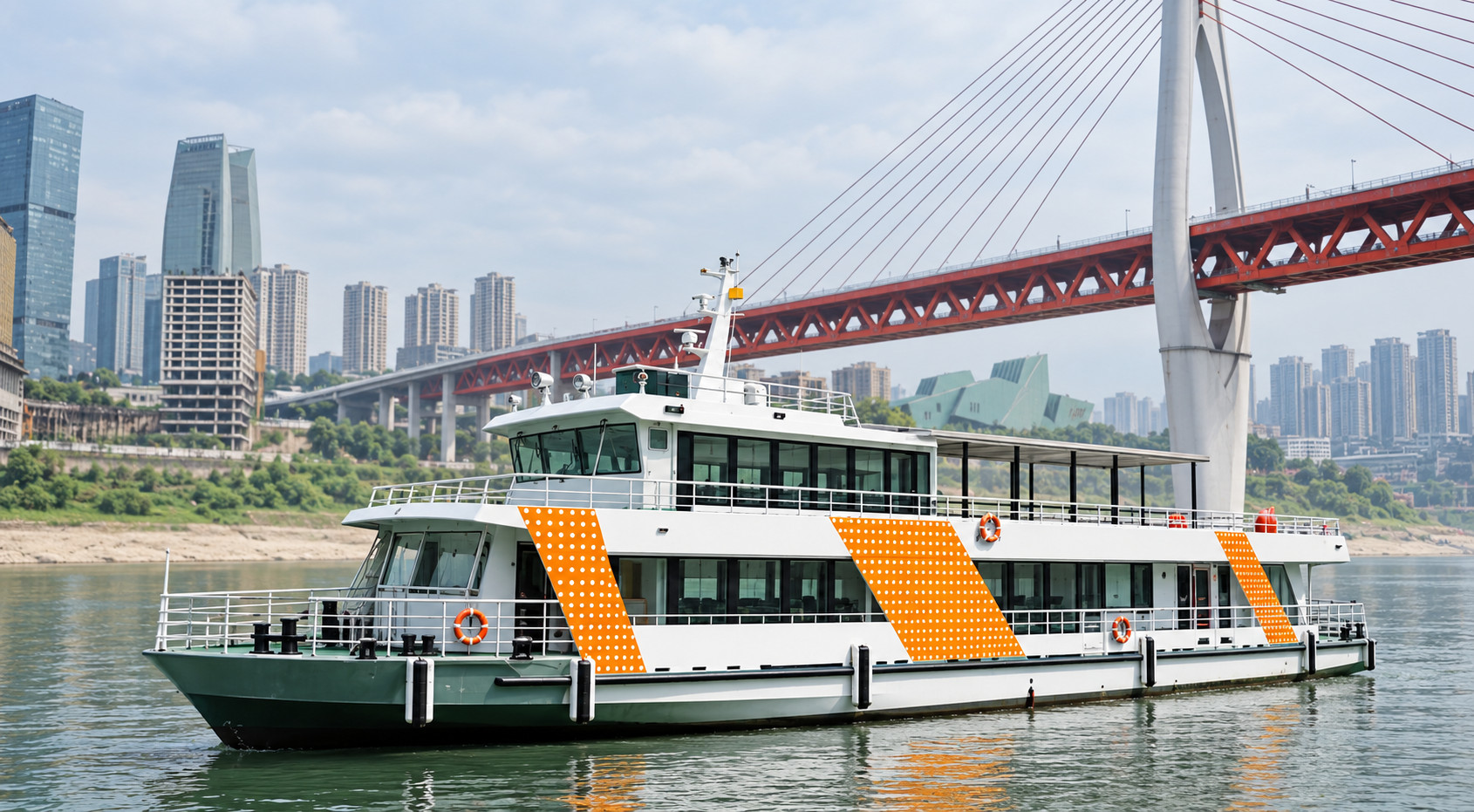
AI illustration based on an undated vessel-and-bridge reference. The individual vessel and route are unconfirmed; no current sailing is implied.
AI illustration based on historical reference Reference creator Unknown; Reference publication date Unknown; Reference capture date Unknown. Reference source
Chongqing public ferries in 2026 include journeys sold for sightseeing as well as crossing the river, so check the named route and destination before buying. A municipal announcement describes the Two Rivers Ferry B line as a loop through three piers. A cheap-looking boat ticket is not automatically a direct crossing, return ticket or hop-on pass.
Start by deciding what you want the boat to accomplish. Are you trying to reach another neighbourhood, enjoy the river briefly, or spend the evening on a sightseeing vessel? Those are different trips. A sailing can be pleasant but inconvenient as transport if its departure time, intermediate stops or final pier do not fit your plans.
Save the product’s Chinese name and the exact embarkation pier. 重庆小渡, Chongqing Xiaodu, is a brand name; 两江小渡, Liangjiang Xiaodu, identifies a service within that family. 两江游 commonly appears on sightseeing-cruise products. Similar English translations are not enough to establish that tickets are interchangeable.
Read the route as a journey, not a brand
The municipal report dated 3 June 2026 describes a Two Rivers Ferry B line that began on 28 May. The announced circuit is Danzishi, 弹子石渡口, to Jiangbeizui, 江北嘴渡口, then Yemaoxi, 野猫溪渡口, and back to Danzishi. That is a loop with named boarding points, not a straight line across a single stretch of river.
To evaluate a ticket, write down the embarkation pier and the place where you want to leave. Then ask whether the boat stops there on that particular sailing. A familiar landmark appearing in the description might be something seen from the water rather than a place where passengers can disembark.
Check whether the ticket is for an assigned departure, a permitted time window or another arrangement. Ask about the end of the trip: does the vessel bring you back, or must you travel home independently? If you want to change riverbanks for dinner, a circular product that returns to its starting pier may not achieve that without a confirmed intermediate stop.
For a longer sightseeing evening, compare the options in our Two Rivers cruise and riverfront guide. Here, the priority is understanding where the boat actually takes you.

AI illustration of a floating dock and riverbank, based on an undated reference. It does not identify a specific pier or establish current water levels.
AI illustration based on historical reference Reference creator Unknown; Reference publication date Unknown; Reference capture date Unknown. Reference source
Separate a dated fare from today’s ticket
The Chongqing Morning News account from 3 June 2026 advertised the B line at RMB15 with a daily 18:30 departure from Danzishi. Those are details of the announcement, not a live quotation for your travel date. The same report says that disembarking and boarding again requires another ticket, so it should not be interpreted as an unlimited hop-on pass.
A 3 August 2026 notice attributed to Chongqing Passenger Ship Company and republished publicly announced suspension of the Two Rivers Ferry ring-tour service from that date because water levels in the Yangtze and Jialing rivers had risen, with reopening to be announced separately. Resumption and operation on your travel date have not been independently established.
An undated iChongqing ferry page still lists RMB2 crossings and describes a Ciqikou route as awaiting opening. That combination is a warning about freshness. Do not use an attractive old price or an old pier list as proof of a currently operating bargain crossing.
Before paying, compare the displayed route, date, fare and boarding place. Ask what the ticket includes and whether leaving at an intermediate stop ends its validity. If a seller uses a general photograph of the river or a large sightseeing ship, request the actual product name instead of inferring the vessel from the image.
For a family or group, check the current concession rules with the operator. Do not transfer a child-height threshold from one boat product to another. Likewise, avoid assuming that a transit card, metro pass or ordinary bus code pays for a sightseeing-oriented ferry simply because it is described as public transport.
Find the pier before descending toward the water
The July 2026 operator report about themed sailings gives a precise example: boarding at Ciqikou pier by Yinglongmen riverside square, with Hongya Cave as the destination. The useful detail is the named waterside location. “Ciqikou” or “Hongya Cave” by itself describes a much larger visitor area.
A pier journey has several parts: reaching the riverside district, finding the correct entrance, descending to the boarding area and following the operator’s gangway instructions. Check them before committing to a long stair route. A pin near the river does not show which level you need or whether a particular access is open.
Keep the Chinese pier name from your order visible on your phone. Look for the operator’s public signs and ask staff to match the ticket to the boarding area. Do not follow an unsolicited seller simply because they say they can get you onto “the ferry.” Adjacent ticket desks can sell different boats or tours.
If you arrive by taxi, confirm a permitted drop-off point and the pedestrian approach from there. When returning after dark, save a clear public meeting point on the landward side. Our Chongqing road-level navigation guide explains why a close-looking pin can still require a substantial change of level.

AI illustration of a gangway approach, based on an undated reference. The exact pier, current access and boarding conditions require separate confirmation.
AI illustration based on historical reference Reference creator Unknown; Reference publication date Unknown; Reference capture date Unknown. Reference source
Recognise when the product is a themed outing
A municipal announcement dated 28 July 2026 introduced a music-themed Ciqikou–Hongya Cave sailing at an advertised RMB68, starting on 31 July. It also described a separate sunset product. These examples show why “small ferry” does not consistently mean a basic low-cost transport fare.
The same announcement directs passengers to the 重庆小渡 official account’s booking menu to check sailings. Use the current product page to identify what is being offered on your date. A music event, sunset service and daytime crossing may share portions of the river while having different prices, departure patterns and ticket conditions.
For a transport-oriented trip, ask whether the additional theme adds anything you want. If your priority is arriving on the opposite bank at a particular time, compare a land-based connection before committing to a sailing designed around an experience. If the boat is the outing, build the rest of the evening around its confirmed departure and endpoint.
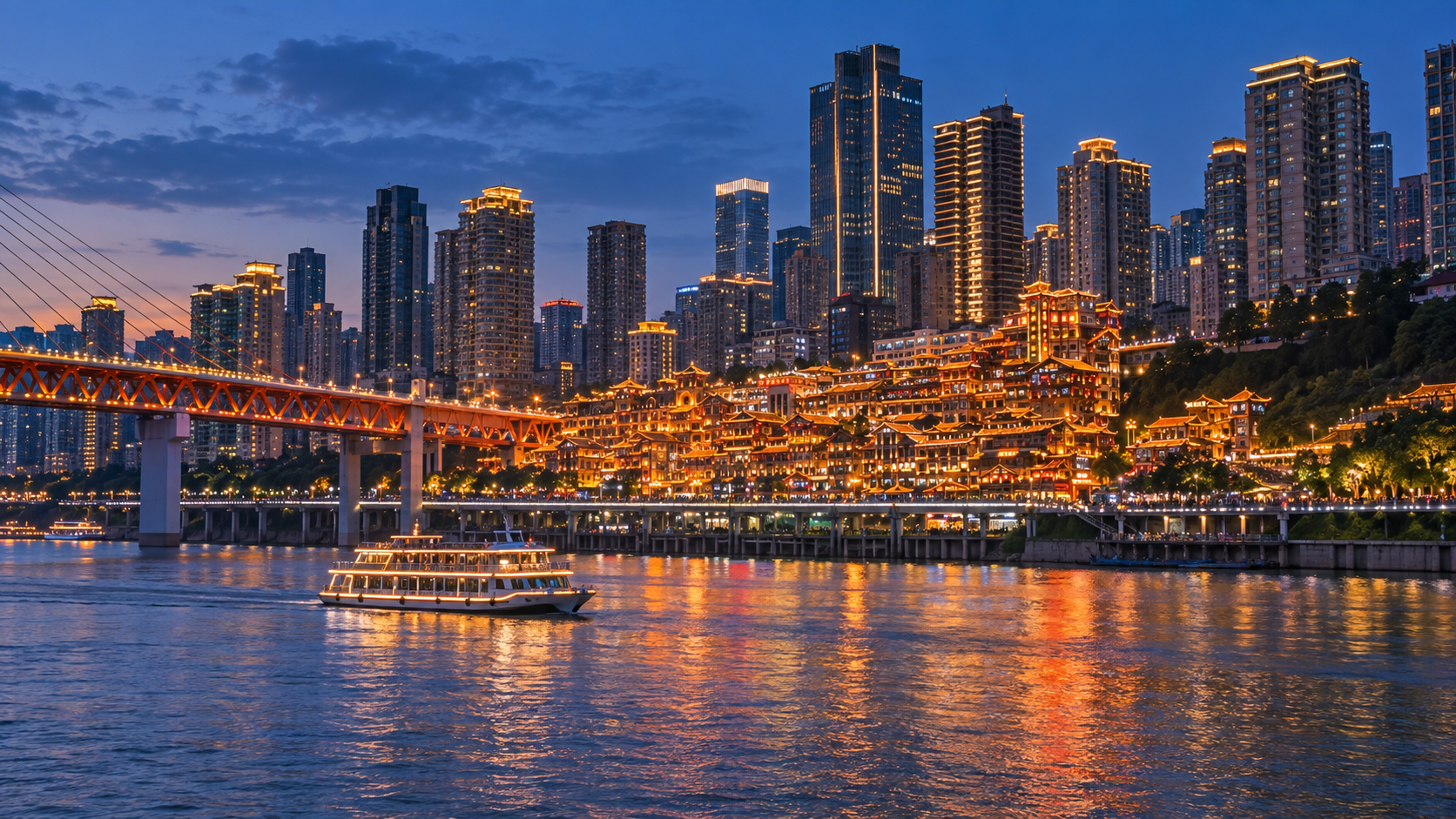
Avoid judging all products by a single price seen in a short video. Establish what the person actually purchased, when they traveled and where they boarded. Their attractive skyline view can be a useful visual reference without providing any reliable evidence about today’s fare or route.

Old fares and announcements do not confirm current operation.
Sources: guide references on ferry products
Confirm the sailing
- Name the product
- Save the exact Chinese product name and boarding pier.
- Check the journey
- Confirm your sailing and permitted landing point.
- Read the ticket terms
- Check today’s fare, validity and reboarding rules.
Treat a sailing notice as specific to its date
The 24 February 2026 Bandao Xiaodu notice announces a change in departures on the Hongya Cave–Jiulong Wharf service. It is direct evidence that published patterns change. This guide does not reproduce that notice’s timetable image or claim it remains the current schedule.
Check the operator before leaving your accommodation and again at the pier if conditions or notices have changed. Ask about your particular direction, not just whether “boats are running.” A departure from another pier, or a different product from the same company, may not solve your journey.
Keep a land-based alternative that does not depend on a boat connection. If a sailing is suspended, follow the operator’s instructions and ask the original seller about the applicable refund or rearrangement. Do not enter closed boarding areas or accept an unverified substitute craft because it appears to be ready to depart.
For the immediate holiday period, the Yuzhong police notice from 28 September 2026 describes dynamic access controls around Hongya Cave and Chaotianmen. This is relevant to getting to the waterfront; it is not a ferry timetable or a declaration that every boat is cancelled. Verify the water service and the land approach separately.
Check the boarding conditions for your group
The June 2026 B-line announcement advises arriving at the pier ahead of departure and describes restrictions on pets and dangerous items. Read the current conditions for the actual sailing rather than assuming all river products use identical rules. Ask about luggage or equipment before paying if it could affect boarding.
For wheelchair users or anyone who cannot manage stairs, obtain a direct answer about the entire access route: street to waiting area, gangway, doorway, seating and exit at the arrival pier. A photograph of a level deck proves little about the slope and gaps involved in reaching it. Ask whether assistance is available and whether the operator can handle your particular chair or mobility equipment.
Follow crew instructions when the boat is ready. Keep the gangway clear, hold the available rail and move carefully when transferring between land and vessel. Find out where you may sit or stand and which decks are open. Do not cross a barrier or crowd a boarding edge for a photograph.
Plan the landing as carefully as embarkation. If you leave at Yemaoxi or Jiangbeizui, identify the onward public street or transport option before the boat departs. Avoid creating a last-minute problem by assuming there will be a suitable taxi waiting beside the gangway.

Ask the operator about assistance before buying; availability is unconfirmed.
Sources: guide references on ferry access
Check the whole approach
- Street to waiting area
- Ask about the entrance, levels, steps and open access.
- Gangway to vessel
- Check slopes, gaps, doorways and your equipment needs.
- Landing to street
- Confirm the arrival approach and onward transport.
Decide whether the boat earns its place in the day
The B-line account published in June 2026 links Danzishi, Jiangbeizui and Yemaoxi as a river circuit. That can make the journey itself interesting. It does not require filling the day with every nearby attraction before or after sailing.
Choose a manageable activity near your confirmed landing, then leave flexibility for the return. If the pier approach, wait and onward climb feel disproportionate to the crossing, enjoy the waterfront from a public promenade instead. The river remains part of the visit without making a ticket essential.
For a south-bank outing, our Xiahaoli guide offers neighbourhood context. Connect it to a boat trip only after checking the actual landing and pedestrian route; the existence of nearby places on a map does not establish a direct, comfortable link between them.
About This Guide
Sources were read on 1 October 2026, including operator announcements carried by the municipal government, Chongqing Morning News and an older English ferry directory. Historical fares are labelled as announcement details. No same-day sailing, ticket purchase, pier walk or wheelchair-access test was completed; current operation and boarding conditions remain operator checks.
Frequently Asked Questions
Q: Is there still a RMB2 ferry across central Chongqing? A: An older iChongqing page lists RMB2 routes, but it does not establish a current sailing or fare. Verify the named pier pair and operator before travelling to the waterfront expecting that price.
Q: Does the Two Rivers Ferry B line cross directly to the opposite bank? A: The June 2026 announcement describes a Danzishi–Jiangbeizui–Yemaoxi–Danzishi circuit. Check the current sailing and permitted alighting pier if you want to use it for a particular crossing.
Q: Can I get off and reboard with the same B-line ticket? A: The June 2026 B-line announcement says a new ticket is required after disembarking. Confirm the terms on the current Danzishi departure before treating any ticket as a hop-on pass.
Q: Is the Chongqing Xiaodu brand the same as a night cruise? A: Chongqing Xiaodu contains named routes and themed products, while other Two Rivers sightseeing cruises are sold separately. Compare the actual Chinese product name, route and boarding pier rather than relying on the English word “ferry.”
Q: Are Chongqing ferry piers suitable for wheelchairs? A: No complete accessible Chongqing pier-to-pier route was verified for this guide. Ask the operator about both piers, gangway conditions, vessel access and assistance for your equipment before purchasing.

Traveler comments
Share a recent experience or ask a practical question about this guide.