
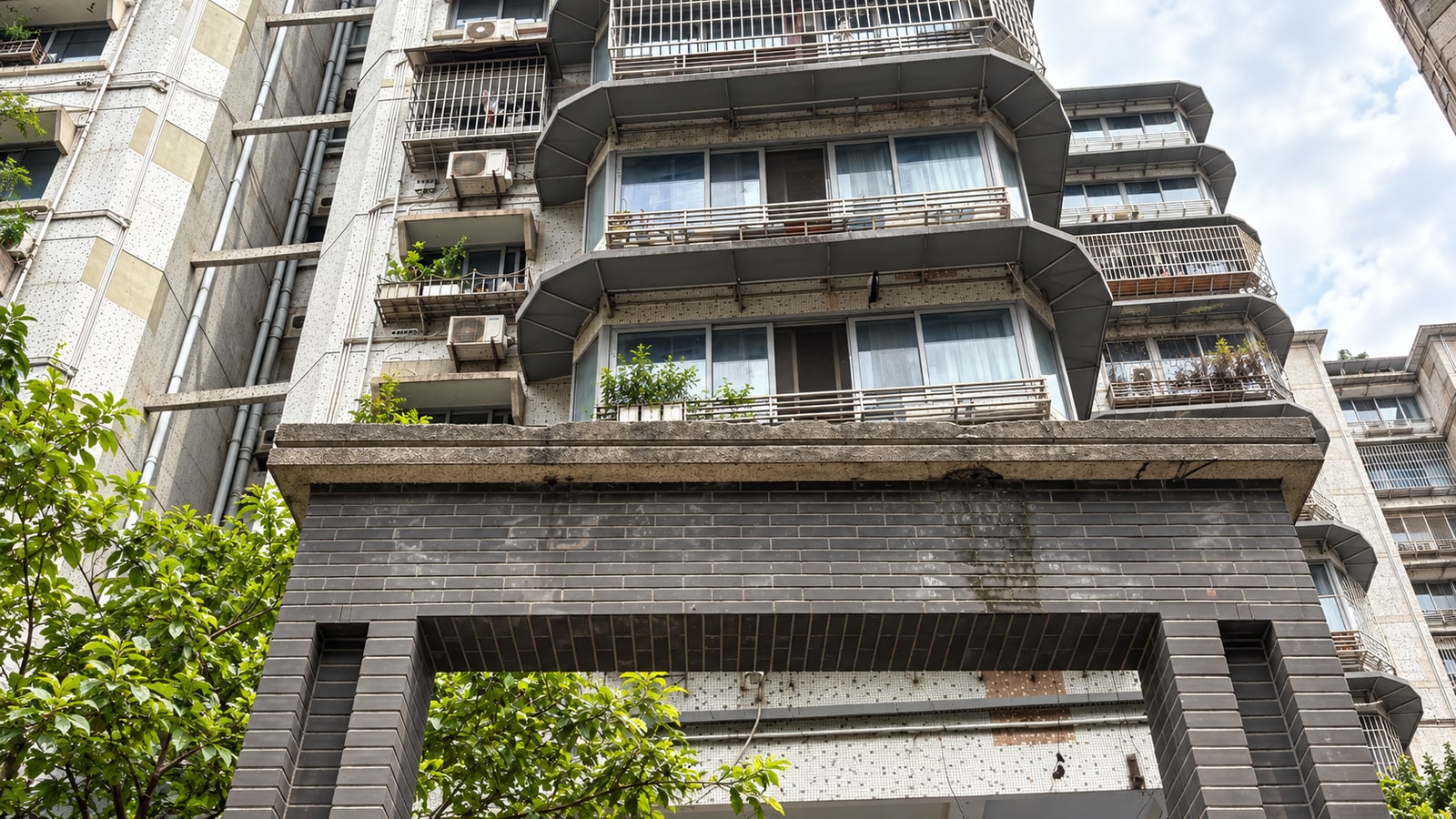
For a Baixiangju walk in Chongqing in 2026, focus on its 3 street-entry levels and respect that people live here. I would make it a short, optional architecture stop, entering shared corridors when permitted that day. Do not arrive expecting a managed attraction, a step-free circuit, or guaranteed access to a cableway photograph.
The useful question is not how to climb every floor. It is how a hillside changes the relationship between a building and the street. Baixiangju makes that visible through apartments, connecting passages and entrances at different heights. A good visit leaves room for residents to carry on with ordinary life, including the right to ask visitors to move on.
Understand the buildings before following a photo pin
Baixiangju is part of the Wanglongmen housing development in Yuzhong. The architectural reference describes connected blocks with different floor counts and 3 entry levels. A number shown on one staircase is not a universal altitude marker for the entire development. This matters when someone shares a photograph labelled simply “floor 15.”
I would resist treating the popular “24 floors, no lift” description as a complete architectural explanation. Sources describe different blocks and count them differently. The point for a visitor is the relationship between slope, street and doorway, rather than settling a tallest-building claim. You do not need to reach a roof to understand that relationship.
Look first from an allowed exterior position. Notice the repeated balconies, the way structures sit against the hill, and where an entrance joins a street. Keep the visit observational: this is a functioning neighbourhood, not a model built to demonstrate an internet nickname. The article's cover is an AI interpretation based on a real exterior reference, so use current signs and maps for navigation.

Choose an arrival level, not just a destination
An August 2026 first-person guide from Meet Chongqing describes Xiaoshizi on Lines 1 and 6, with Exit 7 as its approach. Treat that as a starting lead to verify in your map app, not a promise that every exit or passage will be available when you arrive. Save 白象居 as the destination and check which street the route reaches.
The widely reported entry levels are 1, 10 and 15. These are useful for understanding the site's layered arrangement, but the full route still depends on the doorway and block. I would ask which level I was on before heading down several flights. A short-looking line on a flat screen can hide the part of the visit that takes the most effort.
If you arrive from a riverside attraction, inspect the height of your destination before automatically following the river road. The recent guide warns that its riverside approach reaches a low level and requires climbing. It also describes an elevator connection near Huguang Guild Hall, but we have not independently verified that facility's current operation. Do not make it essential to a wheelchair or stroller plan without checking.
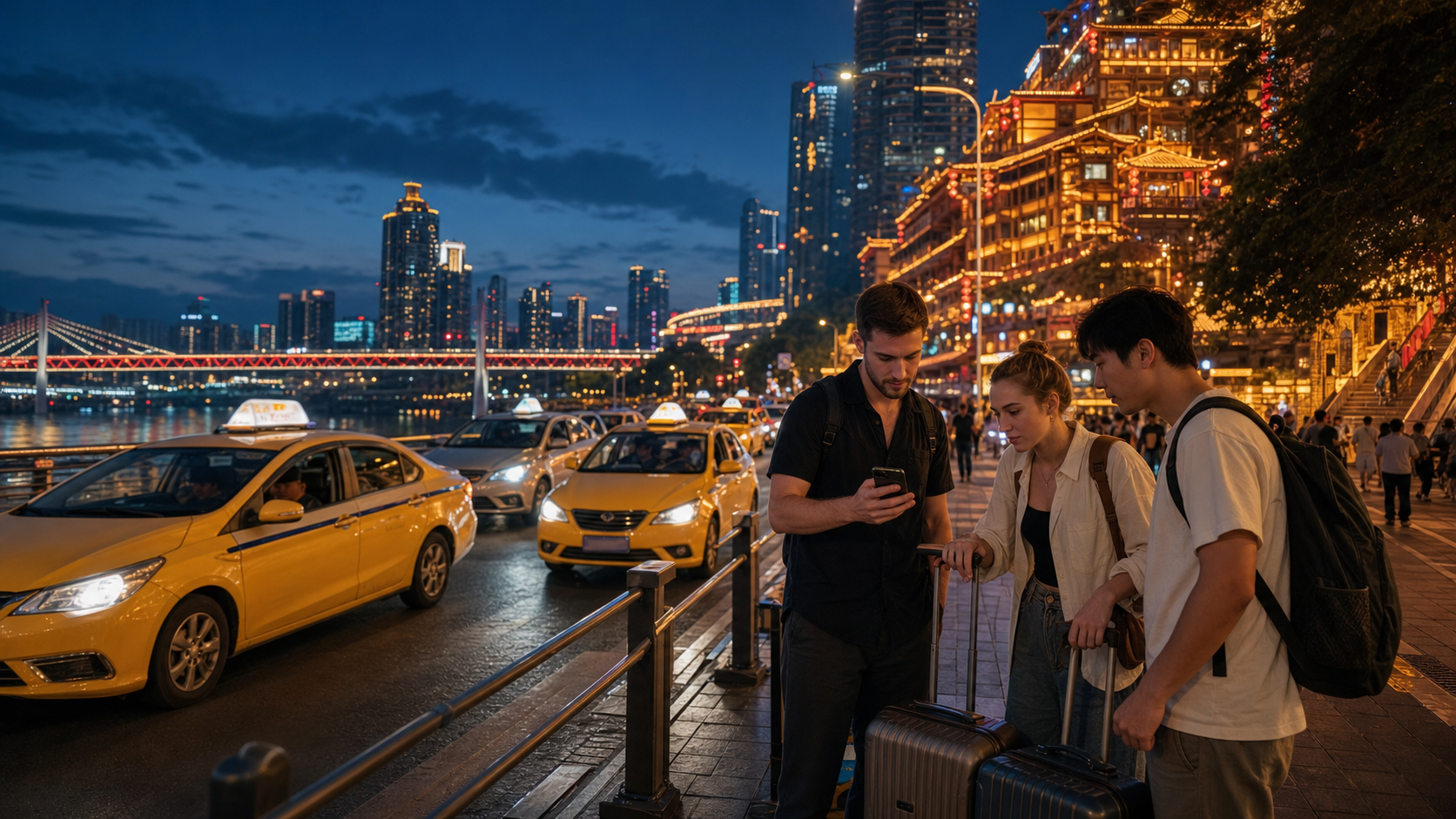
Use 请问,白象居入口在哪一层? — “On which level is the Baixiangju entrance?” When arranging a pickup, send a road-accessible pin after you have reached the street. A driver cannot identify your floor from the building name alone. Our taxi and Didi guide explains how to make pickup details clearer.
Check access before entering residential passages
A CQNEWS report dated 31 May 2023 documents residents temporarily restricting visitors and later removing the sign. It describes congestion interfering with residents returning home. This is evidence of why access needs care, not proof that tourists may enter every corridor in 2026.
I would make 3 checks at the actual entrance: read the sign, look for a managed visitor flow, and ask when unclear. 今天可以参观吗? means “May visitors enter today?” If a resident volunteer or staff member says no, leave without trying another residential door. An old social post, a map pin or a tour listing cannot override a current restriction.
Keep voices low and do not gather outside apartment doors. Step aside for residents carrying shopping, delivery workers and anyone moving through the corridor. If your group needs to discuss a route, do it in a suitable open area rather than across a passage. Do not turn a pause for a photograph into a queue that blocks someone's way home.
Commercial photography services may operate nearby, but paying for photographs does not give your party control of a shared walkway. Agree on what you are purchasing before paying, and decline any proposed shot that depends on trespassing, obstructing access or standing somewhere unsafe. These choices keep the visit manageable even if the popular viewpoint is busy.

Choose a short visit and an easy way out
A traveller’s trip report describes a 30-minute Baixiangju visit involving stairs and residential passages. I would use around 30 minutes as an initial allowance for a focused look, excluding the journey there. That is an editorial planning suggestion, not a timed attraction circuit or a queue estimate.
Agree on your exit before exploring. If you intend to return to the same street, remember that every descent may need to be climbed again. If you prefer to leave at a lower level, check where that exit actually emerges and whether the onward pavement suits your group. Do not assume that “downhill” automatically means easier for knees, balance or a stroller.
For children, keep the observation task simple: compare two entrance heights or notice how a corridor links buildings. Keep them within reach near stairs and do not allow games on railings. For older travellers, assess the first section honestly and turn back before fatigue makes the return difficult. A companion can still enjoy an exterior view without completing the same route as everyone else.
We have not established a continuous step-free visitor route. If you need one, arrange a confirmed alternative or skip the interior passages. The value of the stop should not depend on improvising a way through private areas. Small bags, suitable shoes and a clear return point help more than a long list of photo coordinates.
Take a photograph without blocking the building
The local report describes views that can include the Yangtze River Cableway and Dongshuimen Bridge. I would approach those as possible compositions rather than guaranteed results. Access, weather, visibility and cableway operation can change what you see; the residential visit does not include a transport timetable.
Use a 3-part camera check: stand in an allowed place, leave the route clear, and look for people or private interiors in the frame. Avoid photographing into homes or turning residents into the subject without consent. Do not lean beyond barriers, climb onto structures, stop in a vehicle lane, or hold a tripod across a corridor to reproduce a viral angle.
If several people want the same view, take a brief turn and move on. Do not promise a cable-car arrival time to your group or wait so long that you become the obstruction. There is no need to search for a restricted rooftop when the interesting architectural story is already visible from ordinary, permitted viewpoints.
In rain, choose grip and visibility over the photograph. Keep an umbrella from blocking a narrow route; pause somewhere appropriate to check the screen. If the surface, crowd or traffic feels uncomfortable, put the phone away and leave. Read our heat and stairs guide for broader pacing advice across a Chongqing day.

Build the rest of the outing around your energy
I would attach 1 substantial attraction to Baixiangju, then reassess. The August 2026 neighbourhood account discusses Huguang Guild Hall and the Chaotianmen area as possible pairings. That gives a geographical starting point; it does not establish a continuous flat walk or a guaranteed elevator connection between them.
If architecture and cultural interpretation interest you, consider the Huguang Guild Hall guide. It offers a different kind of visit from a residential passage. Check its admission and available areas separately. If you would rather have shopping and an urban river-end walk, use our Jiefangbei–Raffles City guide to choose the next destination.
For a meal or seated break, select a real venue and check its entrance, menu and total price before committing. Do not assume a souvenir stall offers seating or that a nearby restaurant meets your dietary requirements. A vegetarian description does not establish halal certification; anyone with strict ingredient requirements should confirm the entire dish and preparation with the business.
Keep a fallback that does not depend on entering Baixiangju. If visitor access is restricted, move directly to your other stop or enjoy an allowed exterior view and leave. The time spent getting here does not create a reason to disregard the residents' wishes. A flexible plan protects the rest of the day from becoming a search for a photograph you cannot responsibly take.

About This Guide
We reviewed 4 source domains on 14 September 2026, including local reporting, an architectural reference and traveller accounts. No new on-site inspection or interview is claimed. The 2023 restriction report is historical evidence; current access remains an on-site check. The cover is a reference-based AI illustration, and the 4 planning cards are original rather than navigational maps.
Frequently Asked Questions
Q: Is Baixiangju a tourist attraction with fixed opening hours? A: Baixiangju is a residential complex. We have not verified fixed visitor hours for 2026; follow current signs and instructions at the entrance.
Q: Do I need to climb all 24 floors? A: No such climb is necessary for the visit described here. The useful feature is the relationship between the reported entry levels of 1, 10 and 15, with different blocks having different floor counts.
Q: Which metro station is used for Baixiangju? A: An August 2026 visitor guide uses Xiaoshizi on Lines 1 and 6 and Exit 7. Confirm the current pedestrian approach and destination level in your map app.
Q: Can I bring a stroller or use a wheelchair? A: We have not verified a continuous step-free route through Baixiangju. Check the exact access needed in advance, or choose an exterior-only visit or another stop.
Q: Can I photograph the cableway from Baixiangju? A: Published accounts describe cableway views from parts of the complex. Current permission, crowd conditions, visibility and cableway operation determine whether the photograph is possible.
Traveler comments
Share a recent experience or ask a practical question about this guide.