

AI illustration. Tree-shaded low-rise storefronts inspired by Beicang. Approximate illustration based on a historical reference photograph, not a current photo. Viewpoint, entrances and access are not guaranteed. Original AI illustration for this guide. Historical photo reference only, not republished: Li Yuheng / Visual Chongqing; Chongqing government mirror
Sources checked: 24 October 2026. This is a researched planning guide, not a report of a new on-site visit.
Choose This Route for Small Shops and Time to Wander
Allow around three to four hours for Beicang, the neighboring Beicangli and Taping lanes, and one unhurried café or meal. This is our suggested allowance, not a measured walking time. It suits visitors who enjoy architecture, independent businesses and taking photographs between stops. You can also keep it to a shorter neighborhood walk without buying anything.
The useful distinction is between 北仓文创街区, the Beicang Cultural and Creative Block, and 北仓里, Beicangli, the renewed residential area associated with 塔坪, Taping. Visit both to see how reused working buildings connect with an inhabited community. Our Guanyinqiao shopping guide covers the larger plazas and malls; this afternoon spends more time in the smaller streets beyond them.
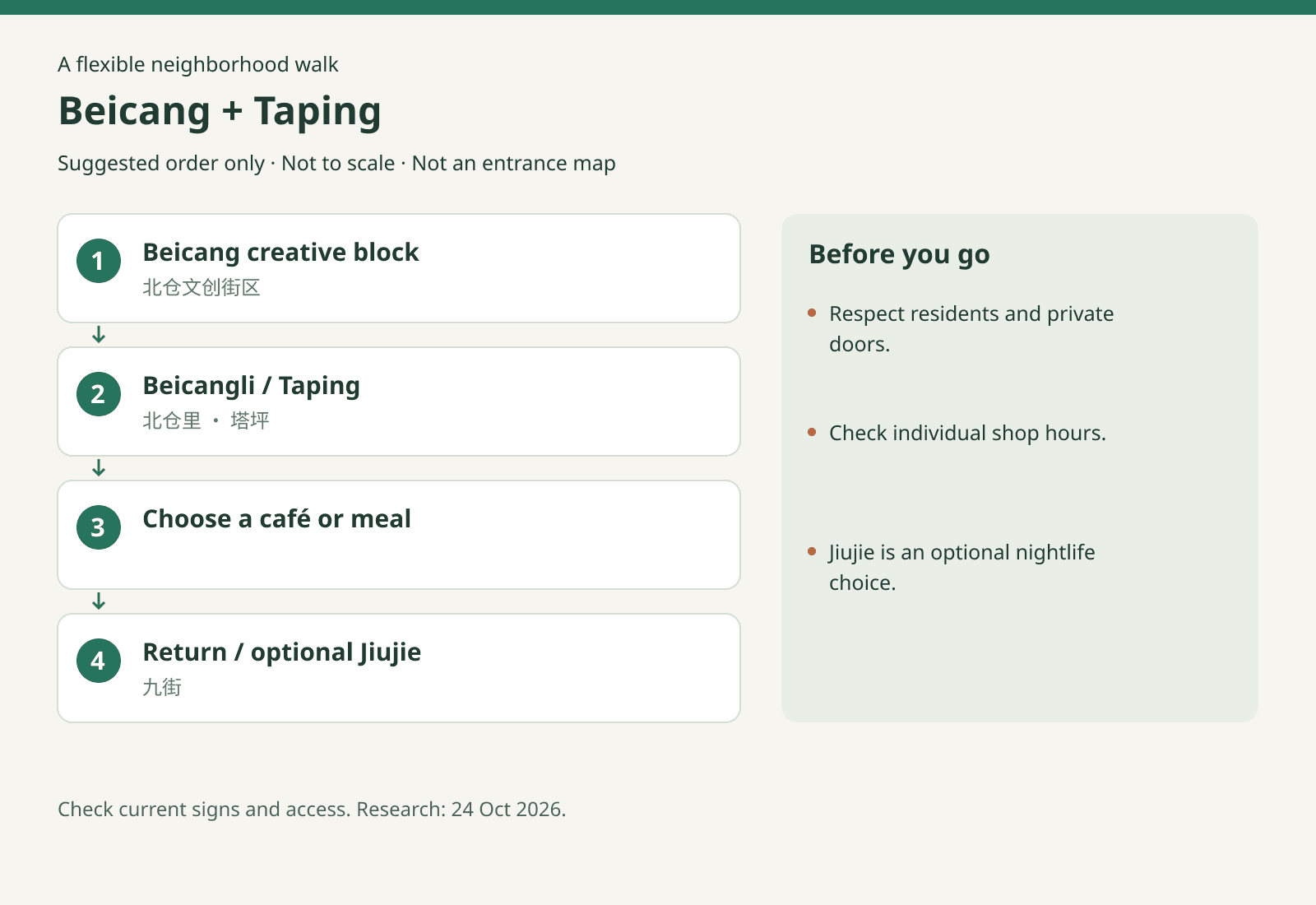
Suggested order only · Not to scale · Not an entrance map. Respect residents and private doors. Check individual shop hours. Jiujie is an optional nightlife choice. Original editorial sequence diagram created for this guide.
Arrive with Two Chinese Place Names Saved
Save 观音桥站, Guanyinqiao Station, and 北仓文创街区 before leaving your hotel. Lines 3 and 9 serve the district. A Chongqing Rail Transit announcement, published on 25 December 2024, records the opening of Line 9’s exit 6A the following day. A May 2026 neighborhood report also describes the improved exit connection.
Use 6A as a planning lead if you arrive on Line 9, then follow current station signs and check the walking route to your chosen first stop. We do not promise that a particular entrance is open on your travel date, or a quick paid-area connection between the two lines. Choose the journey that works from your hotel rather than changing lines solely for a photographed exit.
Older descriptions call the area Jiangbei; newer sources may use Liangjiang New Area. The Chinese place name and actual map pin are more useful than resolving that difference while standing outside the station.
Start with Beicang’s Reused Buildings
Begin with a slow look around the creative block before choosing somewhere to sit. Notice the relationship between the older building fabric and newer uses: brickwork, doors, shopfronts and public space are more revealing together than any single photo spot.
iChongqing’s December 2025 report explains how former textile warehouses were retained and adapted for cultural venues and small businesses. Its interviews describe a mix of public cultural space and commercial activity. That history gives the walk a focus without requiring a particular exhibition to be open.
Choose one place that interests you, perhaps a bookshop, gallery or craft business, and check the entrance notice. If there is an exhibition or workshop, confirm its current dates, charge and participation arrangements. Seeing a workshop in an old article does not establish a drop-in class today. Ask before photographing art or merchandise inside a shop.

AI illustration. An awning, old brick and an empty café chair inspired by Beicang. Approximate illustration based on a historical reference photograph, not a current photo. Viewpoint, entrances and access are not guaranteed. Original AI illustration for this guide. Historical photo reference only, not republished: Li Yuheng / Visual Chongqing; Chongqing government mirror
Continue into Beicangli and Taping
Next, search 北仓里 or 塔坪 and follow the current public pedestrian connection. The May 2026 report explicitly links Taping, Beicang and the surrounding commercial area. Our sequence selects a compact neighborhood visit from that wider geography; it is not a surveyed, turn-by-turn trail.
Here, leave room for ordinary street life. The project designer’s Beicangli account describes textile-related motifs used in the renewal, while the residential buildings remain central to the place. Look for how small businesses fit into the streets rather than treating every doorway as an attraction.
Stay on public paths. A photogenic stairwell, open residential door or courtyard beyond a gate is not an invitation to enter. Avoid aiming a camera into homes, and ask before making a resident the subject of a close photograph. Keep entrances and the narrowest parts of paths clear while choosing your next stop.
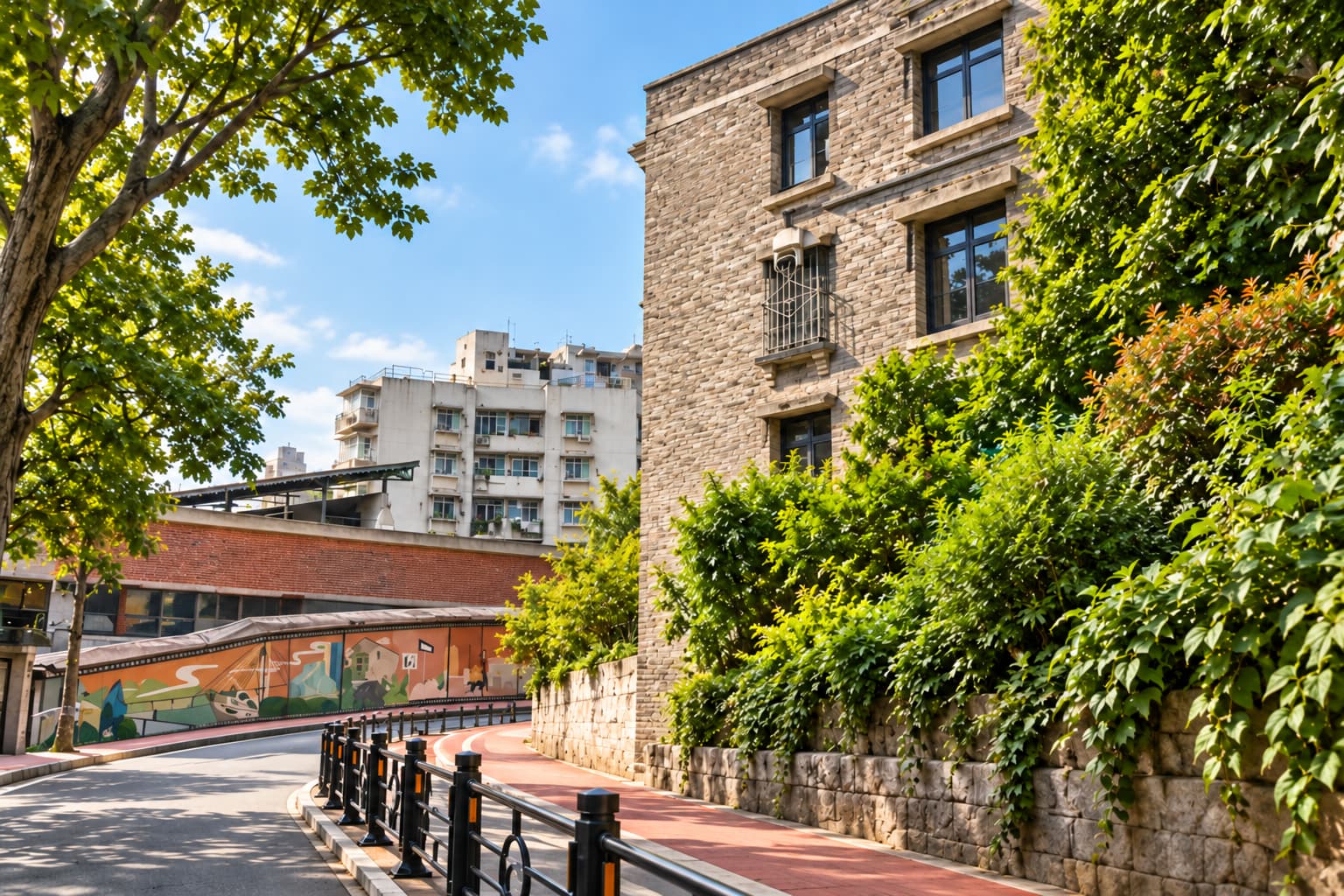
AI illustration. A masonry façade and curving street inspired by Beicangli. Approximate illustration based on a historical reference photograph, not a current photo. Viewpoint, entrances and access are not guaranteed. Original AI illustration for this guide. Historical photo reference only, not republished: Yang Xinyu / Chongqing Morning Post; CQNews mirror
Make One Proper Break, Then Choose Your Finish
For the break, compare a few current menus rather than following a fixed café ranking. Check seating, prices and any minimum order before settling in. Ask about ingredients if you have dietary requirements, and save the shop’s Chinese name if friends will join you later.
Do not build the afternoon around an assumed all-night library. Older descriptions use a “24-hour library” label, but that is not sufficient evidence of current access. Community streets, cultural venues, cafés and shops have separate opening arrangements. A publicly accessible lane also does not make every indoor seat or exhibition free.
After the break, choose one ending:
- Return toward Guanyinqiao if you want a straightforward finish or an indoor meal.
- Stay in the neighborhood for dinner if you have found a suitable open venue.
- Add 九街, Ninth Street, only if nightlife is part of your plan. Check the actual venue, any admission conditions and your return transport first.
There is no need to add a bar simply to complete the route.

AI illustration. A mint-and-coral residential courtyard inspired by Taping. Approximate illustration based on a historical reference photograph, not a current photo. Viewpoint, entrances and access are not guaranteed. Original AI illustration for this guide. Historical photo reference only, not republished: Yang Xinyu / Chongqing Morning Post; CQNews mirror
Keep the Afternoon Flexible
Rain is a reason to shorten the outdoor section, not evidence that every connection has shelter. Comfortable shoes remain useful in an urban neighborhood with slopes and changes of level. For a wheelchair or stroller, verify each required entrance and connection rather than assuming the renewal created a continuous step-free route.
Before an evening extension, check the last service for your direction and any interchange, or save a road-accessible pickup point. Avoid stepping into traffic for a façade photograph. If one venue is closed, the route can still work as a neighborhood walk and a meal; the most useful plan leaves you free to stop.
Choose One of Three Ways to Spend the Afternoon
Our first version is for readers interested mainly in buildings and streets: explore the creative block, continue into the public Beicangli and Taping lanes, then stop for a drink. Skip indoor venues that do not interest you. This keeps the residential section central rather than treating it as an extra photo beside a shopping trip.
The second version is for books, craft or design. Start with a venue whose current offering you have checked, then let the neighborhood walk fill the space before or after that visit. If the activity needs a reservation, plan around the confirmed booking, not an old promotional timetable. Do not assume that every creative business offers a visitor workshop.
The third version is for friends meeting for dinner. Agree on a named public meeting point and explore before the meal. Keep Ninth Street optional, particularly if some people prefer an earlier finish. Our metro guide can help with the wider journey; this neighborhood sequence does not establish current last-train times.
Use Two Questions to Look Beyond the Shopfronts
Ask what has been kept, then ask whom it serves. A brick wall or textile-inspired detail can explain the area's past, but a resident entrance, repair business or community room also says something about its present. A July 2025 People's Daily report describes community partnerships in Taping, linking renewed shared spaces with residents and nearby businesses. It supports reading the neighborhood as a working community, not simply an outdoor retail set.
We suggest looking for that relationship without making residents part of a performance. Choose wider street views when people have not agreed to close photographs. Do not move belongings, lean on a shop display or ask someone to repeat an ordinary task for your camera. When a path is busy, finish the photograph and move on rather than waiting in the doorway for a completely empty frame.
Set One Spending Limit Before Choosing a Café
Separate the walk from the purchases. You can enjoy the public streets without committing to a sequence of paid stops, then choose one café, meal or small purchase that genuinely interests you. Compare the displayed price and ask what is included before ordering. If a venue has a minimum spend or limited seating, decide whether that arrangement suits the group before sitting down.
Save “请问可以在这里坐吗?” to ask whether you may sit here, and “请问可以拍照吗?” to ask whether photographs are allowed. Neither question establishes a price or grants access beyond the permission actually given. For preparing payment methods before the trip, use our Chongqing payment guide, then confirm what the particular merchant accepts.
Make Two Decisions When the Weather Changes
First decide whether the outdoor walk still feels comfortable. Second decide whether the next indoor stop is worth visiting in its own right. A café can be a pleasant break, but it is not evidence of a sheltered connection through the whole neighborhood. We would shorten the route rather than turn several uncertain entrances into a wet-weather obstacle course.
Carry only what you are comfortable taking through small shops and changing street levels. If someone needs to stop, agree on a reachable public meeting place instead of sending them alone to an unverified courtyard or upper floor. Our rainy-day planning guide offers alternatives when an outdoor neighborhood walk no longer fits the day.
Frequently Asked Questions
Q: Is Beicang the same place as Beicangli or Taping? A: They are connected but not interchangeable labels. Use 北仓文创街区 for the creative block, then 北仓里 or 塔坪 for the neighboring residential setting. Saving both names helps you plan the two parts deliberately.
Q: Must I book something to follow this route? A: The suggested public-street walk is not built around a reservation. An individual exhibition, workshop, restaurant or other indoor venue may have its own admission or booking conditions, which need a separate check.
Q: Can I rely on the library being open all night? A: No. An older “24-hour” description is not current operational confirmation. Check the venue itself before making it your late-night destination, and keep another finish available.
Q: Is this a reliable step-free route? A: We have not verified continuous step-free access. Check the required station exit, street connection and venue entrance individually. A renewed block does not guarantee that every surrounding lane meets your access needs.
Q: Do I need to continue to Ninth Street? A: No. The route is complete after Beicang, the neighboring public lanes and a break. Ninth Street is a separate optional extension, not a required final stop.
About This Guide
We checked the cited sources on 24 October 2026 and combined their historical, transport and community reporting into an original visitor plan. The three-to-four-hour allowance and suggested sequence are editorial choices, not an on-site timing survey. Current signs, venue notices and residents' privacy take precedence over this outline.


Traveler comments
Share a recent experience or ask a practical question about this guide.