
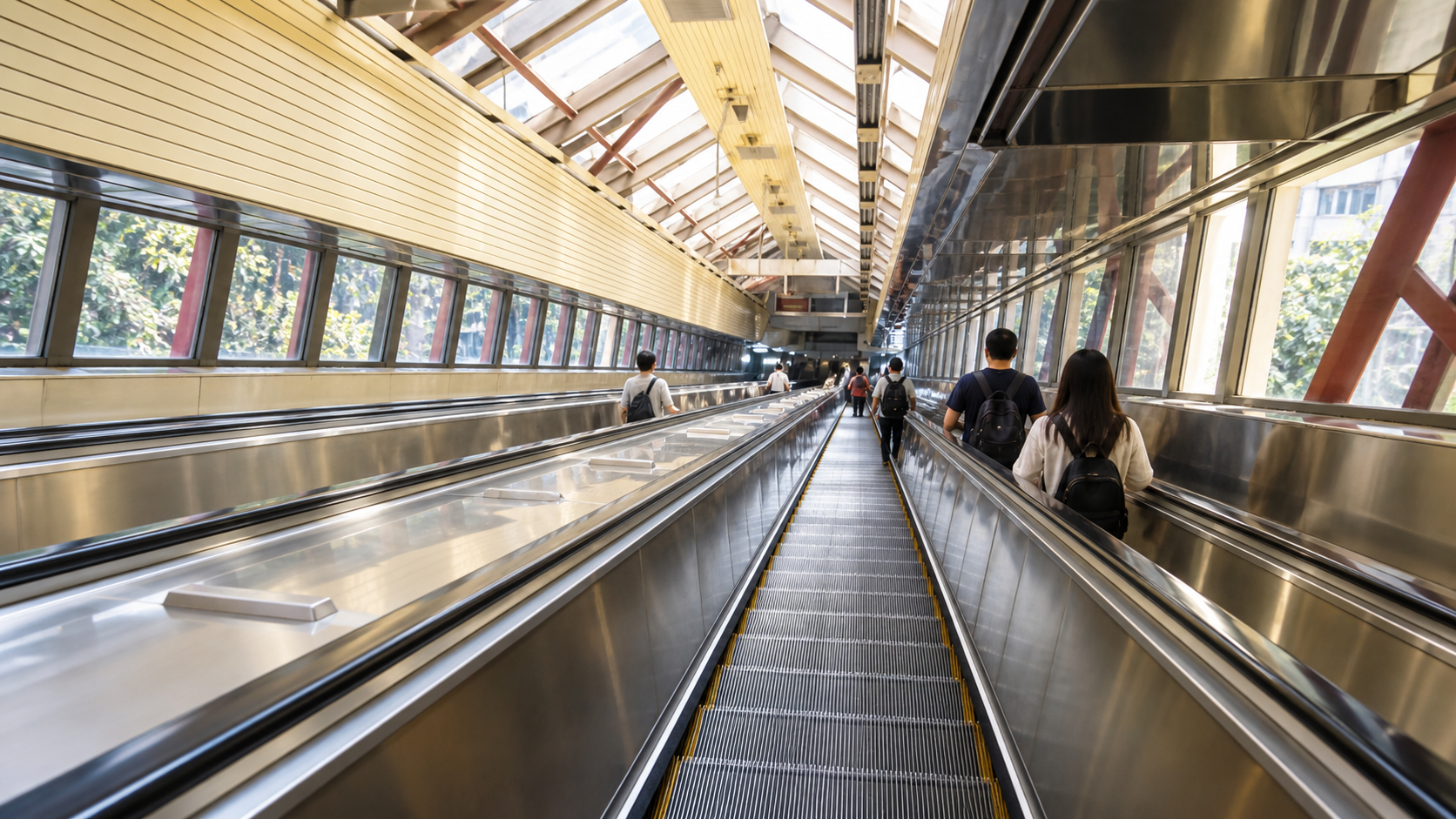
For Chongqing's Crown Escalator in 2026, I would allow 30–45 minutes, begin at Lianglukou, and treat the ride as working city transport rather than a thrill attraction. The indoor escalator runs 112 metres and takes about 2 minutes 30 seconds. Confirm its current hours and fare before making a special journey.
This guide is based on sources reviewed on September 9, 2026, not a new editorial site inspection. The suggested visit length includes finding the entrance, buying a ride and deciding how to leave the lower level. The structure itself is quick; navigation and your onward plan take longer.
The cover and riding photograph are AI illustrations generated from an official real-photo reference. They preserve the indoor escalator's visual identity but do not prove today's entrance, crowd, signs or operating condition.
What the Crown Escalator Actually Is
The Crown Escalator, or 皇冠大扶梯, is a steep indoor public escalator linking upper Lianglukou with lower Caiyuanba. It is 112 m long, rises roughly 52.7 m and sits at a 30-degree incline. The Chongqing Municipal Civil Affairs Bureau describes three escalator channels and a ride of about 2 minutes 30 seconds.
I would visit for one clear reason: it makes Chongqing's vertical city form tangible. You enter near one urban level and emerge near another, without a scenic river panorama or theme-park set. Metal handrails, windows, structural panels and commuters are the experience. That functional character is what distinguishes it from the Yangtze River Cableway.
Expectations matter. A 2024 Tripadvisor reviewer found the ride far less dramatic than social-media clips suggested because it is enclosed and finished within a few minutes. That criticism is useful. If your schedule is tight and you want a sweeping view, allocate the time elsewhere. If you are curious about everyday infrastructure adapted to a mountain city, the short stop makes sense.
Start at Lianglukou for the Simpler Approach
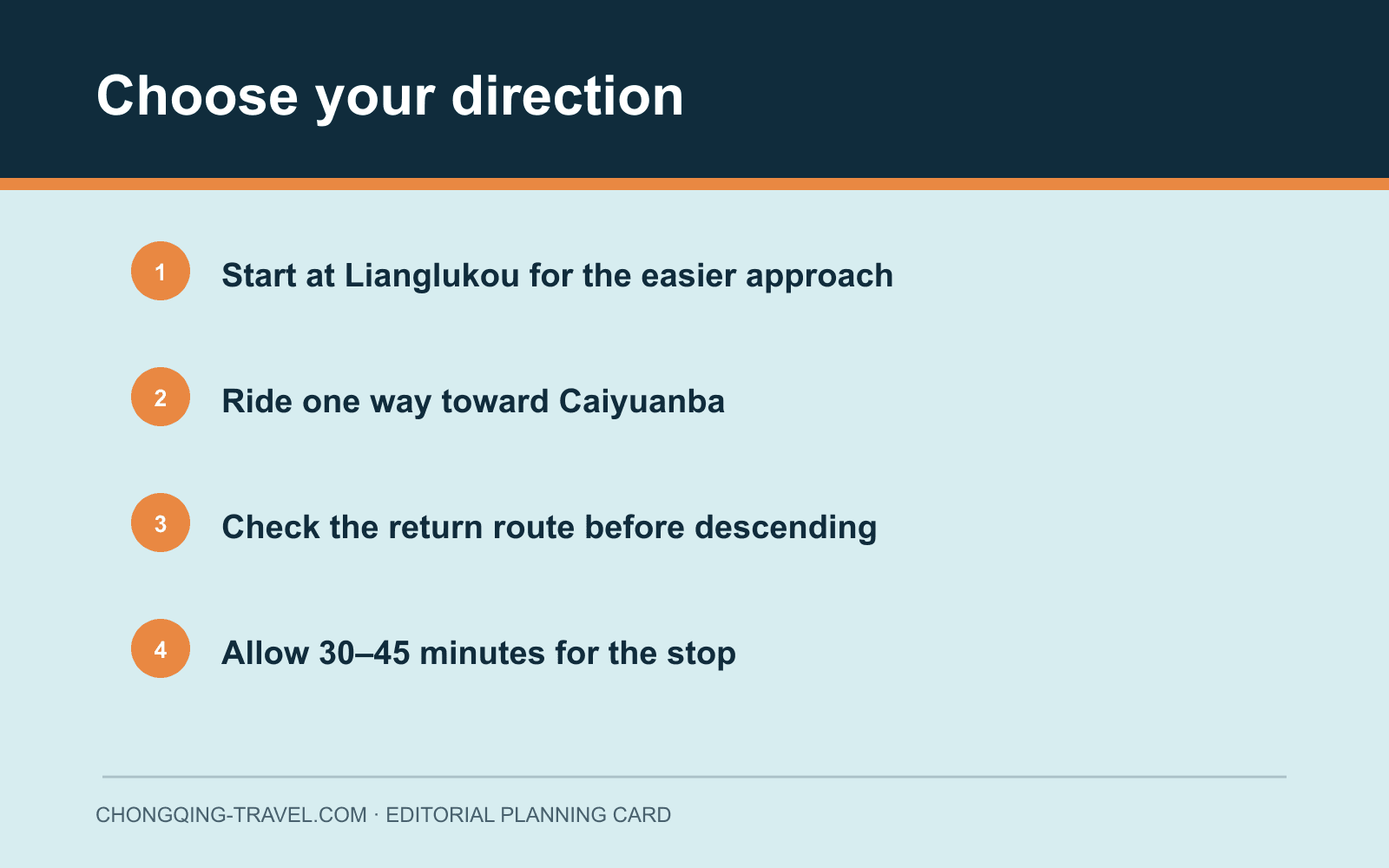
For a first attempt, I would begin at Lianglukou station and search for the Chinese name 皇冠大扶梯. The 2024 municipal rail-attraction guide lists Lianglukou on Line 3 as the transit approach. Lianglukou also serves Line 1, so it is easy to integrate with a central Chongqing day.
Do not rely on an old exit number copied from a blog. Station circulation, nearby construction and pedestrian routing can change. Once inside Lianglukou, follow current Chinese signs, show staff the saved place name if needed, and check your map before passing through any exit gate. The goal is to locate the upper end without adding an unnecessary outdoor descent.
The lower Caiyuanba side can be less intuitive. A December 2023 Tripadvisor traveler report described that entrance as harder to find. Surrounding redevelopment means a saved photograph may age quickly. If you start below, verify the pedestrian approach in live navigation and ask locally rather than walking toward a landmark through a closed work zone.
Ride One Way, Then Decide How to Return
The escalator was built as transport between two levels, so a one-way ride changes your position. The China Daily account says it links Lianglukou with Caiyuanba and quotes a local resident who used it to avoid a bus journey of at least 30 minutes. That is a reminder to plan the lower exit as a real destination, not as the end of a video clip.
Before stepping on, choose among three practical outcomes: ride down and return the same way, continue from Caiyuanba by road transport, or make the lower area part of a wider route. I would keep a live map open and avoid assuming that the nearest visible road is the easiest pickup point. Chongqing's stacked roads can put a vehicle route above or below your pedestrian level.
Allow 30–45 minutes for the complete stop even though the moving ride lasts only 2 minutes 30 seconds. That buffer is our editorial planning allowance for wayfinding, a possible queue, ticketing and changing course. It is not a published operator estimate. Add more time if you need a lift route, are traveling with children, or intend to ride both directions.
Current Fare and Hours Need Separate Checks
The most recent official price we found is CNY 2 per single ride, published in the Chongqing government's August 2024 rail-attraction guide. Treat that as dated context, not a confirmed 2026 gate price. I would carry a small cash backup and ask what payment methods are accepted before joining the line; our research did not verify foreign-wallet acceptance at the escalator.
We did not find a sufficiently current official standard-hours page to publish a fixed daily timetable. Older government notices describe holiday extensions, while traveler pages warn that the escalator may close earlier than major night attractions. Confirm the same-day schedule through your map listing, accommodation desk or the operator information displayed locally.
This distinction prevents a common planning mistake: the fare and the operating hours are separate facts with different source dates. A low ticket price does not mean the facility runs late. If the live schedule cannot be confirmed, place the ride in daylight and keep another route between Lianglukou and Caiyuanba.
Hold the Rail and Save Photography for the Landings
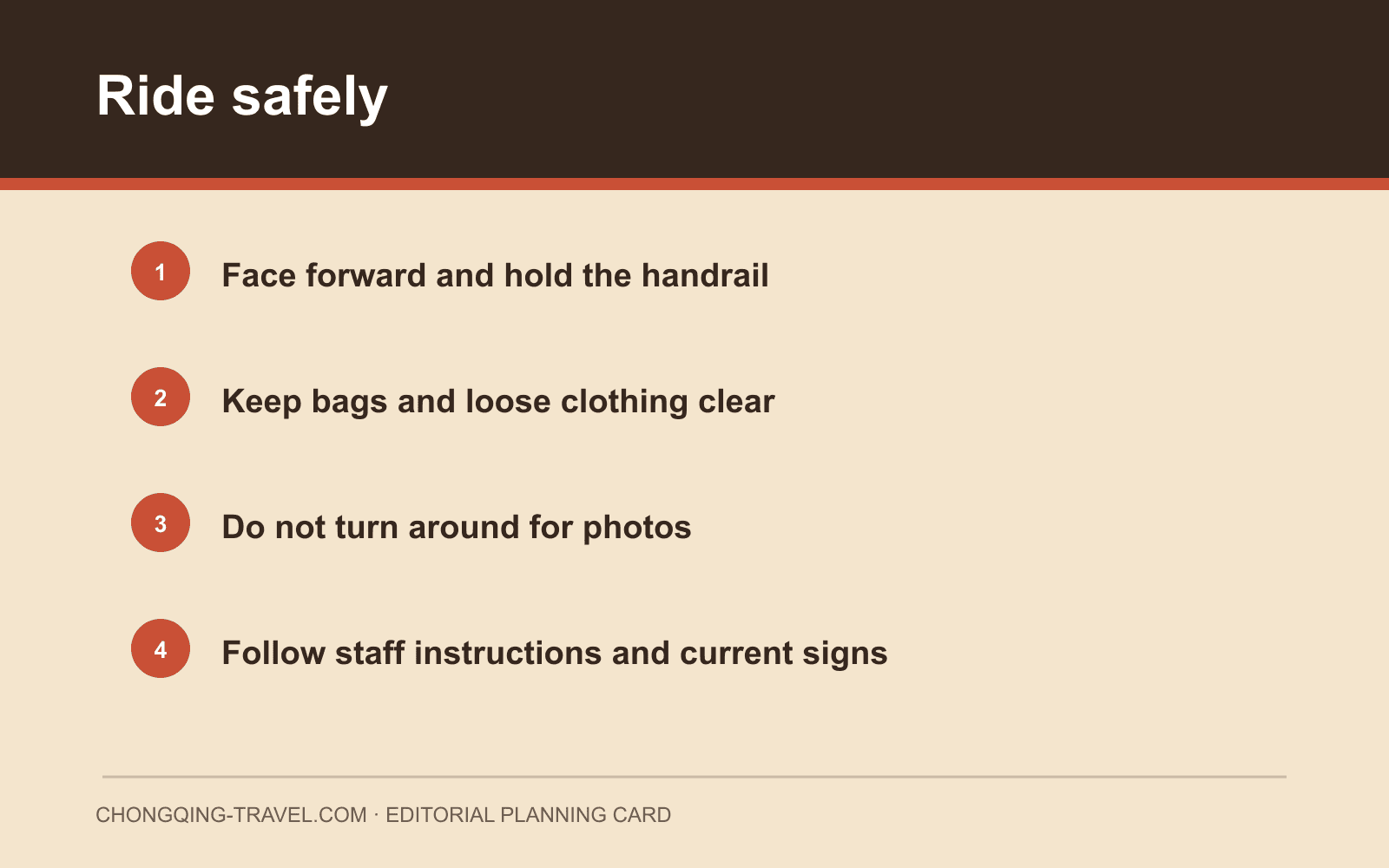
At a 30-degree incline and a stated speed of 0.75 m per second, the ride feels steeper when you look along its full length. I would face forward, hold the handrail, keep loose clothing and bags away from the step edge, and follow staff instructions. A dated municipal visitor notice specifically warned riders not to turn around, lean on side panels or walk casually during the ride.
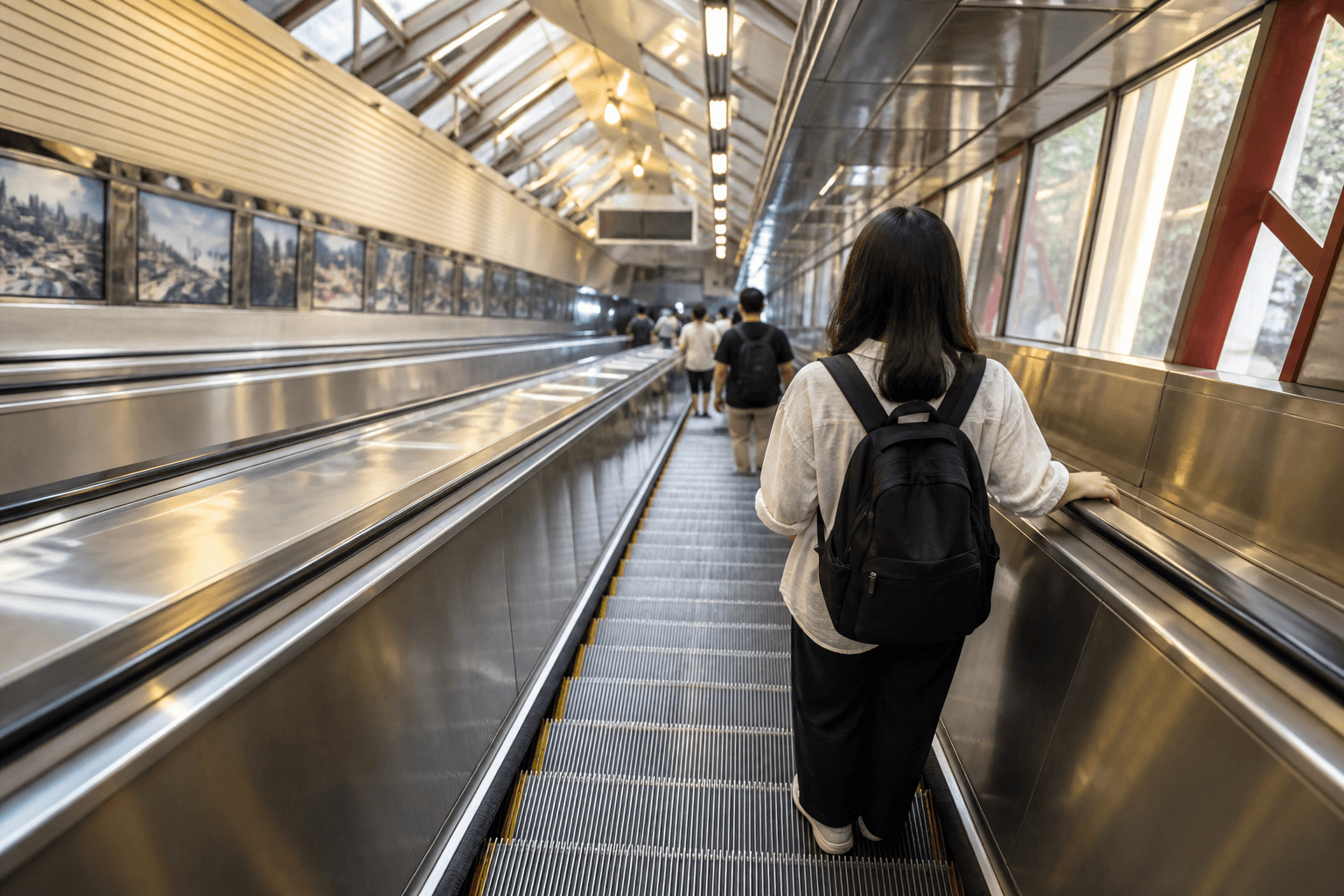
Do not compose a backward-facing video while moving. The long perspective is visually tempting, but your attention belongs on balance and the landing ahead. Take an establishing photograph before boarding or after leaving the moving steps, where permitted, and keep other passengers out of close identifiable frames unless they agree.
Travelers with vertigo, balance problems or difficulty stepping onto a moving escalator should not treat this as an accessibility shortcut. Ask staff about the current alternative route. We did not verify a continuous step-free path at both ends, and the adjacent fixed stairs are not a substitute for an accessible lift.
The History Explains More Than the Record Label
The current escalator began operating in 1996, but the vertical connection is older. The Civil Affairs Bureau says the Lianglukou cable car was completed in 1953 on the same corridor before being replaced. The municipal historical account records construction of the escalator beginning in 1993 and gives the same 112 m length and 2 minute 30 second journey.
I would focus on that continuity instead of repeating a fragile ranking such as “Asia's second longest.” Newer systems and different definitions can make record labels stale. The durable story is how Chongqing repeatedly engineered a connection between the upper and lower city: first a cable car, then a long escalator, both serving everyday movement as well as becoming part of the city's identity.
Renovations have also changed the visitor experience. The Civil Affairs account says works beginning in 2020 added rest and visitor-service functions before reopening in 2021. Those historical details do not guarantee that every facility is open today, but they explain why the site can feel partly like a transit passage and partly like an attraction.
Pair It with One Nearby Area, Not Five
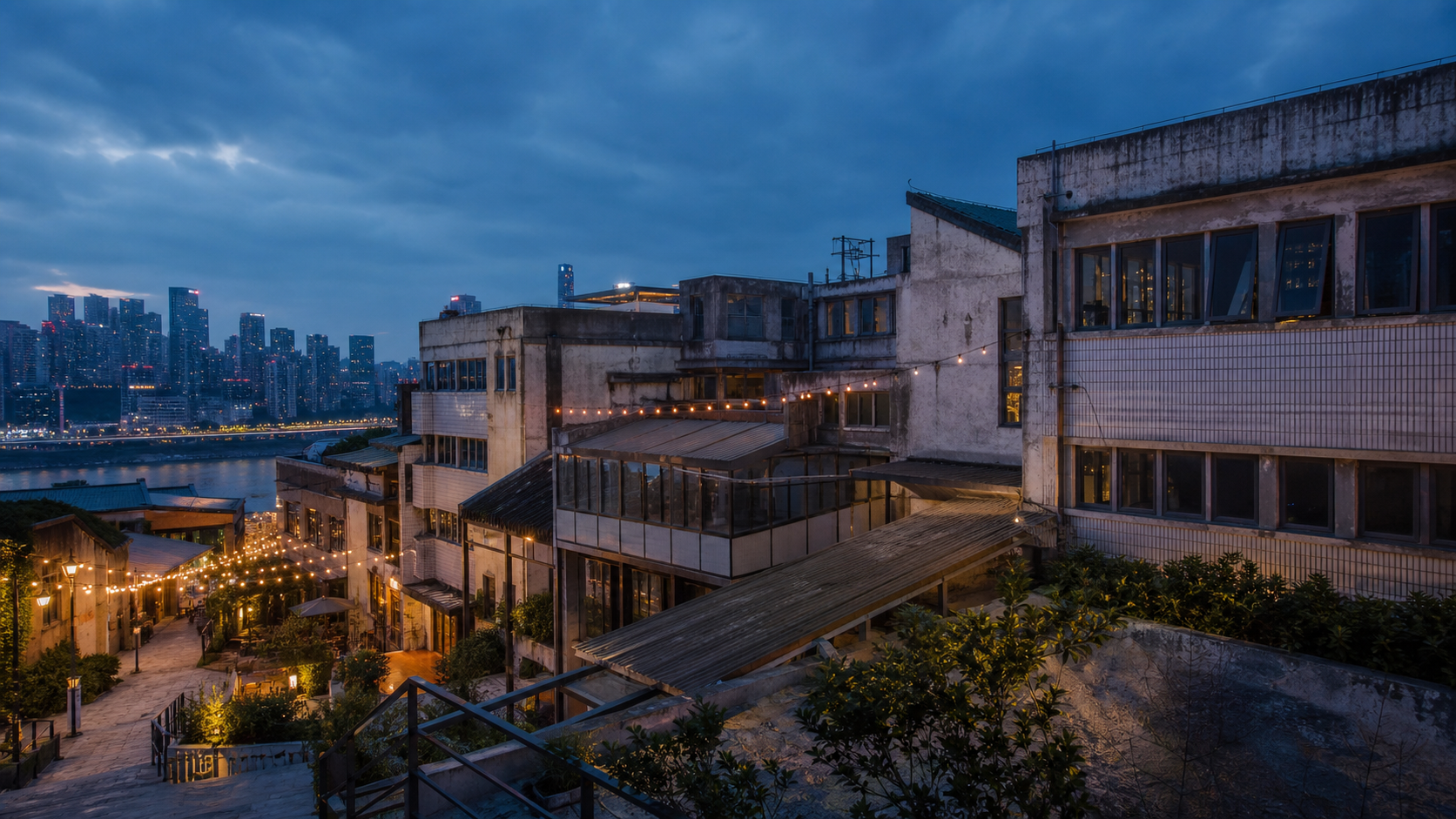
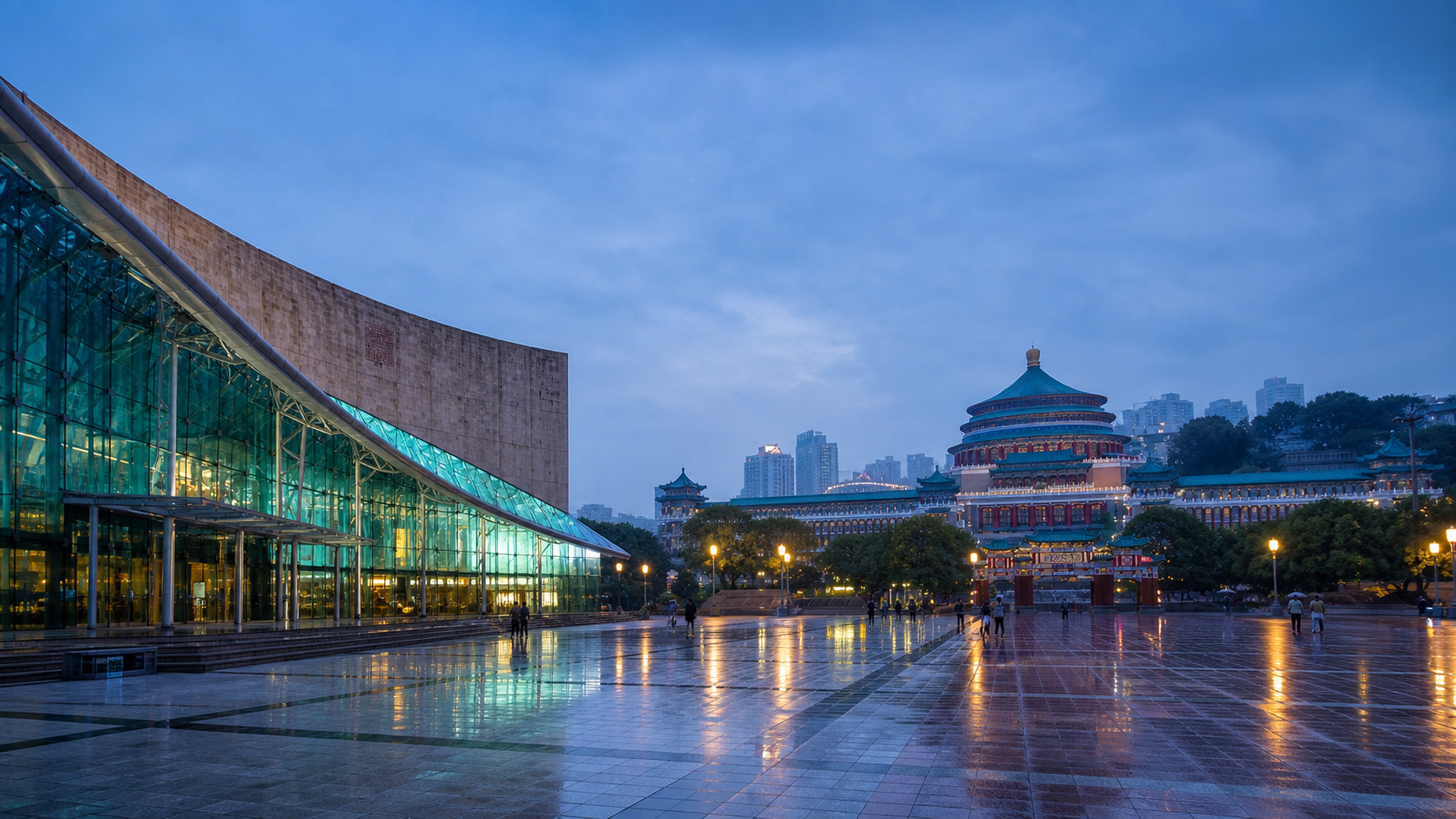
The Crown Escalator works well as a 30–45 minute connector inside a half-day, not as a standalone morning. I would pair it with one area that matches your interests. For history and an indoor break, use our Three Gorges Museum and People's Square guide. For layered terrain and city views, combine it with Eling Park and TESTBED2 or continue toward Liziba.
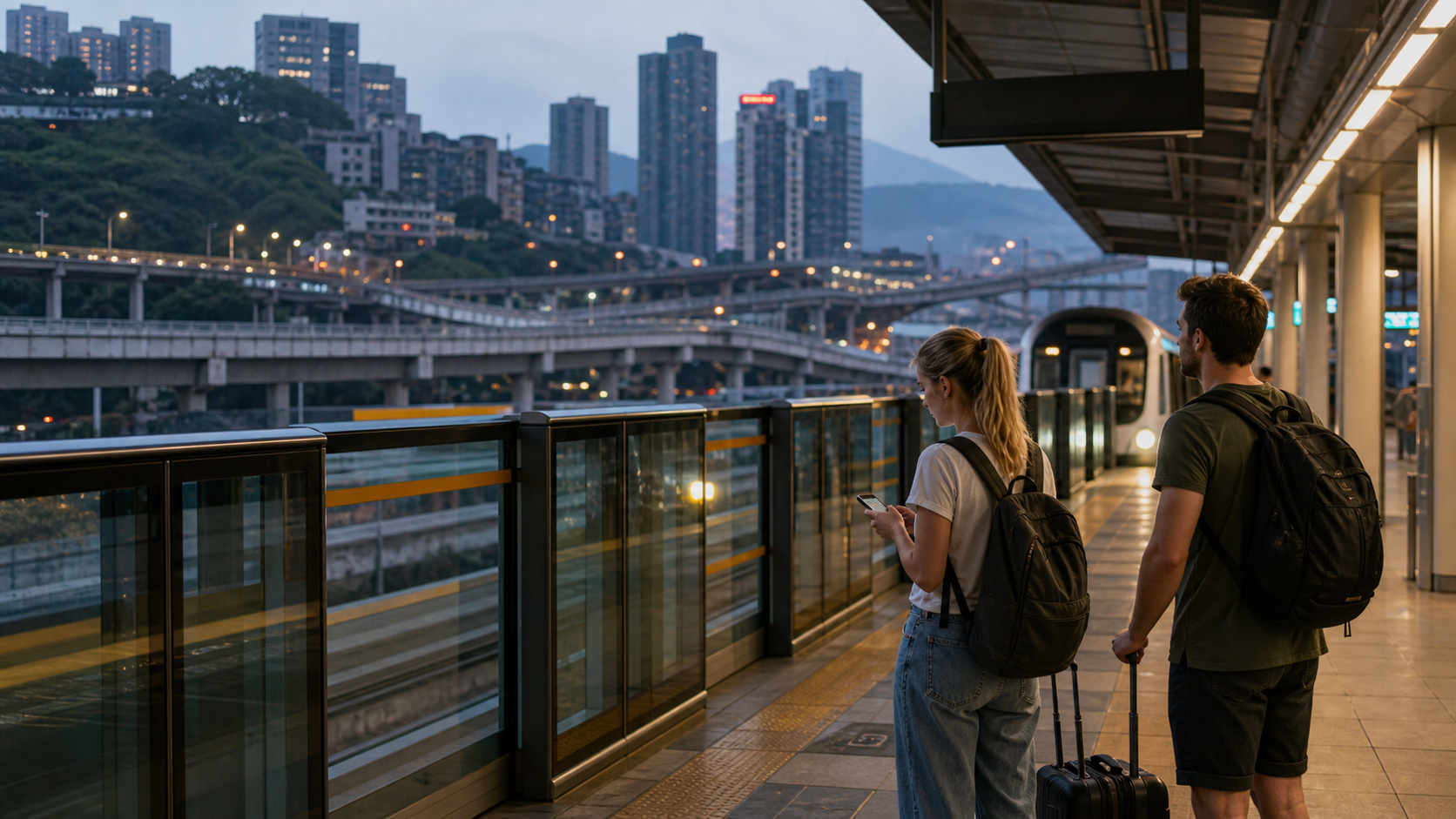
The iChongqing introduction frames the escalator as one example of mountain-city transport alongside the cableway and rail transit. That gives you a sensible theme for a route: choose two or three forms of vertical transport and observe how each handles the terrain. Do not turn that theme into a race across the city.
For families, keep a rest stop between transport attractions. For travelers carrying luggage, visit after storing it rather than using the escalator as a station-transfer shortcut. For anyone sensitive to heat, the enclosure may reduce direct sun but does not guarantee air-conditioned comfort. Check the group after the ride before adding another climb.
About This Guide
Researched on September 9, 2026 from Chongqing municipal sources, China Daily, iChongqing, Tripadvisor and Reddit. Exact structure and history figures come from official or established published accounts; traveler reports inform expectations and wayfinding caution. We claim no recent on-site inspection. The CNY 2 figure is dated to a 2024 government page, while hours, payment, entrances and accessibility require travel-date confirmation.
The two real-scene visuals are reference-first AI illustrations based on an official photograph kept in the internal research archive. The three planning cards are original editorial graphics localized into all seven site languages. No third-party traveler photograph is republished.
Frequently Asked Questions
Q: How long does the Chongqing Crown Escalator ride take? A: The moving ride takes about 2 minutes 30 seconds. Allow 30–45 minutes for finding the entrance, ticketing, riding and organizing your onward route.
Q: Which station should I use for the Crown Escalator? A: Start at Lianglukou, served by Lines 1 and 3, and follow current signs for 皇冠大扶梯. Confirm the exit locally instead of relying on an old exit number.
Q: How much is the Crown Escalator ticket? A: The latest official figure found was CNY 2 for one ride in an August 2024 Chongqing government guide. Check the current fare and accepted payment method on your travel date.
Q: Is the Crown Escalator scary or outdoors? A: It is a steep, enclosed urban escalator, not an exposed cliff ride. The 112 m perspective can feel dramatic, but the trip lasts about 2 minutes 30 seconds.
Q: Can I take photos while riding the escalator? A: Keep facing forward and hold the rail; an official safety notice warns against turning around or moving casually during the ride. Take photographs from a safe landing where current rules permit.
Traveler comments
Share a recent experience or ask a practical question about this guide.