
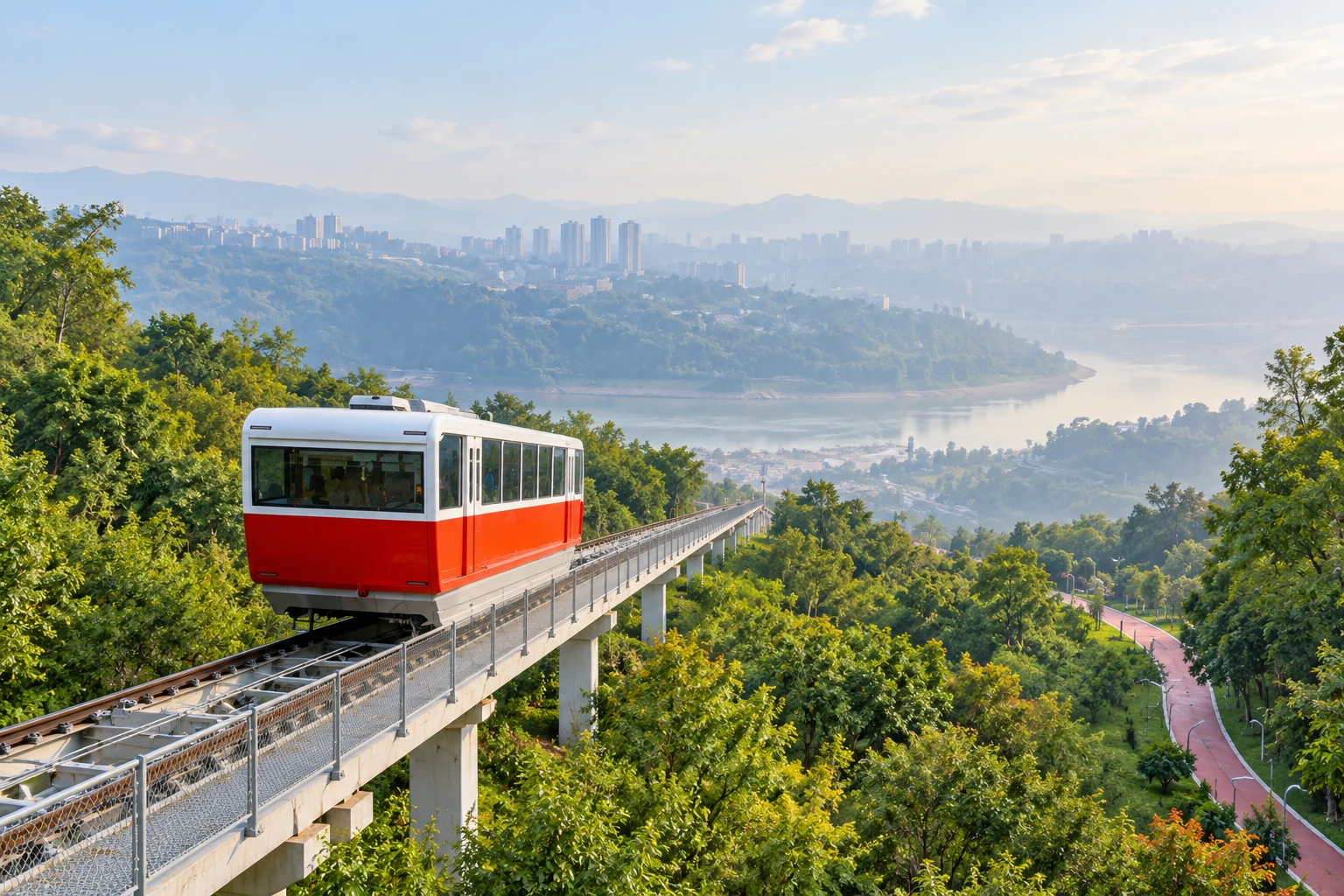
AI-generated approximate illustration based on an undated historical operator photograph, not a current photo. Landscape, access and viewpoints are not guaranteed. Original AI illustration; operator photograph used privately as reference only, not republished.
Sources checked: 27 October 2026 UTC. This is a researched planning guide, not an account of an on-site visit. The photographs used as visual references are historical; our illustrations do not establish today's scenery or access.
A different kind of cable car afternoon
Lijia Time Cable Car, 礼嘉时光缆车, is a hillside funicular in northern Chongqing, not the aerial Yangtze River Cableway downtown. Its red-and-white vehicle runs on rails between two levels of Lijia Smart Park. The useful pairing is a short ride, time among the park's planted slopes and lakes, and a conditional extension toward Jinhaiwan's riverfront—not a dash between famous city-center viewpoints.
Allow roughly half a day including your journey from central Chongqing. That is an editorial planning allowance, not a measured walking circuit. This outing suits travelers who enjoy unusual transport and quieter green spaces. It is less suitable when a tightly scheduled departure, heavy rain or an uncertain accessible return makes the hillside awkward. You can choose only the upper park without committing to the lower riverfront.
The operator's current information page identifies a 550-meter line with a 120-meter elevation difference and a ride of about four minutes. Those figures explain the appeal—and why walking back uphill is a different proposition from riding. A four-minute journey does not mean the complete visit takes four minutes: finding the station, buying tickets and queuing are separate parts of the outing.
Arrive at Jinshansi, not a similarly named attraction
Save these destinations in Chinese before leaving: 金山寺站 for Jinshansi Station, 礼嘉智慧公园 for Lijia Smart Park, 礼嘉时光缆车 for the funicular, and 金海湾公园 for Jinhaiwan Park. Using only an English search for "Chongqing cable car" can send you to the downtown river crossing. Lijia is also near Happy Valley, but neither its admission nor its attractions are part of this park plan.
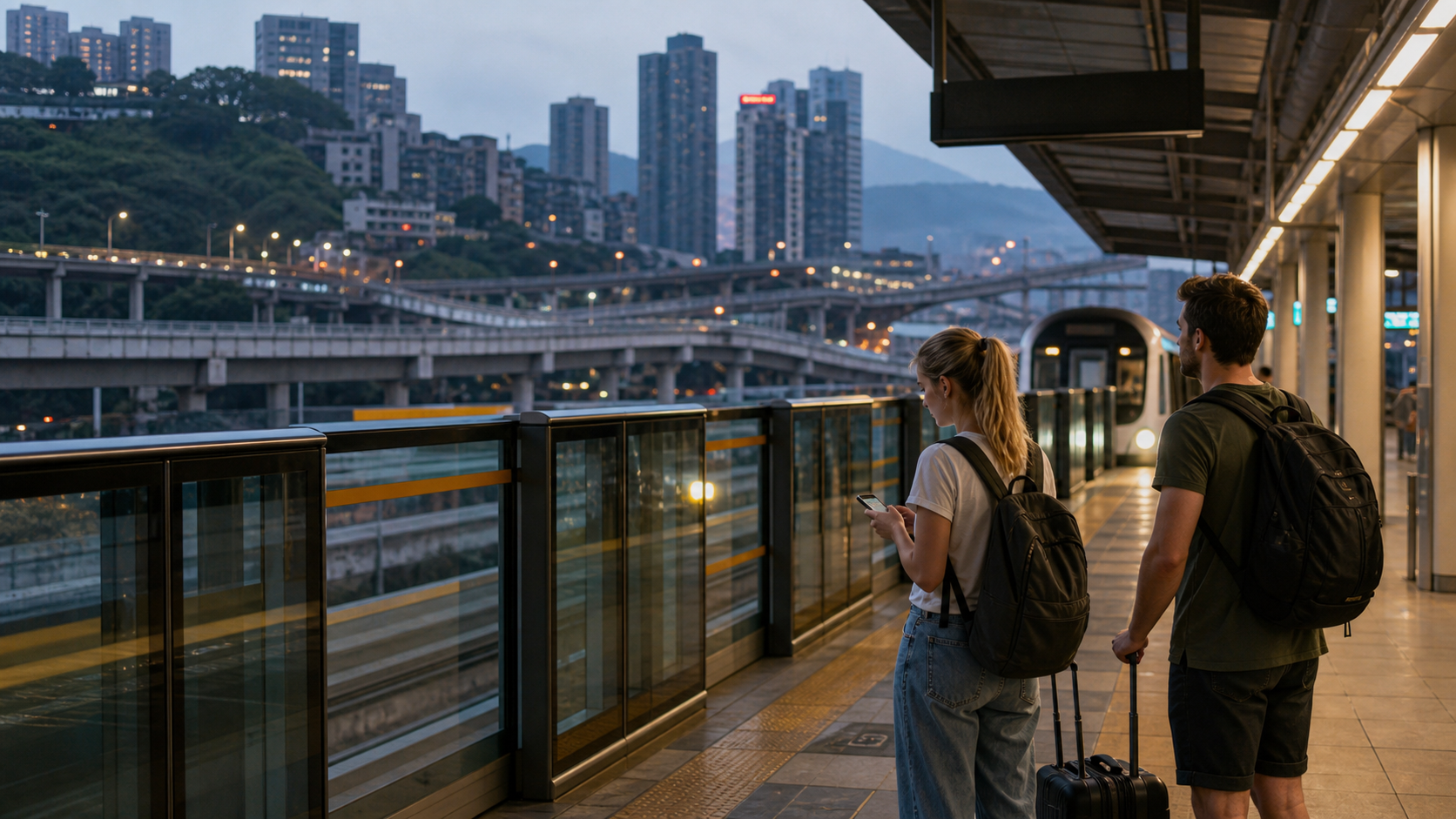
China Tourism News's 7 April 2026 reporting identifies Line 6's Jinshansi Station as the park's rail approach and describes the park as free to enter. Use Line 6 and follow current station signs toward the park, then the park's own signs to the funicular. This guide does not prescribe a particular station exit, a walking duration or a step-free entrance because these details were not independently checked for the publication date.
Before starting, look up the complete trip from your accommodation and the return service for the day. For a taxi, show the Chinese park and funicular names and confirm which station or road level you mean. The operator places the line between Liren Road, 礼仁路, and Jinhai Avenue, 金海大道; an ambiguous pin near the track is not necessarily a legal pickup place. Agree on a signed public entrance or other identifiable permitted meeting point rather than asking a driver to stop beside the rails.
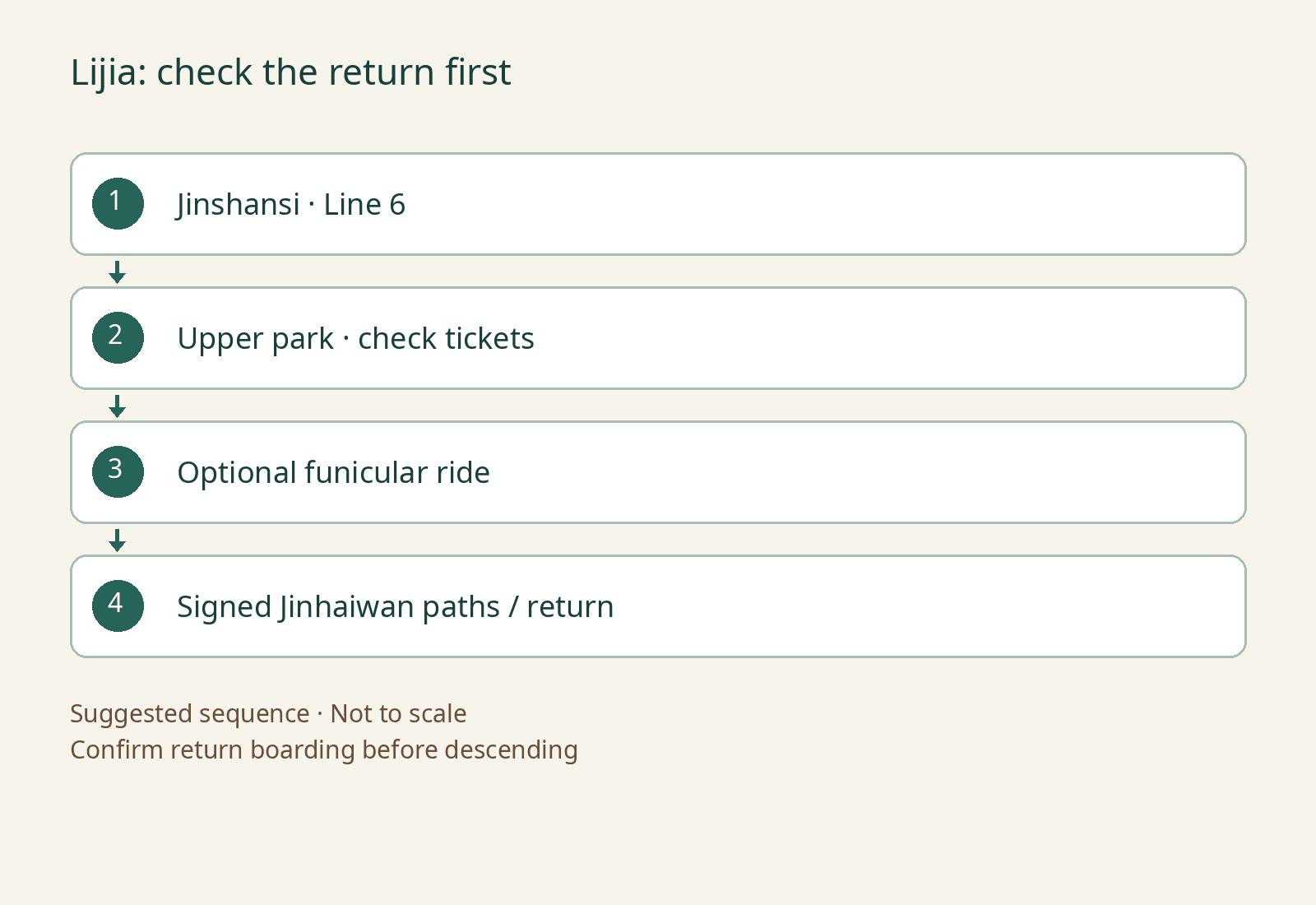
Original editorial sequence diagram, not a surveyed map or accessibility assessment. The lower-park extension is optional; current signs and closures decide the route.
Check the fare and return before descending
The operator page read on 27 October lists regular fares of RMB20 one way and RMB30 return, with daily operation from 09:30 to 17:30 except maintenance. It also lists student and senior concession fares of RMB10 one way and RMB15 return, but does not define all document or eligibility conditions. Ask staff before relying on a concession, especially with a foreign student card or non-Chinese identity document. The page's publication date is not stated; these are figures observed on the retrieval date, not a price guarantee for your future visit.
The same page allows each visitor one child below 1.3 meters free and requires a ticket at 1.3 meters or above. Confirm the applicable ticket and boarding rules at the station rather than extrapolating from another Chongqing attraction. We have not verified foreign-card payment acceptance, an English-language purchase screen, advance-booking requirements or return-ticket validity rules. Check the actual product before paying and retain the receipt or ticket until the visit is finished.
If you want to avoid the uphill walk, ask where to board the return, when the last return boarding occurs and whether your ticket covers it. The advertised 17:30 end of operation is not a promise that you can join a queue at 17:30. Leave a practical margin for the queue and locating the platform. A one-way fare only makes sense if you are comfortable with a separately checked onward route from the lower level.
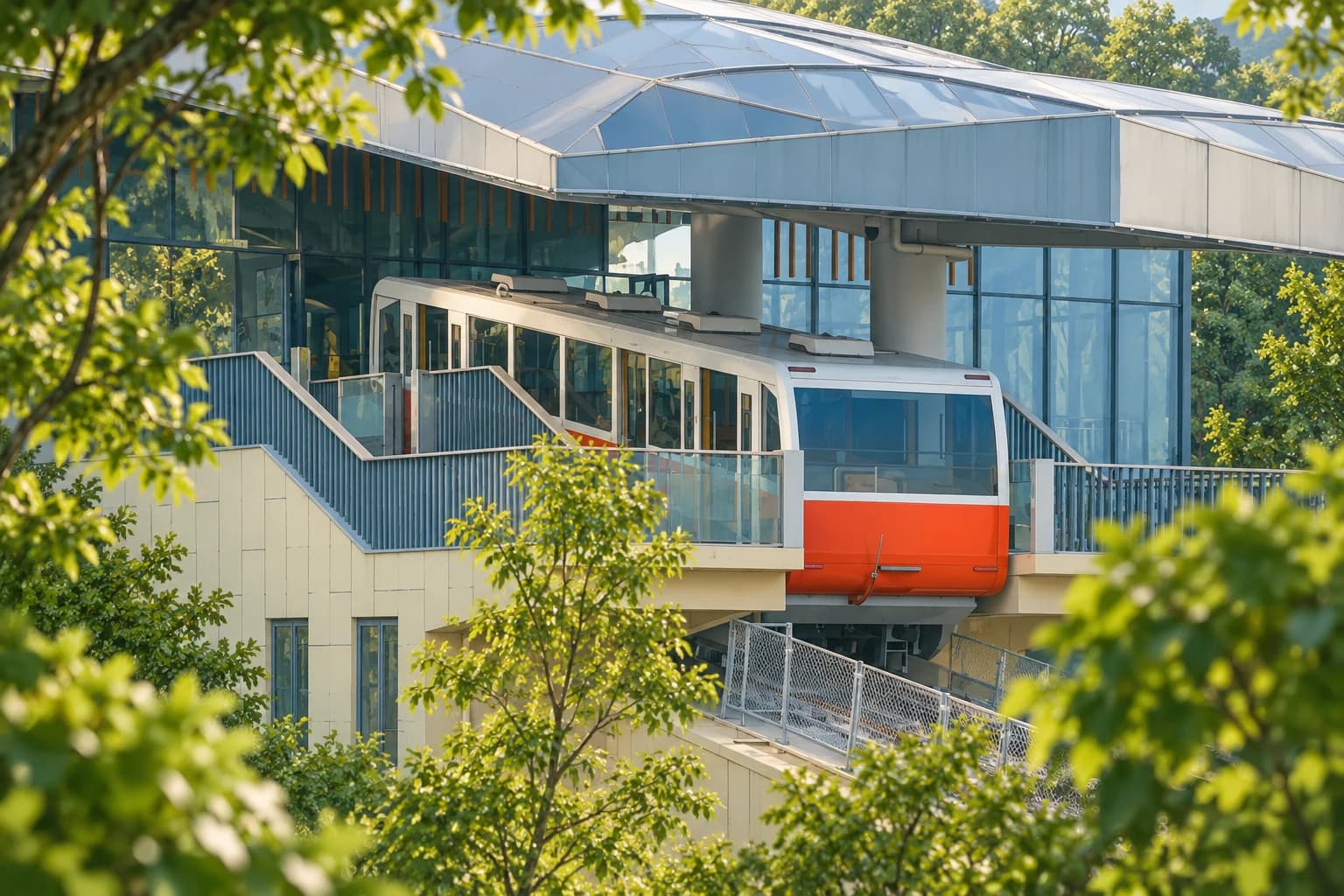
AI-generated approximate illustration based on an undated historical operator photograph, not a current photo. Platform details and boarding access are not guaranteed. Reference photograph remains private and is not republished.
Make the upper park part of the visit
Do not treat the park solely as a waiting area for the ride. The lakes, trees and changes of level provide a slower counterpoint to Chongqing's dense downtown streets. Choose a manageable signed path, stop where the public path widens and keep a flexible turnaround point. The upper-park-only option is particularly useful if the funicular is suspended or the weather makes a descent unattractive.
An independent CNR report dated 3 April 2023, by Bai Diaoyin and intern Li Ran, documents the park's lake, lawns and spring planting. Those photographs establish the historical landscape used for one of this guide's illustrations; they do not promise October blossom, the current condition of a path or operation of the reported driverless shuttle. We have not built the route around that shuttle or any technology exhibition.
The 2026 tourism newspaper also describes technology venues and spring flowers. Treat these as context rather than a checklist of guaranteed open attractions. If a specific exhibition, activity or seasonal plant display is the main reason for your visit, verify it separately before traveling. An enjoyable green-space outing should not depend on an old photo's flower color being repeated on your date.
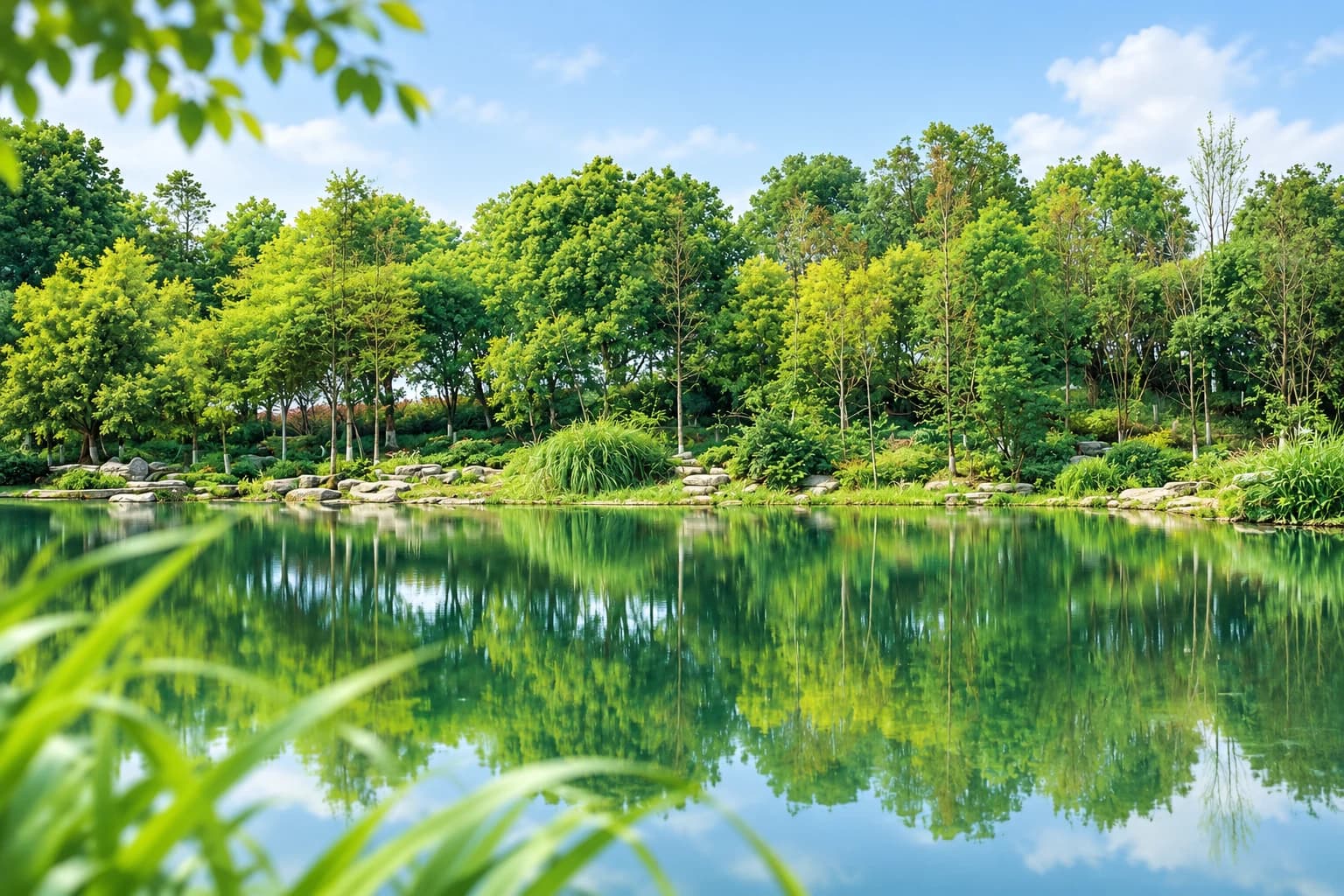
AI-generated approximate illustration based on Li Ran's historical CNR lake photograph published 3 April 2023. It is not a current photograph or a seasonal forecast. The reference photograph is not republished.
Decide whether to extend toward Jinhaiwan
Both the operator and China Tourism News describe a leisure connection linking the funicular, Yajie, Lingjiang Ciyuan, Jinhaiwan Park and Lijia Smart Park. That supports the idea of combining the ride with the riverfront, not a guarantee that every segment is open or equally accessible. At the lower station, read the current park map and signs before choosing a short out-and-back walk or another permitted exit.
For a relaxed visit, choose one river-view pause rather than attempting the entire wider greenway. Keep the funicular return plan in mind while walking away from the station. If you prefer an onward taxi, check the actual pickup road and driver access before you lose the easy option of returning uphill. There is no verified continuous wheelchair route, lift inventory or measured gradient assessment in this guide.
Remain on designated public paths and behind barriers. Jialing River water levels change, and exposed banks, steps or rocks in older pictures are not invitations to descend. Avoid muddy margins and closed flood-control areas even if another visitor goes there. In rain, shorten the outing if surfaces become slippery; do not turn a quiet park afternoon into an improvised riverside scramble. Children should stay close around water and transport platforms.
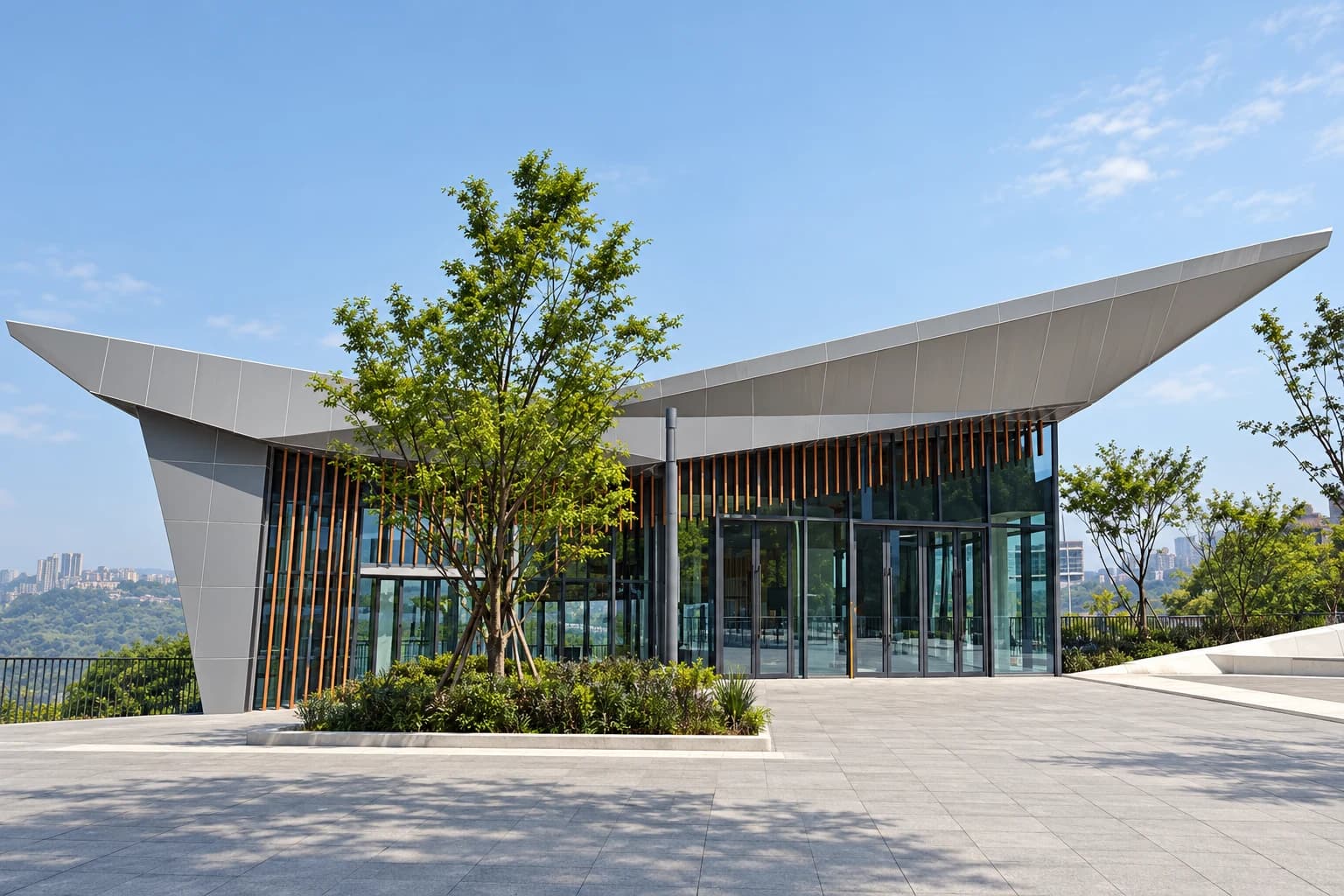
AI-generated approximate illustration based on an undated historical operator photograph. It is not a current entrance photograph, wayfinding instruction or confirmation of step-free access. The reference photograph is not republished.
A workable half-day sequence
Start by checking weather, the operator's notices and the return journey. After reaching Jinshansi, enter the signed public park and identify the funicular station before spending your energy on a long walk. Check tickets and the return boarding arrangements, then decide whether to ride. If the queue is longer than you want, enjoy a shorter upper-park walk instead; no particular wait time has been verified.
After the ride, extend only as far toward Jinhaiwan as the current signs, conditions and your energy allow. Bring drinking water and a light snack rather than depending on a particular café being open. Food outlets, toilets and resting places should be located on the current park map; this guide does not promise facilities at each stop. Return with enough daylight and operating margin to avoid making the steep climb your unplanned final activity.
For more transport preparation, use our metro guide and taxi guide. If you meant the aerial river crossing instead, see the separate Yangtze River Cableway guide and its current notices. The two services should not be substituted for one another without replanning the journey.
Frequently asked questions
Q: Is Lijia Time Cable Car the Yangtze River Cableway? A: No. Lijia is a rail-guided hillside funicular in Lijia Smart Park. The Yangtze River Cableway is a separate aerial crossing downtown.
Q: Which metro station should I use? A: China Tourism News identifies Jinshansi on Line 6. Follow current station and park signs; an exact exit or step-free connection is not verified here.
Q: What does the funicular cost? A: The operator page read on 27 October 2026 lists RMB20 one way and RMB30 return at regular prices. Confirm current fares and ticket conditions before purchase.
Q: Can I rely on a late return ride? A: No. The listed operating window is 09:30–17:30 except maintenance, but last boarding and queues need a same-day check. Confirm your return before descending.
Q: Is the riverfront extension suitable for a wheelchair? A: A continuous accessible route was not verified. Ask the operator about boarding and the park about the exact paths, gradients and return connection before committing to the descent.
Research and image disclosure
This original guide draws on the operator, China Tourism News and CNR as three distinct source organizations. Sources were read on 27 October 2026 UTC; original dates are preserved above and in the private research record. No firsthand visit, measured route, safety inspection or human translation review is claimed. The four realistic scenes are original AI illustrations informed by historical reference photographs, with approximate details; the source photographs are not republished. The route diagram is editorial planning, not surveyed navigation.
Traveler comments
Share a recent experience or ask a practical question about this guide.